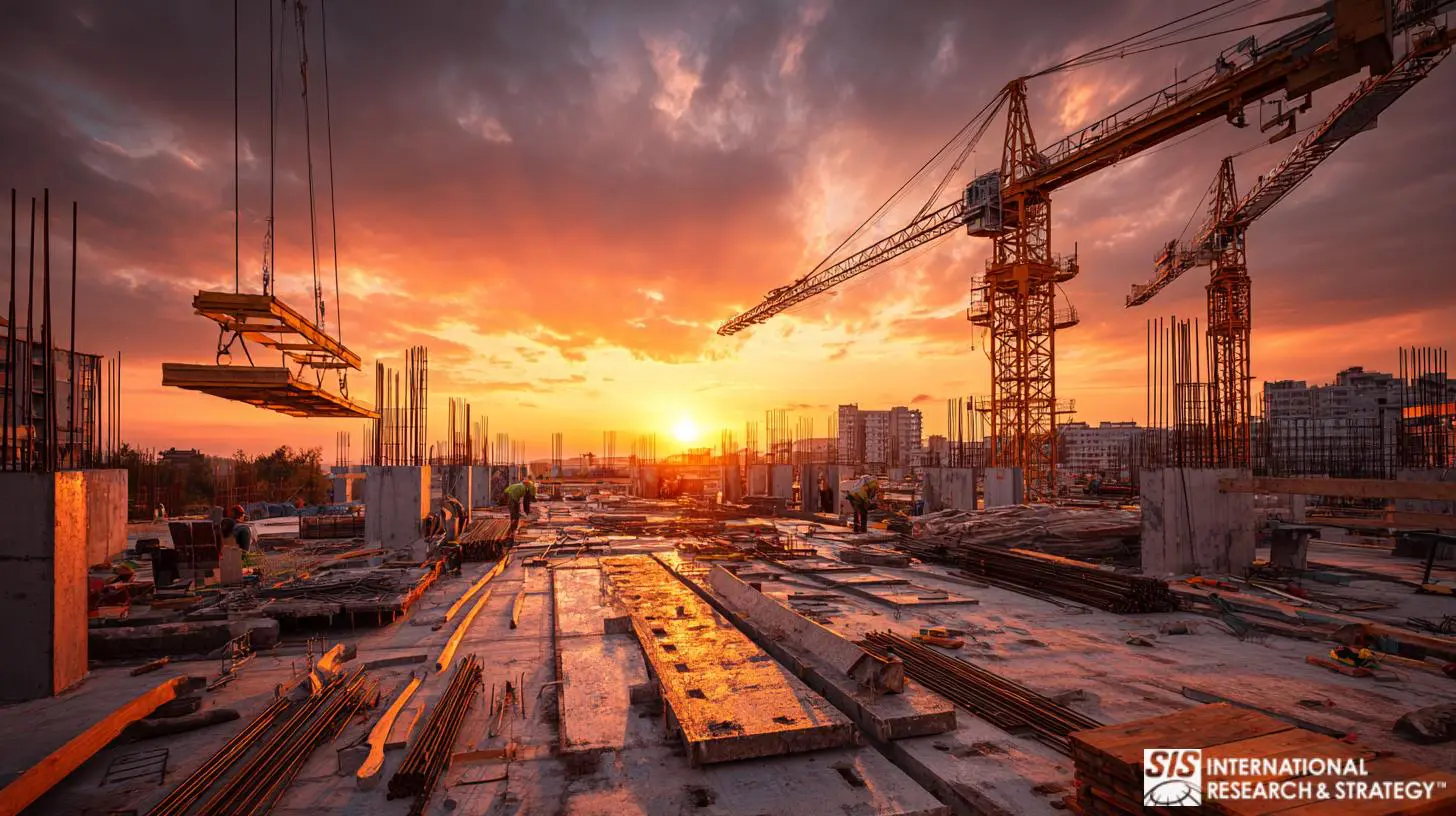
Explore how AI in the construction industry is improving project data, decision-making, automation, and equipment while exposing limits to adoption.
The construction industry is difficult to automate because it is fragmented, variable, and physical.
Every project is unique. Work happens in dynamic environments, and a general contractor may be managing work among hundreds of subcontractors, engineers, suppliers, regulators, and consultants. Ironically, these same characteristics create enormous amounts of information and coordination problems that AI is well suited to attack.
Put another way, construction has two characteristics pulling in opposite directions. It is full of expensive, information-heavy problems that AI is good at solving. Yet its fragmented structure and dependence on physical, safety-critical work that is difficult to standardize make it much harder to transform than supply chain, finance, or manufacturing.
Historically, many of construction’s most important digital technologies came from outside the industry. For example, tools widely used today, such as computer-aided design (CAD), building information modeling (BIM), and project management software, were developed by technology companies.
BIM is a useful example of why some technologies succeed. It solved a specific coordination problem. It made it possible to model projects digitally and brought together parties, such as architects, engineers, and the various trades that had previously worked from separate documents. The result was a more efficient workflow and the ability to identify conflicts before construction began, which in turn delivered cost savings by avoiding expensive delays and rework.
AI in the construction industry is set to extend this idea. Only this time, the challenge isn’t digitally transforming construction information; it is bringing a new way to process and analyze that information, and helping teams decide what to do with it.
Where is AI creating value first?
Autodesk, the software maker best known for establishing BIM as the global standard in the construction industry, surveyed 3,500 construction industry leaders across 28 countries in 2025. Only 32% reported that they were approaching or had achieved their AI goals. The percentage believing that AI would improve construction fell from 80% in 2024 to 68% in 2025. This data suggests that the construction industry has entered an uncomfortable phase, moving from initial excitement around AI into a trough of disillusionment as more users demand ROI from the technology.
Some of the most straightforward applications for AI are projects that tackle the enormous amount of information that surrounds a construction project. These are areas where AI’s unique ability to ingest and synthesize highly fragmented information is inherently well suited to the task. For example, AI can analyze bid documents, assist with estimation, identify contractual risk, and predict scheduling problems.
In other words, some of the earliest opportunities for AI to create value may not be replacing physical construction work, but in reducing the information burden surrounding it.
Samsung C&T goes AI native
Samsung C&T Engineering & Construction Group is challenging the paradigm that technological innovation begins outside the construction industry. In 2025, the company announced its plans to become an “AI Native” construction company. The initiative aims to integrate AI across all construction operations by 2028 by driving the technology into every workflow and decision process. The first outward signs of the company’s strategy are the introduction of three AI agents that were co-developed with AWS.
One of the construction industry’s longstanding challenges is highly fragmented information. Critical project data can be scattered across drawings, site reports, emails, field updates, and subcontractor systems, making it difficult for managers to see emerging problems early.
This is where Samsung’s AI-Project Expert (AIPEX) agent, one of three that the company is piloting, comes in. It is designed to pull together disparate information so project managers can identify emerging problems sooner and make decisions faster. The company’s other agents also target information-heavy tasks. One reviews large volumes of bid documents for potential risks, while another analyzes contracts and supports contractual decision-making.
The significance is really about where Samsung is applying AI. These are areas where missed information can lead to larger consequences and costs later in the project.
Komatsu brings AI into the physical jobsite
Japanese equipment manufacturer Komatsu illustrates a different direction. The company has spent years building its Smart Construction system, a digital construction management solution that combines machine data, 3D site models, sensors, and digital construction workflows. Smart Construction is currently implemented at over 40,000 job sites globally.
Komatsu is now aiming for greater autonomy. In 2026, the company announced a partnership with AIM Intelligent Machines to develop autonomous bulldozers and hydraulic excavators. These new smart machines can understand project objectives, automate decisions around construction methods and travel routes, and execute jobsite tasks independently.
Comparing manufacturing automation to the construction industry shows how difficult Komatsu’s initiative is. A robot in a manufacturing plant can be permanently installed in a controlled environment where it can perform the same task over and over. Construction sites, on the other hand, change constantly, and equipment must operate around people, in changing weather and terrain, work with different materials, and with operators of varying levels of experience. That makes fully autonomous construction much more difficult than automating information processing.
Research methods for finding the right AI application
These factors create an important role for market research in the application of AI in the construction industry.
Techniques for gathering data and insights about construction technology decisions can include the following:
- In-depth interviews. Direct research carried out by tapping into a network of project managers, contractors, and engineers can help identify information bottlenecks, time-consuming processes, and even where users are willing to rely on AI.
- Pre– and post-testing. A before-and-after evaluation method used to measure the impact of an action, such as how a product change can influence a consumer’s awareness, attitudes, or behavior.
- Customer satisfaction surveys. Surveys designed to provide direct data to uncover user preferences, pain points, and behaviors so that products and strategies can be improved.
Overall, market research can help business decision-makers separate flashy technology from solutions that solve problems important enough to deliver lasting value.
The future of AI in construction
If the past is indicative of the future of AI in the construction industry, we will not see a big bang moment of disruption that produces a fully automated jobsite. Instead, AI will tackle one workflow or problem at a time.
For companies evaluating AI, construction equipment, building products, or new market opportunities, understanding where technology delivers real value will become increasingly important. SIS International Research helps construction companies, equipment manufacturers, and technology providers identify unmet needs, evaluate technology adoption, and understand how customer priorities differ across markets. Its construction market research combines qualitative, quantitative, and strategy research with access to contractors, engineers, architects, facility managers, and other industry decision-makers.
Endnotes
- Autodesk. 2025 Design and Make Report: Spotlight on Construction. 2025
- Samsung C&T. AI Native Construction: Samsung C&T E&C Group Unveils Its Roadmap for an AI-Driven Future. November 20, 2025.
- Komatsu. Komatsu Report 2025. 2025.
- Komatsu. Accelerating autonomous construction through the integration of physical AI and Smart Construction – Komatsu and AIM Intelligent Machines enter Strategic Partnership for autonomous operation of bulldozers and hydraulic excavators. July 31, 2026.
- Harvard Business Review. Can the construction industry be disrupted? July 10, 2023