
Nutzung von NYC-Fokusgruppen zum Testen von Produkten für Senioren

New York City ist einer der vielfältigsten Märkte der Welt und damit ein idealer Ort, um Produkte mit verschiedenen Verbrauchersegmenten, darunter auch Senioren, zu testen. Angesichts der schnell wachsenden Seniorenbevölkerung haben Unternehmen die einmalige Gelegenheit, Produkte zu entwickeln, die den sich entwickelnden Bedürfnissen dieser Bevölkerungsgruppe gerecht werden. Deshalb bietet der Einsatz von Fokusgruppen in NYC zum Testen von Produkten für Senioren direkte Einblicke in ihre Vorlieben, Herausforderungen und Erwartungen.
Den Seniorenmarkt in NYC verstehen
Die ältere Bevölkerung New Yorks ist groß und vielfältig und stellt daher für Unternehmen eine wichtige demografische Gruppe dar, die sie bei der Produktentwicklung berücksichtigen müssen. Senioren in NYC haben oft ausgeprägte Vorlieben, darunter einen Schwerpunkt auf Gesundheit, Wellness, Benutzerfreundlichkeit und Technologie, die zu ihrem Lebensstil passt. Darüber hinaus sind viele Senioren technisch versierter als je zuvor und nutzen aktiv digitale Plattformen, Geräte und Dienste. Diese Komplexität macht New York zu einem idealen Ort, um Erkenntnisse darüber zu gewinnen, wie Senioren mit Produkten interagieren und welche Innovationen ihren Bedürfnissen am besten gerecht werden.
Also … welche Vorteile bietet die Nutzung von NYC-Fokusgruppen zum Testen von Produkten für Senioren?
Der Einsatz von Fokusgruppen in New York zum Testen von Produkten für Senioren bietet mehrere klare Vorteile – und hier erfahren Sie, warum Fokusgruppen besonders effektiv sein können:
Direktes Feedback zur Benutzerfreundlichkeit und zum Design des Produkts
Fokusgruppen ermöglichen es Unternehmen, Feedback aus erster Hand von Senioren darüber zu erhalten, wie einfach sie ein Produkt verwenden und navigieren können. Dieser direkte Input ist von unschätzbarem Wert, um Usability-Probleme zu identifizieren und Designverbesserungen vorzunehmen.
Einblicke in die individuellen Bedürfnisse und Vorlieben von Senioren
Senioren haben spezielle Bedürfnisse in Bezug auf Gesundheit, Komfort und Zugänglichkeit, die sich von denen anderer Altersgruppen unterscheiden. Fokusgruppen bieten die Möglichkeit, diese Präferenzen eingehend zu untersuchen. Senioren legen beispielsweise Wert auf einfache Handhabung, größere Textgrößen oder sprachaktivierte Funktionen.
Testen von gesundheitsbezogenen Funktionen und Barrierefreiheitsfunktionen
Gesundheitsbezogene Produkte und solche, die die Zugänglichkeit verbessern, sind für Senioren von entscheidender Bedeutung. Fokusgruppen können beurteilen, wie gut diese Funktionen den Bedürfnissen älterer Benutzer entsprechen. Beispielsweise kann das Testen eines neuen Gesundheitsüberwachungsgeräts oder einer Zugänglichkeitsfunktion in einem Smart-Home-System zeigen, wie effektiv diese Produkte häufige Gesundheitsprobleme oder Mobilitätsprobleme älterer Menschen angehen.
Produkttypen, die sich ideal für Senioren-Fokusgruppen eignen
Bei der Durchführung von Fokusgruppen in New York zum Testen von Produkten für Senioren stellten sich bestimmte Produkte als besonders geeignet für diese Zielgruppe heraus. Wenn Unternehmen wissen, welche Produkte am relevantesten sind, können sie ihre Teststrategien anpassen, um die wertvollsten Erkenntnisse zu gewinnen.
Gesundheits- und Wellnessprodukte
Produkte rund um Gesundheit und Wellness sind für Senioren von großer Bedeutung, da ihnen die Erhaltung ihrer Gesundheit und die Bewältigung von Krankheiten oft am wichtigsten sind. Diese Kategorie umfasst Artikel wie:
- Medizinische Geräte: Blutdruckmessgeräte, Blutzuckermessgeräte und Hörgeräte.
- Fitnessgeräte: Trainingsgeräte für gelenkschonendes Training, Gleichgewichtshilfen und tragbare Fitness-Tracker.
- Nahrungsergänzungsmittel: Vitamine, Nahrungsergänzungsmittel und spezielle Gesundheitsnahrung.
Durch das Testen dieser Produkte mit Senioren können deren Präferenzen hinsichtlich Benutzerfreundlichkeit, Wirksamkeit und Gesamtwert aufgedeckt werden.
Technologie und Hilfsmittel
Für viele Senioren ist Technologie, die das tägliche Leben unterstützt und die Lebensqualität steigert, von entscheidender Bedeutung. Fokusgruppen können bei der Bewertung helfen:
- Smart-Home-Geräte: Sprachgesteuerte Assistenten, intelligente Thermostate und Haussicherheitssysteme.
- Assistierende Technologie: Geräte für Seh- und Hörbehinderungen, Mobilitätshilfen und adaptive Gadgets.
- Kommunikationstools: Seniorenfreundliche Smartphones, Tablets mit vereinfachten Benutzeroberflächen und Telemedizinlösungen.
Feedback einholen an diesen Technologien trägt dazu bei, dass sie benutzerfreundlich sind und den spezifischen Anforderungen älterer Benutzer gerecht werden.
Lebensmittel, Getränke und Haushaltsgegenstände
Produkte rund um Ernährung und Haushalt sind ebenfalls unverzichtbar. Senioren haben möglicherweise besondere Bedürfnisse oder Vorlieben in Bezug auf:
- Fertiggericht: Einfach zuzubereitende Mahlzeiten, diätspezifische Optionen und Essenslieferdienste.
- Küchenhelfer: Auf Benutzerfreundlichkeit ausgelegte Werkzeuge, wie ergonomisches Besteck und vereinfachte Kochgeräte.
- Haushaltshilfen: Reinigungsprodukte, Sicherheitsvorrichtungen und Organisationslösungen.
Fokusgruppen in New York City zum Testen von Produkten für Senioren können Erkenntnisse darüber liefern, wie diese Produkte zum Lebensstil von Senioren passen und welche Anpassungen zur Verbesserung der Benutzerfreundlichkeit erforderlich sind.
Wie New York Diversity beim Testen von Produkten für Senioren hilft
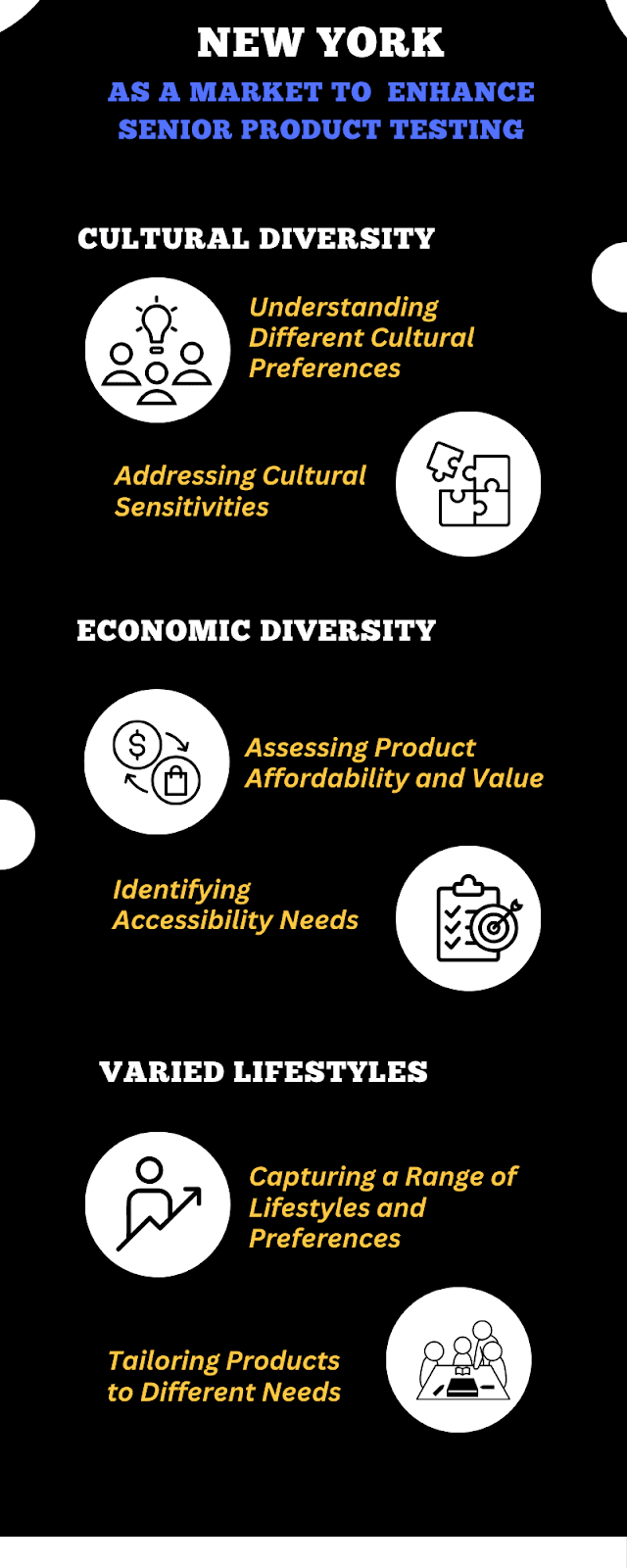
Kulturelle Vielfalt
- Unterschiedliche kulturelle Vorlieben verstehen: In New York leben Senioren mit unterschiedlichem kulturellen Hintergrund. Das Testen von Produkten in dieser Umgebung hilft Unternehmen, kulturelle Vorlieben und Praktiken zu verstehen, die die Akzeptanz und Verwendung von Produkten beeinflussen können.
- Auf kulturelle Sensibilitäten eingehen: Das Feedback einer kulturell vielfältigen älteren Bevölkerung kann dabei helfen, kulturelle Empfindlichkeiten zu erkennen und zu berücksichtigen und so sicherzustellen, dass die Produkte respektvoll sind und alle Marktsegmente ansprechen.
Wirtschaftliche Vielfalt
- Beurteilung der Erschwinglichkeit und des Werts von Produkten: Senioren in New York haben unterschiedliche wirtschaftliche Hintergründe. Fokusgruppen können Einblicke darin geben, wie unterschiedliche Preisstrategien und Wertangebote bei Senioren in unterschiedlichen finanziellen Situationen ankommen.
- Barrierefreiheitsanforderungen ermitteln: Wirtschaftliche Vielfalt kann einen unterschiedlichen Ressourcenzugang offenbaren, der sich auf Produktbedürfnisse und -präferenzen auswirkt. Diese Informationen helfen bei der Entwicklung integrativer Produkte, die den unterschiedlichen wirtschaftlichen Realitäten gerecht werden.
Verschiedene Lebensstile
- Erfassung unterschiedlicher Lebensstile und Vorlieben: Senioren in New York haben unterschiedliche Lebensstile, von Stadtmenschen bis zu Rentnern mit unterschiedlichem Aktivitätsniveau. Fokusgruppen können hervorheben, wie sich unterschiedliche Lebensstile auf die Produktnutzung und -präferenzen auswirken.
- Produkte an unterschiedliche Bedürfnisse anpassen: Erkenntnisse aus einem breiten Spektrum von Lebensstilen ermöglichen es Unternehmen, Produkte an spezifische Bedürfnisse anzupassen, wie etwa Mobilitätshilfen für aktive Senioren oder benutzerfreundliche Technik für weniger technisch versierte Benutzer.
Gestaltung effektiver NYC-Fokusgruppen zum Testen von Produkten für Senioren

Um wertvolle und umsetzbare Erkenntnisse von älteren Teilnehmern in Fokusgruppen zu erhalten, ist es wichtig, die Studie unter Berücksichtigung ihrer spezifischen Bedürfnisse und Vorlieben zu gestalten. Effektive Fokusgruppen in New York zum Testen von Produkten für Senioren gewährleisten aussagekräftiges Feedback und eine positive Erfahrung für ältere Teilnehmer.
Teilnehmer rekrutieren: Kriterien und Überlegungen
- Auswahlkriterien: Legen Sie klare Kriterien für die Auswahl der Teilnehmer fest, wie z. B. Altersspanne, Gesundheitszustand und spezifische Interessen im Zusammenhang mit dem Produkt. Dadurch wird sichergestellt, dass die Fokusgruppe Senioren umfasst, die den Zielmarkt repräsentieren.
- Vielfältige Vertretung: Streben Sie nach Vielfalt in Bezug auf Ethnizität, sozioökonomischen Status und Lebensstil, um verschiedene Perspektiven zu sammeln. Die vielfältige Bevölkerung von NYC bietet die Möglichkeit, vielfältige Einblicke zu gewinnen.
- Anreize: Bieten Sie entsprechende Anreize, wie etwa Geschenkgutscheine oder eine Entschädigung für Zeit und Reisekosten, um die Teilnahme zu fördern und ein positives Erlebnis zu gewährleisten.
Anpassung des Formats für das Engagement der Senioren
- Barrierefreier Veranstaltungsort: Wählen Sie einen Veranstaltungsort, der leicht zugänglich ist und über bequeme Sitzgelegenheiten und Möglichkeiten für Mobilitätshilfen verfügt. Für ältere Teilnehmer ist die Gewährleistung der physischen Zugänglichkeit von entscheidender Bedeutung.
- Vereinfachte Sprache: Verwenden Sie in allen Materialien und Diskussionen eine klare, unkomplizierte Sprache. Vermeiden Sie Fachjargon, der einigen Vorgesetzten unbekannt sein könnte.
- Interaktive Methoden: Integrieren Sie interaktive Elemente wie praktische Produktdemonstrationen oder visuelle Hilfsmittel, um die Teilnehmer einzubinden und Feedback zu erleichtern.
Sicherstellung der Zugänglichkeit in Diskussion und Umgebung
- Technische Unterstützung: Bieten Sie technische Unterstützung für alle digitalen Tools oder Geräte, die während der Fokusgruppe verwendet werden. Stellen Sie sicher, dass die Senioren mit der eingesetzten Technologie vertraut sind.
- Moderationstechniken: Setzen Sie erfahrene Moderatoren ein, die im Umgang mit älteren Teilnehmern geschult sind. Der Moderator sollte geduldig und aufmerksam sein und den älteren Teilnehmern ausreichend Zeit geben, ihre Gedanken auszudrücken.
- Feedback-Sammlung: Nutzen Sie Methoden, die unterschiedlichen Niveaus der technischen Vertrautheit Rechnung tragen. Erwägen Sie beispielsweise, zusätzlich zu digitalen Tools auch Papierumfragen oder Einzelinterviews einzusetzen.
Auswertung der Ergebnisse

Durch die praktische Auswertung wird sichergestellt, dass das Feedback zur Verbesserung der Produktentwicklung, der Marketingstrategien und der allgemeinen Verbrauchereinbindung genutzt wird. So gehen Sie bei der Überprüfung der Ergebnisse von Fokusgruppen in New York City zum Testen von Produkten für Senioren vor:
Feedback von Vorgesetzten interpretieren
- Identifizierung zentraler Themen: Überprüfen Sie das Feedback, um gemeinsame Themen und Muster zu identifizieren. Suchen Sie nach wiederkehrenden Problemen, Präferenzen und Vorschlägen, die zur Produktverbesserung beitragen können.
- Segmentieren von Daten: Analysieren Sie die Daten, indem Sie sie nach verschiedenen Kriterien segmentieren, wie z. B. Alter, Gesundheitszustand und Lebensstil. Dies hilft zu verstehen, wie verschiedene Segmente der älteren Bevölkerung das Produkt wahrnehmen.
- Bewertung der Benutzerfreundlichkeit und Akzeptanz: Bewerten Sie Feedback zur Benutzerfreundlichkeit und Akzeptanz des Produkts. Bestimmen Sie, wie gut das Produkt den spezifischen Bedürfnissen und Vorlieben von Senioren entspricht, und identifizieren Sie Bereiche, die verbessert werden können.
Wichtige Kennzahlen für eine auf Senioren ausgerichtete Produktentwicklung
- Benutzerfreundlichkeit: Messen Sie, wie einfach Senioren das Produkt nutzen können und ob es ihren Zugänglichkeitsanforderungen entspricht. Verfolgen Sie alle gemeldeten Schwierigkeiten und Verbesserungsvorschläge.
- Funktionsrelevanz: Bewerten Sie die Wichtigkeit verschiedener Funktionen aus der Sicht der Senioren. Bestimmen Sie, welche Funktionen am meisten geschätzt werden und welche möglicherweise Anpassungen oder zusätzliche Unterstützung benötigen.
- Gesamtzufriedenheit: Messen Sie die allgemeine Zufriedenheit mit dem Produkt, einschließlich der Zufriedenheit mit Design, Funktionalität und Benutzerfreundlichkeit. Diese Kennzahl hilft dabei, den potenziellen Erfolg des Produkts auf dem Markt einzuschätzen.
Anpassen von Produktdesign und Marketing auf Grundlage von Erkenntnissen
- Designänderungen: Nutzen Sie das Feedback, um notwendige Anpassungen am Produktdesign vorzunehmen und sicherzustellen, dass es den Vorlieben und Bedürfnissen der Senioren entspricht. Dies könnte Änderungen in Größe, Funktionalität oder Benutzerfreundlichkeit beinhalten.
- Marketingstrategien: Passen Sie Marketingstrategien auf Grundlage der Erkenntnisse aus den Fokusgruppen an. Passen Sie Ihre Botschaften an, um die für Senioren attraktivsten Merkmale hervorzuheben und alle identifizierten Bedenken oder Hindernisse zu berücksichtigen.
- Laufende Feedbackschleife: Etablieren Sie eine kontinuierliche Feedback-Schleife mit erfahrenen Verbrauchern, um das Produkt zu verfeinern und auf sich ändernde Bedürfnisse und Vorlieben abgestimmt zu bleiben.
Über SIS International
SIS International bietet quantitative, qualitative und strategische Forschung an. Wir liefern Daten, Tools, Strategien, Berichte und Erkenntnisse zur Entscheidungsfindung. Wir führen auch Interviews, Umfragen, Fokusgruppen und andere Methoden und Ansätze der Marktforschung durch. Kontakt für Ihr nächstes Marktforschungsprojekt.

 DE
DE  EN
EN  AR
AR  ZH
ZH  ZH_HK
ZH_HK  NL
NL  FR
FR  IT
IT  JA
JA  KO
KO  PL
PL  PT
PT  ES
ES