
Het inzetten van focusgroepen in NYC om producten voor senioren te testen

New York City is een van de meest diverse markten ter wereld, waardoor het een ideale locatie is om producten te testen met verschillende consumentensegmenten, waaronder senioren. Met een snelgroeiende seniorenpopulatie hebben bedrijven een unieke kans om producten te ontwikkelen die inspelen op de veranderende behoeften van deze demografie. Daarom biedt het gebruik van focusgroepen in NYC om producten voor senioren te testen direct inzicht in hun voorkeuren, uitdagingen en verwachtingen.
De seniorenmarkt in NYC begrijpen
De seniorenpopulatie in New York City is groot en divers. Hierdoor is het een belangrijke demografische groep waarmee bedrijven rekening moeten houden bij het ontwikkelen van producten. Senioren in NYC hebben vaak specifieke voorkeuren, waaronder een focus op gezondheid, welzijn, gebruiksgemak en technologie die aansluit bij hun levensstijl. Bovendien zijn veel senioren meer tech-savvy dan ooit en zijn ze actief bezig met digitale platforms, apparaten en diensten. Deze complexiteit maakt New York een ideale locatie om inzicht te krijgen in hoe senioren omgaan met producten en welke innovaties het beste aan hun behoeften kunnen voldoen.
Dus… Wat zijn de voordelen van het gebruik van NYC Focusgroepen om producten voor senioren te testen?
Het inzetten van focusgroepen in New York om producten voor senioren te testen, biedt verschillende duidelijke voordelen. Hieronder leest u waarom focusgroepen bijzonder effectief kunnen zijn:
Directe feedback over bruikbaarheid en ontwerp van het product
Focusgroepen stellen bedrijven in staat om feedback uit de eerste hand te krijgen van senioren over hoe gemakkelijk ze een product kunnen gebruiken en navigeren. Deze directe input is van onschatbare waarde voor het identificeren van bruikbaarheidsproblemen en het doorvoeren van ontwerpverbeteringen.
Inzicht in de unieke behoeften en voorkeuren van senioren
Senioren hebben specifieke gezondheids-, comfort- en toegankelijkheidsbehoeften die verschillen van die van andere leeftijdsgroepen. Focusgroepen bieden een kans om deze voorkeuren diepgaand te onderzoeken. Senioren geven bijvoorbeeld prioriteit aan gebruiksgemak, grotere tekstgroottes of spraakgestuurde functies.
Testen van gezondheidsgerelateerde en toegankelijkheidsfuncties
Gezondheidsgerelateerde producten en producten die zijn ontworpen om de toegankelijkheid te verbeteren, zijn cruciaal voor senioren. Focusgroepen kunnen beoordelen hoe goed deze functies voldoen aan de behoeften van senioren. Bijvoorbeeld, het testen van een nieuw apparaat voor gezondheidsbewaking of een toegankelijkheidsfunctie in een smart home-systeem kan onthullen hoe effectief deze producten veelvoorkomende gezondheidsproblemen of mobiliteitsproblemen aanpakken waarmee senioren worden geconfronteerd.
Soorten producten die ideaal zijn voor focusgroepen voor senioren
Bij het uitvoeren van NYC focusgroepen om producten voor senioren te testen, zijn bepaalde producten bijzonder geschikt voor deze demografie. Begrijpen welke producten het meest relevant zijn, kan bedrijven helpen hun teststrategieën aan te passen om de meest waardevolle inzichten te verkrijgen.
Gezondheids- en welzijnsproducten
Producten gerelateerd aan gezondheid en welzijn zijn zeer relevant voor senioren, die vaak prioriteit geven aan het onderhouden van hun gezondheid en het omgaan met medische aandoeningen. Deze categorie omvat items zoals:
- Medische hulpmiddelen: Bloeddrukmeters, glucosemeters en gehoorapparaten.
- Fitnessapparatuur: Fitnessapparaten voor trainingen met een lage impact, hulpmiddelen voor het evenwicht en draagbare fitnesstrackers.
- Voedingssupplementen: Vitaminen, voedingssupplementen en gespecialiseerde gezondheidsvoeding.
Door deze producten te testen bij senioren, kunt u ontdekken wat hun voorkeuren zijn op het gebied van gebruiksgemak, effectiviteit en algemene waarde.
Technologie en hulpmiddelen
Technologie die het dagelijks leven ondersteunt en de kwaliteit van leven verbetert, is cruciaal voor veel senioren. Focusgroepen kunnen helpen bij het evalueren van:
- Slimme apparaten voor thuis: Spraakgestuurde assistenten, slimme thermostaten en beveiligingssystemen voor thuis.
- Ondersteunende technologie: Hulpmiddelen voor mensen met een visuele of auditieve beperking, hulpmiddelen voor mobiliteit en adaptieve gadgets.
- Communicatiehulpmiddelen: Seniorenvriendelijke smartphones, tablets met vereenvoudigde interfaces en oplossingen voor telezorg.
Feedback krijgen Door deze technologieën te implementeren, zorgen we ervoor dat ze gebruiksvriendelijk zijn en voldoen aan de specifieke behoeften van oudere gebruikers.
Voedsel, dranken en huishoudelijke artikelen
Producten gerelateerd aan voedsel en huishoudbeheer zijn ook essentieel. Senioren kunnen specifieke behoeften of voorkeuren hebben gerelateerd aan:
- Kant-en-klaarmaaltijden: Gemakkelijk te bereiden maaltijden, dieet-specifieke opties en maaltijdbezorgservices.
- Keukengadgets: Gereedschappen die zijn ontworpen voor gebruiksgemak, zoals ergonomische gebruiksvoorwerpen en vereenvoudigde kookapparatuur.
- Huishoudelijke hulpmiddelen: Reinigingsproducten, veiligheidsvoorzieningen en organisatieoplossingen.
Focusgroepen in New York die producten voor senioren testen, kunnen inzicht bieden in de mate waarin deze producten passen bij de levensstijl van senioren en welke aanpassingen nodig zijn om de bruikbaarheid te verbeteren.
Hoe New York Diversity helpt bij het testen van producten voor senioren
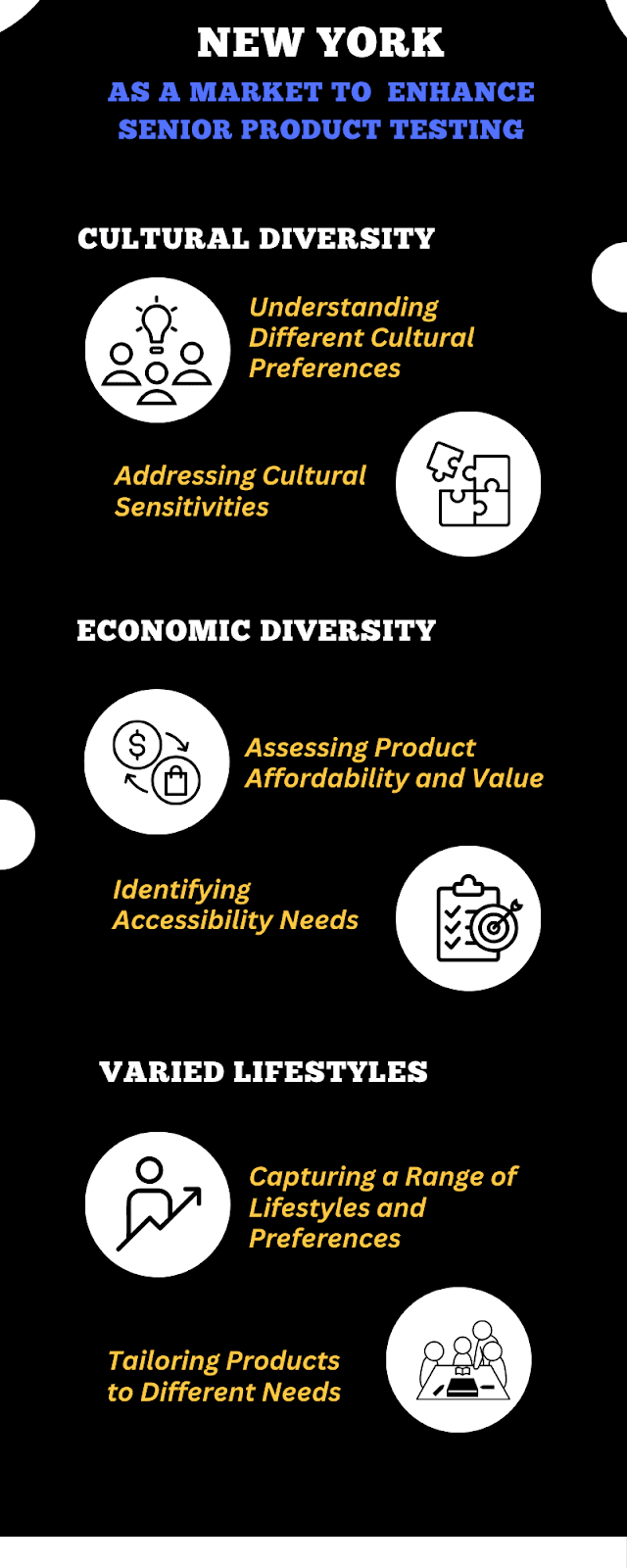
Culturele diversiteit
- Begrijpen van verschillende culturele voorkeuren: NYC is de thuisbasis van senioren met vele culturele achtergronden. Het testen van producten in deze omgeving helpt bedrijven om culturele voorkeuren en praktijken te begrijpen die de acceptatie en het gebruik van producten kunnen beïnvloeden.
- Omgaan met culturele gevoelighedenFeedback van ouderen met een diverse culturele achtergrond kan helpen bij het identificeren en aanpakken van culturele gevoeligheden. Zo zorgen we ervoor dat producten respectvol en aantrekkelijk zijn voor alle marktsegmenten.
Economische diversiteit
- Beoordelen van de betaalbaarheid en waarde van producten: Senioren uit New York komen uit verschillende economische achtergronden. Focusgroepen kunnen inzicht bieden in hoe verschillende prijsstrategieën en waardeproposities aanslaan bij senioren in verschillende financiële situaties.
- Identificeren van toegankelijkheidsbehoeften: Economische diversiteit kan verschillende toegang tot hulpbronnen onthullen, wat productbehoeften en -voorkeuren beïnvloedt. Deze informatie helpt bij het ontwerpen van inclusieve producten die inspelen op verschillende economische realiteiten.
Gevarieerde levensstijlen
- Het vastleggen van een scala aan levensstijlen en voorkeuren: NY senioren hebben diverse levensstijlen, van stedelijke professionals tot gepensioneerden met verschillende activiteitsniveaus. Focusgroepen kunnen benadrukken hoe verschillende levensstijlen het gebruik en de voorkeuren van producten beïnvloeden.
- Producten op maat maken voor verschillende behoeften:Inzichten uit een breed scala aan levensstijlen stellen bedrijven in staat om producten af te stemmen op specifieke behoeften, zoals mobiliteitshulpmiddelen voor actieve senioren of gebruiksvriendelijke technologie voor gebruikers die minder technisch onderlegd zijn.
Het ontwerpen van effectieve focusgroepen in NYC om producten voor senioren te testen

Om waardevolle en bruikbare inzichten te verzamelen van senior deelnemers aan focusgroepen, is het essentieel om de studie te ontwerpen met hun specifieke behoeften en voorkeuren in gedachten. Effectieve NYC focusgroepen om producten te testen voor het ontwerp van senioren zorgen voor zinvolle feedback en een positieve ervaring voor senior deelnemers.
Deelnemers werven: criteria en overwegingen
- Selectiecriteria: Stel duidelijke criteria op voor het selecteren van deelnemers, zoals leeftijdscategorie, gezondheidsstatus en specifieke interesses gerelateerd aan het product. Dit zorgt ervoor dat de focusgroep senioren omvat die de doelmarkt vertegenwoordigen.
- Diverse vertegenwoordiging: Streef naar diversiteit in etniciteit, sociaaleconomische status en levensstijl om verschillende perspectieven te verzamelen. De diverse bevolking van NYC biedt een kans om uiteenlopende inzichten te verzamelen.
- Stimulansen: Bied passende prikkels aan, zoals cadeaubonnen of een vergoeding voor tijd en reiskosten, om deelname te stimuleren en een positieve ervaring te garanderen.
Het aanpassen van het format voor seniorenbetrokkenheid
- Toegankelijke locatie: Kies een locatie die gemakkelijk toegankelijk is, met comfortabele zitplaatsen en voorzieningen voor mobiliteitshulpmiddelen. Fysieke toegankelijkheid is cruciaal voor oudere deelnemers.
- Vereenvoudigde taal: Gebruik duidelijke, directe taal in alle materialen en discussies. Vermijd technisch jargon dat voor sommige senioren onbekend kan zijn.
- Interactieve methoden: Integreer interactieve elementen, zoals praktische productdemonstraties of visuele hulpmiddelen, om deelnemers te betrekken en feedback te vergemakkelijken.
Zorgen voor toegankelijkheid in discussie en omgeving
- Technische ondersteuning: Bied technische assistentie voor alle digitale tools of apparaten die tijdens de focusgroep worden gebruikt. Zorg ervoor dat senioren vertrouwd zijn met de betrokken technologie.
- Moderatietechnieken: Gebruik ervaren moderators die bedreven zijn in het omgaan met senior deelnemers. De moderator moet geduldig en attent zijn, en voldoende tijd geven aan senioren om hun gedachten te uiten.
- Feedbackverzameling: Gebruik methoden die tegemoetkomen aan verschillende niveaus van comfort met technologie. Overweeg bijvoorbeeld om naast digitale tools ook papieren enquêtes of één-op-één interviews te gebruiken.
De resultaten evalueren

Praktische evaluatie zorgt ervoor dat de feedback wordt gebruikt om productontwikkeling, marketingstrategieën en de algehele betrokkenheid van de consument te verbeteren. Hier leest u hoe u de beoordeling van de resultaten van focusgroepen in NYC voor het testen van producten voor senioren kunt aanpakken:
Feedback van senioren interpreteren
- Identificeren van sleutelthema's: Bekijk de feedback om gemeenschappelijke thema's en patronen te identificeren. Zoek naar terugkerende problemen, voorkeuren en suggesties die productverbeteringen kunnen sturen.
- Segmenteren van gegevens: Analyseer de data door deze te segmenteren op basis van verschillende criteria, zoals leeftijd, gezondheidsstatus en levensstijl. Dit helpt te begrijpen hoe verschillende segmenten van de oudere bevolking het product ervaren.
- Beoordelen van bruikbaarheid en acceptatie: Evalueer feedback over bruikbaarheid en acceptatie van het product. Bepaal hoe goed het product voldoet aan de specifieke behoeften en voorkeuren van senioren en identificeer gebieden voor verbetering.
Belangrijke statistieken om bij te houden voor productontwikkeling gericht op senioren
- Gebruiksgemak: Meet hoe gemakkelijk senioren het product kunnen gebruiken en of het voldoet aan hun toegankelijkheidsbehoeften. Houd bij welke problemen gemeld worden en wat de suggesties voor verbetering zijn.
- Relevantie van kenmerken: Beoordeel het belang van verschillende functies vanuit het perspectief van de senioren. Bepaal welke functies het meest gewaardeerd worden en welke mogelijk aanpassingen of extra ondersteuning nodig hebben.
- Algemene tevredenheid: Meet de algehele tevredenheid met het product, inclusief tevredenheid met het ontwerp, functionaliteit en bruikbaarheid. Deze metriek helpt het potentiële succes van het product op de markt te begrijpen.
Aanpassen van productontwerp en marketing op basis van inzichten
- Ontwerpwijzigingen: Gebruik de feedback om de nodige aanpassingen te doen aan het ontwerp van het product, zodat het aansluit bij de voorkeuren en behoeften van senioren. Dit kan veranderingen in grootte, functionaliteit of bruikbaarheid inhouden.
- Marketingstrategieën: Pas marketingstrategieën aan op basis van inzichten verkregen uit de focusgroepen. Pas berichten aan om de meest aantrekkelijke kenmerken voor senioren te benadrukken en pak eventuele zorgen of barrières aan die zijn geïdentificeerd.
- Doorlopende feedbacklus: Zorg voor een continue feedbackloop met senior consumenten om het product te verfijnen en op de hoogte te blijven van veranderende behoeften en voorkeuren.
Over SIS Internationaal
SIS Internationaal biedt kwantitatief, kwalitatief en strategisch onderzoek. Wij bieden data, tools, strategieën, rapporten en inzichten voor besluitvorming. Wij voeren ook interviews, enquêtes, focusgroepen en andere marktonderzoeksmethoden en -benaderingen uit. Neem contact met ons op voor uw volgende marktonderzoeksproject.

 NL
NL  EN
EN  AR
AR  ZH
ZH  ZH_HK
ZH_HK  FR
FR  DE
DE  IT
IT  JA
JA  KO
KO  PL
PL  PT
PT  ES
ES