
ニューヨーク市のフォーカスグループを活用して高齢者向け製品をテストする

ニューヨーク市は世界で最も多様性に富んだ市場の 1 つであり、高齢者を含むさまざまな消費者層を対象に製品をテストするのに理想的な場所です。高齢者人口が急速に増加しているため、企業にはこの人口層の変化するニーズに応える製品を開発する絶好の機会があります。そのため、ニューヨーク市でフォーカス グループを使用して高齢者向け製品をテストすると、高齢者の好み、課題、期待に関する直接的な洞察が得られます。
ニューヨークのシニア市場を理解する
ニューヨーク市の高齢者人口は多く、多様性に富んでいるため、企業が製品を開発する際には、高齢者層を考慮することが非常に重要になります。 ニューヨークの高齢者 高齢者は、健康、ウェルネス、使いやすさ、ライフスタイルに合ったテクノロジーに重点を置くなど、独特の好みを持っていることがよくあります。さらに、多くの高齢者はこれまで以上にテクノロジーに精通しており、デジタル プラットフォーム、デバイス、サービスに積極的に関わっています。この複雑さにより、ニューヨークは高齢者が製品とどのように関わっているか、どのようなイノベーションが彼らのニーズに最も適しているかについての洞察を得るのに理想的な場所となっています。
それで…ニューヨーク市のフォーカス グループを使用して高齢者向け製品をテストする利点は何でしょうか?
ニューヨーク市のフォーカス グループを活用して高齢者向け製品をテストすると、いくつかの明確な利点があります。フォーカス グループが特に効果的である理由は次のとおりです。
製品の使いやすさとデザインに関する直接的なフィードバック
フォーカス グループを利用すると、企業は高齢者から製品の使いやすさや操作性に関する直接的なフィードバックを得ることができます。この直接的なフィードバックは、ユーザビリティの問題を特定し、設計を改善する上で非常に貴重です。
高齢者特有のニーズと嗜好に関する洞察
高齢者は、他の年齢層とは異なる特定の健康、快適性、アクセシビリティのニーズを持っています。フォーカス グループは、これらの好みを詳細に調査する機会を提供します。たとえば、高齢者は、操作のしやすさ、大きなテキスト サイズ、音声起動機能を優先する場合があります。
健康関連機能とアクセシビリティ機能のテスト
健康関連製品やアクセシビリティの向上を目的とした製品は、高齢者にとって非常に重要です。フォーカス グループは、これらの機能が高齢者ユーザーのニーズをどの程度満たしているかを評価できます。たとえば、新しい健康モニタリング デバイスやスマート ホーム システムのアクセシビリティ機能をテストすると、これらの製品が高齢者が直面する一般的な健康上の懸念や移動の問題にどの程度効果的に対処しているかがわかります。
シニアフォーカスグループに最適な製品の種類
ニューヨークでフォーカス グループを実施して高齢者向け製品をテストすると、この年齢層に特に適した製品がいくつか見つかります。どの製品が最も関連性の高いかを理解することで、企業はテスト戦略を調整し、最も価値のある洞察を得ることができます。
健康とウェルネス製品
健康維持と病状の管理を優先する高齢者にとって、健康とウェルネスに関連する製品は非常に重要です。このカテゴリには、次のようなアイテムが含まれます。
- 医療機器: 血圧計、血糖値測定器、補聴器。
- フィットネス機器: 低衝撃のトレーニング用エクササイズマシン、バランス補助器具、ウェアラブルフィットネストラッカー。
- 栄養補助食品: ビタミン、栄養補助食品、専門健康食品。
これらの製品を高齢者にテストすることで、使いやすさ、有効性、全体的な価値に対する好みが明らかになります。
テクノロジーと補助装置
日常生活をサポートし、生活の質を高めるテクノロジーは、多くの高齢者にとって不可欠です。フォーカス グループは、次の項目を評価するのに役立ちます。
- スマートホームデバイス: 音声制御アシスタント、スマートサーモスタット、ホームセキュリティシステム。
- 支援技術: 視覚および聴覚障害のためのデバイス、移動補助具、適応型ガジェット。
- コミュニケーションツール: 高齢者に優しいスマートフォン、シンプルなインターフェースを備えたタブレット、遠隔医療ソリューション。
フィードバックを得る これらのテクノロジーを活用することで、ユーザーフレンドリーで、高齢ユーザーの特定のニーズを満たすものになることが保証されます。
食品、飲料、家庭用品
食品や家事管理に関連する製品も不可欠です。高齢者は次のような特別なニーズや好みを持っている場合があります。
- コンビニ食品: 簡単に調理できる食事、食事制限に合わせたオプション、食事の配達サービス。
- キッチン用品人間工学に基づいた調理器具や簡易調理器具など、使いやすさを追求したツール。
- 家庭用補助器具: 清掃用品、安全装置、整理整頓ソリューション。
高齢者向け製品をテストするニューヨーク市のフォーカス グループは、これらの製品が高齢者のライフスタイルにどのように適合するか、また使いやすさを向上させるために必要な調整について洞察を得ることができます。
ニューヨークの多様性が高齢者向け製品のテストにどのように役立つか
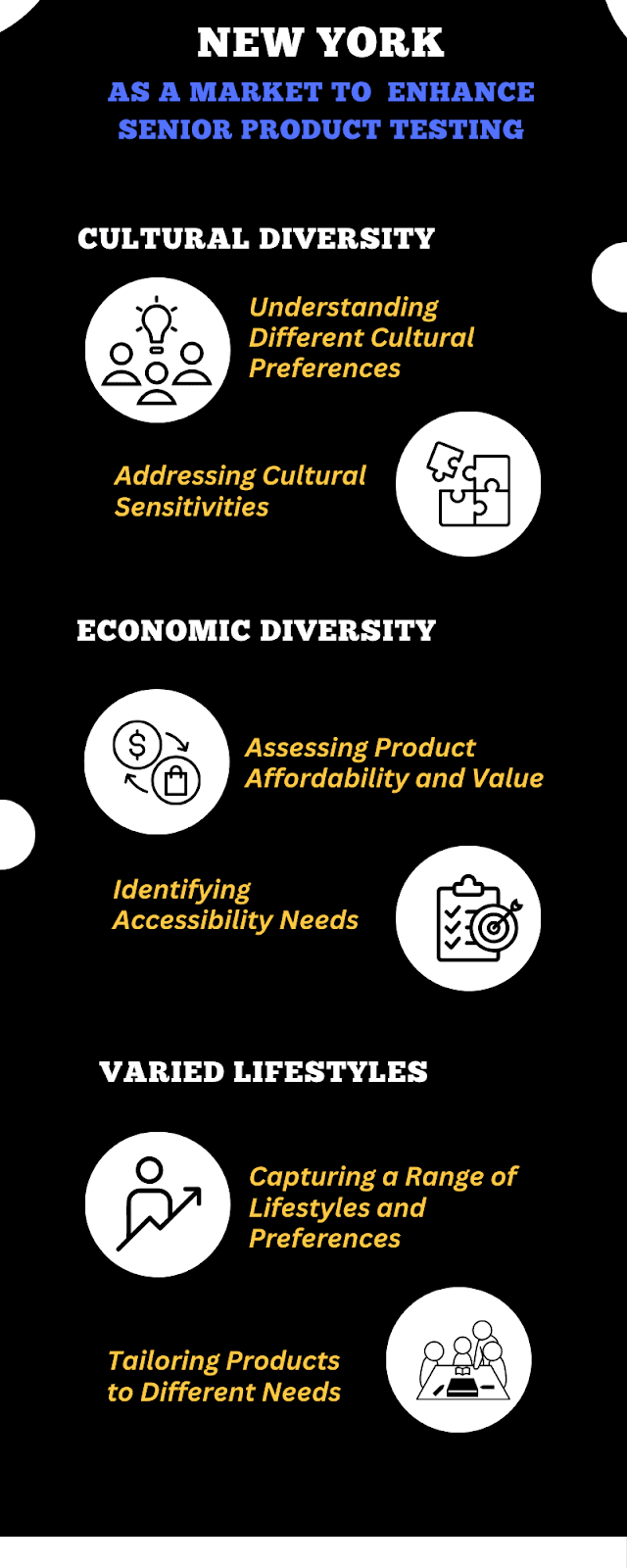
文化的多様性
- 異なる文化的嗜好を理解する: ニューヨーク市には、さまざまな文化的背景を持つ高齢者が住んでいます。この環境で製品をテストすることで、企業は製品の受け入れや使用に影響を与える可能性のある文化的嗜好や慣習を理解することができます。
- 文化的感受性への対応文化的に多様な高齢者層からのフィードバックは、文化的感受性を特定して対処するのに役立ち、製品がすべての市場セグメントに敬意を払われ、魅力的であることを保証します。
経済の多様性
- 製品の価格と価値の評価: ニューヨークの高齢者は、さまざまな経済的背景を持っています。フォーカス グループは、さまざまな価格戦略や価値提案が、さまざまな経済状況にある高齢者にどのように響くかについての洞察を提供します。
- アクセシビリティのニーズの特定: 経済の多様性により、さまざまなリソースへのアクセスが明らかになり、製品のニーズや好みに影響を及ぼします。この情報は、さまざまな経済の現実に対応する包括的な製品を設計するのに役立ちます。
多様なライフスタイル
- 多様なライフスタイルと嗜好を捉える: ニューヨークの高齢者は、都市部で働くプロフェッショナルから活動レベルが異なる退職者まで、多様なライフスタイルを持っています。フォーカス グループは、さまざまなライフスタイルが製品の使用や好みにどのように影響するかを強調できます。
- さまざまなニーズに合わせた製品のカスタマイズ幅広いライフスタイルからの洞察により、企業は活動的な高齢者向けの移動補助具や、技術にあまり詳しくないユーザー向けの使いやすい技術など、特定のニーズを満たす製品をカスタマイズできます。
高齢者向け製品をテストするための効果的なニューヨークのフォーカス グループの設計

フォーカス グループのシニア参加者から貴重で実用的な洞察を集めるには、シニアの特定のニーズと好みを考慮して調査を設計することが不可欠です。シニア向けデザインの製品をテストする効果的なニューヨーク市のフォーカス グループは、シニア参加者にとって有意義なフィードバックと前向きな体験を保証します。
参加者の募集:基準と考慮事項
- 選考基準: 年齢範囲、健康状態、製品に関連する特定の関心など、参加者を選択するための明確な基準を確立します。これにより、フォーカス グループにターゲット市場を代表する高齢者が含まれるようになります。
- 多様な表現: 民族、社会経済的地位、ライフスタイルの多様性を追求し、さまざまな視点を集めます。ニューヨーク市の多様な人口は、さまざまな洞察を得る機会を提供します。
- インセンティブ: 参加を奨励し、肯定的な体験を確実にするために、ギフト カードや時間や交通費の補償などの適切なインセンティブを提供します。
シニアエンゲージメントのためのフォーマットのカスタマイズ
- バリアフリー会場: 快適な座席と移動補助具を備えた、アクセスしやすい会場を選択してください。高齢の参加者にとって、物理的なアクセスのしやすさを確保することは非常に重要です。
- 簡体字すべての資料とディスカッションでは、明確でわかりやすい言葉を使用してください。上級者には馴染みのない専門用語は避けてください。
- インタラクティブな方法: 参加者の関心を引き、フィードバックを促進するために、実践的な製品デモンストレーションや視覚的な補助などのインタラクティブな要素を組み込みます。
議論と環境のアクセシビリティの確保
- テクニカルサポート: フォーカス グループ中に使用されるデジタル ツールやデバイスに関する技術サポートを提供します。高齢者が関連するテクノロジーに慣れていることを確認します。
- モデレーションテクニック: シニアの参加者と関わることに熟練した経験豊富なモデレーターを使用します。モデレーターは、シニアが自分の考えを述べるのに十分な時間を与えながら、忍耐強く注意深くなければなりません。
- フィードバック収集: テクノロジーに対するさまざまなレベルの快適さに対応する方法を活用します。たとえば、デジタル ツールに加えて、紙のアンケートや 1 対 1 のインタビューの使用を検討します。
結果の評価

実践的な評価により、フィードバックが製品開発、マーケティング戦略、および全体的な消費者エンゲージメントの強化に活用されることが保証されます。ここでは、高齢者向け製品をテストするためのニューヨーク市のフォーカス グループの結果のレビューに取り組む方法を説明します。
先輩からのフィードバックを解釈する
- 主要テーマの特定: フィードバックを確認して、共通のテーマとパターンを特定します。繰り返し発生する問題、好み、製品の改善につながる提案を探します。
- データのセグメント化: 年齢、健康状態、ライフスタイルなどのさまざまな基準に基づいてデータをセグメント化して分析します。これにより、高齢者層のさまざまなセグメントが製品をどのように認識しているかを理解するのに役立ちます。
- ユーザビリティと受容性の評価: 製品の使いやすさと受容性に関するフィードバックを評価します。製品が高齢者の特定のニーズと好みをどの程度満たしているかを判断し、改善すべき領域を特定します。
シニア向け製品開発で追跡すべき主要指標
- 使いやすさ: 高齢者が製品をどれだけ簡単に使用できるか、また製品が高齢者のアクセシビリティ ニーズを満たしているかを測定します。報告された問題点や改善の提案を追跡します。
- 機能の関連性: 高齢者の視点からさまざまな機能の重要性を評価します。どの機能が最も重視され、どの機能に調整や追加サポートが必要かを判断します。
- 全体的な満足度: デザイン、機能性、使いやすさなど、製品に対する全体的な満足度を測定します。この指標は、製品が市場で成功する可能性があるかどうかを理解するのに役立ちます。
洞察に基づいて製品設計とマーケティングを調整する
- 設計変更: フィードバックを使用して製品のデザインに必要な調整を加え、高齢者の好みやニーズに合うようにします。これには、サイズ、機能、または使いやすさの変更が含まれる場合があります。
- マーケティング戦略: フォーカス グループから得られた洞察に基づいてマーケティング戦略を調整します。高齢者にとって最も魅力的な機能を強調し、特定された懸念や障壁に対処するようにメッセージをカスタマイズします。
- 継続的なフィードバックループ: 高齢消費者との継続的なフィードバック ループを確立して、製品を改良し、変化するニーズや好みに対応します。
SISインターナショナルについて
SISインターナショナル 定量的、定性的、戦略的な調査を提供します。意思決定のためのデータ、ツール、戦略、レポート、洞察を提供します。また、インタビュー、アンケート、フォーカス グループ、その他の市場調査方法やアプローチも実施します。 お問い合わせ 次の市場調査プロジェクトにご利用ください。

 JA
JA  EN
EN  AR
AR  ZH
ZH  ZH_HK
ZH_HK  NL
NL  FR
FR  DE
DE  IT
IT  KO
KO  PL
PL  PT
PT  ES
ES