
Tirer parti des groupes de discussion de New York pour tester des produits destinés aux seniors

La ville de New York est l'un des marchés les plus diversifiés au monde, ce qui en fait un endroit idéal pour tester des produits auprès de différents segments de consommateurs, notamment les seniors. Avec une population de seniors en croissance rapide, les entreprises ont une occasion unique de développer des produits qui répondent aux besoins en constante évolution de cette population. C'est pourquoi le recours à des groupes de discussion à New York pour tester des produits destinés aux seniors permet d'obtenir un aperçu direct de leurs préférences, de leurs défis et de leurs attentes.
Comprendre le marché des seniors à New York
La population âgée de la ville de New York est nombreuse et diversifiée, ce qui en fait un groupe démographique essentiel que les entreprises doivent prendre en compte lors du développement de produits. Les seniors à New York Les seniors ont souvent des préférences distinctes, notamment en matière de santé, de bien-être, de facilité d’utilisation et de technologie adaptée à leur mode de vie. De plus, de nombreux seniors sont plus férus de technologie que jamais et utilisent activement les plateformes, les appareils et les services numériques. Cette complexité fait de New York un endroit idéal pour mieux comprendre la façon dont les seniors interagissent avec les produits et les innovations qui peuvent le mieux répondre à leurs besoins.
Alors… Quels sont les avantages d’utiliser des groupes de discussion à New York pour tester des produits destinés aux personnes âgées ?
Le recours à des groupes de discussion à New York pour tester des produits destinés aux personnes âgées offre plusieurs avantages distincts. Voici comment les groupes de discussion peuvent être particulièrement efficaces :
Commentaires directs sur la convivialité et la conception du produit
Les groupes de discussion permettent aux entreprises d'obtenir des retours de première main des seniors sur la facilité avec laquelle ils peuvent utiliser et naviguer dans un produit. Cette contribution directe est inestimable pour identifier les problèmes d'utilisabilité et apporter des améliorations de conception.
Informations sur les besoins et préférences uniques des aînés
Les personnes âgées ont des besoins spécifiques en matière de santé, de confort et d’accessibilité qui diffèrent de ceux des autres groupes d’âge. Les groupes de discussion offrent l’occasion d’explorer ces préférences en profondeur. Par exemple, les personnes âgées peuvent privilégier la facilité de manipulation, des tailles de texte plus grandes ou des fonctions à commande vocale.
Test des fonctionnalités liées à la santé et à l'accessibilité
Les produits liés à la santé et ceux conçus pour améliorer l’accessibilité sont essentiels pour les personnes âgées. Les groupes de discussion peuvent évaluer dans quelle mesure ces fonctionnalités répondent aux besoins des utilisateurs âgés. Par exemple, tester un nouvel appareil de surveillance de la santé ou une fonction d’accessibilité dans un système de maison intelligente peut révéler l’efficacité de ces produits pour répondre aux problèmes de santé ou de mobilité courants auxquels sont confrontés les personnes âgées.
Types de produits idéaux pour les groupes de discussion de personnes âgées
Lors de la conduite de groupes de discussion à New York pour tester des produits destinés aux seniors, certains produits sont particulièrement adaptés à cette tranche démographique. Comprendre quels produits sont les plus pertinents peut aider les entreprises à adapter leurs stratégies de test pour obtenir les informations les plus précieuses.
Produits de santé et de bien-être
Les produits liés à la santé et au bien-être sont particulièrement pertinents pour les personnes âgées, qui accordent souvent la priorité au maintien de leur santé et à la gestion de leurs problèmes de santé. Cette catégorie comprend des articles tels que :
- Dispositifs médicaux: Tensiomètres, glucomètres et prothèses auditives.
- Équipement de fitness:Appareils d'exercice pour les entraînements à faible impact, aides à l'équilibre et trackers de fitness portables.
- Compléments alimentaires:Vitamines, compléments alimentaires et aliments santé spécialisés.
Tester ces produits auprès des personnes âgées peut révéler leurs préférences en matière de facilité d’utilisation, d’efficacité et de valeur globale.
Technologie et appareils fonctionnels
La technologie qui facilite la vie quotidienne et améliore la qualité de vie est essentielle pour de nombreuses personnes âgées. Les groupes de discussion peuvent aider à évaluer :
- Appareils pour maison intelligente:Assistants à commande vocale, thermostats intelligents et systèmes de sécurité domestique.
- Technologie d'assistance:Appareils pour les déficiences visuelles et auditives, aides à la mobilité et gadgets adaptatifs.
- Outils de communication: Des téléphones intelligents adaptés aux personnes âgées, des tablettes avec des interfaces simplifiées et des solutions de télésanté.
Obtenir du feedback L’utilisation de ces technologies permet de garantir qu’elles sont conviviales et répondent aux besoins spécifiques des utilisateurs seniors.
Aliments, boissons et articles ménagers
Les produits liés à l'alimentation et à la gestion du ménage sont également essentiels. Les personnes âgées peuvent avoir des besoins ou des préférences particulières en ce qui concerne :
- Plats cuisinés:Des repas faciles à préparer, des options adaptées à chaque régime alimentaire et des services de livraison de repas.
- Gadgets de cuisine:Des outils conçus pour être faciles à utiliser, tels que des ustensiles ergonomiques et des appareils de cuisson simplifiés.
- Aides ménagères: Produits de nettoyage, dispositifs de sécurité et solutions d'organisation.
Les groupes de discussion de New York visant à tester des produits destinés aux personnes âgées peuvent fournir des informations sur la manière dont ces produits s'adaptent au mode de vie des personnes âgées et sur les ajustements nécessaires pour améliorer la convivialité.
Comment la diversité à New York aide à tester des produits pour les seniors
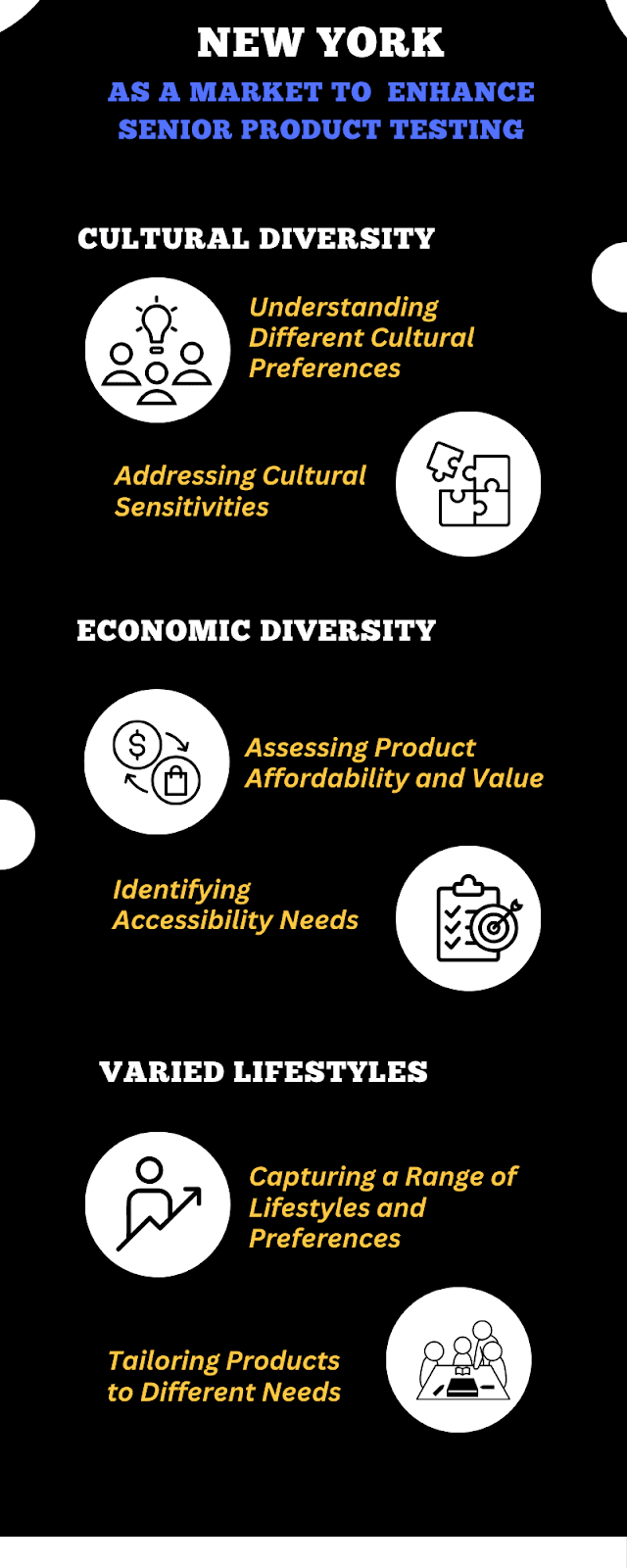
Diversité culturelle
- Comprendre les différentes préférences culturelles:New York accueille des seniors issus de milieux culturels très divers. Tester des produits dans cet environnement permet aux entreprises de comprendre les préférences et pratiques culturelles susceptibles d'influencer l'acceptation et l'utilisation des produits.
- Prendre en compte les sensibilités culturelles:Les commentaires d’une population âgée culturellement diversifiée peuvent aider à identifier et à répondre aux sensibilités culturelles, garantissant ainsi que les produits sont respectueux et attrayants pour tous les segments de marché.
Diversité économique
- Évaluation de l'accessibilité et de la valeur des produits:Les seniors de New York viennent de milieux économiques divers. Les groupes de discussion peuvent donner un aperçu de la manière dont différentes stratégies de tarification et propositions de valeur trouvent un écho auprès des seniors dans différentes situations financières.
- Identifier les besoins en matière d’accessibilité:La diversité économique peut révéler des différences d’accès aux ressources, influençant les besoins et les préférences en matière de produits. Ces informations aident à concevoir des produits inclusifs qui répondent à différentes réalités économiques.
Des modes de vie variés
- Capturer une gamme de styles de vie et de préférences:Les seniors de New York ont des modes de vie variés, allant des professionnels urbains aux retraités aux niveaux d'activité variés. Les groupes de discussion peuvent mettre en évidence l'impact des différents modes de vie sur l'utilisation des produits et les préférences.
- Adaptation des produits aux différents besoins:Les informations issues d’un large éventail de modes de vie permettent aux entreprises d’adapter leurs produits pour répondre à des besoins spécifiques, tels que des aides à la mobilité pour les personnes âgées actives ou des technologies faciles à utiliser pour les utilisateurs moins férus de technologie.
Concevoir des groupes de discussion efficaces à New York pour tester des produits destinés aux seniors

Pour recueillir des informations utiles et exploitables auprès des participants seniors lors des groupes de discussion, il est essentiel de concevoir l'étude en tenant compte de leurs besoins et préférences spécifiques. Des groupes de discussion efficaces à New York pour tester des produits destinés aux seniors garantissent un retour d'information significatif et une expérience positive pour les participants seniors.
Recrutement des participants : critères et considérations
- Critères de sélection: Établissez des critères clairs pour sélectionner les participants, tels que la tranche d’âge, l’état de santé et les intérêts spécifiques liés au produit. Cela garantit que le groupe de discussion comprend des personnes âgées qui représentent le marché cible.
- Représentation diversifiée:Visez la diversité en termes d'ethnicité, de statut socio-économique et de mode de vie pour recueillir des points de vue variés. La population diversifiée de New York offre l'opportunité de saisir des points de vue variés.
- Des incitations:Offrez des incitations appropriées, telles que des cartes-cadeaux ou une compensation pour le temps et les déplacements, pour encourager la participation et garantir une expérience positive.
Adapter le format à l'engagement des seniors
- Lieu accessible: Choisissez un lieu facilement accessible, avec des sièges confortables et des aménagements pour les aides à la mobilité. Il est essentiel de garantir l'accessibilité physique des participants seniors.
- Langage simplifié:Utilisez un langage clair et simple dans tous vos documents et discussions. Évitez le jargon technique qui peut être inconnu de certains seniors.
- Méthodes interactives:Intégrez des éléments interactifs, tels que des démonstrations pratiques de produits ou des aides visuelles, pour impliquer les participants et faciliter la rétroaction.
Assurer l'accessibilité dans les discussions et l'environnement
- Assistance technique:Fournir une assistance technique pour tous les outils ou appareils numériques utilisés pendant le groupe de discussion. Veiller à ce que les aînés soient à l'aise avec la technologie utilisée.
- Techniques de modération: Faites appel à des modérateurs expérimentés et capables de dialoguer avec les participants seniors. Le modérateur doit être patient et attentif, en laissant suffisamment de temps aux seniors pour exprimer leurs pensées.
- Collecte de commentaires:Utilisez des méthodes qui s'adaptent aux différents niveaux de confort avec la technologie. Par exemple, envisagez d'utiliser des enquêtes papier ou des entretiens individuels en plus des outils numériques.
Évaluation des résultats

L'évaluation pratique garantit que les commentaires sont utilisés pour améliorer le développement de produits, les stratégies marketing et l'engagement global des consommateurs. Voici comment aborder l'examen des résultats des groupes de discussion de New York pour tester des produits destinés aux personnes âgées :
Interprétation des commentaires des aînés
- Identifier les thèmes clés: Examinez les commentaires pour identifier les thèmes et les modèles communs. Recherchez les problèmes récurrents, les préférences et les suggestions qui peuvent guider les améliorations du produit.
- Segmentation des données:Analysez les données en les segmentant en fonction de différents critères, tels que l'âge, l'état de santé et le mode de vie. Cela permet de comprendre comment les différents segments de la population âgée perçoivent le produit.
- Évaluation de la convivialité et de l'acceptation: Évaluer les commentaires sur la convivialité et l'acceptation du produit. Déterminer dans quelle mesure le produit répond aux besoins et aux préférences spécifiques des personnes âgées et identifier les domaines à améliorer.
Indicateurs clés à suivre pour un développement de produits axé sur les seniors
- Facilité d'utilisation: Mesurez la facilité avec laquelle les personnes âgées peuvent utiliser le produit et s'il répond à leurs besoins en matière d'accessibilité. Suivez les difficultés signalées et les suggestions d'amélioration.
- Pertinence des fonctionnalités:Évaluez l'importance des différentes caractéristiques du point de vue des aînés. Déterminez les caractéristiques les plus appréciées et celles qui pourraient nécessiter des ajustements ou un soutien supplémentaire.
- Satisfaction globale:Évaluez la satisfaction globale à l'égard du produit, notamment la satisfaction à l'égard de la conception, de la fonctionnalité et de la facilité d'utilisation. Cette mesure permet de comprendre le succès potentiel du produit sur le marché.
Ajuster la conception et le marketing des produits en fonction des informations recueillies
- Modifications de conception:Utilisez les commentaires pour apporter les ajustements nécessaires à la conception du produit, en veillant à ce qu'il corresponde aux préférences et aux besoins des personnes âgées. Cela peut impliquer des changements de taille, de fonctionnalité ou de facilité d'utilisation.
- Stratégies de marketing:Adapter les stratégies marketing en fonction des informations recueillies lors des groupes de discussion. Adapter les messages pour mettre en valeur les caractéristiques les plus attrayantes pour les aînés et répondre aux préoccupations ou aux obstacles identifiés.
- Boucle de rétroaction continue:Établir une boucle de rétroaction continue avec les consommateurs seniors pour affiner le produit et rester à l’écoute de l’évolution des besoins et des préférences.
À propos de SIS International
SIS International propose des recherches quantitatives, qualitatives et stratégiques. Nous fournissons des données, des outils, des stratégies, des rapports et des informations pour la prise de décision. Nous menons également des entretiens, des enquêtes, des groupes de discussion et d’autres méthodes et approches d’études de marché. Contactez nous pour votre prochain projet d'étude de marché.

 FR
FR  EN
EN  AR
AR  ZH
ZH  ZH_HK
ZH_HK  NL
NL  DE
DE  IT
IT  JA
JA  KO
KO  PL
PL  PT
PT  ES
ES