

Low-incidence diseases present a paradox in healthcare. On the one hand, the number of people who are affected by any rare disease in their lifetime is low: just 1 in 17 people are affected. Yet, according to the World Health Organization, more than 7,000 identified low-incidence diseases collectively impact 300 million people worldwide. 70% of cases begin in childhood, and 150 conditions account for 80% of diagnosed patients.
These diseases’ individual rarity obscures the collective challenge. Low-incidence diseases present a major public health problem today. Combined the problems of recruiting patients with low-incidence disease complicate and ultimately prolong the development of new drugs and treatment methods.
The challenges begin with diagnosis.
Recruitment challenges begin with diagnosing rare diseases
Before recruitment of patients for interviews, surveys, or clinical trials can begin, there are challenges in simply diagnosing rare diseases. First, doctors are far less experienced and knowledgeable about low-incidence diseases because they have fewer opportunities to become familiar with them.
This leads to a longer, fragmented patient journey fraught with multiple misdiagnoses, interactions with many specialists, and treatment of the wrong conditions. All the while, the clock is ticking for patients as conditions worsen and some become untreatable and irreversible.
Making matters more challenging, patient populations can vary widely across conditions. The chart below shows several examples of low-incidence diseases and their associated prevalence per million people.
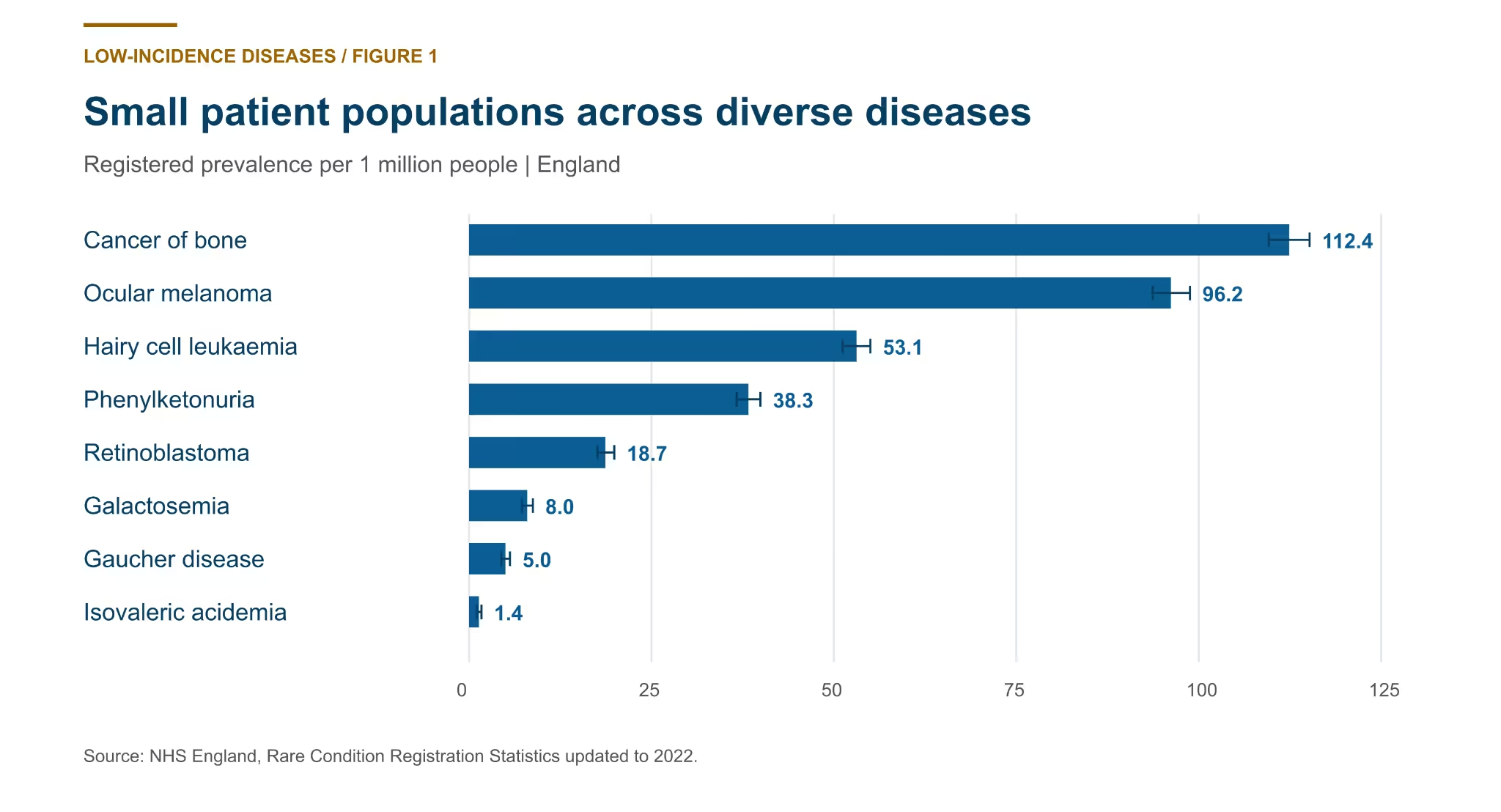
Why recruiting patients with low-incidence disease is one of healthcare’s toughest challenges
Patients with low-incidence disease are difficult to recruit because they are likely spread across diverse regions and across fragmented healthcare systems. Plus, as discussed above, individual physicians encounter fewer cases, which limits the opportunity to connect the dots across unfamiliar symptoms. It follows that until patients receive the right diagnosis, they are inaccessible to the recruitment process.
However, even after diagnosis, an identified patient population does not translate into the eligible population for interviews, surveys, or trials. Clinical trials, in particular, may require a particular genetic variant, disease stage, treatment history, or age group. Each criterion narrows an already limited pool. Travel, fatigue, caregiver responsibilities, and competing studies can further restrict participation.
Still, even after patients are recruited for clinical trials, up to 81% will not pass screening, compared with 57% for non-rare diseases.
Research methods to identify qualified recruits for clinical trials
Research methods of an effective recruitment strategy can span multiple channels, with each serving a specific purpose. At SIS International, we’ve been performing successful rare disease market research for leading healthcare organizations for over 40 years. Over that time, we’ve developed a comprehensive process with a proven track record.
- Begin with desk research. Desk research, or secondary research, can deliver patient association mapping and can identify physician offices, specialist clinics, treatment centers, registries, and relevant online communities. The aim is to identify where patients receive diagnosis and ongoing care.
- Work with patient associations. Disease-specific patient associations, such as the National Gaucher Foundation, can help with the recruitment process. Associations like this advocate for patients and families and can even post opportunities for clinical trials, focus groups, and patient-experience research. Involve them early in the process rather than approaching only when recruitment falls behind.
- Engage physicians. Contact physician offices to establish a process for referrals that allows interested patients to initiate contact or authorizes an introduction. Further, develop appropriate referral incentives for low-incidence disease patients.
- Use social media strategically. Selective social media use supports recruitment. Interacting with moderated patient communities can provide more relevant reach than broad advertising, though advertising can also be helpful.
- Utilize advertising. When geography matters, advertising in local newspapers, community publications, and local radio near specialist recruitment centers can help reach broader audiences.
- Reduce participation barriers. Remote interviews, flexible scheduling, relevant materials, and appropriate incentive structures can make research more practical and accessible. This is especially important for patients who are geographically dispersed and whose treatments may limit mobility.
Building a patient panel and understanding its value
Two broad approaches to recruitment exist: study-specific recruitment and ongoing patient-panel recruitment. Both methods use the steps outlined above but serve different goals.
- Study-specific recruitment: Researchers recruit patients for an interview, survey, or clinical trial. Participation ends when the study is complete, and there is no further involvement.
- Ongoing patient-panel recruitment: Researchers build and maintain a group of patients who agree to be contacted about future research opportunities.
The key difference is that one recruits for a one-time study while the other focuses on building an ongoing research resource. An in-house panel is most attractive when repeated research needs justify sustained investment. In these cases, the value of ongoing patient panels exceeds that of a one-off approach.
AI’s evolving role in recruiting patients with low-incidence disease
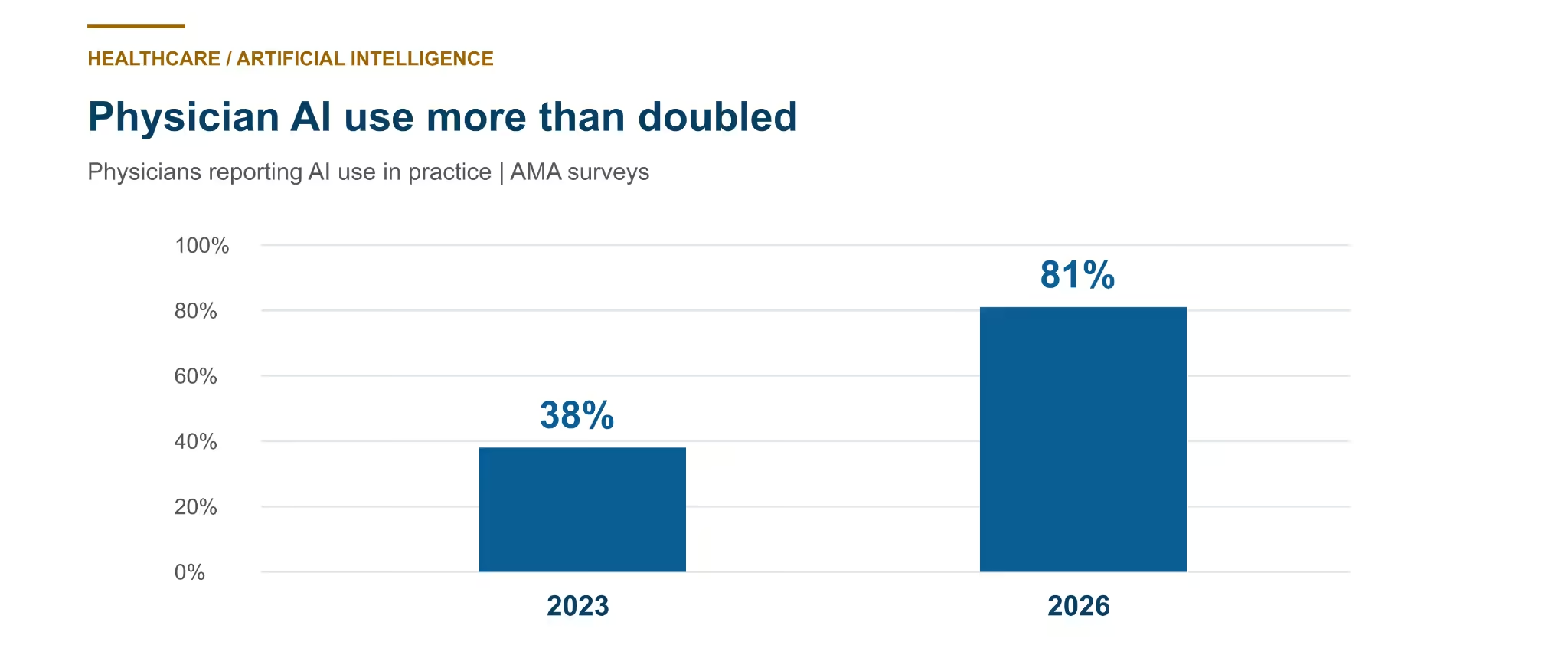
Adoption of artificial intelligence by physicians is on the rise. In fact, a 2026 study by the American Medical Association (AMA) found that physicians’ use of AI more than doubled from 2023 to 2026, rising from 38% up to 81% today. This will no doubt improve patient care and doctors’ ability to gain insights from Big Data that have remained locked away until now.
As AI becomes further embedded into healthcare practices, it is natural to presume that effective diagnosis of rare diseases will improve as the underlying data contained in electronic health records (EHR) and other systems of record become accessible and useful in new ways. At the same time, machine learning and algorithm-driven case finding methods are becoming powerful tools for speeding up the diagnosis of low-incidence diseases.
One example comes from Mendelian, a rare-disease technology company. The company makes MendelScan, an algorithm designed to search through the massive amounts of data contained in EHRs. The technology received the National Health Service England (NHS) AI in Health and Care Award in 2024 for demonstrating its ability to produce positive predictive values for identifying patients before official diagnosis.
As AI’s role in healthcare continues to evolve, the fundamental recruiting methods for low-incidence diseases will follow suit.
Recruitment must be centered around patients
Recruiting patients with low-incidence diseases starts with understanding who they are, earning their trust, and making participation fit their lives.
Effective recruitment requires deep demographic knowledge, trusted relationships, and research that is centered on patients’ lives. Our coordinated approach combines desk research, physician referrals, advocacy partnerships, online communities, and meticulously established and routinely maintained patient panels.
At SIS International, we specialize in planning and executing research methods that recruit hard-to-reach patient populations. Contact us today to discuss your target populations, research objectives, and recruitment feasibility—and design an approach that brings experience and strategic insights to bear against the challenges of low-incidence diseases.
Learn more about SIS healthcare market research.
End Notes
1 Mendelian. Rare Disease Case Finding & Early Diagnosis. Accessed September 25, 2026.
2 WHO. Rare diseases: A global health priority for equity and inclusion. May 27, 2025
3 Nguengang Wakap, S., Lambert, D.M., Olry, A. et al. Estimating cumulative point prevalence of rare diseases: analysis of the Orphanet database. Eur J Hum Genet 28, 165–173. February 2020.
4 Applied Clinical Trials Online. Proliferation of Rare Diseases R&D Necessating Novel Strategies. September 1, 2019
5 AMA. AMA: AI usage among doctors doubles as confidence in technology grows. March 12, 2026.
6 Mendelian. AI in Healthcare Award: Final Report. December 2024.