
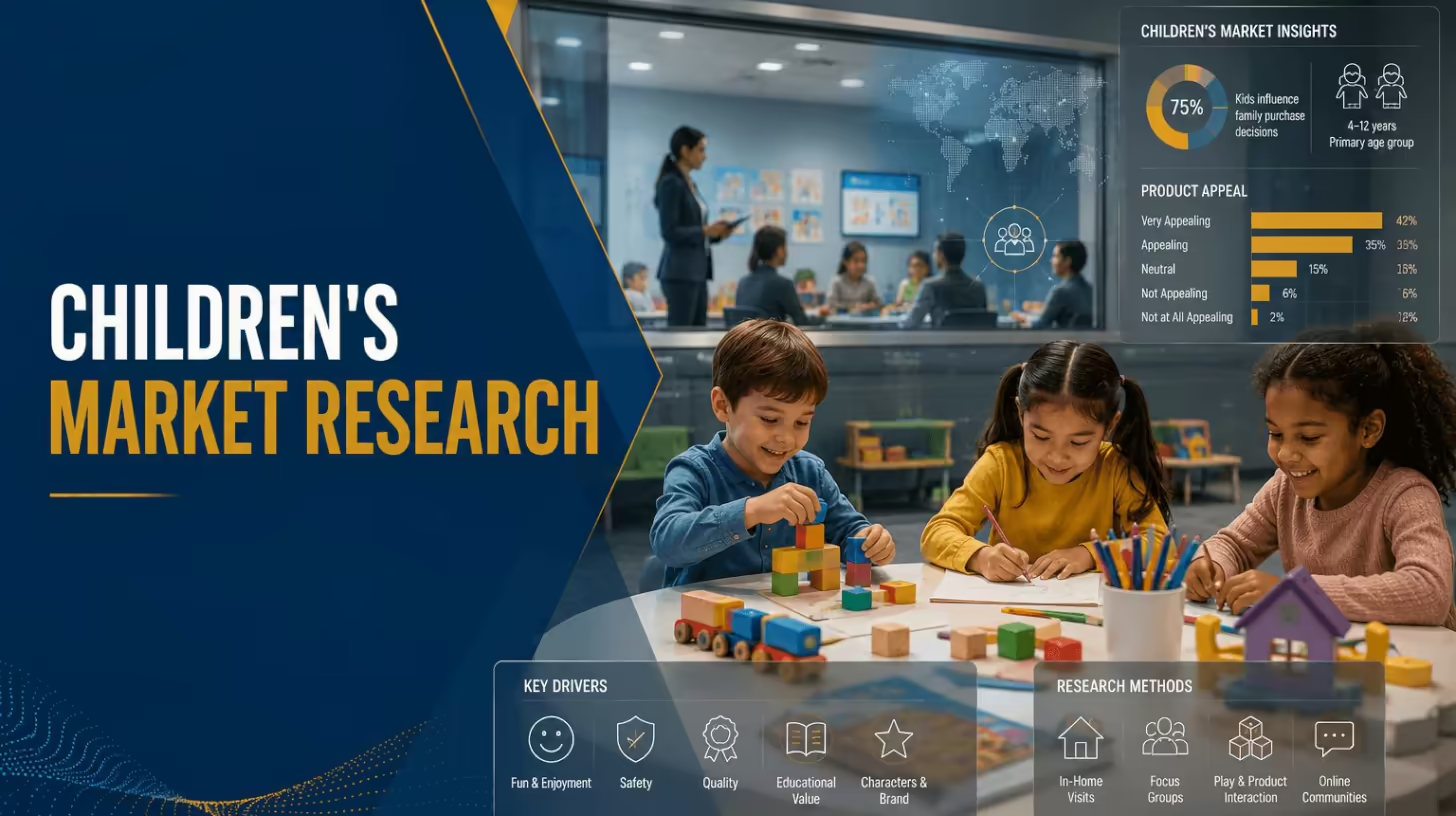
Fielding children and youth market research is a vital part of developing products targeting this demographic group. Or rather groups—how a 16-year-old buys is quite different from a six-year-old. Market research can help you understand the nuances and find the opportunities for your product or service.
How big is the child and youth market?
The U.S. has roughly 68.4 million children ages 1 through 17. The age breakdown of this target breaks down into three distinct age-bracketed markets:
- Ages 1–7: 26.6 million
- Ages 8-11: 16.3 million
- ages 12–17 25.5 million
Top product categories for the child and youth markets
The U.S. toy market topped $30.3 billion at retail in 2025. U.S. consumer spending on children’s and infants’ clothing reached $27.6 billion in 2025. Toys and clothing are the categories that first come to mind, yet opportunities extend into over a dozen other categories:
- Books and educational products
- Sports and outdoor products
- Technology and gaming
- School supplies
- Personal care and beauty
- Food and snacks
- Furniture and room décor
- Arts and crafts
- Collectibles
- Travel and activity products
- Health and wellness products
Evolving decision-makers and trend dynamics
In the beginning, parents make nearly every purchase decision. As children age, they have greater influence on choices and begin to use their own money to make purchases. The needs and wants of children also change as they age. How they think, gather information, and form opinions evolves as they approach adulthood. The role of the parent evolves as children grow, as well.
More than who makes the decisions evolves from one market to the next. What matters varies. Here’s a breakdown by age bracket
Ages 1–7
In this age bracket, parents make the decisions. Children influence those decisions to some degree. A baby can reject a food or refuse to play with a specific toy. An older child in a store can ask for a brand of cereal, want to see dinosaurs at a museum, or ask for a toy. The parent retains the final say. In market research, it is important to understand that for young children, it is a two-person market involving the child and the parent.
Ages 8–11
In this age bracket, the child becomes a consumer. In tween years, children become more independent. They have stronger preferences about clothing, entertainment, technology, toys, beauty, and brands. They also begin to discover products through social media, gaming, influencers, friends, and online shopping. Parents provide guidance, but allow more decision-making autonomy. What the child wants becomes the critical market research question, supported by researching what parents think.
Ages 12–17
Teens have much more control over what they do, watch, use, wear, and buy. Fashion, beauty, technology, gaming, music, sports, food, and social platforms stimulate needs and wants. Peers exert considerable influence. Many have jobs and have their own money. Parents may still provide guidance and can function as gate keepers, but their decision-making power is much reduced. Research needs to uncover what teens choose and what influences their choices.
Children and youth market research is not like adult research
You cannot simply apply approaches that work for adults to this market. Children communicate differently. Their attention spans differ. They may have difficulty explaining why they like something. They may also tell you what they think you want to hear. And then there is the evolving role parents make in buying decisions to consider. Market research with children and youth typically involves combining several methods. And it always involves getting parental permission, protecting the child’s privacy, and designing age-appropriate experiences.
Focus groups with parents and children
Focus groups that capture both perspectives can be helpful, not just in the answers you get from each, but how they interact with each other. Running part of the group as just children and just parents, then doing a joint session gives you perspectives. Parents can tell you what they want and why, their problems, what they avoid, what they worry about, and what influences their decisions. Children can tell you how they learn about products and what they notice. They can tell you what they like, what they think is fun, what is embarrassing, and what they reject. They can tell you what their friends like, what they aspire to, and what they want to own.
Quantitative surveys
With older children, well-designed surveys can uncover levels of product awareness, purchase intent, preference, usage, influences, price sensitivity, and more. Surveying parents at the same time allows you to compare answers for insight into the interplay of how opinions are formed and purchase decisions are made.
Ethnographic research
Watching what people do can tell you more than asking people what they say they do. At home, you can watch a parent and child interact with a product, listen to what they say, and see their reactions. While out shopping, you can observe the interplay between the child and parent within a particular category, gaining insight int purchase behavior at the point of purchase.
One-on-one interviews
Face-to-face, over the phone, or by video, interviews can be an effective way to gain insight. You can interact with children and their parents, separately or together, to find out what they think, products they use or don’t use, and why. You can explore what they wish they had and how they influence or make decisions. For younger children, you can use different techniques including drawing, sorting pictures, and interacting with products.
Research in action
Here are several examples of child and youth market research in action.
LEGO researches kids 1–7
LEGO embarked on a large global research program of 61,532 kids in 36 markets. The goal was to understand what new trends are influencing play. The company used quantitative surveys to explore attitudes, what inspires creativity, barriers to play, and social trends. Focus groups explored various ways parents and kids learn about and connect with different parts of the LEGO brand. An interesting aspect to this research was using play for insights. Researchers gave children a challenge and asked them to develop solutions through play with the product. Observation and interviews followed.
Children’s apparel exploration in ages 8–11
Child and youth market research into apparel can change marketing strategies and product presentation. A children’s retailer that did well with babies and toddlers was losing customers as they aged. The company wanted to better understand how clothing purchase decisions change for children age 6 and older by talking with both kids and parents. They fielded a survey to explore attitudes toward children’s clothing purchases and how the purchase journey changed with age. The research included a technique called MaxDiff to uncover what matters most and applied multivariate analytics to identify attitudes, buying occasions, and consumer segments. Looking at competitors, they mapped the brand across traditional and emerging alternatives.
Ages 12–17
The teen brand Abercrombie & Fitch had fallen out with this fickle and fashion-conscious segment. Listening to customers and responding to their preferences drove a rare retail comeback at a time when brick-and-mortar and mall shopping were in decline. The brand’s previous focus on exclusivity, being the brand for popular kids, no longer worked. Research uncovered a need to be more inclusive, to win in the basics, and to focus on fit. Watching trends in a fast fashion business model meant managing inventory to be on trend, not chasing trends. In addition to focus groups and surveys, the brand partnered with influencers to have conversations with highly targeted audiences to get direct insights to trends and preferences.
Turn what you learn into opportunities.
The best market research doesn’t just describe your target. It shows you where to focus next. New needs, new parent concerns, changing habits, and evolving relationships with products and brands are all insights that affect decision-making and choice.