Luxury brands operate differently from most consumer businesses because their value depends on more than the functional quality of the product.
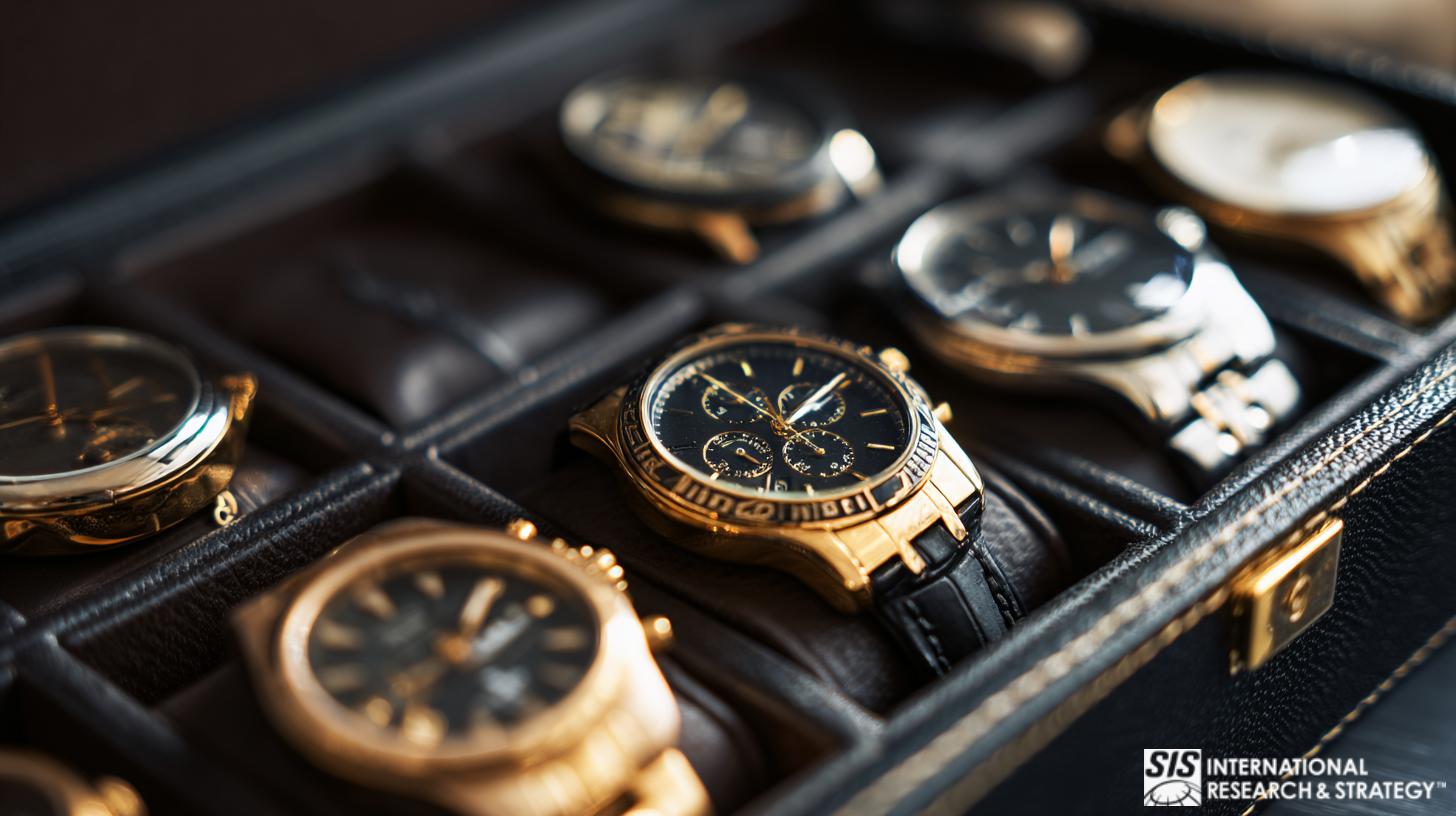
A watch can tell time without costing $50,000. A handbag can carry personal items without costing several thousand dollars. A car can provide transportation without being a Ferrari or Lamborghini. Luxury consumers are also paying for design, craftsmanship, scarcity, heritage, service, status, and the experience associated with the brand.
That makes luxury brand market research unusually important.
Traditional measures such as price sensitivity and purchase intent still matter, but luxury companies also need to understand less tangible questions. What makes a product feel exclusive? When does a higher price increase desirability rather than reduce demand? How much does the physical store matter? Which customers value heritage, and which are more interested in novelty? How should a global brand change its approach between New York, Milan, Tokyo and Dubai without weakening its identity?
The answers can vary significantly by product category and region.
What Defines a Luxury Brand?
There is no single price that turns a product into a luxury product.
Luxury can include high-end watches, jewelry, designer fashion and leather goods, automobiles, hotels, cosmetics, wines and spirits, and other premium products. Price is an obvious characteristic, but it is only one component.
Luxury brands generally compete through a combination of:
- High-quality materials and craftsmanship
- Distinctive design
- Brand heritage
- Scarcity or controlled distribution
- Personalization
- High levels of service
- Strong cultural recognition
- Premium pricing
- Exclusive retail environments
These characteristics help explain why luxury brands cannot compete only by maximizing sales volume.
Exclusivity itself can be part of the product.
That creates a difficult balance. Brands need enough customers to grow while maintaining enough scarcity and distinction to justify premium pricing.
Recent results across the sector show how uneven that balance can become. LVMH generated €80.8 billion in revenue in 2025, but performance differed considerably across business groups and regions. Richemont similarly reported strong jewelry growth while its specialist watchmakers faced weaker demand in parts of Asia.
Understanding those differences requires research that goes beyond global sales totals.
Market Research Methods for Luxury Brands
Luxury consumers can be difficult to study using a single research method. The customer base may be relatively small, purchases can be infrequent and motivations are not always captured well through standardized survey questions.
Luxury market research therefore often combines qualitative and quantitative methods.
Qualitative In-Depth Interviews
In-depth interviews (IDIs) allow researchers to explore the motivations behind luxury purchases in detail.
Interviews can be conducted face-to-face, by telephone or through video calls depending on the market and participant.
Researchers can explore questions such as:
- Why does a customer prefer one luxury brand over another?
- What creates a sense of exclusivity?
- How important is craftsmanship?
- How does the customer evaluate price?
- What role does the store experience play?
- How important are sales associates and personal relationships?
- Does the customer buy luxury products locally or while traveling?
- How does the customer respond to artificial intelligence or digital experiences?
For ultra-high-net-worth consumers and buyers of products such as high jewelry, watches and automobiles, in-depth interviews can reveal motivations that would be difficult to capture through a large survey alone.
Store Intercepts
The physical retail environment remains particularly important in luxury.
Store intercepts allow researchers to speak with consumers close to the moment when they are browsing or purchasing a product.
Research can examine why consumers entered a particular store, what they noticed, which products they considered, how they interacted with staff and whether the experience changed their perception of the brand.
This matters because the luxury store itself can function as part of the brand.
A flagship on Fifth Avenue, Avenue Montaigne or Via Montenapoleone is not simply a place where inventory is kept. Architecture, art, service and product presentation all communicate the brand’s position.
Quantitative Surveys
Quantitative surveys provide a broader view of consumer attitudes.
Luxury brands can measure:
- Brand awareness
- Purchase frequency
- Brand consideration
- Customer satisfaction
- Preferred products
- Attitudes toward pricing
- Perceptions of exclusivity
- Online versus in-store purchasing
- Interest in personalization
- Use of resale platforms
- Attitudes toward sustainability
- Acceptance of artificial intelligence
- Differences across countries and customer segments
Quantitative research becomes especially useful when a global luxury company needs to determine whether an insight from qualitative interviews applies across a larger market.
Case Study: Tiffany & Co. and the North American Luxury Experience
Tiffany & Co. provides a useful North American case study because it shows how physical retail can remain valuable even as luxury shopping becomes more digital.
After LVMH acquired Tiffany, the company invested heavily in products, marketing and stores. Its Fifth Avenue flagship in New York, known as The Landmark, reopened after a major renovation designed to combine jewelry, art, architecture and hospitality.
The investment produced measurable results. LVMH reported that The Landmark achieved record revenue in 2024. Since LVMH acquired Tiffany, high-jewelry revenue has quadrupled and operating profit has doubled.
Tiffany has since used the New York concept as a model for other locations. In 2025, it continued rolling out Landmark-inspired stores globally, while collections including HardWear, Knot and Bird on a Rock performed strongly.
What Worked
Tiffany treated the physical store as more than a distribution point.
The Landmark creates an environment around the product through art, architecture, heritage and personalized service. That is particularly relevant for expensive purchases where consumers may still value seeing products and interacting with specialists in person.
For luxury market researchers, the case highlights the importance of studying the entire customer experience.
A survey can measure satisfaction. Store intercepts and qualitative interviews can help explain which parts of the environment actually increase desirability and purchasing behavior.
Case Study: Ferrari and Personalization in European Luxury
Luxury automobiles provide another example of how premium brands create value beyond the underlying product.
Ferrari operates under deliberate scarcity. Rather than attempting to maximize vehicle production, it manages supply, model mix and customer access while investing heavily in personalization.
Ferrari’s financial reporting repeatedly identifies personalization as a contributor to revenue and profitability. Its 2025 financial guidance specifically cited strong personalization alongside favorable product and country mix.
For buyers, personalization can include choices involving paint, materials, interior finishes and other specifications that make individual vehicles more distinctive.
What Worked
Ferrari demonstrates that a luxury brand does not always need more customers to create more value.
Personalization increases the economic value of individual relationships while reinforcing the idea that the product is unusual and individually configured.
This creates a useful market research question for other luxury companies: which forms of personalization actually increase perceived exclusivity?
In-depth interviews can identify the options customers value enough to pay for, while quantitative research can test demand across a broader population of qualified buyers.
The distinction matters because personalization that feels meaningful can increase luxury value. Personalization that feels automated or superficial can have the opposite effect.
Case Study: APAC and the Changing Luxury Watch Market
Asia-Pacific demonstrates why luxury companies need regional research rather than relying on global assumptions.
Richemont owns specialist watchmakers including Vacheron Constantin, Jaeger-LeCoultre, IWC Schaffhausen and A. Lange & Söhne. In its fiscal year ending March 2025, the company’s Specialist Watchmakers sales fell 13%.
The decline was driven primarily by weakness in Asia-Pacific, particularly China, Hong Kong and Macau.
The broader company performed much better. Richemont’s jewelry maisons, including Cartier and Van Cleef & Arpels, grew sales by 8%, while sales in the Americas rose 16%, Japan increased 25% and the Middle East and Africa rose 15%.
By 2026, conditions had begun changing again. Richemont reported that Asia-Pacific sales increased 21% at constant exchange rates in the quarter ending June 2026, while Japan increased 36%.
What Worked and What Changed
The case shows the danger of treating “APAC luxury consumers” as a single market.
Demand can move differently across mainland China, Hong Kong, South Korea, Singapore, Japan and Australia. Currency movements can influence tourist purchases, while consumer confidence can affect discretionary spending differently by market.
The appropriate research program may therefore combine regional quantitative surveys with local in-depth interviews and store intercepts.
A global sales decline can show what happened. Local consumer research is often needed to understand why.
Case Study: Luxury Growth in the Middle East
The Middle East has become increasingly important to global luxury brands.
Richemont reported that sales in its Middle East and Africa region rose 15% in fiscal 2025, with growth across jewelry, watches and other luxury categories.
Momentum continued later in the year. During the quarter ending December 2025, regional sales increased 20%, led by strong demand in the United Arab Emirates and double-digit growth across Richemont’s business areas.
What Worked
The Middle East case demonstrates why global luxury brands need to understand both local customers and international luxury spending.
Markets such as Dubai combine wealthy local consumers, expatriates and international visitors. Preferences can vary across product categories, shopping occasions and customer groups.
Qualitative interviews can explore attitudes toward craftsmanship, heritage, exclusivity and service. Store intercepts can capture consumer behavior within luxury retail destinations, while quantitative surveys can measure broader preferences across markets such as the United Arab Emirates and Saudi Arabia.
The goal is not to create an entirely different brand for each region. It is to understand which parts of the global brand resonate locally and where the customer experience needs to adapt.
How Will Artificial Intelligence Affect Luxury Brands?
Artificial intelligence creates an unusual challenge for luxury companies.
AI is valuable precisely because it can operate at scale. Luxury often derives value from things that do not scale easily: craftsmanship, scarcity, human expertise and individualized service.
The most effective uses of AI may therefore be the ones that improve operations and customer understanding without making the product feel automated.
Personalization and Clienteling
Luxury brands can use AI to analyze purchase history, preferences and customer interactions to help sales associates provide more relevant recommendations.
A client who has purchased from a particular jewelry collection, for example, might receive information about a new piece that complements an existing purchase.
The technology can support the relationship without replacing the human advisor.
Content Production
Luxury companies are already experimenting with generative AI behind the scenes.
At VivaTech 2025, LVMH highlighted a Louis Vuitton generative AI project that converts physical products into digital assets for content production. LVMH said the system can improve production efficiency and speed while allowing the company to retain control of the creative process.
This type of application may allow luxury brands to produce digital imagery and product experiences faster without using AI to replace the underlying physical craftsmanship.
Demand Forecasting and Inventory
AI can also help analyze sales patterns, customer demand and inventory.
This is particularly valuable in luxury because overproduction creates more than a financial problem. Excess inventory and aggressive discounting can damage exclusivity.
Better forecasting can help brands align production more closely with demand.
The Risk of Making Luxury Feel Generic
AI also creates a strategic risk.
If every brand uses similar systems to generate advertising, recommendations and customer interactions, luxury experiences can begin to feel interchangeable.
Brands therefore need to test AI applications with consumers rather than assuming greater automation is always desirable.
Luxury market research can measure whether AI-driven experiences feel helpful, intrusive, personalized or generic before they are introduced at scale.
Conclusions and Recommendations
Luxury brands operate in a market where growth depends on understanding both global trends and highly specific consumer motivations.
The case studies show why one strategy does not work everywhere.
Tiffany demonstrates the continuing value of immersive physical retail. Ferrari shows how personalization can increase the value of individual customer relationships. Richemont’s APAC results demonstrate how quickly luxury demand can diverge between regional markets, while its Middle East growth shows the importance of understanding emerging centers of luxury consumption.
Luxury companies should therefore:
- Combine quantitative surveys with qualitative research
- Use in-depth interviews for high-value and difficult-to-reach consumers
- Conduct store intercepts to understand the physical retail experience
- Research markets individually rather than relying on broad regional assumptions
- Measure perceived exclusivity as well as purchase intent
- Test personalization concepts before introducing them broadly
- Use AI to support human service and creativity rather than automatically replacing them
- Monitor regional demand continuously
- Protect brand heritage and scarcity while experimenting with new technology
The central challenge in luxury is unusual: companies need to grow without making the product feel ordinary.
Market research helps brands understand where that boundary lies.
Frequently Asked Questions
What is luxury brand market research?
Luxury brand market research examines the behavior, preferences and motivations of consumers purchasing premium products such as designer fashion, jewelry, watches and luxury automobiles.
Which research methods work best for luxury brands?
Common methods include in-depth interviews, store intercepts and quantitative surveys. The appropriate mix depends on the product, customer population and research question.
Why are in-depth interviews useful for luxury research?
Luxury purchases can involve complex motivations including craftsmanship, exclusivity, status, heritage and personal relationships. In-depth interviews allow researchers to explore those motivations in more detail than standardized surveys.
How does luxury demand differ by region?
Demand can vary considerably based on consumer confidence, tourism, currency movements, local culture and product category. Recent watch and jewelry results in Asia-Pacific, the Americas and the Middle East demonstrate why brands should research markets individually.
How will AI affect luxury brands?
AI can support personalization, customer analysis, content production, demand forecasting and clienteling. Luxury brands also need to determine where consumers still expect human service, craftsmanship and creative judgment.