
Market Research in Washington DC
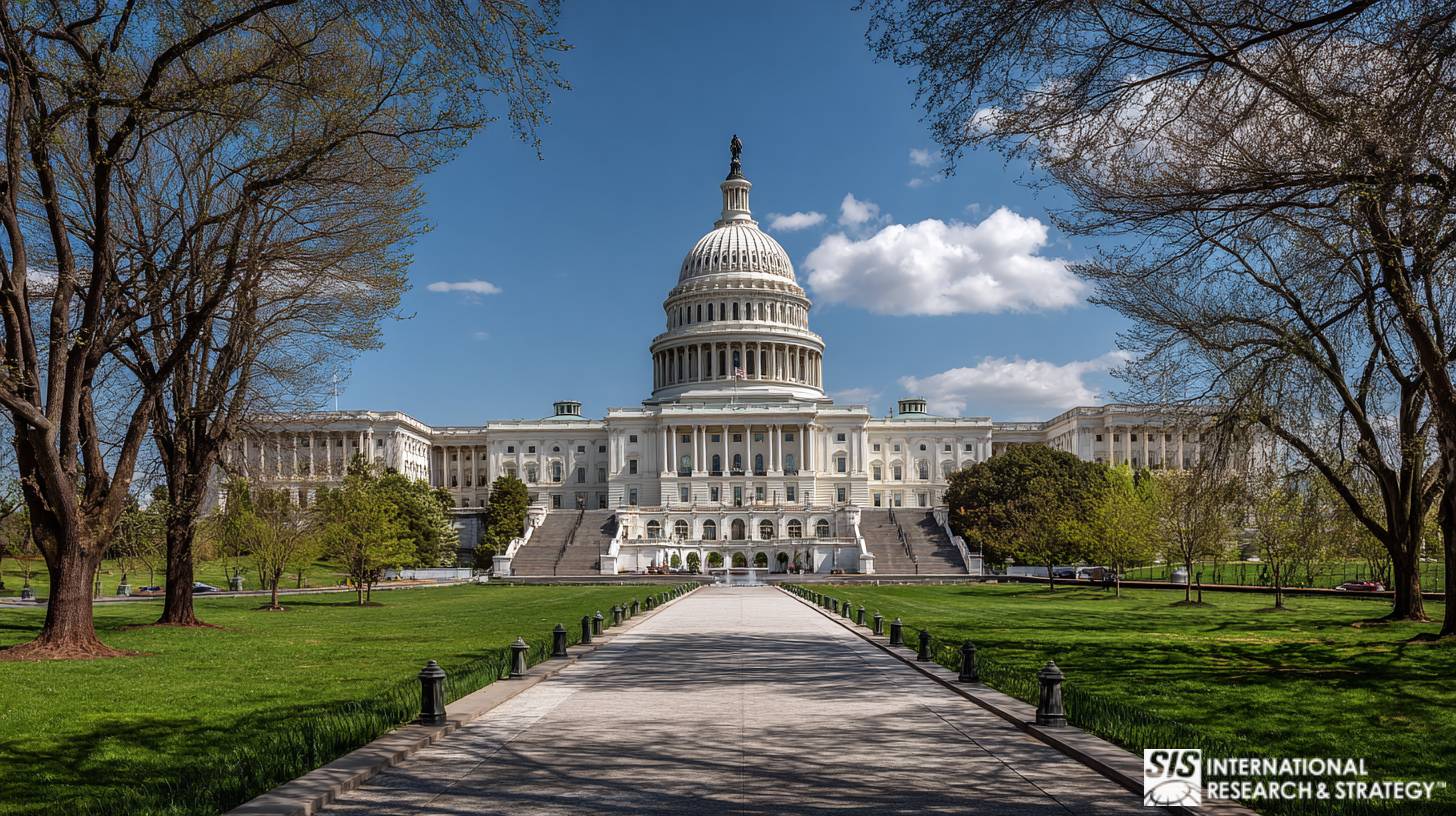
Washington, DC’s metro area is the 8th largest urban economy in the US.
The District of Columbia’s 68.3 square miles are sliced out of Maryland and sit across the Potomac River from Virginia. DC is the nation’s capital. The population of its metro area is nearly 5 million people. While the government’s economic impact is enormous, so are the contributions of other sectors, including education, hospitality and tourism, and more. Market Research in Washington DC helps organizations to serve stakeholder needs better.
Exceptional universities, several with major research capabilities, feed the economy and supply talent for local business and government needs. Its museums, galleries, aquarium, zoo, monuments, and national treasures attract tourists and conventioneers by the millions. Hotels and hospitality services benefit from traffic at both low- and high-end spending levels. And, as the capital of the United States, a district with its own government structure, it employs tens of thousands creating one of the nation’s largest metropolitan areas. An efficient subway system and healthy relationships with nearby cities like Arlington keep The District economy vibrant and functioning at a high level.
The Higher Education Industry
There are a number of major colleges and universities in the District of Columbia, given its limited space. They include the campuses of Georgetown University, American University, Howard University, Gallaudet University, and George Washington University.
Higher education accounts for thousands of jobs and helps The District sustain its highly educated population. Each year, 80,000 students participate in courses at one or more of the member institutions of the D.C. Consortium. The District’s higher education brings $2 billion to the area economy and graduates top lawyers, doctors, and other professionals. Many students stay in DC after graduation.
Market Research in Washington DC: How Leading Firms Win the Federal and Regional Buyer
Washington DC operates as two markets running on different clocks. One follows federal procurement cycles, congressional appropriations, and agency mission priorities. The other moves on the rhythms of a high-income metro economy spanning Northern Virginia, suburban Maryland, and the District itself. Market Research in Washington DC succeeds when it reads both clocks at once.
For VP-level decision makers at Fortune 500 firms, the opportunity is concentrated. The DC metro hosts the highest density of federal program offices, defense primes, regulatory agencies, trade associations, and policy-influenced commercial buyers in the country. Reading this market accurately compresses sales cycles, sharpens positioning, and identifies adjacencies that competitors miss.
Why Market Research in Washington DC Demands a Dual-Lens Approach
The federal lens and the commercial lens require different instruments. Federal buyers respond to FOIA-sourced competitive intelligence, IDIQ pipeline analysis, and SAM.gov pipeline intelligence. Commercial buyers in the same metro respond to consumer journey work, B2B expert interviews, and category-level demand signals. Firms that apply only one lens leave revenue on the table.
Consider the industrial supplier selling sensors. The same product line sells into GSA schedules, Department of Defense PEO offices through OTA pathways, and into commercial real estate operators retrofitting buildings across Tysons Corner and the Capitol Riverfront. Each buyer evaluates evidence differently. The federal program manager weights past performance and CMMC readiness. The commercial buyer weights total cost of ownership and integration risk.
According to SIS International Research, B2B suppliers operating across both federal and commercial buyers in the DC metro consistently underestimate how much their commercial win rates depend on credibility signals built first on the federal side. Past performance citations, security posture, and named agency references travel into commercial conversations in ways that do not occur in other US metros.
The Federal Buyer: What Sophisticated Suppliers Read
Winning federal work requires reading signals well before the RFP drops. The strongest competitive intelligence programs in DC track PEO (Program Executive Office) engagement maps, SBIR/STTR pipeline positioning, and set-aside strategy across 8(a), HUBZone, and SDVOSB designations. They also model LPTA versus best-value trade-offs by agency, because the same product can win on price at one agency and lose for being underpriced at another.
FedRAMP compliance assessment and CMMC readiness evaluation now function as gating criteria across DoD, DHS, and civilian agencies. Suppliers treating these as compliance checkboxes miss the strategic point. Agencies use compliance posture as a proxy for organizational maturity. Firms that publish credible readiness benchmarks shorten evaluation cycles and reduce sole-source justification friction.
ITAR and EAR classification impact, DFARS clause compliance, and CUI handling protocols shape which contracts a supplier can pursue at all. The best competitive intelligence work maps the supplier’s clearance and compliance footprint against the actual addressable pipeline, not the theoretical one.
The Commercial Buyer: A High-Income, Policy-Adjacent Metro
The DC metro commercial economy runs on professional services, association headquarters, hospitals, universities, and a real estate base shaped by federal employment patterns. SIS International Research has conducted site feasibility evaluations across DC neighborhoods spanning NoMa, Capitol Hill, and the H Street corridor, examining demographic shifts, transportation access, and absorption rate forecasting for education, retail, and mixed-use developments.
SIS International’s site feasibility work in the DC market has shown that highest-and-best-use analysis in the District requires a layered read: federal employment density, school catchment dynamics for K-12 private and charter operators, and entitlement risk specific to historic preservation overlays. National benchmarks routinely misprice DC sites because they undercount the policy-driven income stability of the federal workforce.
For consumer-facing brands, shopper journey analytics in DC behave differently than in comparable metros. The proportion of dual-income households, the international diplomatic community, and the high concentration of advanced-degree professionals shift category management optimization and assortment rationalization decisions. Premium and ethical positioning carries more weight here than promotional lift.
Methodologies That Match the Market
SIS International applies a defined toolkit to DC engagements: B2B expert interviews with former agency officials and program managers, competitive intelligence drawing on FOIA-sourced documents and SAM.gov pipeline intelligence, focus groups recruited across the DC-Maryland-Virginia footprint, ethnographic research in commercial and government workplace settings, and market entry assessments for foreign firms entering federal and regional markets.
For consumer and category work, central location tests, CATA methodology, and shopper intercepts run across Pentagon City, Union Market, and Bethesda Row capture distinct buyer profiles within a fifteen-mile radius. For B2B industrial and technology firms, structured expert interviews with program executives and prime contractor decision makers consistently produce the highest-value intelligence.
The Federal-Commercial Intelligence Matrix
| Buyer Type | Primary Evidence | Decision Driver |
|---|---|---|
| Federal program office | Past performance, compliance posture, FOIA pipeline | Mission risk reduction |
| Defense prime subcontract | Teaming history, security clearance footprint | Schedule and technical fit |
| Association and policy buyer | Member research, KOL mapping | Member value and influence |
| Commercial real estate operator | TCO, absorption forecasts, tenant mix | NOI optimization |
| Consumer category in DC metro | Shopper journey, CLT, demographic overlay | Premium positioning fit |
Source: SIS International Research
Where Leading Firms Find the Hidden Upside
The DC metro contains adjacencies that national category research routinely misses. Three patterns recur across the strongest engagements.
First, federal credibility compounds. A named agency reference from a successful pilot at HHS, GSA, or DoD opens commercial conversations across hospital systems, universities, and regulated industries nationally. The DC win is often a marketing asset before it is a revenue asset.
Second, the policy proximity premium is real and measurable. Trade associations, think tanks, and embassies make procurement decisions that ripple into Fortune 500 strategy. Mapping these influencer networks through KOL mapping and structured interviews surfaces opportunities that pipeline data alone will not show.
Third, the regional commercial market rewards firms that respect its specificity. Northern Virginia data center demand, Maryland life sciences corridor expansion, and DC mixed-use redevelopment each operate on different cycles and reward different evidence. Treating the metro as a single market produces generic conclusions.
What Sophisticated Buyers of Market Research in Washington DC Expect
The bar for Market Research in Washington DC has risen. Senior buyers expect researchers to bring named agency familiarity, commercial category depth, and the ability to translate between the two. They expect methodologies named and defended, not bundled into vague offerings. They expect evidence that survives skeptical review by procurement, legal, and program leadership.
SIS International Research has operated across this market for four decades, with engagements spanning federal feasibility studies, commercial site evaluation, association member research, and competitive intelligence for firms entering the US through the DC corridor. The work that performs best combines B2B expert interviews, competitive intelligence, and category research into a single decision-grade deliverable.
For Fortune 500 leadership teams treating DC as a growth market rather than a compliance market, the upside is structural. Market Research in Washington DC done well shortens cycles, sharpens positioning, and converts the region’s complexity into competitive advantage.
About SIS International
SIS International offers Quantitative, Qualitative, and Strategy Research. We provide data, tools, strategies, reports, and insights for decision-making. We also conduct interviews, surveys, focus groups, and other Market Research methods and approaches. Contact us for your next Market Research project.

 EN
EN  AR
AR  ZH
ZH  ZH_HK
ZH_HK  NL
NL  FR
FR  DE
DE  IT
IT  JA
JA  KO
KO  PL
PL  PT
PT  ES
ES