
Use online focus group services in NY for broad exploration and concept testing where conversation matters most. Bring groups together in person when testing physical products, evaluating packaging, or exploring topics where in-person chemistry and spontaneous interaction create breakthrough insights.
Focus group services in NY now offer seamless online options that often outperform in-person sessions for certain objectives. Cost savings are real—no facility rental, no participant travel time, no food and beverage expenses. Recruitment barriers disappear when people join from home at 8 PM instead of commuting to Manhattan at 6 PM. You can include participants from Long Island, Westchester, or New Jersey who’d never attend in-person sessions.
Online formats also reduce observer effect. Participants in their own homes often speak more candidly than in formal research facilities. They are less conscious of being watched, less performative, more natural. For sensitive topics—healthcare, personal finance, controversial products—this comfort translates directly into better data.
But in-person sessions retain critical advantages. Nothing replicates the energy of face-to-face conversation. Group dynamics that generate the most valuable insights—disagreements, building on each other’s ideas, spontaneous laughter—happen more naturally in person. Product testing requiring hands-on interaction obviously demands physical presence. And some participants simply engage more deeply when physically present versus clicking through another Zoom meeting.
What Separates Elite Qualitative Research Firms New York from Commodity Providers
Commodity providers deliver a room, a recruit, and a transcript. Elite qualitative research firms New York deliver a decision. The difference is visible in three places: the screener, the moderator’s guide, and the debrief.
Screener design determines whether you are hearing from the buyer who actually drives the category. A weak screener over-indexes on incidence and under-indexes on behavior. A strong screener uses category velocity questions, competitive shop-along evidence, and JAR-scale calibration items to disqualify professional respondents and surface true category deciders.
The moderator’s guide separates concept diagnostic work from concept validation theater. A guide built for penalty analysis and CATA (check-all-that-apply) probing produces reasons a concept underperforms, not just a score. That is the difference between a focus group that informs a launch and one that ratifies a decision already made.
Shopper Journey Analytics Focus Groups Reveal What Panel Data Cannot
Scanner panels tell you what shoppers bought. They do not tell you what shoppers considered and rejected at shelf. That gap is where category share moves, and it is what shopper journey analytics focus groups exist to close.
The technique pairs a moderated discussion with a projective mapping exercise and a shop-along photo diary submitted before the session. Participants walk the moderator through the last three category purchases, naming the substitutes considered and the reason each was rejected. That protocol surfaces the private label competitive threat with a specificity scanner data cannot produce.
NYC Usability Testing Labs and In-Person Consumer Research NYC for Product and Packaging
Physical product work still requires a physical room. Packaging structural tests, planogram simulations, and prototype interactions cannot be replicated on Zoom without losing the tactile signal that drives purchase intent. NYC usability testing labs remain the default for beauty prestige, premium grocery, and consumer electronics categories where haptic and visual cues carry the concept.
Facility selection turns on three variables: one-way glass configuration for client observation, kitchen access for CLT and taste testing work, and back-room video capture that supports frame-by-frame review of first-touch behavior. Manhattan and Long Island City facilities cover the full range. The choice depends on category and stimulus.
For consumer product testing facilities in Manhattan, the Flatiron and Midtown corridors offer the fastest recruit fulfillment because they draw from the largest daytime professional population in the country. Brooklyn facilities pull deeper on multicultural and Gen Z cohorts, which matters for beauty, apparel, and functional beverage work.
New York Market Research Recruitment: The Variable That Determines Study Validity
Recruitment is where studies win or lose. New York market research recruitment operates in a market saturated with professional respondents, which makes verification protocols the difference between clean data and contaminated data.
The verification stack includes cross-panel deduplication, LinkedIn verification for B2B and higher-income screens, past-participation lookback windows, and category behavior validation calls before confirming the seat. Weak recruitment shows up in the transcript as vague, over-articulate answers that do not tie to real shopping behavior. Strong recruitment produces friction, hesitation, and specificity.
A City With No Single Majority
New York City population by racial and ethnic group, where no group holds a majority, which is why a concept tested here is stress tested against the diversity of a national rollout
Source 1: New York City Census Racial and Ethnic Composition
Source 2: SIS International Focus Group Services in New York
Common Mistakes That Waste Your Investment
You would be shocked at how many companies sabotage their own research without realizing it.
Over-controlling the conversation
- Executives create discussion guides with 40 topics expecting coverage in 90 minutes
- This leaves zero space for organic conversation where the best insights actually live
- Professional focus group services in NY push back on unrealistic guides and help you prioritize what matters most
Recruiting too narrowly or too broadly
- One client recruited high-income New Yorkers for premium product feedback—sounds logical, right?
- Except high income doesn't equal premium product buyers
- Some wealthy people hunt bargains while middle-income consumers splurge on categories they love
- They wasted thousands recruiting wrong people because they confused demographic proxies with actual target customers
Treating focus groups as quantitative research
- You can't say "67% of participants preferred option A" based on eight people
- Focus groups explore why, how, and what if—not how many or how often
- Surveys and quantitative methods measure prevalence and statistical significance
- Confuse these purposes and you'll either make decisions based on invalid statistics or miss insights entirely
Ignoring cultural context
- A major retail brand tested store concepts with focus group services in NY and got positive feedback
- They rolled out nationwide and sales bombed everywhere except major coastal cities
- New York groups loved urban density, public transit access, and experiential retail
- These elements don't translate to suburban and rural markets that operate completely differently
- New York feedback was accurate for New York—they just overgeneralized to markets with different dynamics
How to Choose Your NY Focus Group Partner
Provider selection determines whether you waste money or gain insights that transform your business.
Evaluate category-specific experience
- A provider dominating pharmaceutical research might be wrong for consumer electronics
- Someone brilliant with B2B audiences might struggle recruiting teenagers
- Category experience matters because recruitment tactics, discussion approaches, and analytical frameworks differ dramatically
- Ask for case studies showing successful projects in your specific industry
Dig into recruitment capabilities
- Ask about database size, screening processes, and verification methods
- Understand how they handle difficult-to-reach populations
- Request examples showing complex recruitment they've executed successfully
- Many providers overpromise and underdeliver on recruitment—this is the single biggest risk factor
Visit facilities before committing
- Website photos can be misleading—you need to see actual spaces
- Check client lounges, observation rooms, and conference spaces in person
- Confirm sight lines from observation rooms so you can clearly see all participants
- Test video streaming and recording quality yourself
- Verify backup systems exist for technology failures
Talk to moderators who'll work on your project
- Do they ask intelligent questions about your business objectives?
- Do they demonstrate genuine curiosity about your research goals?
- Do they suggest improvements to your discussion guide or screening criteria?
- Passive order-takers deliver mediocre research while active partners push back and improve your research design
Evaluate communication and support
- The best focus group services in NY become research partners, not just transaction vendors
- How do they keep clients updated throughout recruitment and execution?
- Do they flag potential issues early or wait until problems become crises?
- What post-research support do they provide for follow-up questions?
Consumer Product Testing NYC: Where the Category Signal Lives
Consumer product testing NYC engagements work best when the physical stimulus matches the decision environment. Blind taste testing for a new yogurt SKU should replicate refrigerator conditions, not conference room lighting. Fragrance evaluation requires scent-neutral facilities. Packaging response should be measured against a real shelf set with competitive product, not a single hero image on foam board.
Leading brands use central location tests (CLTs) in Midtown facilities equipped with observation rooms, prep kitchens, and shelf simulation walls. A CLT for a plant-based protein reformulation runs sequential monadic against the incumbent from Beyond and Impossible, applies JAR scales on texture and aftertaste, and closes with penalty analysis to quantify which attributes drag purchase intent. That structure converts qualitative reactions into a defensible go-no-go recommendation.
The Economics of NYC Focus Group Services
The cost of conducting consumer focus groups in NYC runs higher than tier-two markets, and the return justifies the premium for decisions above a certain threshold. Facility rental, participant incentives at Manhattan rates, and moderator seniority push a well-executed four-group study into a defined range. That investment is trivial against a national launch budget, a private label conversion, or a DTC channel economics decision that will define margin for three years.
The math becomes obvious at the portfolio level. Brands evaluating assortment rationalization across a national footprint use NYC as the diagnostic lab because the shopper diversity approximates the national mix inside one geography. One well-designed New York study can replace three regional studies and compress the timeline by months.
Where SIS Focus Group Work Delivers Differentiated Value
SIS International Research has operated qualitative programs out of New York for four decades, running focus groups, ethnographic research, CLTs, and in-depth interviews for consumer, retail, hospitality, automotive, and technology clients. The New York facility supports in-person groups, hybrid sessions, and observation for client teams flying in from Europe, Asia, and the West Coast. Across recent SIS engagements in beverage, personal care, and specialty retail, the qualitative findings that reshaped client strategy came disproportionately from sessions where the moderator held space for disagreement rather than steering toward consensus, and where the stimulus set included the client's weakest competitor alongside its strongest.
The instrument is only as good as the hands using it. NYC focus group services executed with disciplined recruitment, calibrated moderation, and realistic stimulus design remain one of the highest-return investments in the consumer research toolkit.
Making Focus Groups Work for Your Business
<blockquote">
In structured recruitment work SIS has conducted for retail and consumer clients in the New York metro, the show rate ceiling for tight-screener, category-specific recruits sits meaningfully below the industry average for general population screens, which is why elite fielding assumes over-recruitment as a baseline rather than a contingency.
Focus group services in NY should be foundational to how you make decisions in one of America's most important markets. Product development, marketing strategy, pricing decisions, retail experience design—all benefit from direct consumer input before you make expensive commitments.
Think of focus group services in NY as providing access to your future customers' minds before you commit resources. You're not just gathering opinions—you're stress-testing assumptions, identifying blind spots, and discovering opportunities your internal team never imagined. That insight is worth far more than the invoice amount.
New York does not forgive mediocrity. The market's too competitive, consumers too sophisticated, alternatives too abundant. Focus group services in NY give you the consumer intelligence you need to compete effectively in America's toughest market. Use them wisely, and New York's success becomes your competitive advantage everywhere else.
FAQs
What makes NYC focus group services more valuable than other markets?
New York concentrates the full range of American consumer segments, incomes, and cultural backgrounds inside a 30-mile radius, which lets brands stress-test a concept against the diversity of a national rollout in a single fielding.
How much should a company budget for professional focus group services in NY?
Diagnostic-grade qualitative in New York typically runs higher than secondary markets because of recruit rigor, facility quality, and moderator caliber. The premium is justified when the study informs a SKU, launch, or assortment decision above six figures in exposure.
What is the best qualitative method for private label competitive threat analysis?
Recruit national brand loyalists rather than private label converts and evaluate the private label stimulus against the strongest incumbents on a real shelf simulation. Their objections define the ceiling on switching and the true competitive risk.
How do shopper journey analytics focus groups differ from standard focus groups?
They reconstruct the full path to purchase using diary handoffs, shelf walk videos, and moderated debriefs, which exposes the actual triggers behind a purchase decision rather than the rationalizations consumers offer at checkout.
Can NYC focus groups replace multiple regional studies?
For many national assortment rationalization and concept testing decisions, yes. New York's shopper diversity approximates the national consumer mix, so one well-designed study often replaces two or three regional fieldings.
When should focus groups be used instead of quantitative research?
Focus groups belong in the sequence between quantitative concept screening and in-market pilot. They refine winning territories identified in quant and diagnose why concepts underperform, which survey data alone cannot explain.
Our Facility Location in New York
11 E 22nd Street, Floor 2, New York, NY 10010 T: +1(212) 505-6805
About SIS International
SIS International offers Quantitative, Qualitative, and Strategy Research. We provide data, tools, strategies, reports, and insights for decision-making. We also conduct interviews, surveys, focus groups, and other Market Research methods and approaches. Contact us for your next Market Research project.
The Moderator Makes Everything Happen
<blockquote">
You can have perfect participants in a beautiful facility, and terrible moderation ruins everything.
New York demands moderators with specific skills. They need the confidence to manage dominant personalities without shutting them down. The sensitivity to read non-verbal cues in a fast-paced environment. The subject matter expertise to probe intelligently when interesting topics surface. And the cultural fluency to connect with diverse participants and earn their trust quickly.
The best focus group services in NY employ moderators specializing in different industries and research types. A moderator brilliant at pharmaceutical research might struggle with consumer packaged goods. Someone perfect for financial services might be wrong for fashion and beauty. Match the moderator to your category and research objectives, not just availability.
Watch for these moderator qualities during provider selection: Do they ask about your business objectives before discussing methodology? Do they want input on the discussion guide development rather than just accepting whatever you send? Do they probe during sample recruiting to ensure participants meet criteria? These behaviors signal someone who cares about research quality, not just completing another session.
Online vs. In-Person: Choosing Your Format
 <blockquote">
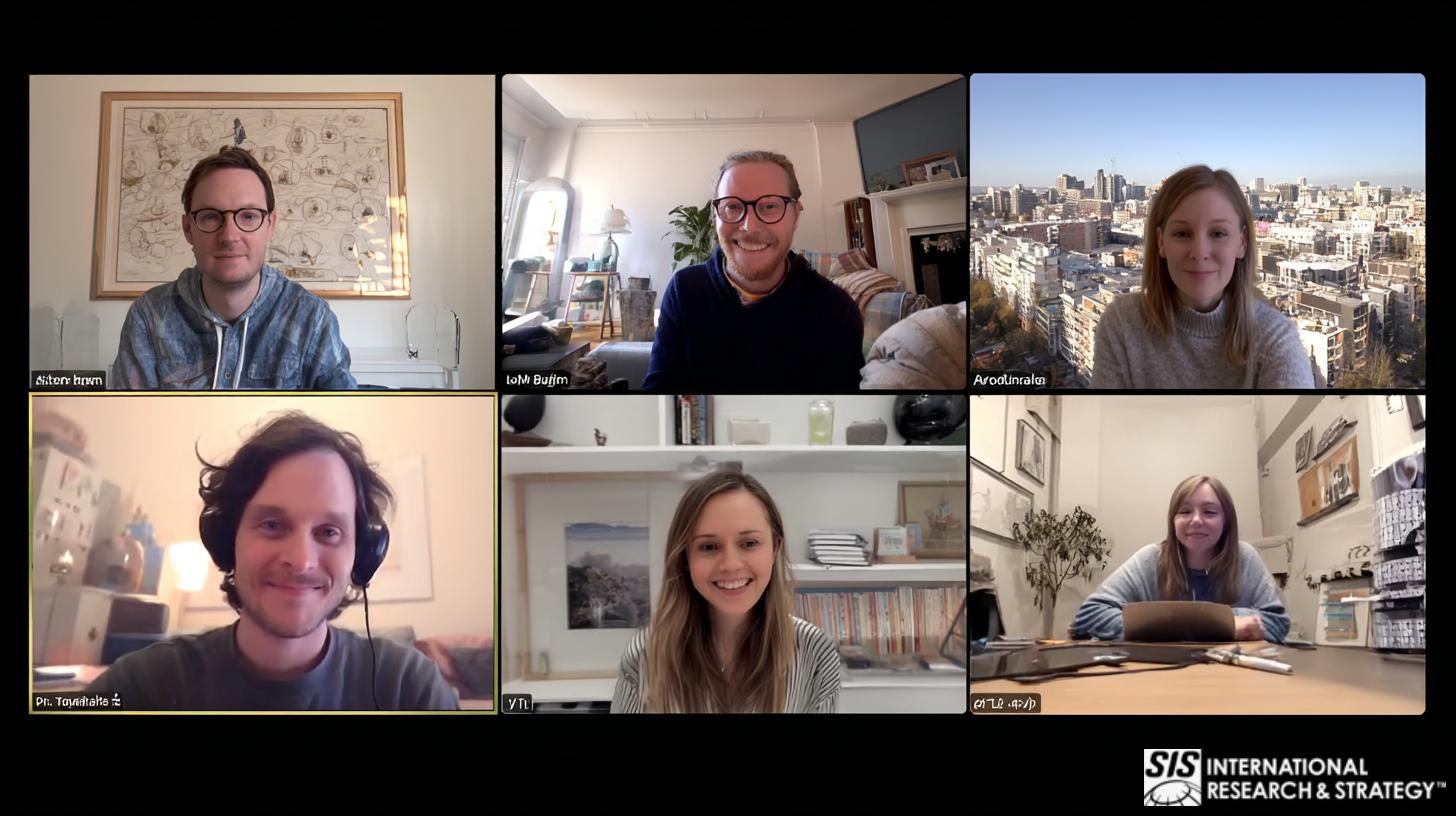
Use online focus group services in NY for broad exploration and concept testing where conversation matters most. Bring groups together in person when testing physical products, evaluating packaging, or exploring topics where in-person chemistry and spontaneous interaction create breakthrough insights.
Focus group services in NY now offer seamless online options that often outperform in-person sessions for certain objectives. Cost savings are real—no facility rental, no participant travel time, no food and beverage expenses. Recruitment barriers disappear when people join from home at 8 PM instead of commuting to Manhattan at 6 PM. You can include participants from Long Island, Westchester, or New Jersey who'd never attend in-person sessions.
Online formats also reduce observer effect. Participants in their own homes often speak more candidly than in formal research facilities. They are less conscious of being watched, less performative, more natural. For sensitive topics—healthcare, personal finance, controversial products—this comfort translates directly into better data.
But in-person sessions retain critical advantages. Nothing replicates the energy of face-to-face conversation. Group dynamics that generate the most valuable insights—disagreements, building on each other's ideas, spontaneous laughter—happen more naturally in person. Product testing requiring hands-on interaction obviously demands physical presence. And some participants simply engage more deeply when physically present versus clicking through another Zoom meeting.
What Separates Elite Qualitative Research Firms New York from Commodity Providers
Commodity providers deliver a room, a recruit, and a transcript. Elite qualitative research firms New York deliver a decision. The difference is visible in three places: the screener, the moderator's guide, and the debrief.
Screener design determines whether you are hearing from the buyer who actually drives the category. A weak screener over-indexes on incidence and under-indexes on behavior. A strong screener uses category velocity questions, competitive shop-along evidence, and JAR-scale calibration items to disqualify professional respondents and surface true category deciders.
The moderator's guide separates concept diagnostic work from concept validation theater. A guide built for penalty analysis and CATA (check-all-that-apply) probing produces reasons a concept underperforms, not just a score. That is the difference between a focus group that informs a launch and one that ratifies a decision already made.
Shopper Journey Analytics Focus Groups Reveal What Panel Data Cannot
Scanner panels tell you what shoppers bought. They do not tell you what shoppers considered and rejected at shelf. That gap is where category share moves, and it is what shopper journey analytics focus groups exist to close.
The technique pairs a moderated discussion with a projective mapping exercise and a shop-along photo diary submitted before the session. Participants walk the moderator through the last three category purchases, naming the substitutes considered and the reason each was rejected. That protocol surfaces the private label competitive threat with a specificity scanner data cannot produce.
NYC Usability Testing Labs and In-Person Consumer Research NYC for Product and Packaging
Physical product work still requires a physical room. Packaging structural tests, planogram simulations, and prototype interactions cannot be replicated on Zoom without losing the tactile signal that drives purchase intent. NYC usability testing labs remain the default for beauty prestige, premium grocery, and consumer electronics categories where haptic and visual cues carry the concept.
Facility selection turns on three variables: one-way glass configuration for client observation, kitchen access for CLT and taste testing work, and back-room video capture that supports frame-by-frame review of first-touch behavior. Manhattan and Long Island City facilities cover the full range. The choice depends on category and stimulus.
For consumer product testing facilities in Manhattan, the Flatiron and Midtown corridors offer the fastest recruit fulfillment because they draw from the largest daytime professional population in the country. Brooklyn facilities pull deeper on multicultural and Gen Z cohorts, which matters for beauty, apparel, and functional beverage work.
New York Market Research Recruitment: The Variable That Determines Study Validity
Recruitment is where studies win or lose. New York market research recruitment operates in a market saturated with professional respondents, which makes verification protocols the difference between clean data and contaminated data.
The verification stack includes cross-panel deduplication, LinkedIn verification for B2B and higher-income screens, past-participation lookback windows, and category behavior validation calls before confirming the seat. Weak recruitment shows up in the transcript as vague, over-articulate answers that do not tie to real shopping behavior. Strong recruitment produces friction, hesitation, and specificity.
A City With No Single Majority
New York City population by racial and ethnic group, where no group holds a majority, which is why a concept tested here is stress tested against the diversity of a national rollout
Source 1: New York City Census Racial and Ethnic Composition
Source 2: SIS International Focus Group Services in New York
Common Mistakes That Waste Your Investment
You would be shocked at how many companies sabotage their own research without realizing it.
Over-controlling the conversation
- Executives create discussion guides with 40 topics expecting coverage in 90 minutes
- This leaves zero space for organic conversation where the best insights actually live
- Professional focus group services in NY push back on unrealistic guides and help you prioritize what matters most
Recruiting too narrowly or too broadly
- One client recruited high-income New Yorkers for premium product feedback—sounds logical, right?
- Except high income doesn't equal premium product buyers
- Some wealthy people hunt bargains while middle-income consumers splurge on categories they love
- They wasted thousands recruiting wrong people because they confused demographic proxies with actual target customers
Treating focus groups as quantitative research
- You can't say "67% of participants preferred option A" based on eight people
- Focus groups explore why, how, and what if—not how many or how often
- Surveys and quantitative methods measure prevalence and statistical significance
- Confuse these purposes and you'll either make decisions based on invalid statistics or miss insights entirely
Ignoring cultural context
- A major retail brand tested store concepts with focus group services in NY and got positive feedback
- They rolled out nationwide and sales bombed everywhere except major coastal cities
- New York groups loved urban density, public transit access, and experiential retail
- These elements don't translate to suburban and rural markets that operate completely differently
- New York feedback was accurate for New York—they just overgeneralized to markets with different dynamics
How to Choose Your NY Focus Group Partner
Provider selection determines whether you waste money or gain insights that transform your business.
Evaluate category-specific experience
- A provider dominating pharmaceutical research might be wrong for consumer electronics
- Someone brilliant with B2B audiences might struggle recruiting teenagers
- Category experience matters because recruitment tactics, discussion approaches, and analytical frameworks differ dramatically
- Ask for case studies showing successful projects in your specific industry
Dig into recruitment capabilities
- Ask about database size, screening processes, and verification methods
- Understand how they handle difficult-to-reach populations
- Request examples showing complex recruitment they've executed successfully
- Many providers overpromise and underdeliver on recruitment—this is the single biggest risk factor
Visit facilities before committing
- Website photos can be misleading—you need to see actual spaces
- Check client lounges, observation rooms, and conference spaces in person
- Confirm sight lines from observation rooms so you can clearly see all participants
- Test video streaming and recording quality yourself
- Verify backup systems exist for technology failures
Talk to moderators who'll work on your project
- Do they ask intelligent questions about your business objectives?
- Do they demonstrate genuine curiosity about your research goals?
- Do they suggest improvements to your discussion guide or screening criteria?
- Passive order-takers deliver mediocre research while active partners push back and improve your research design
Evaluate communication and support
- The best focus group services in NY become research partners, not just transaction vendors
- How do they keep clients updated throughout recruitment and execution?
- Do they flag potential issues early or wait until problems become crises?
- What post-research support do they provide for follow-up questions?
Consumer Product Testing NYC: Where the Category Signal Lives
Consumer product testing NYC engagements work best when the physical stimulus matches the decision environment. Blind taste testing for a new yogurt SKU should replicate refrigerator conditions, not conference room lighting. Fragrance evaluation requires scent-neutral facilities. Packaging response should be measured against a real shelf set with competitive product, not a single hero image on foam board.
Leading brands use central location tests (CLTs) in Midtown facilities equipped with observation rooms, prep kitchens, and shelf simulation walls. A CLT for a plant-based protein reformulation runs sequential monadic against the incumbent from Beyond and Impossible, applies JAR scales on texture and aftertaste, and closes with penalty analysis to quantify which attributes drag purchase intent. That structure converts qualitative reactions into a defensible go-no-go recommendation.
The Economics of NYC Focus Group Services
The cost of conducting consumer focus groups in NYC runs higher than tier-two markets, and the return justifies the premium for decisions above a certain threshold. Facility rental, participant incentives at Manhattan rates, and moderator seniority push a well-executed four-group study into a defined range. That investment is trivial against a national launch budget, a private label conversion, or a DTC channel economics decision that will define margin for three years.
The math becomes obvious at the portfolio level. Brands evaluating assortment rationalization across a national footprint use NYC as the diagnostic lab because the shopper diversity approximates the national mix inside one geography. One well-designed New York study can replace three regional studies and compress the timeline by months.
Where SIS Focus Group Work Delivers Differentiated Value
SIS International Research has operated qualitative programs out of New York for four decades, running focus groups, ethnographic research, CLTs, and in-depth interviews for consumer, retail, hospitality, automotive, and technology clients. The New York facility supports in-person groups, hybrid sessions, and observation for client teams flying in from Europe, Asia, and the West Coast. Across recent SIS engagements in beverage, personal care, and specialty retail, the qualitative findings that reshaped client strategy came disproportionately from sessions where the moderator held space for disagreement rather than steering toward consensus, and where the stimulus set included the client's weakest competitor alongside its strongest.
The instrument is only as good as the hands using it. NYC focus group services executed with disciplined recruitment, calibrated moderation, and realistic stimulus design remain one of the highest-return investments in the consumer research toolkit.
Making Focus Groups Work for Your Business
<blockquote">
In structured recruitment work SIS has conducted for retail and consumer clients in the New York metro, the show rate ceiling for tight-screener, category-specific recruits sits meaningfully below the industry average for general population screens, which is why elite fielding assumes over-recruitment as a baseline rather than a contingency.
Focus group services in NY should be foundational to how you make decisions in one of America's most important markets. Product development, marketing strategy, pricing decisions, retail experience design—all benefit from direct consumer input before you make expensive commitments.
Think of focus group services in NY as providing access to your future customers' minds before you commit resources. You're not just gathering opinions—you're stress-testing assumptions, identifying blind spots, and discovering opportunities your internal team never imagined. That insight is worth far more than the invoice amount.
New York does not forgive mediocrity. The market's too competitive, consumers too sophisticated, alternatives too abundant. Focus group services in NY give you the consumer intelligence you need to compete effectively in America's toughest market. Use them wisely, and New York's success becomes your competitive advantage everywhere else.
FAQs
What makes NYC focus group services more valuable than other markets?
New York concentrates the full range of American consumer segments, incomes, and cultural backgrounds inside a 30-mile radius, which lets brands stress-test a concept against the diversity of a national rollout in a single fielding.
How much should a company budget for professional focus group services in NY?
Diagnostic-grade qualitative in New York typically runs higher than secondary markets because of recruit rigor, facility quality, and moderator caliber. The premium is justified when the study informs a SKU, launch, or assortment decision above six figures in exposure.
What is the best qualitative method for private label competitive threat analysis?
Recruit national brand loyalists rather than private label converts and evaluate the private label stimulus against the strongest incumbents on a real shelf simulation. Their objections define the ceiling on switching and the true competitive risk.
How do shopper journey analytics focus groups differ from standard focus groups?
They reconstruct the full path to purchase using diary handoffs, shelf walk videos, and moderated debriefs, which exposes the actual triggers behind a purchase decision rather than the rationalizations consumers offer at checkout.
Can NYC focus groups replace multiple regional studies?
For many national assortment rationalization and concept testing decisions, yes. New York's shopper diversity approximates the national consumer mix, so one well-designed study often replaces two or three regional fieldings.
When should focus groups be used instead of quantitative research?
Focus groups belong in the sequence between quantitative concept screening and in-market pilot. They refine winning territories identified in quant and diagnose why concepts underperform, which survey data alone cannot explain.
Our Facility Location in New York
11 E 22nd Street, Floor 2, New York, NY 10010 T: +1(212) 505-6805
About SIS International
SIS International offers Quantitative, Qualitative, and Strategy Research. We provide data, tools, strategies, reports, and insights for decision-making. We also conduct interviews, surveys, focus groups, and other Market Research methods and approaches. Contact us for your next Market Research project.
Most companies waste thousands on focus groups that include the wrong participants.
Professional focus group services in NY use multi-stage screening that goes far beyond basic demographics. Initial screening catches age, location, income level, and category usage. But that's just the beginning. Secondary screening explores attitudes, behaviors, recent purchases, and brand relationships.
Here is a real example: A technology company wanted "smartphone users aged 25-40" for groups about mobile banking. Basic screening would've recruited anyone in that age range with a phone. Smart screening went deeper—How often do you use banking apps? Which features matter most? Have you tried competitors' products? What frustrates you about current solutions? The resulting groups included engaged users with strong opinions, not just anyone who owned a smartphone.
Professional screeners also watch for warning signs. Is someone trying too hard to qualify? They might be professional focus group participants who game the system for incentive payments. Does someone work in marketing, advertising, or market research? They're usually excluded because industry insiders analyze conversations differently than typical consumers. Has someone participated in groups recently? Frequent participants develop a "focus group mentality" that skews results.
How NY Services Handle Diverse Recruitment Needs
<blockquote">
SIS International Research has found that recruit specificity, not incentive size, drives the discriminating power of retail concept tests in NYC, particularly for private label concept testing where category-lapsed users produce sharper diagnostic feedback than heavy users.
Need to reach Chinese immigrants who arrived within the last five years? Russian speakers over 50? LGBTQ+ consumers in specific income brackets? Dominican families in the Bronx? Orthodox Jewish communities in Brooklyn? Focus group services in NY can find them. The city's incredible diversity means virtually any demographic exists here in sufficient numbers for research.
Professional focus group services in NY employ recruiters who speak multiple languages and understand cultural contexts. They maintain relationships with community organizations that provide access to hard-to-reach populations. They know which neighborhoods over-index for specific demographics and how to build trust with communities skeptical of corporate research.
New York City Ethnic & Racial Demographics
Why NYC's Diversity Matters for Focus Groups
- 800+ Languages Spoken: NYC is the most linguistically diverse city in the world
- 36% Foreign-Born: Over 3 million residents born outside the US provide global perspectives
- No Single Majority: No ethnic group represents over 50% of the population
- Diverse Neighborhoods: Each borough offers distinct demographic profiles for targeted research
- Cultural Testing Ground: Products that succeed with NYC's diverse consumers often translate nationally
The Moderator Makes Everything Happen
<blockquote">
You can have perfect participants in a beautiful facility, and terrible moderation ruins everything.
New York demands moderators with specific skills. They need the confidence to manage dominant personalities without shutting them down. The sensitivity to read non-verbal cues in a fast-paced environment. The subject matter expertise to probe intelligently when interesting topics surface. And the cultural fluency to connect with diverse participants and earn their trust quickly.
The best focus group services in NY employ moderators specializing in different industries and research types. A moderator brilliant at pharmaceutical research might struggle with consumer packaged goods. Someone perfect for financial services might be wrong for fashion and beauty. Match the moderator to your category and research objectives, not just availability.
Watch for these moderator qualities during provider selection: Do they ask about your business objectives before discussing methodology? Do they want input on the discussion guide development rather than just accepting whatever you send? Do they probe during sample recruiting to ensure participants meet criteria? These behaviors signal someone who cares about research quality, not just completing another session.
Online vs. In-Person: Choosing Your Format
<blockquote">
Use online focus group services in NY for broad exploration and concept testing where conversation matters most. Bring groups together in person when testing physical products, evaluating packaging, or exploring topics where in-person chemistry and spontaneous interaction create breakthrough insights.
Focus group services in NY now offer seamless online options that often outperform in-person sessions for certain objectives. Cost savings are real—no facility rental, no participant travel time, no food and beverage expenses. Recruitment barriers disappear when people join from home at 8 PM instead of commuting to Manhattan at 6 PM. You can include participants from Long Island, Westchester, or New Jersey who'd never attend in-person sessions.
Online formats also reduce observer effect. Participants in their own homes often speak more candidly than in formal research facilities. They are less conscious of being watched, less performative, more natural. For sensitive topics—healthcare, personal finance, controversial products—this comfort translates directly into better data.
But in-person sessions retain critical advantages. Nothing replicates the energy of face-to-face conversation. Group dynamics that generate the most valuable insights—disagreements, building on each other's ideas, spontaneous laughter—happen more naturally in person. Product testing requiring hands-on interaction obviously demands physical presence. And some participants simply engage more deeply when physically present versus clicking through another Zoom meeting.
What Separates Elite Qualitative Research Firms New York from Commodity Providers
Commodity providers deliver a room, a recruit, and a transcript. Elite qualitative research firms New York deliver a decision. The difference is visible in three places: the screener, the moderator's guide, and the debrief.
Screener design determines whether you are hearing from the buyer who actually drives the category. A weak screener over-indexes on incidence and under-indexes on behavior. A strong screener uses category velocity questions, competitive shop-along evidence, and JAR-scale calibration items to disqualify professional respondents and surface true category deciders.
The moderator's guide separates concept diagnostic work from concept validation theater. A guide built for penalty analysis and CATA (check-all-that-apply) probing produces reasons a concept underperforms, not just a score. That is the difference between a focus group that informs a launch and one that ratifies a decision already made.
Shopper Journey Analytics Focus Groups Reveal What Panel Data Cannot
Scanner panels tell you what shoppers bought. They do not tell you what shoppers considered and rejected at shelf. That gap is where category share moves, and it is what shopper journey analytics focus groups exist to close.
The technique pairs a moderated discussion with a projective mapping exercise and a shop-along photo diary submitted before the session. Participants walk the moderator through the last three category purchases, naming the substitutes considered and the reason each was rejected. That protocol surfaces the private label competitive threat with a specificity scanner data cannot produce.
NYC Usability Testing Labs and In-Person Consumer Research NYC for Product and Packaging
Physical product work still requires a physical room. Packaging structural tests, planogram simulations, and prototype interactions cannot be replicated on Zoom without losing the tactile signal that drives purchase intent. NYC usability testing labs remain the default for beauty prestige, premium grocery, and consumer electronics categories where haptic and visual cues carry the concept.
Facility selection turns on three variables: one-way glass configuration for client observation, kitchen access for CLT and taste testing work, and back-room video capture that supports frame-by-frame review of first-touch behavior. Manhattan and Long Island City facilities cover the full range. The choice depends on category and stimulus.
For consumer product testing facilities in Manhattan, the Flatiron and Midtown corridors offer the fastest recruit fulfillment because they draw from the largest daytime professional population in the country. Brooklyn facilities pull deeper on multicultural and Gen Z cohorts, which matters for beauty, apparel, and functional beverage work.
New York Market Research Recruitment: The Variable That Determines Study Validity
Recruitment is where studies win or lose. New York market research recruitment operates in a market saturated with professional respondents, which makes verification protocols the difference between clean data and contaminated data.
The verification stack includes cross-panel deduplication, LinkedIn verification for B2B and higher-income screens, past-participation lookback windows, and category behavior validation calls before confirming the seat. Weak recruitment shows up in the transcript as vague, over-articulate answers that do not tie to real shopping behavior. Strong recruitment produces friction, hesitation, and specificity.
A City With No Single Majority
New York City population by racial and ethnic group, where no group holds a majority, which is why a concept tested here is stress tested against the diversity of a national rollout
Source 1: New York City Census Racial and Ethnic Composition
Source 2: SIS International Focus Group Services in New York
Common Mistakes That Waste Your Investment
You would be shocked at how many companies sabotage their own research without realizing it.
Over-controlling the conversation
- Executives create discussion guides with 40 topics expecting coverage in 90 minutes
- This leaves zero space for organic conversation where the best insights actually live
- Professional focus group services in NY push back on unrealistic guides and help you prioritize what matters most
Recruiting too narrowly or too broadly
- One client recruited high-income New Yorkers for premium product feedback—sounds logical, right?
- Except high income doesn't equal premium product buyers
- Some wealthy people hunt bargains while middle-income consumers splurge on categories they love
- They wasted thousands recruiting wrong people because they confused demographic proxies with actual target customers
Treating focus groups as quantitative research
- You can't say "67% of participants preferred option A" based on eight people
- Focus groups explore why, how, and what if—not how many or how often
- Surveys and quantitative methods measure prevalence and statistical significance
- Confuse these purposes and you'll either make decisions based on invalid statistics or miss insights entirely
Ignoring cultural context
- A major retail brand tested store concepts with focus group services in NY and got positive feedback
- They rolled out nationwide and sales bombed everywhere except major coastal cities
- New York groups loved urban density, public transit access, and experiential retail
- These elements don't translate to suburban and rural markets that operate completely differently
- New York feedback was accurate for New York—they just overgeneralized to markets with different dynamics
How to Choose Your NY Focus Group Partner
Provider selection determines whether you waste money or gain insights that transform your business.
Evaluate category-specific experience
- A provider dominating pharmaceutical research might be wrong for consumer electronics
- Someone brilliant with B2B audiences might struggle recruiting teenagers
- Category experience matters because recruitment tactics, discussion approaches, and analytical frameworks differ dramatically
- Ask for case studies showing successful projects in your specific industry
Dig into recruitment capabilities
- Ask about database size, screening processes, and verification methods
- Understand how they handle difficult-to-reach populations
- Request examples showing complex recruitment they've executed successfully
- Many providers overpromise and underdeliver on recruitment—this is the single biggest risk factor
Visit facilities before committing
- Website photos can be misleading—you need to see actual spaces
- Check client lounges, observation rooms, and conference spaces in person
- Confirm sight lines from observation rooms so you can clearly see all participants
- Test video streaming and recording quality yourself
- Verify backup systems exist for technology failures
Talk to moderators who'll work on your project
- Do they ask intelligent questions about your business objectives?
- Do they demonstrate genuine curiosity about your research goals?
- Do they suggest improvements to your discussion guide or screening criteria?
- Passive order-takers deliver mediocre research while active partners push back and improve your research design
Evaluate communication and support
- The best focus group services in NY become research partners, not just transaction vendors
- How do they keep clients updated throughout recruitment and execution?
- Do they flag potential issues early or wait until problems become crises?
- What post-research support do they provide for follow-up questions?
Consumer Product Testing NYC: Where the Category Signal Lives
Consumer product testing NYC engagements work best when the physical stimulus matches the decision environment. Blind taste testing for a new yogurt SKU should replicate refrigerator conditions, not conference room lighting. Fragrance evaluation requires scent-neutral facilities. Packaging response should be measured against a real shelf set with competitive product, not a single hero image on foam board.
Leading brands use central location tests (CLTs) in Midtown facilities equipped with observation rooms, prep kitchens, and shelf simulation walls. A CLT for a plant-based protein reformulation runs sequential monadic against the incumbent from Beyond and Impossible, applies JAR scales on texture and aftertaste, and closes with penalty analysis to quantify which attributes drag purchase intent. That structure converts qualitative reactions into a defensible go-no-go recommendation.
The Economics of NYC Focus Group Services
The cost of conducting consumer focus groups in NYC runs higher than tier-two markets, and the return justifies the premium for decisions above a certain threshold. Facility rental, participant incentives at Manhattan rates, and moderator seniority push a well-executed four-group study into a defined range. That investment is trivial against a national launch budget, a private label conversion, or a DTC channel economics decision that will define margin for three years.
The math becomes obvious at the portfolio level. Brands evaluating assortment rationalization across a national footprint use NYC as the diagnostic lab because the shopper diversity approximates the national mix inside one geography. One well-designed New York study can replace three regional studies and compress the timeline by months.
Where SIS Focus Group Work Delivers Differentiated Value
SIS International Research has operated qualitative programs out of New York for four decades, running focus groups, ethnographic research, CLTs, and in-depth interviews for consumer, retail, hospitality, automotive, and technology clients. The New York facility supports in-person groups, hybrid sessions, and observation for client teams flying in from Europe, Asia, and the West Coast. Across recent SIS engagements in beverage, personal care, and specialty retail, the qualitative findings that reshaped client strategy came disproportionately from sessions where the moderator held space for disagreement rather than steering toward consensus, and where the stimulus set included the client's weakest competitor alongside its strongest.
The instrument is only as good as the hands using it. NYC focus group services executed with disciplined recruitment, calibrated moderation, and realistic stimulus design remain one of the highest-return investments in the consumer research toolkit.
Making Focus Groups Work for Your Business
<blockquote">
In structured recruitment work SIS has conducted for retail and consumer clients in the New York metro, the show rate ceiling for tight-screener, category-specific recruits sits meaningfully below the industry average for general population screens, which is why elite fielding assumes over-recruitment as a baseline rather than a contingency.
Focus group services in NY should be foundational to how you make decisions in one of America's most important markets. Product development, marketing strategy, pricing decisions, retail experience design—all benefit from direct consumer input before you make expensive commitments.
Think of focus group services in NY as providing access to your future customers' minds before you commit resources. You're not just gathering opinions—you're stress-testing assumptions, identifying blind spots, and discovering opportunities your internal team never imagined. That insight is worth far more than the invoice amount.
New York does not forgive mediocrity. The market's too competitive, consumers too sophisticated, alternatives too abundant. Focus group services in NY give you the consumer intelligence you need to compete effectively in America's toughest market. Use them wisely, and New York's success becomes your competitive advantage everywhere else.
FAQs
What makes NYC focus group services more valuable than other markets?
New York concentrates the full range of American consumer segments, incomes, and cultural backgrounds inside a 30-mile radius, which lets brands stress-test a concept against the diversity of a national rollout in a single fielding.
How much should a company budget for professional focus group services in NY?
Diagnostic-grade qualitative in New York typically runs higher than secondary markets because of recruit rigor, facility quality, and moderator caliber. The premium is justified when the study informs a SKU, launch, or assortment decision above six figures in exposure.
What is the best qualitative method for private label competitive threat analysis?
Recruit national brand loyalists rather than private label converts and evaluate the private label stimulus against the strongest incumbents on a real shelf simulation. Their objections define the ceiling on switching and the true competitive risk.
How do shopper journey analytics focus groups differ from standard focus groups?
They reconstruct the full path to purchase using diary handoffs, shelf walk videos, and moderated debriefs, which exposes the actual triggers behind a purchase decision rather than the rationalizations consumers offer at checkout.
Can NYC focus groups replace multiple regional studies?
For many national assortment rationalization and concept testing decisions, yes. New York's shopper diversity approximates the national consumer mix, so one well-designed study often replaces two or three regional fieldings.
When should focus groups be used instead of quantitative research?
Focus groups belong in the sequence between quantitative concept screening and in-market pilot. They refine winning territories identified in quant and diagnose why concepts underperform, which survey data alone cannot explain.
Our Facility Location in New York
11 E 22nd Street, Floor 2, New York, NY 10010 T: +1(212) 505-6805
About SIS International
SIS International offers Quantitative, Qualitative, and Strategy Research. We provide data, tools, strategies, reports, and insights for decision-making. We also conduct interviews, surveys, focus groups, and other Market Research methods and approaches. Contact us for your next Market Research project.
The Screening Process That Actually Works
<blockquote">
Most companies waste thousands on focus groups that include the wrong participants.
Professional focus group services in NY use multi-stage screening that goes far beyond basic demographics. Initial screening catches age, location, income level, and category usage. But that's just the beginning. Secondary screening explores attitudes, behaviors, recent purchases, and brand relationships.
Here is a real example: A technology company wanted "smartphone users aged 25-40" for groups about mobile banking. Basic screening would've recruited anyone in that age range with a phone. Smart screening went deeper—How often do you use banking apps? Which features matter most? Have you tried competitors' products? What frustrates you about current solutions? The resulting groups included engaged users with strong opinions, not just anyone who owned a smartphone.
Professional screeners also watch for warning signs. Is someone trying too hard to qualify? They might be professional focus group participants who game the system for incentive payments. Does someone work in marketing, advertising, or market research? They're usually excluded because industry insiders analyze conversations differently than typical consumers. Has someone participated in groups recently? Frequent participants develop a "focus group mentality" that skews results.
How NY Services Handle Diverse Recruitment Needs
<blockquote">
SIS International Research has found that recruit specificity, not incentive size, drives the discriminating power of retail concept tests in NYC, particularly for private label concept testing where category-lapsed users produce sharper diagnostic feedback than heavy users.
Need to reach Chinese immigrants who arrived within the last five years? Russian speakers over 50? LGBTQ+ consumers in specific income brackets? Dominican families in the Bronx? Orthodox Jewish communities in Brooklyn? Focus group services in NY can find them. The city's incredible diversity means virtually any demographic exists here in sufficient numbers for research.
Professional focus group services in NY employ recruiters who speak multiple languages and understand cultural contexts. They maintain relationships with community organizations that provide access to hard-to-reach populations. They know which neighborhoods over-index for specific demographics and how to build trust with communities skeptical of corporate research.
New York City Ethnic & Racial Demographics
Why NYC's Diversity Matters for Focus Groups
- 800+ Languages Spoken: NYC is the most linguistically diverse city in the world
- 36% Foreign-Born: Over 3 million residents born outside the US provide global perspectives
- No Single Majority: No ethnic group represents over 50% of the population
- Diverse Neighborhoods: Each borough offers distinct demographic profiles for targeted research
- Cultural Testing Ground: Products that succeed with NYC's diverse consumers often translate nationally
The Moderator Makes Everything Happen
<blockquote">
You can have perfect participants in a beautiful facility, and terrible moderation ruins everything.
New York demands moderators with specific skills. They need the confidence to manage dominant personalities without shutting them down. The sensitivity to read non-verbal cues in a fast-paced environment. The subject matter expertise to probe intelligently when interesting topics surface. And the cultural fluency to connect with diverse participants and earn their trust quickly.
The best focus group services in NY employ moderators specializing in different industries and research types. A moderator brilliant at pharmaceutical research might struggle with consumer packaged goods. Someone perfect for financial services might be wrong for fashion and beauty. Match the moderator to your category and research objectives, not just availability.
Watch for these moderator qualities during provider selection: Do they ask about your business objectives before discussing methodology? Do they want input on the discussion guide development rather than just accepting whatever you send? Do they probe during sample recruiting to ensure participants meet criteria? These behaviors signal someone who cares about research quality, not just completing another session.
Online vs. In-Person: Choosing Your Format
<blockquote">
Use online focus group services in NY for broad exploration and concept testing where conversation matters most. Bring groups together in person when testing physical products, evaluating packaging, or exploring topics where in-person chemistry and spontaneous interaction create breakthrough insights.
Focus group services in NY now offer seamless online options that often outperform in-person sessions for certain objectives. Cost savings are real—no facility rental, no participant travel time, no food and beverage expenses. Recruitment barriers disappear when people join from home at 8 PM instead of commuting to Manhattan at 6 PM. You can include participants from Long Island, Westchester, or New Jersey who'd never attend in-person sessions.
Online formats also reduce observer effect. Participants in their own homes often speak more candidly than in formal research facilities. They are less conscious of being watched, less performative, more natural. For sensitive topics—healthcare, personal finance, controversial products—this comfort translates directly into better data.
But in-person sessions retain critical advantages. Nothing replicates the energy of face-to-face conversation. Group dynamics that generate the most valuable insights—disagreements, building on each other's ideas, spontaneous laughter—happen more naturally in person. Product testing requiring hands-on interaction obviously demands physical presence. And some participants simply engage more deeply when physically present versus clicking through another Zoom meeting.
What Separates Elite Qualitative Research Firms New York from Commodity Providers
Commodity providers deliver a room, a recruit, and a transcript. Elite qualitative research firms New York deliver a decision. The difference is visible in three places: the screener, the moderator's guide, and the debrief.
Screener design determines whether you are hearing from the buyer who actually drives the category. A weak screener over-indexes on incidence and under-indexes on behavior. A strong screener uses category velocity questions, competitive shop-along evidence, and JAR-scale calibration items to disqualify professional respondents and surface true category deciders.
The moderator's guide separates concept diagnostic work from concept validation theater. A guide built for penalty analysis and CATA (check-all-that-apply) probing produces reasons a concept underperforms, not just a score. That is the difference between a focus group that informs a launch and one that ratifies a decision already made.
Shopper Journey Analytics Focus Groups Reveal What Panel Data Cannot
Scanner panels tell you what shoppers bought. They do not tell you what shoppers considered and rejected at shelf. That gap is where category share moves, and it is what shopper journey analytics focus groups exist to close.
The technique pairs a moderated discussion with a projective mapping exercise and a shop-along photo diary submitted before the session. Participants walk the moderator through the last three category purchases, naming the substitutes considered and the reason each was rejected. That protocol surfaces the private label competitive threat with a specificity scanner data cannot produce.
NYC Usability Testing Labs and In-Person Consumer Research NYC for Product and Packaging
Physical product work still requires a physical room. Packaging structural tests, planogram simulations, and prototype interactions cannot be replicated on Zoom without losing the tactile signal that drives purchase intent. NYC usability testing labs remain the default for beauty prestige, premium grocery, and consumer electronics categories where haptic and visual cues carry the concept.
Facility selection turns on three variables: one-way glass configuration for client observation, kitchen access for CLT and taste testing work, and back-room video capture that supports frame-by-frame review of first-touch behavior. Manhattan and Long Island City facilities cover the full range. The choice depends on category and stimulus.
For consumer product testing facilities in Manhattan, the Flatiron and Midtown corridors offer the fastest recruit fulfillment because they draw from the largest daytime professional population in the country. Brooklyn facilities pull deeper on multicultural and Gen Z cohorts, which matters for beauty, apparel, and functional beverage work.
New York Market Research Recruitment: The Variable That Determines Study Validity
Recruitment is where studies win or lose. New York market research recruitment operates in a market saturated with professional respondents, which makes verification protocols the difference between clean data and contaminated data.
The verification stack includes cross-panel deduplication, LinkedIn verification for B2B and higher-income screens, past-participation lookback windows, and category behavior validation calls before confirming the seat. Weak recruitment shows up in the transcript as vague, over-articulate answers that do not tie to real shopping behavior. Strong recruitment produces friction, hesitation, and specificity.
A City With No Single Majority
New York City population by racial and ethnic group, where no group holds a majority, which is why a concept tested here is stress tested against the diversity of a national rollout
Source 1: New York City Census Racial and Ethnic Composition
Source 2: SIS International Focus Group Services in New York
Common Mistakes That Waste Your Investment
You would be shocked at how many companies sabotage their own research without realizing it.
Over-controlling the conversation
- Executives create discussion guides with 40 topics expecting coverage in 90 minutes
- This leaves zero space for organic conversation where the best insights actually live
- Professional focus group services in NY push back on unrealistic guides and help you prioritize what matters most
Recruiting too narrowly or too broadly
- One client recruited high-income New Yorkers for premium product feedback—sounds logical, right?
- Except high income doesn't equal premium product buyers
- Some wealthy people hunt bargains while middle-income consumers splurge on categories they love
- They wasted thousands recruiting wrong people because they confused demographic proxies with actual target customers
Treating focus groups as quantitative research
- You can't say "67% of participants preferred option A" based on eight people
- Focus groups explore why, how, and what if—not how many or how often
- Surveys and quantitative methods measure prevalence and statistical significance
- Confuse these purposes and you'll either make decisions based on invalid statistics or miss insights entirely
Ignoring cultural context
- A major retail brand tested store concepts with focus group services in NY and got positive feedback
- They rolled out nationwide and sales bombed everywhere except major coastal cities
- New York groups loved urban density, public transit access, and experiential retail
- These elements don't translate to suburban and rural markets that operate completely differently
- New York feedback was accurate for New York—they just overgeneralized to markets with different dynamics
How to Choose Your NY Focus Group Partner
Provider selection determines whether you waste money or gain insights that transform your business.
Evaluate category-specific experience
- A provider dominating pharmaceutical research might be wrong for consumer electronics
- Someone brilliant with B2B audiences might struggle recruiting teenagers
- Category experience matters because recruitment tactics, discussion approaches, and analytical frameworks differ dramatically
- Ask for case studies showing successful projects in your specific industry
Dig into recruitment capabilities
- Ask about database size, screening processes, and verification methods
- Understand how they handle difficult-to-reach populations
- Request examples showing complex recruitment they've executed successfully
- Many providers overpromise and underdeliver on recruitment—this is the single biggest risk factor
Visit facilities before committing
- Website photos can be misleading—you need to see actual spaces
- Check client lounges, observation rooms, and conference spaces in person
- Confirm sight lines from observation rooms so you can clearly see all participants
- Test video streaming and recording quality yourself
- Verify backup systems exist for technology failures
Talk to moderators who'll work on your project
- Do they ask intelligent questions about your business objectives?
- Do they demonstrate genuine curiosity about your research goals?
- Do they suggest improvements to your discussion guide or screening criteria?
- Passive order-takers deliver mediocre research while active partners push back and improve your research design
Evaluate communication and support
- The best focus group services in NY become research partners, not just transaction vendors
- How do they keep clients updated throughout recruitment and execution?
- Do they flag potential issues early or wait until problems become crises?
- What post-research support do they provide for follow-up questions?
Consumer Product Testing NYC: Where the Category Signal Lives
Consumer product testing NYC engagements work best when the physical stimulus matches the decision environment. Blind taste testing for a new yogurt SKU should replicate refrigerator conditions, not conference room lighting. Fragrance evaluation requires scent-neutral facilities. Packaging response should be measured against a real shelf set with competitive product, not a single hero image on foam board.
Leading brands use central location tests (CLTs) in Midtown facilities equipped with observation rooms, prep kitchens, and shelf simulation walls. A CLT for a plant-based protein reformulation runs sequential monadic against the incumbent from Beyond and Impossible, applies JAR scales on texture and aftertaste, and closes with penalty analysis to quantify which attributes drag purchase intent. That structure converts qualitative reactions into a defensible go-no-go recommendation.
The Economics of NYC Focus Group Services
The cost of conducting consumer focus groups in NYC runs higher than tier-two markets, and the return justifies the premium for decisions above a certain threshold. Facility rental, participant incentives at Manhattan rates, and moderator seniority push a well-executed four-group study into a defined range. That investment is trivial against a national launch budget, a private label conversion, or a DTC channel economics decision that will define margin for three years.
The math becomes obvious at the portfolio level. Brands evaluating assortment rationalization across a national footprint use NYC as the diagnostic lab because the shopper diversity approximates the national mix inside one geography. One well-designed New York study can replace three regional studies and compress the timeline by months.
Where SIS Focus Group Work Delivers Differentiated Value
SIS International Research has operated qualitative programs out of New York for four decades, running focus groups, ethnographic research, CLTs, and in-depth interviews for consumer, retail, hospitality, automotive, and technology clients. The New York facility supports in-person groups, hybrid sessions, and observation for client teams flying in from Europe, Asia, and the West Coast. Across recent SIS engagements in beverage, personal care, and specialty retail, the qualitative findings that reshaped client strategy came disproportionately from sessions where the moderator held space for disagreement rather than steering toward consensus, and where the stimulus set included the client's weakest competitor alongside its strongest.
The instrument is only as good as the hands using it. NYC focus group services executed with disciplined recruitment, calibrated moderation, and realistic stimulus design remain one of the highest-return investments in the consumer research toolkit.
Making Focus Groups Work for Your Business
<blockquote">
In structured recruitment work SIS has conducted for retail and consumer clients in the New York metro, the show rate ceiling for tight-screener, category-specific recruits sits meaningfully below the industry average for general population screens, which is why elite fielding assumes over-recruitment as a baseline rather than a contingency.
Focus group services in NY should be foundational to how you make decisions in one of America's most important markets. Product development, marketing strategy, pricing decisions, retail experience design—all benefit from direct consumer input before you make expensive commitments.
Think of focus group services in NY as providing access to your future customers' minds before you commit resources. You're not just gathering opinions—you're stress-testing assumptions, identifying blind spots, and discovering opportunities your internal team never imagined. That insight is worth far more than the invoice amount.
New York does not forgive mediocrity. The market's too competitive, consumers too sophisticated, alternatives too abundant. Focus group services in NY give you the consumer intelligence you need to compete effectively in America's toughest market. Use them wisely, and New York's success becomes your competitive advantage everywhere else.
FAQs
What makes NYC focus group services more valuable than other markets?
New York concentrates the full range of American consumer segments, incomes, and cultural backgrounds inside a 30-mile radius, which lets brands stress-test a concept against the diversity of a national rollout in a single fielding.
How much should a company budget for professional focus group services in NY?
Diagnostic-grade qualitative in New York typically runs higher than secondary markets because of recruit rigor, facility quality, and moderator caliber. The premium is justified when the study informs a SKU, launch, or assortment decision above six figures in exposure.
What is the best qualitative method for private label competitive threat analysis?
Recruit national brand loyalists rather than private label converts and evaluate the private label stimulus against the strongest incumbents on a real shelf simulation. Their objections define the ceiling on switching and the true competitive risk.
How do shopper journey analytics focus groups differ from standard focus groups?
They reconstruct the full path to purchase using diary handoffs, shelf walk videos, and moderated debriefs, which exposes the actual triggers behind a purchase decision rather than the rationalizations consumers offer at checkout.
Can NYC focus groups replace multiple regional studies?
For many national assortment rationalization and concept testing decisions, yes. New York's shopper diversity approximates the national consumer mix, so one well-designed study often replaces two or three regional fieldings.
When should focus groups be used instead of quantitative research?
Focus groups belong in the sequence between quantitative concept screening and in-market pilot. They refine winning territories identified in quant and diagnose why concepts underperform, which survey data alone cannot explain.
Our Facility Location in New York
11 E 22nd Street, Floor 2, New York, NY 10010 T: +1(212) 505-6805
About SIS International
SIS International offers Quantitative, Qualitative, and Strategy Research. We provide data, tools, strategies, reports, and insights for decision-making. We also conduct interviews, surveys, focus groups, and other Market Research methods and approaches. Contact us for your next Market Research project.
Theory and practice are worlds apart in focus group research.
Professional focus group services in NY start with proper screening. Looking for early adopters? They will find tech enthusiasts who have tried products before mainstream awareness. Need affluent consumers? They will recruit from specific zip codes with verified income levels and spending behaviors that match your target market.
The moderator selection process makes or breaks your research. New York requires moderators with specific skills—they need to manage strong personalities without letting one voice dominate, read between the lines when participants are being polite rather than honest, and probe deeper when something interesting surfaces.
Manhattan vs. Outer Boroughs: Location Strategy
<blockquote">
Stop assuming all New York research should happen in Manhattan.
Focus group services in NY increasingly recognize that Brooklyn, Queens, and the Bronx offer distinct consumer perspectives that Manhattan misses. A Brooklyn focus group might reveal different food trends than a Manhattan group. Queens participants bring multicultural insights that even diverse Manhattan groups can't match. The Bronx offers perspectives on value-consciousness and brand loyalty that wealthier neighborhoods overlook.
Smart researchers use multi-location strategies. Run initial exploratory groups in Manhattan to cast a wide net. Follow up with targeted sessions in specific boroughs to understand neighborhood-level nuances.
A National Market Inside One City
New York City population by borough, showing the concentration of distinct consumer segments that makes the city a stress test for national launches
Source 1: New York City Census Population by Borough
Source 2: SIS International Focus Group Services in New York
The Screening Process That Actually Works
<blockquote">
Most companies waste thousands on focus groups that include the wrong participants.
Professional focus group services in NY use multi-stage screening that goes far beyond basic demographics. Initial screening catches age, location, income level, and category usage. But that's just the beginning. Secondary screening explores attitudes, behaviors, recent purchases, and brand relationships.
Here is a real example: A technology company wanted "smartphone users aged 25-40" for groups about mobile banking. Basic screening would've recruited anyone in that age range with a phone. Smart screening went deeper—How often do you use banking apps? Which features matter most? Have you tried competitors' products? What frustrates you about current solutions? The resulting groups included engaged users with strong opinions, not just anyone who owned a smartphone.
Professional screeners also watch for warning signs. Is someone trying too hard to qualify? They might be professional focus group participants who game the system for incentive payments. Does someone work in marketing, advertising, or market research? They're usually excluded because industry insiders analyze conversations differently than typical consumers. Has someone participated in groups recently? Frequent participants develop a "focus group mentality" that skews results.
How NY Services Handle Diverse Recruitment Needs
<blockquote">
SIS International Research has found that recruit specificity, not incentive size, drives the discriminating power of retail concept tests in NYC, particularly for private label concept testing where category-lapsed users produce sharper diagnostic feedback than heavy users.
Need to reach Chinese immigrants who arrived within the last five years? Russian speakers over 50? LGBTQ+ consumers in specific income brackets? Dominican families in the Bronx? Orthodox Jewish communities in Brooklyn? Focus group services in NY can find them. The city's incredible diversity means virtually any demographic exists here in sufficient numbers for research.
Professional focus group services in NY employ recruiters who speak multiple languages and understand cultural contexts. They maintain relationships with community organizations that provide access to hard-to-reach populations. They know which neighborhoods over-index for specific demographics and how to build trust with communities skeptical of corporate research.
New York City Ethnic & Racial Demographics
Why NYC's Diversity Matters for Focus Groups
- 800+ Languages Spoken: NYC is the most linguistically diverse city in the world
- 36% Foreign-Born: Over 3 million residents born outside the US provide global perspectives
- No Single Majority: No ethnic group represents over 50% of the population
- Diverse Neighborhoods: Each borough offers distinct demographic profiles for targeted research
- Cultural Testing Ground: Products that succeed with NYC's diverse consumers often translate nationally
The Moderator Makes Everything Happen
<blockquote">
You can have perfect participants in a beautiful facility, and terrible moderation ruins everything.
New York demands moderators with specific skills. They need the confidence to manage dominant personalities without shutting them down. The sensitivity to read non-verbal cues in a fast-paced environment. The subject matter expertise to probe intelligently when interesting topics surface. And the cultural fluency to connect with diverse participants and earn their trust quickly.
The best focus group services in NY employ moderators specializing in different industries and research types. A moderator brilliant at pharmaceutical research might struggle with consumer packaged goods. Someone perfect for financial services might be wrong for fashion and beauty. Match the moderator to your category and research objectives, not just availability.
Watch for these moderator qualities during provider selection: Do they ask about your business objectives before discussing methodology? Do they want input on the discussion guide development rather than just accepting whatever you send? Do they probe during sample recruiting to ensure participants meet criteria? These behaviors signal someone who cares about research quality, not just completing another session.
Online vs. In-Person: Choosing Your Format
<blockquote">
Use online focus group services in NY for broad exploration and concept testing where conversation matters most. Bring groups together in person when testing physical products, evaluating packaging, or exploring topics where in-person chemistry and spontaneous interaction create breakthrough insights.
Focus group services in NY now offer seamless online options that often outperform in-person sessions for certain objectives. Cost savings are real—no facility rental, no participant travel time, no food and beverage expenses. Recruitment barriers disappear when people join from home at 8 PM instead of commuting to Manhattan at 6 PM. You can include participants from Long Island, Westchester, or New Jersey who'd never attend in-person sessions.
Online formats also reduce observer effect. Participants in their own homes often speak more candidly than in formal research facilities. They are less conscious of being watched, less performative, more natural. For sensitive topics—healthcare, personal finance, controversial products—this comfort translates directly into better data.
But in-person sessions retain critical advantages. Nothing replicates the energy of face-to-face conversation. Group dynamics that generate the most valuable insights—disagreements, building on each other's ideas, spontaneous laughter—happen more naturally in person. Product testing requiring hands-on interaction obviously demands physical presence. And some participants simply engage more deeply when physically present versus clicking through another Zoom meeting.
What Separates Elite Qualitative Research Firms New York from Commodity Providers
Commodity providers deliver a room, a recruit, and a transcript. Elite qualitative research firms New York deliver a decision. The difference is visible in three places: the screener, the moderator's guide, and the debrief.
Screener design determines whether you are hearing from the buyer who actually drives the category. A weak screener over-indexes on incidence and under-indexes on behavior. A strong screener uses category velocity questions, competitive shop-along evidence, and JAR-scale calibration items to disqualify professional respondents and surface true category deciders.
The moderator's guide separates concept diagnostic work from concept validation theater. A guide built for penalty analysis and CATA (check-all-that-apply) probing produces reasons a concept underperforms, not just a score. That is the difference between a focus group that informs a launch and one that ratifies a decision already made.
Shopper Journey Analytics Focus Groups Reveal What Panel Data Cannot
Scanner panels tell you what shoppers bought. They do not tell you what shoppers considered and rejected at shelf. That gap is where category share moves, and it is what shopper journey analytics focus groups exist to close.
The technique pairs a moderated discussion with a projective mapping exercise and a shop-along photo diary submitted before the session. Participants walk the moderator through the last three category purchases, naming the substitutes considered and the reason each was rejected. That protocol surfaces the private label competitive threat with a specificity scanner data cannot produce.
NYC Usability Testing Labs and In-Person Consumer Research NYC for Product and Packaging
Physical product work still requires a physical room. Packaging structural tests, planogram simulations, and prototype interactions cannot be replicated on Zoom without losing the tactile signal that drives purchase intent. NYC usability testing labs remain the default for beauty prestige, premium grocery, and consumer electronics categories where haptic and visual cues carry the concept.
Facility selection turns on three variables: one-way glass configuration for client observation, kitchen access for CLT and taste testing work, and back-room video capture that supports frame-by-frame review of first-touch behavior. Manhattan and Long Island City facilities cover the full range. The choice depends on category and stimulus.
For consumer product testing facilities in Manhattan, the Flatiron and Midtown corridors offer the fastest recruit fulfillment because they draw from the largest daytime professional population in the country. Brooklyn facilities pull deeper on multicultural and Gen Z cohorts, which matters for beauty, apparel, and functional beverage work.
New York Market Research Recruitment: The Variable That Determines Study Validity
Recruitment is where studies win or lose. New York market research recruitment operates in a market saturated with professional respondents, which makes verification protocols the difference between clean data and contaminated data.
The verification stack includes cross-panel deduplication, LinkedIn verification for B2B and higher-income screens, past-participation lookback windows, and category behavior validation calls before confirming the seat. Weak recruitment shows up in the transcript as vague, over-articulate answers that do not tie to real shopping behavior. Strong recruitment produces friction, hesitation, and specificity.
A City With No Single Majority
New York City population by racial and ethnic group, where no group holds a majority, which is why a concept tested here is stress tested against the diversity of a national rollout
Source 1: New York City Census Racial and Ethnic Composition
Source 2: SIS International Focus Group Services in New York
Common Mistakes That Waste Your Investment
You would be shocked at how many companies sabotage their own research without realizing it.
Over-controlling the conversation
- Executives create discussion guides with 40 topics expecting coverage in 90 minutes
- This leaves zero space for organic conversation where the best insights actually live
- Professional focus group services in NY push back on unrealistic guides and help you prioritize what matters most
Recruiting too narrowly or too broadly
- One client recruited high-income New Yorkers for premium product feedback—sounds logical, right?
- Except high income doesn't equal premium product buyers
- Some wealthy people hunt bargains while middle-income consumers splurge on categories they love
- They wasted thousands recruiting wrong people because they confused demographic proxies with actual target customers
Treating focus groups as quantitative research
- You can't say "67% of participants preferred option A" based on eight people
- Focus groups explore why, how, and what if—not how many or how often
- Surveys and quantitative methods measure prevalence and statistical significance
- Confuse these purposes and you'll either make decisions based on invalid statistics or miss insights entirely
Ignoring cultural context
- A major retail brand tested store concepts with focus group services in NY and got positive feedback
- They rolled out nationwide and sales bombed everywhere except major coastal cities
- New York groups loved urban density, public transit access, and experiential retail
- These elements don't translate to suburban and rural markets that operate completely differently
- New York feedback was accurate for New York—they just overgeneralized to markets with different dynamics
How to Choose Your NY Focus Group Partner
Provider selection determines whether you waste money or gain insights that transform your business.
Evaluate category-specific experience
- A provider dominating pharmaceutical research might be wrong for consumer electronics
- Someone brilliant with B2B audiences might struggle recruiting teenagers
- Category experience matters because recruitment tactics, discussion approaches, and analytical frameworks differ dramatically
- Ask for case studies showing successful projects in your specific industry
Dig into recruitment capabilities
- Ask about database size, screening processes, and verification methods
- Understand how they handle difficult-to-reach populations
- Request examples showing complex recruitment they've executed successfully
- Many providers overpromise and underdeliver on recruitment—this is the single biggest risk factor
Visit facilities before committing
- Website photos can be misleading—you need to see actual spaces
- Check client lounges, observation rooms, and conference spaces in person
- Confirm sight lines from observation rooms so you can clearly see all participants
- Test video streaming and recording quality yourself
- Verify backup systems exist for technology failures
Talk to moderators who'll work on your project
- Do they ask intelligent questions about your business objectives?
- Do they demonstrate genuine curiosity about your research goals?
- Do they suggest improvements to your discussion guide or screening criteria?
- Passive order-takers deliver mediocre research while active partners push back and improve your research design
Evaluate communication and support
- The best focus group services in NY become research partners, not just transaction vendors
- How do they keep clients updated throughout recruitment and execution?
- Do they flag potential issues early or wait until problems become crises?
- What post-research support do they provide for follow-up questions?
Consumer Product Testing NYC: Where the Category Signal Lives
Consumer product testing NYC engagements work best when the physical stimulus matches the decision environment. Blind taste testing for a new yogurt SKU should replicate refrigerator conditions, not conference room lighting. Fragrance evaluation requires scent-neutral facilities. Packaging response should be measured against a real shelf set with competitive product, not a single hero image on foam board.
Leading brands use central location tests (CLTs) in Midtown facilities equipped with observation rooms, prep kitchens, and shelf simulation walls. A CLT for a plant-based protein reformulation runs sequential monadic against the incumbent from Beyond and Impossible, applies JAR scales on texture and aftertaste, and closes with penalty analysis to quantify which attributes drag purchase intent. That structure converts qualitative reactions into a defensible go-no-go recommendation.
The Economics of NYC Focus Group Services
The cost of conducting consumer focus groups in NYC runs higher than tier-two markets, and the return justifies the premium for decisions above a certain threshold. Facility rental, participant incentives at Manhattan rates, and moderator seniority push a well-executed four-group study into a defined range. That investment is trivial against a national launch budget, a private label conversion, or a DTC channel economics decision that will define margin for three years.
The math becomes obvious at the portfolio level. Brands evaluating assortment rationalization across a national footprint use NYC as the diagnostic lab because the shopper diversity approximates the national mix inside one geography. One well-designed New York study can replace three regional studies and compress the timeline by months.
Where SIS Focus Group Work Delivers Differentiated Value
SIS International Research has operated qualitative programs out of New York for four decades, running focus groups, ethnographic research, CLTs, and in-depth interviews for consumer, retail, hospitality, automotive, and technology clients. The New York facility supports in-person groups, hybrid sessions, and observation for client teams flying in from Europe, Asia, and the West Coast. Across recent SIS engagements in beverage, personal care, and specialty retail, the qualitative findings that reshaped client strategy came disproportionately from sessions where the moderator held space for disagreement rather than steering toward consensus, and where the stimulus set included the client's weakest competitor alongside its strongest.
The instrument is only as good as the hands using it. NYC focus group services executed with disciplined recruitment, calibrated moderation, and realistic stimulus design remain one of the highest-return investments in the consumer research toolkit.
Making Focus Groups Work for Your Business
<blockquote">
In structured recruitment work SIS has conducted for retail and consumer clients in the New York metro, the show rate ceiling for tight-screener, category-specific recruits sits meaningfully below the industry average for general population screens, which is why elite fielding assumes over-recruitment as a baseline rather than a contingency.
Focus group services in NY should be foundational to how you make decisions in one of America's most important markets. Product development, marketing strategy, pricing decisions, retail experience design—all benefit from direct consumer input before you make expensive commitments.
Think of focus group services in NY as providing access to your future customers' minds before you commit resources. You're not just gathering opinions—you're stress-testing assumptions, identifying blind spots, and discovering opportunities your internal team never imagined. That insight is worth far more than the invoice amount.
New York does not forgive mediocrity. The market's too competitive, consumers too sophisticated, alternatives too abundant. Focus group services in NY give you the consumer intelligence you need to compete effectively in America's toughest market. Use them wisely, and New York's success becomes your competitive advantage everywhere else.
FAQs
What makes NYC focus group services more valuable than other markets?
New York concentrates the full range of American consumer segments, incomes, and cultural backgrounds inside a 30-mile radius, which lets brands stress-test a concept against the diversity of a national rollout in a single fielding.
How much should a company budget for professional focus group services in NY?
Diagnostic-grade qualitative in New York typically runs higher than secondary markets because of recruit rigor, facility quality, and moderator caliber. The premium is justified when the study informs a SKU, launch, or assortment decision above six figures in exposure.
What is the best qualitative method for private label competitive threat analysis?
Recruit national brand loyalists rather than private label converts and evaluate the private label stimulus against the strongest incumbents on a real shelf simulation. Their objections define the ceiling on switching and the true competitive risk.
How do shopper journey analytics focus groups differ from standard focus groups?
They reconstruct the full path to purchase using diary handoffs, shelf walk videos, and moderated debriefs, which exposes the actual triggers behind a purchase decision rather than the rationalizations consumers offer at checkout.
Can NYC focus groups replace multiple regional studies?
For many national assortment rationalization and concept testing decisions, yes. New York's shopper diversity approximates the national consumer mix, so one well-designed study often replaces two or three regional fieldings.
When should focus groups be used instead of quantitative research?
Focus groups belong in the sequence between quantitative concept screening and in-market pilot. They refine winning territories identified in quant and diagnose why concepts underperform, which survey data alone cannot explain.
Our Facility Location in New York
11 E 22nd Street, Floor 2, New York, NY 10010 T: +1(212) 505-6805
About SIS International
SIS International offers Quantitative, Qualitative, and Strategy Research. We provide data, tools, strategies, reports, and insights for decision-making. We also conduct interviews, surveys, focus groups, and other Market Research methods and approaches. Contact us for your next Market Research project.
What You Actually Get From Professional NY Services
<blockquote">
Theory and practice are worlds apart in focus group research.
Professional focus group services in NY start with proper screening. Looking for early adopters? They will find tech enthusiasts who have tried products before mainstream awareness. Need affluent consumers? They will recruit from specific zip codes with verified income levels and spending behaviors that match your target market.
The moderator selection process makes or breaks your research. New York requires moderators with specific skills—they need to manage strong personalities without letting one voice dominate, read between the lines when participants are being polite rather than honest, and probe deeper when something interesting surfaces.
Manhattan vs. Outer Boroughs: Location Strategy
<blockquote">
Stop assuming all New York research should happen in Manhattan.
Focus group services in NY increasingly recognize that Brooklyn, Queens, and the Bronx offer distinct consumer perspectives that Manhattan misses. A Brooklyn focus group might reveal different food trends than a Manhattan group. Queens participants bring multicultural insights that even diverse Manhattan groups can't match. The Bronx offers perspectives on value-consciousness and brand loyalty that wealthier neighborhoods overlook.
Smart researchers use multi-location strategies. Run initial exploratory groups in Manhattan to cast a wide net. Follow up with targeted sessions in specific boroughs to understand neighborhood-level nuances.
A National Market Inside One City
New York City population by borough, showing the concentration of distinct consumer segments that makes the city a stress test for national launches
Source 1: New York City Census Population by Borough
Source 2: SIS International Focus Group Services in New York
The Screening Process That Actually Works
<blockquote">
Most companies waste thousands on focus groups that include the wrong participants.
Professional focus group services in NY use multi-stage screening that goes far beyond basic demographics. Initial screening catches age, location, income level, and category usage. But that's just the beginning. Secondary screening explores attitudes, behaviors, recent purchases, and brand relationships.
Here is a real example: A technology company wanted "smartphone users aged 25-40" for groups about mobile banking. Basic screening would've recruited anyone in that age range with a phone. Smart screening went deeper—How often do you use banking apps? Which features matter most? Have you tried competitors' products? What frustrates you about current solutions? The resulting groups included engaged users with strong opinions, not just anyone who owned a smartphone.
Professional screeners also watch for warning signs. Is someone trying too hard to qualify? They might be professional focus group participants who game the system for incentive payments. Does someone work in marketing, advertising, or market research? They're usually excluded because industry insiders analyze conversations differently than typical consumers. Has someone participated in groups recently? Frequent participants develop a "focus group mentality" that skews results.
How NY Services Handle Diverse Recruitment Needs
<blockquote">
SIS International Research has found that recruit specificity, not incentive size, drives the discriminating power of retail concept tests in NYC, particularly for private label concept testing where category-lapsed users produce sharper diagnostic feedback than heavy users.
Need to reach Chinese immigrants who arrived within the last five years? Russian speakers over 50? LGBTQ+ consumers in specific income brackets? Dominican families in the Bronx? Orthodox Jewish communities in Brooklyn? Focus group services in NY can find them. The city's incredible diversity means virtually any demographic exists here in sufficient numbers for research.
Professional focus group services in NY employ recruiters who speak multiple languages and understand cultural contexts. They maintain relationships with community organizations that provide access to hard-to-reach populations. They know which neighborhoods over-index for specific demographics and how to build trust with communities skeptical of corporate research.
New York City Ethnic & Racial Demographics
Why NYC's Diversity Matters for Focus Groups
- 800+ Languages Spoken: NYC is the most linguistically diverse city in the world
- 36% Foreign-Born: Over 3 million residents born outside the US provide global perspectives
- No Single Majority: No ethnic group represents over 50% of the population
- Diverse Neighborhoods: Each borough offers distinct demographic profiles for targeted research
- Cultural Testing Ground: Products that succeed with NYC's diverse consumers often translate nationally
The Moderator Makes Everything Happen
<blockquote">
You can have perfect participants in a beautiful facility, and terrible moderation ruins everything.
New York demands moderators with specific skills. They need the confidence to manage dominant personalities without shutting them down. The sensitivity to read non-verbal cues in a fast-paced environment. The subject matter expertise to probe intelligently when interesting topics surface. And the cultural fluency to connect with diverse participants and earn their trust quickly.
The best focus group services in NY employ moderators specializing in different industries and research types. A moderator brilliant at pharmaceutical research might struggle with consumer packaged goods. Someone perfect for financial services might be wrong for fashion and beauty. Match the moderator to your category and research objectives, not just availability.
Watch for these moderator qualities during provider selection: Do they ask about your business objectives before discussing methodology? Do they want input on the discussion guide development rather than just accepting whatever you send? Do they probe during sample recruiting to ensure participants meet criteria? These behaviors signal someone who cares about research quality, not just completing another session.
Online vs. In-Person: Choosing Your Format
<blockquote">
Use online focus group services in NY for broad exploration and concept testing where conversation matters most. Bring groups together in person when testing physical products, evaluating packaging, or exploring topics where in-person chemistry and spontaneous interaction create breakthrough insights.
Focus group services in NY now offer seamless online options that often outperform in-person sessions for certain objectives. Cost savings are real—no facility rental, no participant travel time, no food and beverage expenses. Recruitment barriers disappear when people join from home at 8 PM instead of commuting to Manhattan at 6 PM. You can include participants from Long Island, Westchester, or New Jersey who'd never attend in-person sessions.
Online formats also reduce observer effect. Participants in their own homes often speak more candidly than in formal research facilities. They are less conscious of being watched, less performative, more natural. For sensitive topics—healthcare, personal finance, controversial products—this comfort translates directly into better data.
But in-person sessions retain critical advantages. Nothing replicates the energy of face-to-face conversation. Group dynamics that generate the most valuable insights—disagreements, building on each other's ideas, spontaneous laughter—happen more naturally in person. Product testing requiring hands-on interaction obviously demands physical presence. And some participants simply engage more deeply when physically present versus clicking through another Zoom meeting.
What Separates Elite Qualitative Research Firms New York from Commodity Providers
Commodity providers deliver a room, a recruit, and a transcript. Elite qualitative research firms New York deliver a decision. The difference is visible in three places: the screener, the moderator's guide, and the debrief.
Screener design determines whether you are hearing from the buyer who actually drives the category. A weak screener over-indexes on incidence and under-indexes on behavior. A strong screener uses category velocity questions, competitive shop-along evidence, and JAR-scale calibration items to disqualify professional respondents and surface true category deciders.
The moderator's guide separates concept diagnostic work from concept validation theater. A guide built for penalty analysis and CATA (check-all-that-apply) probing produces reasons a concept underperforms, not just a score. That is the difference between a focus group that informs a launch and one that ratifies a decision already made.
Shopper Journey Analytics Focus Groups Reveal What Panel Data Cannot
Scanner panels tell you what shoppers bought. They do not tell you what shoppers considered and rejected at shelf. That gap is where category share moves, and it is what shopper journey analytics focus groups exist to close.
The technique pairs a moderated discussion with a projective mapping exercise and a shop-along photo diary submitted before the session. Participants walk the moderator through the last three category purchases, naming the substitutes considered and the reason each was rejected. That protocol surfaces the private label competitive threat with a specificity scanner data cannot produce.
NYC Usability Testing Labs and In-Person Consumer Research NYC for Product and Packaging
Physical product work still requires a physical room. Packaging structural tests, planogram simulations, and prototype interactions cannot be replicated on Zoom without losing the tactile signal that drives purchase intent. NYC usability testing labs remain the default for beauty prestige, premium grocery, and consumer electronics categories where haptic and visual cues carry the concept.
Facility selection turns on three variables: one-way glass configuration for client observation, kitchen access for CLT and taste testing work, and back-room video capture that supports frame-by-frame review of first-touch behavior. Manhattan and Long Island City facilities cover the full range. The choice depends on category and stimulus.
For consumer product testing facilities in Manhattan, the Flatiron and Midtown corridors offer the fastest recruit fulfillment because they draw from the largest daytime professional population in the country. Brooklyn facilities pull deeper on multicultural and Gen Z cohorts, which matters for beauty, apparel, and functional beverage work.
New York Market Research Recruitment: The Variable That Determines Study Validity
Recruitment is where studies win or lose. New York market research recruitment operates in a market saturated with professional respondents, which makes verification protocols the difference between clean data and contaminated data.
The verification stack includes cross-panel deduplication, LinkedIn verification for B2B and higher-income screens, past-participation lookback windows, and category behavior validation calls before confirming the seat. Weak recruitment shows up in the transcript as vague, over-articulate answers that do not tie to real shopping behavior. Strong recruitment produces friction, hesitation, and specificity.
A City With No Single Majority
New York City population by racial and ethnic group, where no group holds a majority, which is why a concept tested here is stress tested against the diversity of a national rollout
Source 1: New York City Census Racial and Ethnic Composition
Source 2: SIS International Focus Group Services in New York
Common Mistakes That Waste Your Investment
You would be shocked at how many companies sabotage their own research without realizing it.
Over-controlling the conversation
- Executives create discussion guides with 40 topics expecting coverage in 90 minutes
- This leaves zero space for organic conversation where the best insights actually live
- Professional focus group services in NY push back on unrealistic guides and help you prioritize what matters most
Recruiting too narrowly or too broadly
- One client recruited high-income New Yorkers for premium product feedback—sounds logical, right?
- Except high income doesn't equal premium product buyers
- Some wealthy people hunt bargains while middle-income consumers splurge on categories they love
- They wasted thousands recruiting wrong people because they confused demographic proxies with actual target customers
Treating focus groups as quantitative research
- You can't say "67% of participants preferred option A" based on eight people
- Focus groups explore why, how, and what if—not how many or how often
- Surveys and quantitative methods measure prevalence and statistical significance
- Confuse these purposes and you'll either make decisions based on invalid statistics or miss insights entirely
Ignoring cultural context
- A major retail brand tested store concepts with focus group services in NY and got positive feedback
- They rolled out nationwide and sales bombed everywhere except major coastal cities
- New York groups loved urban density, public transit access, and experiential retail
- These elements don't translate to suburban and rural markets that operate completely differently
- New York feedback was accurate for New York—they just overgeneralized to markets with different dynamics
How to Choose Your NY Focus Group Partner
Provider selection determines whether you waste money or gain insights that transform your business.
Evaluate category-specific experience
- A provider dominating pharmaceutical research might be wrong for consumer electronics
- Someone brilliant with B2B audiences might struggle recruiting teenagers
- Category experience matters because recruitment tactics, discussion approaches, and analytical frameworks differ dramatically
- Ask for case studies showing successful projects in your specific industry
Dig into recruitment capabilities
- Ask about database size, screening processes, and verification methods
- Understand how they handle difficult-to-reach populations
- Request examples showing complex recruitment they've executed successfully
- Many providers overpromise and underdeliver on recruitment—this is the single biggest risk factor
Visit facilities before committing
- Website photos can be misleading—you need to see actual spaces
- Check client lounges, observation rooms, and conference spaces in person
- Confirm sight lines from observation rooms so you can clearly see all participants
- Test video streaming and recording quality yourself
- Verify backup systems exist for technology failures
Talk to moderators who'll work on your project
- Do they ask intelligent questions about your business objectives?
- Do they demonstrate genuine curiosity about your research goals?
- Do they suggest improvements to your discussion guide or screening criteria?
- Passive order-takers deliver mediocre research while active partners push back and improve your research design
Evaluate communication and support
- The best focus group services in NY become research partners, not just transaction vendors
- How do they keep clients updated throughout recruitment and execution?
- Do they flag potential issues early or wait until problems become crises?
- What post-research support do they provide for follow-up questions?
Consumer Product Testing NYC: Where the Category Signal Lives
Consumer product testing NYC engagements work best when the physical stimulus matches the decision environment. Blind taste testing for a new yogurt SKU should replicate refrigerator conditions, not conference room lighting. Fragrance evaluation requires scent-neutral facilities. Packaging response should be measured against a real shelf set with competitive product, not a single hero image on foam board.
Leading brands use central location tests (CLTs) in Midtown facilities equipped with observation rooms, prep kitchens, and shelf simulation walls. A CLT for a plant-based protein reformulation runs sequential monadic against the incumbent from Beyond and Impossible, applies JAR scales on texture and aftertaste, and closes with penalty analysis to quantify which attributes drag purchase intent. That structure converts qualitative reactions into a defensible go-no-go recommendation.
The Economics of NYC Focus Group Services
The cost of conducting consumer focus groups in NYC runs higher than tier-two markets, and the return justifies the premium for decisions above a certain threshold. Facility rental, participant incentives at Manhattan rates, and moderator seniority push a well-executed four-group study into a defined range. That investment is trivial against a national launch budget, a private label conversion, or a DTC channel economics decision that will define margin for three years.
The math becomes obvious at the portfolio level. Brands evaluating assortment rationalization across a national footprint use NYC as the diagnostic lab because the shopper diversity approximates the national mix inside one geography. One well-designed New York study can replace three regional studies and compress the timeline by months.
Where SIS Focus Group Work Delivers Differentiated Value
SIS International Research has operated qualitative programs out of New York for four decades, running focus groups, ethnographic research, CLTs, and in-depth interviews for consumer, retail, hospitality, automotive, and technology clients. The New York facility supports in-person groups, hybrid sessions, and observation for client teams flying in from Europe, Asia, and the West Coast. Across recent SIS engagements in beverage, personal care, and specialty retail, the qualitative findings that reshaped client strategy came disproportionately from sessions where the moderator held space for disagreement rather than steering toward consensus, and where the stimulus set included the client's weakest competitor alongside its strongest.
The instrument is only as good as the hands using it. NYC focus group services executed with disciplined recruitment, calibrated moderation, and realistic stimulus design remain one of the highest-return investments in the consumer research toolkit.
Making Focus Groups Work for Your Business
<blockquote">
In structured recruitment work SIS has conducted for retail and consumer clients in the New York metro, the show rate ceiling for tight-screener, category-specific recruits sits meaningfully below the industry average for general population screens, which is why elite fielding assumes over-recruitment as a baseline rather than a contingency.
Focus group services in NY should be foundational to how you make decisions in one of America's most important markets. Product development, marketing strategy, pricing decisions, retail experience design—all benefit from direct consumer input before you make expensive commitments.
Think of focus group services in NY as providing access to your future customers' minds before you commit resources. You're not just gathering opinions—you're stress-testing assumptions, identifying blind spots, and discovering opportunities your internal team never imagined. That insight is worth far more than the invoice amount.
New York does not forgive mediocrity. The market's too competitive, consumers too sophisticated, alternatives too abundant. Focus group services in NY give you the consumer intelligence you need to compete effectively in America's toughest market. Use them wisely, and New York's success becomes your competitive advantage everywhere else.
FAQs
What makes NYC focus group services more valuable than other markets?
New York concentrates the full range of American consumer segments, incomes, and cultural backgrounds inside a 30-mile radius, which lets brands stress-test a concept against the diversity of a national rollout in a single fielding.
How much should a company budget for professional focus group services in NY?
Diagnostic-grade qualitative in New York typically runs higher than secondary markets because of recruit rigor, facility quality, and moderator caliber. The premium is justified when the study informs a SKU, launch, or assortment decision above six figures in exposure.
What is the best qualitative method for private label competitive threat analysis?
Recruit national brand loyalists rather than private label converts and evaluate the private label stimulus against the strongest incumbents on a real shelf simulation. Their objections define the ceiling on switching and the true competitive risk.
How do shopper journey analytics focus groups differ from standard focus groups?
They reconstruct the full path to purchase using diary handoffs, shelf walk videos, and moderated debriefs, which exposes the actual triggers behind a purchase decision rather than the rationalizations consumers offer at checkout.
Can NYC focus groups replace multiple regional studies?
For many national assortment rationalization and concept testing decisions, yes. New York's shopper diversity approximates the national consumer mix, so one well-designed study often replaces two or three regional fieldings.
When should focus groups be used instead of quantitative research?
Focus groups belong in the sequence between quantitative concept screening and in-market pilot. They refine winning territories identified in quant and diagnose why concepts underperform, which survey data alone cannot explain.
Our Facility Location in New York
11 E 22nd Street, Floor 2, New York, NY 10010 T: +1(212) 505-6805
About SIS International
SIS International offers Quantitative, Qualitative, and Strategy Research. We provide data, tools, strategies, reports, and insights for decision-making. We also conduct interviews, surveys, focus groups, and other Market Research methods and approaches. Contact us for your next Market Research project.
Why New York Makes Focus Groups Different
<blockquote">
New York consumers are brutally honest. They have seen everything. And in focus group settings, they will tell you exactly what they think without sugar-coating it. This directness is gold if you can handle hearing hard truths about your product.
Trends that start in Manhattan spread to Brooklyn, then to other major cities, then nationwide. Fashion, food, technology, lifestyle choices... New York often leads the way.
The diversity factor matters more than you realize. In a single New York focus group, you might have participants whose families came from fifteen different countries. You are not just testing products with one demographic—you are stress-testing them against multiple cultural perspectives simultaneously. This matters enormously if you're planning national or international launches.
New York City Population by Borough
Strategic Importance for Focus Group Research
- Brooklyn: Largest borough with diverse neighborhoods from Park Slope to Williamsburg, offering varied consumer segments
- Queens: Most ethnically diverse urban area globally, ideal for multicultural research and immigrant perspectives
- Manhattan: Highest-income borough and trend-setter, home to early adopters and affluent consumers
- The Bronx: Significant Hispanic/Latino and African American populations, valuable for urban consumer insights
- Staten Island: Most suburban character, provides perspectives often missed in Manhattan-centric research
What You Actually Get From Professional NY Services
<blockquote">
Theory and practice are worlds apart in focus group research.
Professional focus group services in NY start with proper screening. Looking for early adopters? They will find tech enthusiasts who have tried products before mainstream awareness. Need affluent consumers? They will recruit from specific zip codes with verified income levels and spending behaviors that match your target market.
The moderator selection process makes or breaks your research. New York requires moderators with specific skills—they need to manage strong personalities without letting one voice dominate, read between the lines when participants are being polite rather than honest, and probe deeper when something interesting surfaces.
Manhattan vs. Outer Boroughs: Location Strategy
<blockquote">
Stop assuming all New York research should happen in Manhattan.
Focus group services in NY increasingly recognize that Brooklyn, Queens, and the Bronx offer distinct consumer perspectives that Manhattan misses. A Brooklyn focus group might reveal different food trends than a Manhattan group. Queens participants bring multicultural insights that even diverse Manhattan groups can't match. The Bronx offers perspectives on value-consciousness and brand loyalty that wealthier neighborhoods overlook.
Smart researchers use multi-location strategies. Run initial exploratory groups in Manhattan to cast a wide net. Follow up with targeted sessions in specific boroughs to understand neighborhood-level nuances.
A National Market Inside One City
New York City population by borough, showing the concentration of distinct consumer segments that makes the city a stress test for national launches
Source 1: New York City Census Population by Borough
Source 2: SIS International Focus Group Services in New York
The Screening Process That Actually Works
<blockquote">
Most companies waste thousands on focus groups that include the wrong participants.
Professional focus group services in NY use multi-stage screening that goes far beyond basic demographics. Initial screening catches age, location, income level, and category usage. But that's just the beginning. Secondary screening explores attitudes, behaviors, recent purchases, and brand relationships.
Here is a real example: A technology company wanted "smartphone users aged 25-40" for groups about mobile banking. Basic screening would've recruited anyone in that age range with a phone. Smart screening went deeper—How often do you use banking apps? Which features matter most? Have you tried competitors' products? What frustrates you about current solutions? The resulting groups included engaged users with strong opinions, not just anyone who owned a smartphone.
Professional screeners also watch for warning signs. Is someone trying too hard to qualify? They might be professional focus group participants who game the system for incentive payments. Does someone work in marketing, advertising, or market research? They're usually excluded because industry insiders analyze conversations differently than typical consumers. Has someone participated in groups recently? Frequent participants develop a "focus group mentality" that skews results.
How NY Services Handle Diverse Recruitment Needs
<blockquote">
SIS International Research has found that recruit specificity, not incentive size, drives the discriminating power of retail concept tests in NYC, particularly for private label concept testing where category-lapsed users produce sharper diagnostic feedback than heavy users.
Need to reach Chinese immigrants who arrived within the last five years? Russian speakers over 50? LGBTQ+ consumers in specific income brackets? Dominican families in the Bronx? Orthodox Jewish communities in Brooklyn? Focus group services in NY can find them. The city's incredible diversity means virtually any demographic exists here in sufficient numbers for research.
Professional focus group services in NY employ recruiters who speak multiple languages and understand cultural contexts. They maintain relationships with community organizations that provide access to hard-to-reach populations. They know which neighborhoods over-index for specific demographics and how to build trust with communities skeptical of corporate research.
New York City Ethnic & Racial Demographics
Why NYC's Diversity Matters for Focus Groups
- 800+ Languages Spoken: NYC is the most linguistically diverse city in the world
- 36% Foreign-Born: Over 3 million residents born outside the US provide global perspectives
- No Single Majority: No ethnic group represents over 50% of the population
- Diverse Neighborhoods: Each borough offers distinct demographic profiles for targeted research
- Cultural Testing Ground: Products that succeed with NYC's diverse consumers often translate nationally
The Moderator Makes Everything Happen
<blockquote">
You can have perfect participants in a beautiful facility, and terrible moderation ruins everything.
New York demands moderators with specific skills. They need the confidence to manage dominant personalities without shutting them down. The sensitivity to read non-verbal cues in a fast-paced environment. The subject matter expertise to probe intelligently when interesting topics surface. And the cultural fluency to connect with diverse participants and earn their trust quickly.
The best focus group services in NY employ moderators specializing in different industries and research types. A moderator brilliant at pharmaceutical research might struggle with consumer packaged goods. Someone perfect for financial services might be wrong for fashion and beauty. Match the moderator to your category and research objectives, not just availability.
Watch for these moderator qualities during provider selection: Do they ask about your business objectives before discussing methodology? Do they want input on the discussion guide development rather than just accepting whatever you send? Do they probe during sample recruiting to ensure participants meet criteria? These behaviors signal someone who cares about research quality, not just completing another session.
Online vs. In-Person: Choosing Your Format
<blockquote">
Use online focus group services in NY for broad exploration and concept testing where conversation matters most. Bring groups together in person when testing physical products, evaluating packaging, or exploring topics where in-person chemistry and spontaneous interaction create breakthrough insights.
Focus group services in NY now offer seamless online options that often outperform in-person sessions for certain objectives. Cost savings are real—no facility rental, no participant travel time, no food and beverage expenses. Recruitment barriers disappear when people join from home at 8 PM instead of commuting to Manhattan at 6 PM. You can include participants from Long Island, Westchester, or New Jersey who'd never attend in-person sessions.
Online formats also reduce observer effect. Participants in their own homes often speak more candidly than in formal research facilities. They are less conscious of being watched, less performative, more natural. For sensitive topics—healthcare, personal finance, controversial products—this comfort translates directly into better data.
But in-person sessions retain critical advantages. Nothing replicates the energy of face-to-face conversation. Group dynamics that generate the most valuable insights—disagreements, building on each other's ideas, spontaneous laughter—happen more naturally in person. Product testing requiring hands-on interaction obviously demands physical presence. And some participants simply engage more deeply when physically present versus clicking through another Zoom meeting.
What Separates Elite Qualitative Research Firms New York from Commodity Providers
Commodity providers deliver a room, a recruit, and a transcript. Elite qualitative research firms New York deliver a decision. The difference is visible in three places: the screener, the moderator's guide, and the debrief.
Screener design determines whether you are hearing from the buyer who actually drives the category. A weak screener over-indexes on incidence and under-indexes on behavior. A strong screener uses category velocity questions, competitive shop-along evidence, and JAR-scale calibration items to disqualify professional respondents and surface true category deciders.
The moderator's guide separates concept diagnostic work from concept validation theater. A guide built for penalty analysis and CATA (check-all-that-apply) probing produces reasons a concept underperforms, not just a score. That is the difference between a focus group that informs a launch and one that ratifies a decision already made.
Shopper Journey Analytics Focus Groups Reveal What Panel Data Cannot
Scanner panels tell you what shoppers bought. They do not tell you what shoppers considered and rejected at shelf. That gap is where category share moves, and it is what shopper journey analytics focus groups exist to close.
The technique pairs a moderated discussion with a projective mapping exercise and a shop-along photo diary submitted before the session. Participants walk the moderator through the last three category purchases, naming the substitutes considered and the reason each was rejected. That protocol surfaces the private label competitive threat with a specificity scanner data cannot produce.
NYC Usability Testing Labs and In-Person Consumer Research NYC for Product and Packaging
Physical product work still requires a physical room. Packaging structural tests, planogram simulations, and prototype interactions cannot be replicated on Zoom without losing the tactile signal that drives purchase intent. NYC usability testing labs remain the default for beauty prestige, premium grocery, and consumer electronics categories where haptic and visual cues carry the concept.
Facility selection turns on three variables: one-way glass configuration for client observation, kitchen access for CLT and taste testing work, and back-room video capture that supports frame-by-frame review of first-touch behavior. Manhattan and Long Island City facilities cover the full range. The choice depends on category and stimulus.
For consumer product testing facilities in Manhattan, the Flatiron and Midtown corridors offer the fastest recruit fulfillment because they draw from the largest daytime professional population in the country. Brooklyn facilities pull deeper on multicultural and Gen Z cohorts, which matters for beauty, apparel, and functional beverage work.
New York Market Research Recruitment: The Variable That Determines Study Validity
Recruitment is where studies win or lose. New York market research recruitment operates in a market saturated with professional respondents, which makes verification protocols the difference between clean data and contaminated data.
The verification stack includes cross-panel deduplication, LinkedIn verification for B2B and higher-income screens, past-participation lookback windows, and category behavior validation calls before confirming the seat. Weak recruitment shows up in the transcript as vague, over-articulate answers that do not tie to real shopping behavior. Strong recruitment produces friction, hesitation, and specificity.
A City With No Single Majority
New York City population by racial and ethnic group, where no group holds a majority, which is why a concept tested here is stress tested against the diversity of a national rollout
Source 1: New York City Census Racial and Ethnic Composition
Source 2: SIS International Focus Group Services in New York
Common Mistakes That Waste Your Investment
You would be shocked at how many companies sabotage their own research without realizing it.
Over-controlling the conversation
- Executives create discussion guides with 40 topics expecting coverage in 90 minutes
- This leaves zero space for organic conversation where the best insights actually live
- Professional focus group services in NY push back on unrealistic guides and help you prioritize what matters most
Recruiting too narrowly or too broadly
- One client recruited high-income New Yorkers for premium product feedback—sounds logical, right?
- Except high income doesn't equal premium product buyers
- Some wealthy people hunt bargains while middle-income consumers splurge on categories they love
- They wasted thousands recruiting wrong people because they confused demographic proxies with actual target customers
Treating focus groups as quantitative research
- You can't say "67% of participants preferred option A" based on eight people
- Focus groups explore why, how, and what if—not how many or how often
- Surveys and quantitative methods measure prevalence and statistical significance
- Confuse these purposes and you'll either make decisions based on invalid statistics or miss insights entirely
Ignoring cultural context
- A major retail brand tested store concepts with focus group services in NY and got positive feedback
- They rolled out nationwide and sales bombed everywhere except major coastal cities
- New York groups loved urban density, public transit access, and experiential retail
- These elements don't translate to suburban and rural markets that operate completely differently
- New York feedback was accurate for New York—they just overgeneralized to markets with different dynamics
How to Choose Your NY Focus Group Partner
Provider selection determines whether you waste money or gain insights that transform your business.
Evaluate category-specific experience
- A provider dominating pharmaceutical research might be wrong for consumer electronics
- Someone brilliant with B2B audiences might struggle recruiting teenagers
- Category experience matters because recruitment tactics, discussion approaches, and analytical frameworks differ dramatically
- Ask for case studies showing successful projects in your specific industry
Dig into recruitment capabilities
- Ask about database size, screening processes, and verification methods
- Understand how they handle difficult-to-reach populations
- Request examples showing complex recruitment they've executed successfully
- Many providers overpromise and underdeliver on recruitment—this is the single biggest risk factor
Visit facilities before committing
- Website photos can be misleading—you need to see actual spaces
- Check client lounges, observation rooms, and conference spaces in person
- Confirm sight lines from observation rooms so you can clearly see all participants
- Test video streaming and recording quality yourself
- Verify backup systems exist for technology failures
Talk to moderators who'll work on your project
- Do they ask intelligent questions about your business objectives?
- Do they demonstrate genuine curiosity about your research goals?
- Do they suggest improvements to your discussion guide or screening criteria?
- Passive order-takers deliver mediocre research while active partners push back and improve your research design
Evaluate communication and support
- The best focus group services in NY become research partners, not just transaction vendors
- How do they keep clients updated throughout recruitment and execution?
- Do they flag potential issues early or wait until problems become crises?
- What post-research support do they provide for follow-up questions?
Consumer Product Testing NYC: Where the Category Signal Lives
Consumer product testing NYC engagements work best when the physical stimulus matches the decision environment. Blind taste testing for a new yogurt SKU should replicate refrigerator conditions, not conference room lighting. Fragrance evaluation requires scent-neutral facilities. Packaging response should be measured against a real shelf set with competitive product, not a single hero image on foam board.
Leading brands use central location tests (CLTs) in Midtown facilities equipped with observation rooms, prep kitchens, and shelf simulation walls. A CLT for a plant-based protein reformulation runs sequential monadic against the incumbent from Beyond and Impossible, applies JAR scales on texture and aftertaste, and closes with penalty analysis to quantify which attributes drag purchase intent. That structure converts qualitative reactions into a defensible go-no-go recommendation.
The Economics of NYC Focus Group Services
The cost of conducting consumer focus groups in NYC runs higher than tier-two markets, and the return justifies the premium for decisions above a certain threshold. Facility rental, participant incentives at Manhattan rates, and moderator seniority push a well-executed four-group study into a defined range. That investment is trivial against a national launch budget, a private label conversion, or a DTC channel economics decision that will define margin for three years.
The math becomes obvious at the portfolio level. Brands evaluating assortment rationalization across a national footprint use NYC as the diagnostic lab because the shopper diversity approximates the national mix inside one geography. One well-designed New York study can replace three regional studies and compress the timeline by months.
Where SIS Focus Group Work Delivers Differentiated Value
SIS International Research has operated qualitative programs out of New York for four decades, running focus groups, ethnographic research, CLTs, and in-depth interviews for consumer, retail, hospitality, automotive, and technology clients. The New York facility supports in-person groups, hybrid sessions, and observation for client teams flying in from Europe, Asia, and the West Coast. Across recent SIS engagements in beverage, personal care, and specialty retail, the qualitative findings that reshaped client strategy came disproportionately from sessions where the moderator held space for disagreement rather than steering toward consensus, and where the stimulus set included the client's weakest competitor alongside its strongest.
The instrument is only as good as the hands using it. NYC focus group services executed with disciplined recruitment, calibrated moderation, and realistic stimulus design remain one of the highest-return investments in the consumer research toolkit.
Making Focus Groups Work for Your Business
<blockquote">
In structured recruitment work SIS has conducted for retail and consumer clients in the New York metro, the show rate ceiling for tight-screener, category-specific recruits sits meaningfully below the industry average for general population screens, which is why elite fielding assumes over-recruitment as a baseline rather than a contingency.
Focus group services in NY should be foundational to how you make decisions in one of America's most important markets. Product development, marketing strategy, pricing decisions, retail experience design—all benefit from direct consumer input before you make expensive commitments.
Think of focus group services in NY as providing access to your future customers' minds before you commit resources. You're not just gathering opinions—you're stress-testing assumptions, identifying blind spots, and discovering opportunities your internal team never imagined. That insight is worth far more than the invoice amount.
New York does not forgive mediocrity. The market's too competitive, consumers too sophisticated, alternatives too abundant. Focus group services in NY give you the consumer intelligence you need to compete effectively in America's toughest market. Use them wisely, and New York's success becomes your competitive advantage everywhere else.
FAQs
What makes NYC focus group services more valuable than other markets?
New York concentrates the full range of American consumer segments, incomes, and cultural backgrounds inside a 30-mile radius, which lets brands stress-test a concept against the diversity of a national rollout in a single fielding.
How much should a company budget for professional focus group services in NY?
Diagnostic-grade qualitative in New York typically runs higher than secondary markets because of recruit rigor, facility quality, and moderator caliber. The premium is justified when the study informs a SKU, launch, or assortment decision above six figures in exposure.
What is the best qualitative method for private label competitive threat analysis?
Recruit national brand loyalists rather than private label converts and evaluate the private label stimulus against the strongest incumbents on a real shelf simulation. Their objections define the ceiling on switching and the true competitive risk.
How do shopper journey analytics focus groups differ from standard focus groups?
They reconstruct the full path to purchase using diary handoffs, shelf walk videos, and moderated debriefs, which exposes the actual triggers behind a purchase decision rather than the rationalizations consumers offer at checkout.
Can NYC focus groups replace multiple regional studies?
For many national assortment rationalization and concept testing decisions, yes. New York's shopper diversity approximates the national consumer mix, so one well-designed study often replaces two or three regional fieldings.
When should focus groups be used instead of quantitative research?
Focus groups belong in the sequence between quantitative concept screening and in-market pilot. They refine winning territories identified in quant and diagnose why concepts underperform, which survey data alone cannot explain.
Our Facility Location in New York
11 E 22nd Street, Floor 2, New York, NY 10010 T: +1(212) 505-6805
About SIS International
SIS International offers Quantitative, Qualitative, and Strategy Research. We provide data, tools, strategies, reports, and insights for decision-making. We also conduct interviews, surveys, focus groups, and other Market Research methods and approaches. Contact us for your next Market Research project.
Focus Group Services in NY
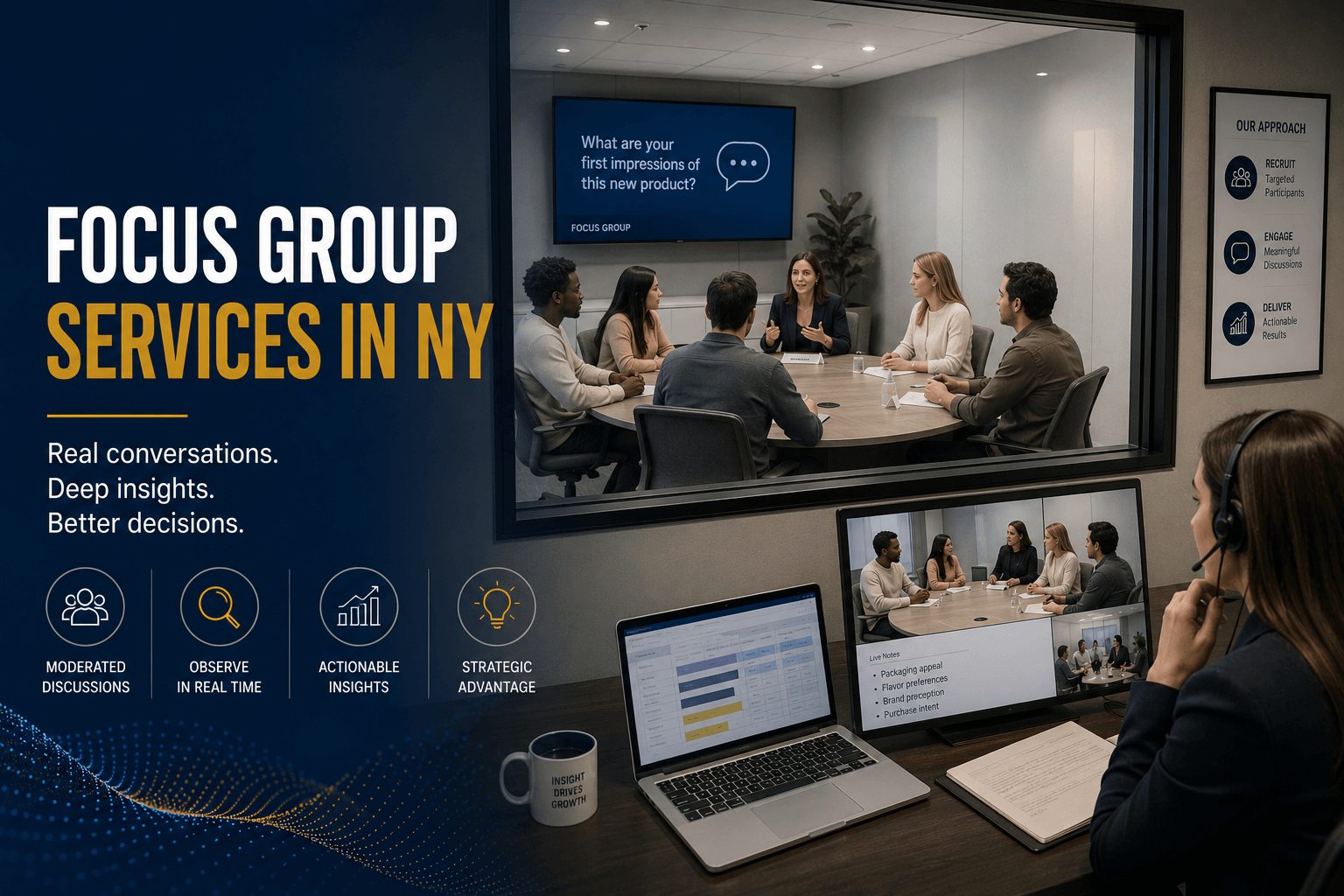
<blockquote">
Focus group services in NY exist to bridge the gap between your assumptions and reality. New York is the most demanding, diverse, and influential consumer market in America. What works in Atlanta or Seattle might bomb here... What succeeds here often sets trends everywhere else.
New York rewards brands that read consumers correctly and punishes those that guess. Manhattan and the outer boroughs concentrate every income tier, cultural background, and shopping behavior a national brand will encounter, which is why NYC focus group services remain the highest-leverage qualitative investment a consumer or retail leader can make before a launch, a relaunch, or a repositioning.
The city functions as a stress test. If a private label reformulation holds up in front of a Trader Joe's shopper in Chelsea, a Whole Foods buyer in the Upper West Side, and a Costco member in Rego Park, it will hold up in Dallas, Denver, and Detroit. That density of consumer archetypes inside a 30-mile radius is why the smartest category leaders anchor their qualitative pipelines here.
Table of Contents
Why New York Makes Focus Groups Different
<blockquote">
New York consumers are brutally honest. They have seen everything. And in focus group settings, they will tell you exactly what they think without sugar-coating it. This directness is gold if you can handle hearing hard truths about your product.
Trends that start in Manhattan spread to Brooklyn, then to other major cities, then nationwide. Fashion, food, technology, lifestyle choices... New York often leads the way.
The diversity factor matters more than you realize. In a single New York focus group, you might have participants whose families came from fifteen different countries. You are not just testing products with one demographic—you are stress-testing them against multiple cultural perspectives simultaneously. This matters enormously if you're planning national or international launches.
New York City Population by Borough
Strategic Importance for Focus Group Research
- Brooklyn: Largest borough with diverse neighborhoods from Park Slope to Williamsburg, offering varied consumer segments
- Queens: Most ethnically diverse urban area globally, ideal for multicultural research and immigrant perspectives
- Manhattan: Highest-income borough and trend-setter, home to early adopters and affluent consumers
- The Bronx: Significant Hispanic/Latino and African American populations, valuable for urban consumer insights
- Staten Island: Most suburban character, provides perspectives often missed in Manhattan-centric research
What You Actually Get From Professional NY Services
<blockquote">
Theory and practice are worlds apart in focus group research.
Professional focus group services in NY start with proper screening. Looking for early adopters? They will find tech enthusiasts who have tried products before mainstream awareness. Need affluent consumers? They will recruit from specific zip codes with verified income levels and spending behaviors that match your target market.
The moderator selection process makes or breaks your research. New York requires moderators with specific skills—they need to manage strong personalities without letting one voice dominate, read between the lines when participants are being polite rather than honest, and probe deeper when something interesting surfaces.
Manhattan vs. Outer Boroughs: Location Strategy
<blockquote">
Stop assuming all New York research should happen in Manhattan.
Focus group services in NY increasingly recognize that Brooklyn, Queens, and the Bronx offer distinct consumer perspectives that Manhattan misses. A Brooklyn focus group might reveal different food trends than a Manhattan group. Queens participants bring multicultural insights that even diverse Manhattan groups can't match. The Bronx offers perspectives on value-consciousness and brand loyalty that wealthier neighborhoods overlook.
Smart researchers use multi-location strategies. Run initial exploratory groups in Manhattan to cast a wide net. Follow up with targeted sessions in specific boroughs to understand neighborhood-level nuances.
A National Market Inside One City
New York City population by borough, showing the concentration of distinct consumer segments that makes the city a stress test for national launches
Source 1: New York City Census Population by Borough
Source 2: SIS International Focus Group Services in New York
The Screening Process That Actually Works
<blockquote">
Most companies waste thousands on focus groups that include the wrong participants.
Professional focus group services in NY use multi-stage screening that goes far beyond basic demographics. Initial screening catches age, location, income level, and category usage. But that's just the beginning. Secondary screening explores attitudes, behaviors, recent purchases, and brand relationships.
Here is a real example: A technology company wanted "smartphone users aged 25-40" for groups about mobile banking. Basic screening would've recruited anyone in that age range with a phone. Smart screening went deeper—How often do you use banking apps? Which features matter most? Have you tried competitors' products? What frustrates you about current solutions? The resulting groups included engaged users with strong opinions, not just anyone who owned a smartphone.
Professional screeners also watch for warning signs. Is someone trying too hard to qualify? They might be professional focus group participants who game the system for incentive payments. Does someone work in marketing, advertising, or market research? They're usually excluded because industry insiders analyze conversations differently than typical consumers. Has someone participated in groups recently? Frequent participants develop a "focus group mentality" that skews results.
How NY Services Handle Diverse Recruitment Needs
<blockquote">
SIS International Research has found that recruit specificity, not incentive size, drives the discriminating power of retail concept tests in NYC, particularly for private label concept testing where category-lapsed users produce sharper diagnostic feedback than heavy users.
Need to reach Chinese immigrants who arrived within the last five years? Russian speakers over 50? LGBTQ+ consumers in specific income brackets? Dominican families in the Bronx? Orthodox Jewish communities in Brooklyn? Focus group services in NY can find them. The city's incredible diversity means virtually any demographic exists here in sufficient numbers for research.
Professional focus group services in NY employ recruiters who speak multiple languages and understand cultural contexts. They maintain relationships with community organizations that provide access to hard-to-reach populations. They know which neighborhoods over-index for specific demographics and how to build trust with communities skeptical of corporate research.
New York City Ethnic & Racial Demographics
Why NYC's Diversity Matters for Focus Groups
- 800+ Languages Spoken: NYC is the most linguistically diverse city in the world
- 36% Foreign-Born: Over 3 million residents born outside the US provide global perspectives
- No Single Majority: No ethnic group represents over 50% of the population
- Diverse Neighborhoods: Each borough offers distinct demographic profiles for targeted research
- Cultural Testing Ground: Products that succeed with NYC's diverse consumers often translate nationally
The Moderator Makes Everything Happen
<blockquote">
You can have perfect participants in a beautiful facility, and terrible moderation ruins everything.
New York demands moderators with specific skills. They need the confidence to manage dominant personalities without shutting them down. The sensitivity to read non-verbal cues in a fast-paced environment. The subject matter expertise to probe intelligently when interesting topics surface. And the cultural fluency to connect with diverse participants and earn their trust quickly.
The best focus group services in NY employ moderators specializing in different industries and research types. A moderator brilliant at pharmaceutical research might struggle with consumer packaged goods. Someone perfect for financial services might be wrong for fashion and beauty. Match the moderator to your category and research objectives, not just availability.
Watch for these moderator qualities during provider selection: Do they ask about your business objectives before discussing methodology? Do they want input on the discussion guide development rather than just accepting whatever you send? Do they probe during sample recruiting to ensure participants meet criteria? These behaviors signal someone who cares about research quality, not just completing another session.
Online vs. In-Person: Choosing Your Format
<blockquote">
Use online focus group services in NY for broad exploration and concept testing where conversation matters most. Bring groups together in person when testing physical products, evaluating packaging, or exploring topics where in-person chemistry and spontaneous interaction create breakthrough insights.
Focus group services in NY now offer seamless online options that often outperform in-person sessions for certain objectives. Cost savings are real—no facility rental, no participant travel time, no food and beverage expenses. Recruitment barriers disappear when people join from home at 8 PM instead of commuting to Manhattan at 6 PM. You can include participants from Long Island, Westchester, or New Jersey who'd never attend in-person sessions.
Online formats also reduce observer effect. Participants in their own homes often speak more candidly than in formal research facilities. They are less conscious of being watched, less performative, more natural. For sensitive topics—healthcare, personal finance, controversial products—this comfort translates directly into better data.
But in-person sessions retain critical advantages. Nothing replicates the energy of face-to-face conversation. Group dynamics that generate the most valuable insights—disagreements, building on each other's ideas, spontaneous laughter—happen more naturally in person. Product testing requiring hands-on interaction obviously demands physical presence. And some participants simply engage more deeply when physically present versus clicking through another Zoom meeting.
What Separates Elite Qualitative Research Firms New York from Commodity Providers
Commodity providers deliver a room, a recruit, and a transcript. Elite qualitative research firms New York deliver a decision. The difference is visible in three places: the screener, the moderator's guide, and the debrief.
Screener design determines whether you are hearing from the buyer who actually drives the category. A weak screener over-indexes on incidence and under-indexes on behavior. A strong screener uses category velocity questions, competitive shop-along evidence, and JAR-scale calibration items to disqualify professional respondents and surface true category deciders.
The moderator's guide separates concept diagnostic work from concept validation theater. A guide built for penalty analysis and CATA (check-all-that-apply) probing produces reasons a concept underperforms, not just a score. That is the difference between a focus group that informs a launch and one that ratifies a decision already made.
Shopper Journey Analytics Focus Groups Reveal What Panel Data Cannot
Scanner panels tell you what shoppers bought. They do not tell you what shoppers considered and rejected at shelf. That gap is where category share moves, and it is what shopper journey analytics focus groups exist to close.
The technique pairs a moderated discussion with a projective mapping exercise and a shop-along photo diary submitted before the session. Participants walk the moderator through the last three category purchases, naming the substitutes considered and the reason each was rejected. That protocol surfaces the private label competitive threat with a specificity scanner data cannot produce.
NYC Usability Testing Labs and In-Person Consumer Research NYC for Product and Packaging
Physical product work still requires a physical room. Packaging structural tests, planogram simulations, and prototype interactions cannot be replicated on Zoom without losing the tactile signal that drives purchase intent. NYC usability testing labs remain the default for beauty prestige, premium grocery, and consumer electronics categories where haptic and visual cues carry the concept.
Facility selection turns on three variables: one-way glass configuration for client observation, kitchen access for CLT and taste testing work, and back-room video capture that supports frame-by-frame review of first-touch behavior. Manhattan and Long Island City facilities cover the full range. The choice depends on category and stimulus.
For consumer product testing facilities in Manhattan, the Flatiron and Midtown corridors offer the fastest recruit fulfillment because they draw from the largest daytime professional population in the country. Brooklyn facilities pull deeper on multicultural and Gen Z cohorts, which matters for beauty, apparel, and functional beverage work.
New York Market Research Recruitment: The Variable That Determines Study Validity
Recruitment is where studies win or lose. New York market research recruitment operates in a market saturated with professional respondents, which makes verification protocols the difference between clean data and contaminated data.
The verification stack includes cross-panel deduplication, LinkedIn verification for B2B and higher-income screens, past-participation lookback windows, and category behavior validation calls before confirming the seat. Weak recruitment shows up in the transcript as vague, over-articulate answers that do not tie to real shopping behavior. Strong recruitment produces friction, hesitation, and specificity.
A City With No Single Majority
New York City population by racial and ethnic group, where no group holds a majority, which is why a concept tested here is stress tested against the diversity of a national rollout
Source 1: New York City Census Racial and Ethnic Composition
Source 2: SIS International Focus Group Services in New York
Common Mistakes That Waste Your Investment
You would be shocked at how many companies sabotage their own research without realizing it.
Over-controlling the conversation
- Executives create discussion guides with 40 topics expecting coverage in 90 minutes
- This leaves zero space for organic conversation where the best insights actually live
- Professional focus group services in NY push back on unrealistic guides and help you prioritize what matters most
Recruiting too narrowly or too broadly
- One client recruited high-income New Yorkers for premium product feedback—sounds logical, right?
- Except high income doesn't equal premium product buyers
- Some wealthy people hunt bargains while middle-income consumers splurge on categories they love
- They wasted thousands recruiting wrong people because they confused demographic proxies with actual target customers
Treating focus groups as quantitative research
- You can't say "67% of participants preferred option A" based on eight people
- Focus groups explore why, how, and what if—not how many or how often
- Surveys and quantitative methods measure prevalence and statistical significance
- Confuse these purposes and you'll either make decisions based on invalid statistics or miss insights entirely
Ignoring cultural context
- A major retail brand tested store concepts with focus group services in NY and got positive feedback
- They rolled out nationwide and sales bombed everywhere except major coastal cities
- New York groups loved urban density, public transit access, and experiential retail
- These elements don't translate to suburban and rural markets that operate completely differently
- New York feedback was accurate for New York—they just overgeneralized to markets with different dynamics
How to Choose Your NY Focus Group Partner
Provider selection determines whether you waste money or gain insights that transform your business.
Evaluate category-specific experience
- A provider dominating pharmaceutical research might be wrong for consumer electronics
- Someone brilliant with B2B audiences might struggle recruiting teenagers
- Category experience matters because recruitment tactics, discussion approaches, and analytical frameworks differ dramatically
- Ask for case studies showing successful projects in your specific industry
Dig into recruitment capabilities
- Ask about database size, screening processes, and verification methods
- Understand how they handle difficult-to-reach populations
- Request examples showing complex recruitment they've executed successfully
- Many providers overpromise and underdeliver on recruitment—this is the single biggest risk factor
Visit facilities before committing
- Website photos can be misleading—you need to see actual spaces
- Check client lounges, observation rooms, and conference spaces in person
- Confirm sight lines from observation rooms so you can clearly see all participants
- Test video streaming and recording quality yourself
- Verify backup systems exist for technology failures
Talk to moderators who'll work on your project
- Do they ask intelligent questions about your business objectives?
- Do they demonstrate genuine curiosity about your research goals?
- Do they suggest improvements to your discussion guide or screening criteria?
- Passive order-takers deliver mediocre research while active partners push back and improve your research design
Evaluate communication and support
- The best focus group services in NY become research partners, not just transaction vendors
- How do they keep clients updated throughout recruitment and execution?
- Do they flag potential issues early or wait until problems become crises?
- What post-research support do they provide for follow-up questions?
Consumer Product Testing NYC: Where the Category Signal Lives
Consumer product testing NYC engagements work best when the physical stimulus matches the decision environment. Blind taste testing for a new yogurt SKU should replicate refrigerator conditions, not conference room lighting. Fragrance evaluation requires scent-neutral facilities. Packaging response should be measured against a real shelf set with competitive product, not a single hero image on foam board.
Leading brands use central location tests (CLTs) in Midtown facilities equipped with observation rooms, prep kitchens, and shelf simulation walls. A CLT for a plant-based protein reformulation runs sequential monadic against the incumbent from Beyond and Impossible, applies JAR scales on texture and aftertaste, and closes with penalty analysis to quantify which attributes drag purchase intent. That structure converts qualitative reactions into a defensible go-no-go recommendation.
The Economics of NYC Focus Group Services
The cost of conducting consumer focus groups in NYC runs higher than tier-two markets, and the return justifies the premium for decisions above a certain threshold. Facility rental, participant incentives at Manhattan rates, and moderator seniority push a well-executed four-group study into a defined range. That investment is trivial against a national launch budget, a private label conversion, or a DTC channel economics decision that will define margin for three years.
The math becomes obvious at the portfolio level. Brands evaluating assortment rationalization across a national footprint use NYC as the diagnostic lab because the shopper diversity approximates the national mix inside one geography. One well-designed New York study can replace three regional studies and compress the timeline by months.
Where SIS Focus Group Work Delivers Differentiated Value
SIS International Research has operated qualitative programs out of New York for four decades, running focus groups, ethnographic research, CLTs, and in-depth interviews for consumer, retail, hospitality, automotive, and technology clients. The New York facility supports in-person groups, hybrid sessions, and observation for client teams flying in from Europe, Asia, and the West Coast. Across recent SIS engagements in beverage, personal care, and specialty retail, the qualitative findings that reshaped client strategy came disproportionately from sessions where the moderator held space for disagreement rather than steering toward consensus, and where the stimulus set included the client's weakest competitor alongside its strongest.
The instrument is only as good as the hands using it. NYC focus group services executed with disciplined recruitment, calibrated moderation, and realistic stimulus design remain one of the highest-return investments in the consumer research toolkit.
Making Focus Groups Work for Your Business
<blockquote">
In structured recruitment work SIS has conducted for retail and consumer clients in the New York metro, the show rate ceiling for tight-screener, category-specific recruits sits meaningfully below the industry average for general population screens, which is why elite fielding assumes over-recruitment as a baseline rather than a contingency.
Focus group services in NY should be foundational to how you make decisions in one of America's most important markets. Product development, marketing strategy, pricing decisions, retail experience design—all benefit from direct consumer input before you make expensive commitments.
Think of focus group services in NY as providing access to your future customers' minds before you commit resources. You're not just gathering opinions—you're stress-testing assumptions, identifying blind spots, and discovering opportunities your internal team never imagined. That insight is worth far more than the invoice amount.
New York does not forgive mediocrity. The market's too competitive, consumers too sophisticated, alternatives too abundant. Focus group services in NY give you the consumer intelligence you need to compete effectively in America's toughest market. Use them wisely, and New York's success becomes your competitive advantage everywhere else.
FAQs
What makes NYC focus group services more valuable than other markets?
New York concentrates the full range of American consumer segments, incomes, and cultural backgrounds inside a 30-mile radius, which lets brands stress-test a concept against the diversity of a national rollout in a single fielding.
How much should a company budget for professional focus group services in NY?
Diagnostic-grade qualitative in New York typically runs higher than secondary markets because of recruit rigor, facility quality, and moderator caliber. The premium is justified when the study informs a SKU, launch, or assortment decision above six figures in exposure.
What is the best qualitative method for private label competitive threat analysis?
Recruit national brand loyalists rather than private label converts and evaluate the private label stimulus against the strongest incumbents on a real shelf simulation. Their objections define the ceiling on switching and the true competitive risk.
How do shopper journey analytics focus groups differ from standard focus groups?
They reconstruct the full path to purchase using diary handoffs, shelf walk videos, and moderated debriefs, which exposes the actual triggers behind a purchase decision rather than the rationalizations consumers offer at checkout.
Can NYC focus groups replace multiple regional studies?
For many national assortment rationalization and concept testing decisions, yes. New York's shopper diversity approximates the national consumer mix, so one well-designed study often replaces two or three regional fieldings.
When should focus groups be used instead of quantitative research?
Focus groups belong in the sequence between quantitative concept screening and in-market pilot. They refine winning territories identified in quant and diagnose why concepts underperform, which survey data alone cannot explain.
Our Facility Location in New York
11 E 22nd Street, Floor 2, New York, NY 10010 T: +1(212) 505-6805
About SIS International
SIS International offers Quantitative, Qualitative, and Strategy Research. We provide data, tools, strategies, reports, and insights for decision-making. We also conduct interviews, surveys, focus groups, and other Market Research methods and approaches. Contact us for your next Market Research project.
Focus Group Services in NY
<blockquote">
Focus group services in NY exist to bridge the gap between your assumptions and reality. New York is the most demanding, diverse, and influential consumer market in America. What works in Atlanta or Seattle might bomb here... What succeeds here often sets trends everywhere else.
New York rewards brands that read consumers correctly and punishes those that guess. Manhattan and the outer boroughs concentrate every income tier, cultural background, and shopping behavior a national brand will encounter, which is why NYC focus group services remain the highest-leverage qualitative investment a consumer or retail leader can make before a launch, a relaunch, or a repositioning.
The city functions as a stress test. If a private label reformulation holds up in front of a Trader Joe's shopper in Chelsea, a Whole Foods buyer in the Upper West Side, and a Costco member in Rego Park, it will hold up in Dallas, Denver, and Detroit. That density of consumer archetypes inside a 30-mile radius is why the smartest category leaders anchor their qualitative pipelines here.
Table of Contents
Why New York Makes Focus Groups Different
<blockquote">
New York consumers are brutally honest. They have seen everything. And in focus group settings, they will tell you exactly what they think without sugar-coating it. This directness is gold if you can handle hearing hard truths about your product.
Trends that start in Manhattan spread to Brooklyn, then to other major cities, then nationwide. Fashion, food, technology, lifestyle choices... New York often leads the way.
The diversity factor matters more than you realize. In a single New York focus group, you might have participants whose families came from fifteen different countries. You are not just testing products with one demographic—you are stress-testing them against multiple cultural perspectives simultaneously. This matters enormously if you're planning national or international launches.
New York City Population by Borough
Strategic Importance for Focus Group Research
- Brooklyn: Largest borough with diverse neighborhoods from Park Slope to Williamsburg, offering varied consumer segments
- Queens: Most ethnically diverse urban area globally, ideal for multicultural research and immigrant perspectives
- Manhattan: Highest-income borough and trend-setter, home to early adopters and affluent consumers
- The Bronx: Significant Hispanic/Latino and African American populations, valuable for urban consumer insights
- Staten Island: Most suburban character, provides perspectives often missed in Manhattan-centric research
What You Actually Get From Professional NY Services
<blockquote">
Theory and practice are worlds apart in focus group research.
Professional focus group services in NY start with proper screening. Looking for early adopters? They will find tech enthusiasts who have tried products before mainstream awareness. Need affluent consumers? They will recruit from specific zip codes with verified income levels and spending behaviors that match your target market.
The moderator selection process makes or breaks your research. New York requires moderators with specific skills—they need to manage strong personalities without letting one voice dominate, read between the lines when participants are being polite rather than honest, and probe deeper when something interesting surfaces.
Manhattan vs. Outer Boroughs: Location Strategy
<blockquote">
Stop assuming all New York research should happen in Manhattan.
Focus group services in NY increasingly recognize that Brooklyn, Queens, and the Bronx offer distinct consumer perspectives that Manhattan misses. A Brooklyn focus group might reveal different food trends than a Manhattan group. Queens participants bring multicultural insights that even diverse Manhattan groups can't match. The Bronx offers perspectives on value-consciousness and brand loyalty that wealthier neighborhoods overlook.
Smart researchers use multi-location strategies. Run initial exploratory groups in Manhattan to cast a wide net. Follow up with targeted sessions in specific boroughs to understand neighborhood-level nuances.
A National Market Inside One City
New York City population by borough, showing the concentration of distinct consumer segments that makes the city a stress test for national launches
Source 1: New York City Census Population by Borough
Source 2: SIS International Focus Group Services in New York
The Screening Process That Actually Works
<blockquote">
Most companies waste thousands on focus groups that include the wrong participants.
Professional focus group services in NY use multi-stage screening that goes far beyond basic demographics. Initial screening catches age, location, income level, and category usage. But that's just the beginning. Secondary screening explores attitudes, behaviors, recent purchases, and brand relationships.
Here is a real example: A technology company wanted "smartphone users aged 25-40" for groups about mobile banking. Basic screening would've recruited anyone in that age range with a phone. Smart screening went deeper—How often do you use banking apps? Which features matter most? Have you tried competitors' products? What frustrates you about current solutions? The resulting groups included engaged users with strong opinions, not just anyone who owned a smartphone.
Professional screeners also watch for warning signs. Is someone trying too hard to qualify? They might be professional focus group participants who game the system for incentive payments. Does someone work in marketing, advertising, or market research? They're usually excluded because industry insiders analyze conversations differently than typical consumers. Has someone participated in groups recently? Frequent participants develop a "focus group mentality" that skews results.
How NY Services Handle Diverse Recruitment Needs
<blockquote">
SIS International Research has found that recruit specificity, not incentive size, drives the discriminating power of retail concept tests in NYC, particularly for private label concept testing where category-lapsed users produce sharper diagnostic feedback than heavy users.
Need to reach Chinese immigrants who arrived within the last five years? Russian speakers over 50? LGBTQ+ consumers in specific income brackets? Dominican families in the Bronx? Orthodox Jewish communities in Brooklyn? Focus group services in NY can find them. The city's incredible diversity means virtually any demographic exists here in sufficient numbers for research.
Professional focus group services in NY employ recruiters who speak multiple languages and understand cultural contexts. They maintain relationships with community organizations that provide access to hard-to-reach populations. They know which neighborhoods over-index for specific demographics and how to build trust with communities skeptical of corporate research.
New York City Ethnic & Racial Demographics
Why NYC's Diversity Matters for Focus Groups
- 800+ Languages Spoken: NYC is the most linguistically diverse city in the world
- 36% Foreign-Born: Over 3 million residents born outside the US provide global perspectives
- No Single Majority: No ethnic group represents over 50% of the population
- Diverse Neighborhoods: Each borough offers distinct demographic profiles for targeted research
- Cultural Testing Ground: Products that succeed with NYC's diverse consumers often translate nationally
The Moderator Makes Everything Happen
<blockquote">
You can have perfect participants in a beautiful facility, and terrible moderation ruins everything.
New York demands moderators with specific skills. They need the confidence to manage dominant personalities without shutting them down. The sensitivity to read non-verbal cues in a fast-paced environment. The subject matter expertise to probe intelligently when interesting topics surface. And the cultural fluency to connect with diverse participants and earn their trust quickly.
The best focus group services in NY employ moderators specializing in different industries and research types. A moderator brilliant at pharmaceutical research might struggle with consumer packaged goods. Someone perfect for financial services might be wrong for fashion and beauty. Match the moderator to your category and research objectives, not just availability.
Watch for these moderator qualities during provider selection: Do they ask about your business objectives before discussing methodology? Do they want input on the discussion guide development rather than just accepting whatever you send? Do they probe during sample recruiting to ensure participants meet criteria? These behaviors signal someone who cares about research quality, not just completing another session.
Online vs. In-Person: Choosing Your Format
<blockquote">
Use online focus group services in NY for broad exploration and concept testing where conversation matters most. Bring groups together in person when testing physical products, evaluating packaging, or exploring topics where in-person chemistry and spontaneous interaction create breakthrough insights.
Focus group services in NY now offer seamless online options that often outperform in-person sessions for certain objectives. Cost savings are real—no facility rental, no participant travel time, no food and beverage expenses. Recruitment barriers disappear when people join from home at 8 PM instead of commuting to Manhattan at 6 PM. You can include participants from Long Island, Westchester, or New Jersey who'd never attend in-person sessions.
Online formats also reduce observer effect. Participants in their own homes often speak more candidly than in formal research facilities. They are less conscious of being watched, less performative, more natural. For sensitive topics—healthcare, personal finance, controversial products—this comfort translates directly into better data.
But in-person sessions retain critical advantages. Nothing replicates the energy of face-to-face conversation. Group dynamics that generate the most valuable insights—disagreements, building on each other's ideas, spontaneous laughter—happen more naturally in person. Product testing requiring hands-on interaction obviously demands physical presence. And some participants simply engage more deeply when physically present versus clicking through another Zoom meeting.
What Separates Elite Qualitative Research Firms New York from Commodity Providers
Commodity providers deliver a room, a recruit, and a transcript. Elite qualitative research firms New York deliver a decision. The difference is visible in three places: the screener, the moderator's guide, and the debrief.
Screener design determines whether you are hearing from the buyer who actually drives the category. A weak screener over-indexes on incidence and under-indexes on behavior. A strong screener uses category velocity questions, competitive shop-along evidence, and JAR-scale calibration items to disqualify professional respondents and surface true category deciders.
The moderator's guide separates concept diagnostic work from concept validation theater. A guide built for penalty analysis and CATA (check-all-that-apply) probing produces reasons a concept underperforms, not just a score. That is the difference between a focus group that informs a launch and one that ratifies a decision already made.
Shopper Journey Analytics Focus Groups Reveal What Panel Data Cannot
Scanner panels tell you what shoppers bought. They do not tell you what shoppers considered and rejected at shelf. That gap is where category share moves, and it is what shopper journey analytics focus groups exist to close.
The technique pairs a moderated discussion with a projective mapping exercise and a shop-along photo diary submitted before the session. Participants walk the moderator through the last three category purchases, naming the substitutes considered and the reason each was rejected. That protocol surfaces the private label competitive threat with a specificity scanner data cannot produce.
NYC Usability Testing Labs and In-Person Consumer Research NYC for Product and Packaging
Physical product work still requires a physical room. Packaging structural tests, planogram simulations, and prototype interactions cannot be replicated on Zoom without losing the tactile signal that drives purchase intent. NYC usability testing labs remain the default for beauty prestige, premium grocery, and consumer electronics categories where haptic and visual cues carry the concept.
Facility selection turns on three variables: one-way glass configuration for client observation, kitchen access for CLT and taste testing work, and back-room video capture that supports frame-by-frame review of first-touch behavior. Manhattan and Long Island City facilities cover the full range. The choice depends on category and stimulus.
For consumer product testing facilities in Manhattan, the Flatiron and Midtown corridors offer the fastest recruit fulfillment because they draw from the largest daytime professional population in the country. Brooklyn facilities pull deeper on multicultural and Gen Z cohorts, which matters for beauty, apparel, and functional beverage work.
New York Market Research Recruitment: The Variable That Determines Study Validity
Recruitment is where studies win or lose. New York market research recruitment operates in a market saturated with professional respondents, which makes verification protocols the difference between clean data and contaminated data.
The verification stack includes cross-panel deduplication, LinkedIn verification for B2B and higher-income screens, past-participation lookback windows, and category behavior validation calls before confirming the seat. Weak recruitment shows up in the transcript as vague, over-articulate answers that do not tie to real shopping behavior. Strong recruitment produces friction, hesitation, and specificity.
A City With No Single Majority
New York City population by racial and ethnic group, where no group holds a majority, which is why a concept tested here is stress tested against the diversity of a national rollout
Source 1: New York City Census Racial and Ethnic Composition
Source 2: SIS International Focus Group Services in New York
Common Mistakes That Waste Your Investment
You would be shocked at how many companies sabotage their own research without realizing it.
Over-controlling the conversation
- Executives create discussion guides with 40 topics expecting coverage in 90 minutes
- This leaves zero space for organic conversation where the best insights actually live
- Professional focus group services in NY push back on unrealistic guides and help you prioritize what matters most
Recruiting too narrowly or too broadly
- One client recruited high-income New Yorkers for premium product feedback—sounds logical, right?
- Except high income doesn't equal premium product buyers
- Some wealthy people hunt bargains while middle-income consumers splurge on categories they love
- They wasted thousands recruiting wrong people because they confused demographic proxies with actual target customers
Treating focus groups as quantitative research
- You can't say "67% of participants preferred option A" based on eight people
- Focus groups explore why, how, and what if—not how many or how often
- Surveys and quantitative methods measure prevalence and statistical significance
- Confuse these purposes and you'll either make decisions based on invalid statistics or miss insights entirely
Ignoring cultural context
- A major retail brand tested store concepts with focus group services in NY and got positive feedback
- They rolled out nationwide and sales bombed everywhere except major coastal cities
- New York groups loved urban density, public transit access, and experiential retail
- These elements don't translate to suburban and rural markets that operate completely differently
- New York feedback was accurate for New York—they just overgeneralized to markets with different dynamics
How to Choose Your NY Focus Group Partner
Provider selection determines whether you waste money or gain insights that transform your business.
Evaluate category-specific experience
- A provider dominating pharmaceutical research might be wrong for consumer electronics
- Someone brilliant with B2B audiences might struggle recruiting teenagers
- Category experience matters because recruitment tactics, discussion approaches, and analytical frameworks differ dramatically
- Ask for case studies showing successful projects in your specific industry
Dig into recruitment capabilities
- Ask about database size, screening processes, and verification methods
- Understand how they handle difficult-to-reach populations
- Request examples showing complex recruitment they've executed successfully
- Many providers overpromise and underdeliver on recruitment—this is the single biggest risk factor
Visit facilities before committing
- Website photos can be misleading—you need to see actual spaces
- Check client lounges, observation rooms, and conference spaces in person
- Confirm sight lines from observation rooms so you can clearly see all participants
- Test video streaming and recording quality yourself
- Verify backup systems exist for technology failures
Talk to moderators who'll work on your project
- Do they ask intelligent questions about your business objectives?
- Do they demonstrate genuine curiosity about your research goals?
- Do they suggest improvements to your discussion guide or screening criteria?
- Passive order-takers deliver mediocre research while active partners push back and improve your research design
Evaluate communication and support
- The best focus group services in NY become research partners, not just transaction vendors
- How do they keep clients updated throughout recruitment and execution?
- Do they flag potential issues early or wait until problems become crises?
- What post-research support do they provide for follow-up questions?
Consumer Product Testing NYC: Where the Category Signal Lives
Consumer product testing NYC engagements work best when the physical stimulus matches the decision environment. Blind taste testing for a new yogurt SKU should replicate refrigerator conditions, not conference room lighting. Fragrance evaluation requires scent-neutral facilities. Packaging response should be measured against a real shelf set with competitive product, not a single hero image on foam board.
Leading brands use central location tests (CLTs) in Midtown facilities equipped with observation rooms, prep kitchens, and shelf simulation walls. A CLT for a plant-based protein reformulation runs sequential monadic against the incumbent from Beyond and Impossible, applies JAR scales on texture and aftertaste, and closes with penalty analysis to quantify which attributes drag purchase intent. That structure converts qualitative reactions into a defensible go-no-go recommendation.
The Economics of NYC Focus Group Services
The cost of conducting consumer focus groups in NYC runs higher than tier-two markets, and the return justifies the premium for decisions above a certain threshold. Facility rental, participant incentives at Manhattan rates, and moderator seniority push a well-executed four-group study into a defined range. That investment is trivial against a national launch budget, a private label conversion, or a DTC channel economics decision that will define margin for three years.
The math becomes obvious at the portfolio level. Brands evaluating assortment rationalization across a national footprint use NYC as the diagnostic lab because the shopper diversity approximates the national mix inside one geography. One well-designed New York study can replace three regional studies and compress the timeline by months.
Where SIS Focus Group Work Delivers Differentiated Value
SIS International Research has operated qualitative programs out of New York for four decades, running focus groups, ethnographic research, CLTs, and in-depth interviews for consumer, retail, hospitality, automotive, and technology clients. The New York facility supports in-person groups, hybrid sessions, and observation for client teams flying in from Europe, Asia, and the West Coast. Across recent SIS engagements in beverage, personal care, and specialty retail, the qualitative findings that reshaped client strategy came disproportionately from sessions where the moderator held space for disagreement rather than steering toward consensus, and where the stimulus set included the client's weakest competitor alongside its strongest.
The instrument is only as good as the hands using it. NYC focus group services executed with disciplined recruitment, calibrated moderation, and realistic stimulus design remain one of the highest-return investments in the consumer research toolkit.
Making Focus Groups Work for Your Business
<blockquote">
In structured recruitment work SIS has conducted for retail and consumer clients in the New York metro, the show rate ceiling for tight-screener, category-specific recruits sits meaningfully below the industry average for general population screens, which is why elite fielding assumes over-recruitment as a baseline rather than a contingency.
Focus group services in NY should be foundational to how you make decisions in one of America's most important markets. Product development, marketing strategy, pricing decisions, retail experience design—all benefit from direct consumer input before you make expensive commitments.
Think of focus group services in NY as providing access to your future customers' minds before you commit resources. You're not just gathering opinions—you're stress-testing assumptions, identifying blind spots, and discovering opportunities your internal team never imagined. That insight is worth far more than the invoice amount.
New York does not forgive mediocrity. The market's too competitive, consumers too sophisticated, alternatives too abundant. Focus group services in NY give you the consumer intelligence you need to compete effectively in America's toughest market. Use them wisely, and New York's success becomes your competitive advantage everywhere else.
FAQs
What makes NYC focus group services more valuable than other markets?
New York concentrates the full range of American consumer segments, incomes, and cultural backgrounds inside a 30-mile radius, which lets brands stress-test a concept against the diversity of a national rollout in a single fielding.
How much should a company budget for professional focus group services in NY?
Diagnostic-grade qualitative in New York typically runs higher than secondary markets because of recruit rigor, facility quality, and moderator caliber. The premium is justified when the study informs a SKU, launch, or assortment decision above six figures in exposure.
What is the best qualitative method for private label competitive threat analysis?
Recruit national brand loyalists rather than private label converts and evaluate the private label stimulus against the strongest incumbents on a real shelf simulation. Their objections define the ceiling on switching and the true competitive risk.
How do shopper journey analytics focus groups differ from standard focus groups?
They reconstruct the full path to purchase using diary handoffs, shelf walk videos, and moderated debriefs, which exposes the actual triggers behind a purchase decision rather than the rationalizations consumers offer at checkout.
Can NYC focus groups replace multiple regional studies?
For many national assortment rationalization and concept testing decisions, yes. New York's shopper diversity approximates the national consumer mix, so one well-designed study often replaces two or three regional fieldings.
When should focus groups be used instead of quantitative research?
Focus groups belong in the sequence between quantitative concept screening and in-market pilot. They refine winning territories identified in quant and diagnose why concepts underperform, which survey data alone cannot explain.
Our Facility Location in New York
11 E 22nd Street, Floor 2, New York, NY 10010 T: +1(212) 505-6805
About SIS International
SIS International offers Quantitative, Qualitative, and Strategy Research. We provide data, tools, strategies, reports, and insights for decision-making. We also conduct interviews, surveys, focus groups, and other Market Research methods and approaches. Contact us for your next Market Research project.