Thought Leadership


Discover Carrefour's experience in expanding to Dubai, United Arab Emirates.
Ruth Stanat remembers her article from 1990 regarding Strategic Intelligence.
Global competitors never stop their Strategic Plan [...]
How to Continue Your Expansion in Emerging Markets in this Recession
Ruth Stanat, President and CEO, SIS International Research
January 26, 2009
Background
Automotive Sensor Market Research Automotive sys [...]
Understand the pros and cons of discounting at super luxury retailers.
By Dmitry Shimanov, General Director of MAR Consult Research Agency
Also accessible on SIS Worldwide Intelligence A famous economic law says: “Demand determines supply”. Is this really true?
Regular consumers take this assumption for granted. In today’s market, however, this law requires further revision and clarification. At first, supply determines demand and only then does demand begin to expand the amount of supply.

As part of our series of marketing-related books, we have reviewed Luke Sullivan's book "Hey Whipple Squeeze This." While focused on advertising, the book delves into solving problems and understanding consumers. Likewise, it can be applied to other areas of marketing services. We have structured this review on interesting concepts on which the author focused.
Brainstorming
Sullivan asserts the value in posing the problem as a question. One of our favorite quotes in the book was when Sullivan stated, “A problem well-stated is a problem half-solved.” By focusing on the question, people can facilitate the brainstorming process.
The 2008 US Presidential Election was fascinating for a multitude of reasons, but in particular because of the use of new marketing.
By Dmitry Shimanov, General Director of MAR Consult Research Agency
Also accessible on SIS Worldwide Intelligence Library. One of the common mistakes existing in business circles is that marketing research is necessary only for large companies. As a matter of fact, small businesses require it as much as transnational corporations.
Why? Here are four reasons.
First, in order to expand market share, small companies need to find a suitable niche. This is why market analysis and SWOT analysis of competitors will be required. Second, small companies deal with extreme pressure of competition. They have to keep hold of every client, and to do so, complete information on consumers is necessary (from social and demographic features to psychographic portrait).
 As part of our series of marketing book reviews, we have recently reviewed Jon Steel's "Truth, Lies and Advertising: the Art of Account Planning." While focused on advertising, the book's content can feasibly be applied to other branches of marketing services. In particular, we were eager to read its perspective on market research in Advertising campaigns.
Steel's goal is to propose a new model of advertising based on the complexity of people and their emotions. The model incorporates a partnership of stakeholders in an advertising campaign:
The fragrance industry worldwide rolls to the beat of its own drum in terms of marketing and consumer purchases.
We reviewed a few chapters in Malcolm Gladwell's best-seller "Blink". Why? Thin Slicing reveals insights into human behavior.
 Culture can be simply defined as a way of life of people in a particular society. In a broad term, culture is a configuration of learned behaviour whose component elements are shared and transmitted by members of a particular community. People from the same cultural background have common trait, ideology, norms, belief, value system, consumption pattern, speak same language and use same currency. Different cultures show a tremendous spectrum of diversity in how a society perceives either a product, idea or service as well as what its members expect.
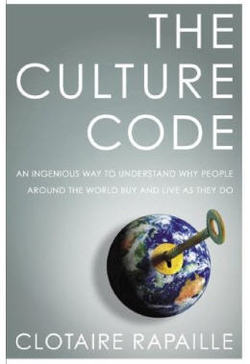 As part of our series of marketing-related books, we have reviewed Clotaire Rappaille's book "The Culture Code." In marketing research, Rappaille is known for his style and unique theories on human behavior. He is known for his rejection of the traditional focus group; instead he proposes a 3-hour focus group in which he does unstructured probing of obscure questions to elicit deeply rooted emotions and attitudes. In the book, he talks about how a culture has a code for every concept, and that it is the job of marketers to decode those meanings.
Rapaille lays out 5 central principles that belie his marketing research approach.
©2026 SIS International Research