
End-to-End Strategy and Consulting Support
At SIS, we provide end-to-end support for our clients’ multi-channel marketing strategies—from initial research and insights to execution and performance monitoring. Our Strategy Consulting and Sales Growth Consulting services help businesses define their marketing goals, identify the most effective channels, and implement campaigns that achieve measurable success.
Highly Experienced Team
Our team of 150+ employees and collaborators brings together experts in marketing, research, strategy, and technology. This diverse expertise ensures we can offer a comprehensive perspective on multi-channel marketing and tailor our approach to each client’s needs.
Our Facility Location in New York
11 E 22nd Street, Floor 2, New York, NY 10010 T: +1(212) 505-6805
About SIS International
SIS International offers Quantitative, Qualitative, and Strategy Research. We provide data, tools, strategies, reports, and insights for decision-making. We also conduct interviews, surveys, focus groups, and other Market Research methods and approaches. Contact us for your next Market Research project.
Proven Track Record with Fortune 500 Companies
Our proven track record of working with over 70% of Fortune 500 companies speaks volumes about the quality and effectiveness of our services. Our deep understanding of B2B markets allows us to craft strategies that deliver measurable results—enhancing brand visibility, improving engagement, and boosting conversion rates across diverse channels.
B2B Multi-Channel Marketing Strategy
Technology plays a crucial role in today’s marketing landscape, and we leverage the latest innovations to maximize the effectiveness of our clients’ multi-channel marketing strategies. At SIS International, we integrate AI, blockchain, and PowerBi dashboards to provide deeper insights, automate processes, and visualize data effectively.
End-to-End Strategy and Consulting Support
At SIS, we provide end-to-end support for our clients’ multi-channel marketing strategies—from initial research and insights to execution and performance monitoring. Our Strategy Consulting and Sales Growth Consulting services help businesses define their marketing goals, identify the most effective channels, and implement campaigns that achieve measurable success.
Highly Experienced Team
Our team of 150+ employees and collaborators brings together experts in marketing, research, strategy, and technology. This diverse expertise ensures we can offer a comprehensive perspective on multi-channel marketing and tailor our approach to each client’s needs.
Our Facility Location in New York
11 E 22nd Street, Floor 2, New York, NY 10010 T: +1(212) 505-6805
About SIS International
SIS International offers Quantitative, Qualitative, and Strategy Research. We provide data, tools, strategies, reports, and insights for decision-making. We also conduct interviews, surveys, focus groups, and other Market Research methods and approaches. Contact us for your next Market Research project.
Comprehensive Solutions Tailored to Your Needs
At SIS, we offer a wide range of solutions that cater to various aspects of B2B growth and marketing, ensuring that our clients’ strategies are comprehensive and effective. From brand consulting and customer satisfaction analysis to market entry and sales growth consulting, our expertise covers all the critical elements contributing to a successful multi-channel marketing approach.
Proven Track Record with Fortune 500 Companies
Our proven track record of working with over 70% of Fortune 500 companies speaks volumes about the quality and effectiveness of our services. Our deep understanding of B2B markets allows us to craft strategies that deliver measurable results—enhancing brand visibility, improving engagement, and boosting conversion rates across diverse channels.
B2B Multi-Channel Marketing Strategy
Technology plays a crucial role in today’s marketing landscape, and we leverage the latest innovations to maximize the effectiveness of our clients’ multi-channel marketing strategies. At SIS International, we integrate AI, blockchain, and PowerBi dashboards to provide deeper insights, automate processes, and visualize data effectively.
End-to-End Strategy and Consulting Support
At SIS, we provide end-to-end support for our clients’ multi-channel marketing strategies—from initial research and insights to execution and performance monitoring. Our Strategy Consulting and Sales Growth Consulting services help businesses define their marketing goals, identify the most effective channels, and implement campaigns that achieve measurable success.
Highly Experienced Team
Our team of 150+ employees and collaborators brings together experts in marketing, research, strategy, and technology. This diverse expertise ensures we can offer a comprehensive perspective on multi-channel marketing and tailor our approach to each client’s needs.
Our Facility Location in New York
11 E 22nd Street, Floor 2, New York, NY 10010 T: +1(212) 505-6805
About SIS International
SIS International offers Quantitative, Qualitative, and Strategy Research. We provide data, tools, strategies, reports, and insights for decision-making. We also conduct interviews, surveys, focus groups, and other Market Research methods and approaches. Contact us for your next Market Research project.
Global Reach and Extensive Expertise
Our global reach and superior B2B market expertise are what set us apart. Having conducted projects in 135+ countries and serviced clients across various industries, SIS International has the insights to navigate different market dynamics effectively.
Comprehensive Solutions Tailored to Your Needs
At SIS, we offer a wide range of solutions that cater to various aspects of B2B growth and marketing, ensuring that our clients’ strategies are comprehensive and effective. From brand consulting and customer satisfaction analysis to market entry and sales growth consulting, our expertise covers all the critical elements contributing to a successful multi-channel marketing approach.
Proven Track Record with Fortune 500 Companies
Our proven track record of working with over 70% of Fortune 500 companies speaks volumes about the quality and effectiveness of our services. Our deep understanding of B2B markets allows us to craft strategies that deliver measurable results—enhancing brand visibility, improving engagement, and boosting conversion rates across diverse channels.
B2B Multi-Channel Marketing Strategy
Technology plays a crucial role in today’s marketing landscape, and we leverage the latest innovations to maximize the effectiveness of our clients’ multi-channel marketing strategies. At SIS International, we integrate AI, blockchain, and PowerBi dashboards to provide deeper insights, automate processes, and visualize data effectively.
End-to-End Strategy and Consulting Support
At SIS, we provide end-to-end support for our clients’ multi-channel marketing strategies—from initial research and insights to execution and performance monitoring. Our Strategy Consulting and Sales Growth Consulting services help businesses define their marketing goals, identify the most effective channels, and implement campaigns that achieve measurable success.
Highly Experienced Team
Our team of 150+ employees and collaborators brings together experts in marketing, research, strategy, and technology. This diverse expertise ensures we can offer a comprehensive perspective on multi-channel marketing and tailor our approach to each client’s needs.
Our Facility Location in New York
11 E 22nd Street, Floor 2, New York, NY 10010 T: +1(212) 505-6805
About SIS International
SIS International offers Quantitative, Qualitative, and Strategy Research. We provide data, tools, strategies, reports, and insights for decision-making. We also conduct interviews, surveys, focus groups, and other Market Research methods and approaches. Contact us for your next Market Research project.
What Makes SIS International a Top B2B Multi-Channel Marketing Strategy Company?

At SIS International, we understand the complexities and challenges of creating an effective B2B multi-channel marketing strategy. With over 40 years of experience in the industry, we’ve worked with some of the world’s most influential companies, including over 70% of the Fortune 500, to provide actionable insights that drive growth and competitive advantage. Here’s why SIS International stands out as a leader in multi-channel marketing strategy.
Global Reach and Extensive Expertise
Our global reach and superior B2B market expertise are what set us apart. Having conducted projects in 135+ countries and serviced clients across various industries, SIS International has the insights to navigate different market dynamics effectively.
Comprehensive Solutions Tailored to Your Needs
At SIS, we offer a wide range of solutions that cater to various aspects of B2B growth and marketing, ensuring that our clients’ strategies are comprehensive and effective. From brand consulting and customer satisfaction analysis to market entry and sales growth consulting, our expertise covers all the critical elements contributing to a successful multi-channel marketing approach.
Proven Track Record with Fortune 500 Companies
Our proven track record of working with over 70% of Fortune 500 companies speaks volumes about the quality and effectiveness of our services. Our deep understanding of B2B markets allows us to craft strategies that deliver measurable results—enhancing brand visibility, improving engagement, and boosting conversion rates across diverse channels.
B2B Multi-Channel Marketing Strategy
Technology plays a crucial role in today’s marketing landscape, and we leverage the latest innovations to maximize the effectiveness of our clients’ multi-channel marketing strategies. At SIS International, we integrate AI, blockchain, and PowerBi dashboards to provide deeper insights, automate processes, and visualize data effectively.
End-to-End Strategy and Consulting Support
At SIS, we provide end-to-end support for our clients’ multi-channel marketing strategies—from initial research and insights to execution and performance monitoring. Our Strategy Consulting and Sales Growth Consulting services help businesses define their marketing goals, identify the most effective channels, and implement campaigns that achieve measurable success.
Highly Experienced Team
Our team of 150+ employees and collaborators brings together experts in marketing, research, strategy, and technology. This diverse expertise ensures we can offer a comprehensive perspective on multi-channel marketing and tailor our approach to each client’s needs.
Our Facility Location in New York
11 E 22nd Street, Floor 2, New York, NY 10010 T: +1(212) 505-6805
About SIS International
SIS International offers Quantitative, Qualitative, and Strategy Research. We provide data, tools, strategies, reports, and insights for decision-making. We also conduct interviews, surveys, focus groups, and other Market Research methods and approaches. Contact us for your next Market Research project.
How to Develop a Successful Multi-Channel Marketing Strategy

A well-executed strategy ensures businesses can reach their target audience at the right time with the right message, providing value and building relationships that ultimately lead to conversion. Here’s a step-by-step guide on how to develop a successful multi-channel marketing strategy:
- Step 1: Define Your Target Audience and Buyer Personas
Identify the types of businesses you want to reach, their industry, company size, and specific pain points. Developing detailed buyer personas helps you understand your ideal customers, including their roles, responsibilities, challenges, and preferred communication channels. - Step 2: Set Clear Goals and Key Performance Indicators (KPIs)
Are you aiming to increase brand awareness, generate leads, nurture prospects, or improve conversions? Establish clear, measurable goals, such as increasing website traffic by 20%, generating a certain number of leads, or boosting conversion rates. Set KPIs to track your progress, such as engagement rates, lead quality, or cost per lead. - Step 3: Choose the Right Channels Based on Audience Preferences
To create a successful B2B multi-channel marketing strategy, selecting the right channels for your target audience is essential. Use data to understand where your audience is most active—some segments may be more engaged on LinkedIn, while others prefer webinars or email. Choosing the channels that best align with your buyer personas helps you focus your resources on where they will have the most impact. - Step 4: Create Consistent and Relevant Content
To effectively engage prospects, create consistent, high-quality content that resonates with your audience across different channels. Develop a content calendar to plan and coordinate posts, emails, articles, and campaigns, ensuring your messaging remains consistent and aligned with your brand identity. - Step 5: Integrate Marketing Automation Tools
Use automation tools like HubSpot, Marketo, or Mailchimp to manage campaigns, schedule content, nurture leads, and track engagement across channels. Automation helps ensure your campaigns are timely and consistent while enabling scale personalization. - Step 6: Coordinate Cross-Channel Efforts
Make sure that your campaigns are well-aligned across channels—if you are launching a new product, the message should be communicated consistently across social media, email, blog posts, and paid ads. Cross-channel coordination ensures that your audience receives a cohesive message no matter where they engage with your brand, helping to strengthen their connection with your company. - Step 7: Monitor Performance and Gather Insights
Use analytics tools like Google Analytics, social media insights, and email metrics to gather data on engagement, lead generation, conversion rates, and other KPIs. These insights help you understand which channels work best, what content resonates most with your audience, and where adjustments are needed.
What Makes SIS International a Top B2B Multi-Channel Marketing Strategy Company?
At SIS International, we understand the complexities and challenges of creating an effective B2B multi-channel marketing strategy. With over 40 years of experience in the industry, we’ve worked with some of the world’s most influential companies, including over 70% of the Fortune 500, to provide actionable insights that drive growth and competitive advantage. Here’s why SIS International stands out as a leader in multi-channel marketing strategy.
Global Reach and Extensive Expertise
Our global reach and superior B2B market expertise are what set us apart. Having conducted projects in 135+ countries and serviced clients across various industries, SIS International has the insights to navigate different market dynamics effectively.
Comprehensive Solutions Tailored to Your Needs
At SIS, we offer a wide range of solutions that cater to various aspects of B2B growth and marketing, ensuring that our clients’ strategies are comprehensive and effective. From brand consulting and customer satisfaction analysis to market entry and sales growth consulting, our expertise covers all the critical elements contributing to a successful multi-channel marketing approach.
Proven Track Record with Fortune 500 Companies
Our proven track record of working with over 70% of Fortune 500 companies speaks volumes about the quality and effectiveness of our services. Our deep understanding of B2B markets allows us to craft strategies that deliver measurable results—enhancing brand visibility, improving engagement, and boosting conversion rates across diverse channels.
B2B Multi-Channel Marketing Strategy
Technology plays a crucial role in today’s marketing landscape, and we leverage the latest innovations to maximize the effectiveness of our clients’ multi-channel marketing strategies. At SIS International, we integrate AI, blockchain, and PowerBi dashboards to provide deeper insights, automate processes, and visualize data effectively.
End-to-End Strategy and Consulting Support
At SIS, we provide end-to-end support for our clients’ multi-channel marketing strategies—from initial research and insights to execution and performance monitoring. Our Strategy Consulting and Sales Growth Consulting services help businesses define their marketing goals, identify the most effective channels, and implement campaigns that achieve measurable success.
Highly Experienced Team
Our team of 150+ employees and collaborators brings together experts in marketing, research, strategy, and technology. This diverse expertise ensures we can offer a comprehensive perspective on multi-channel marketing and tailor our approach to each client’s needs.
Our Facility Location in New York
11 E 22nd Street, Floor 2, New York, NY 10010 T: +1(212) 505-6805
About SIS International
SIS International offers Quantitative, Qualitative, and Strategy Research. We provide data, tools, strategies, reports, and insights for decision-making. We also conduct interviews, surveys, focus groups, and other Market Research methods and approaches. Contact us for your next Market Research project.
Key Channels in a B2B Multi-Channel Strategy
A successful B2B Multi-Channel Marketing Strategy requires a well-thought-out approach to selecting and utilizing the right channels to connect with your audience. Each channel serves a unique purpose and builds awareness, engagement, and trust among potential customers – and here are the key channels that make up an effective multi-channel B2B strategy:
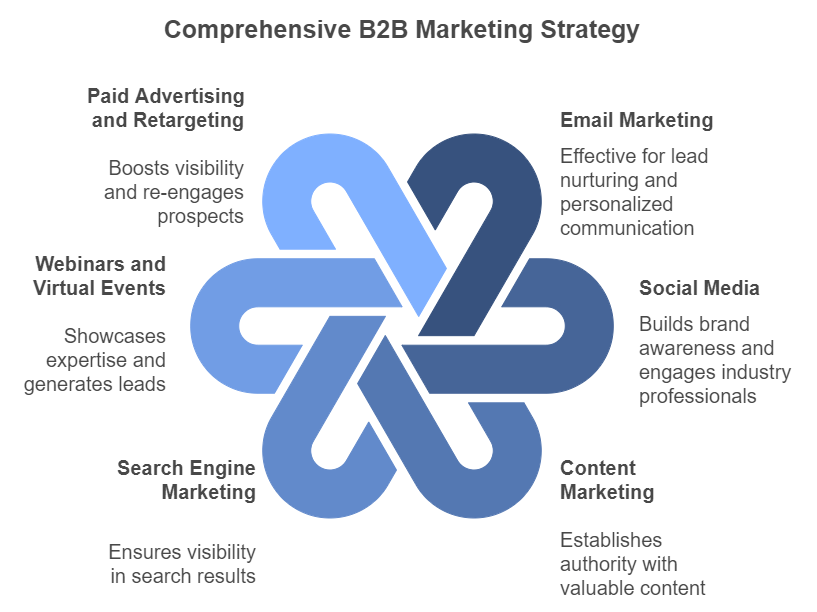
Email Marketing: It is one of the most effective channels for lead nurturing, allowing businesses to share relevant content based on where prospects are in their buyer journey. From educational newsletters to promotional offers and personalized follow-ups, email helps guide prospects down the funnel while building brand loyalty.
Social Media: B2B companies use social media to build brand awareness, engage with their audience, and share valuable content. LinkedIn, in particular, is ideal for B2B marketing as it allows businesses to target industry professionals, network, and establish thought leadership. X is useful for sharing timely updates and engaging with industry trends, while Facebook can help reach a broader audience.
Content Marketing: Content marketing is a vital component of a multi-channel strategy, focusing on creating and distributing valuable content to attract and engage the target audience. High-quality content helps establish authority and build trust with potential customers, positioning your brand as an industry expert.
Search Engine Marketing (SEM): Search Engine Marketing (including organic SEO and paid search advertising) is critical for ensuring your content is visible when prospects actively search for information or solutions.
Webinars and Virtual Events: These events allow businesses to showcase their expertise, discuss industry trends, and directly answer potential customers’ questions. Webinars also serve as a great lead generation tool, as attendees are often highly interested prospects looking for in-depth information.
Paid Advertising and Retargeting: Paid ads help boost your brand’s visibility, especially among prospects who may not yet be familiar with your business. Retargeting is particularly effective for B2B, as it helps re-engage prospects who have previously visited your website or interacted with your content but have not yet converted.
Industry-Specific Platforms and Forums: Platforms like industry association websites, trade publications, and online forums provide opportunities to engage with prospects in a context where they are already seeking relevant information. Participating in discussions, sharing content, or advertising on these platforms helps position your brand in front of an audience actively interested in your industry and looking for solutions.
Video Marketing: Platforms like YouTube, LinkedIn, and even your website can be leveraged to share video content that helps build a connection with your audience. Videos are an excellent way to humanize your brand, engage viewers, and convey messages in an impactful and memorable manner.
Website and Landing Pages: Your website serves as the hub of your marketing activities, while landing pages are designed to convert visitors into leads by offering valuable content or incentives in exchange for contact information. It is essential to create a seamless experience across your website and ensure it aligns with your multi-channel marketing efforts. Landing pages tailored to specific campaigns or audiences help capture leads effectively. At the same time, clear calls-to-action (CTAs) and informative content keep visitors engaged and guide them through the buying journey.
How to Develop a Successful Multi-Channel Marketing Strategy
A well-executed strategy ensures businesses can reach their target audience at the right time with the right message, providing value and building relationships that ultimately lead to conversion. Here’s a step-by-step guide on how to develop a successful multi-channel marketing strategy:
- Step 1: Define Your Target Audience and Buyer Personas
Identify the types of businesses you want to reach, their industry, company size, and specific pain points. Developing detailed buyer personas helps you understand your ideal customers, including their roles, responsibilities, challenges, and preferred communication channels. - Step 2: Set Clear Goals and Key Performance Indicators (KPIs)
Are you aiming to increase brand awareness, generate leads, nurture prospects, or improve conversions? Establish clear, measurable goals, such as increasing website traffic by 20%, generating a certain number of leads, or boosting conversion rates. Set KPIs to track your progress, such as engagement rates, lead quality, or cost per lead. - Step 3: Choose the Right Channels Based on Audience Preferences
To create a successful B2B multi-channel marketing strategy, selecting the right channels for your target audience is essential. Use data to understand where your audience is most active—some segments may be more engaged on LinkedIn, while others prefer webinars or email. Choosing the channels that best align with your buyer personas helps you focus your resources on where they will have the most impact. - Step 4: Create Consistent and Relevant Content
To effectively engage prospects, create consistent, high-quality content that resonates with your audience across different channels. Develop a content calendar to plan and coordinate posts, emails, articles, and campaigns, ensuring your messaging remains consistent and aligned with your brand identity. - Step 5: Integrate Marketing Automation Tools
Use automation tools like HubSpot, Marketo, or Mailchimp to manage campaigns, schedule content, nurture leads, and track engagement across channels. Automation helps ensure your campaigns are timely and consistent while enabling scale personalization. - Step 6: Coordinate Cross-Channel Efforts
Make sure that your campaigns are well-aligned across channels—if you are launching a new product, the message should be communicated consistently across social media, email, blog posts, and paid ads. Cross-channel coordination ensures that your audience receives a cohesive message no matter where they engage with your brand, helping to strengthen their connection with your company. - Step 7: Monitor Performance and Gather Insights
Use analytics tools like Google Analytics, social media insights, and email metrics to gather data on engagement, lead generation, conversion rates, and other KPIs. These insights help you understand which channels work best, what content resonates most with your audience, and where adjustments are needed.
What Makes SIS International a Top B2B Multi-Channel Marketing Strategy Company?
At SIS International, we understand the complexities and challenges of creating an effective B2B multi-channel marketing strategy. With over 40 years of experience in the industry, we’ve worked with some of the world’s most influential companies, including over 70% of the Fortune 500, to provide actionable insights that drive growth and competitive advantage. Here’s why SIS International stands out as a leader in multi-channel marketing strategy.
Global Reach and Extensive Expertise
Our global reach and superior B2B market expertise are what set us apart. Having conducted projects in 135+ countries and serviced clients across various industries, SIS International has the insights to navigate different market dynamics effectively.
Comprehensive Solutions Tailored to Your Needs
At SIS, we offer a wide range of solutions that cater to various aspects of B2B growth and marketing, ensuring that our clients’ strategies are comprehensive and effective. From brand consulting and customer satisfaction analysis to market entry and sales growth consulting, our expertise covers all the critical elements contributing to a successful multi-channel marketing approach.
Proven Track Record with Fortune 500 Companies
Our proven track record of working with over 70% of Fortune 500 companies speaks volumes about the quality and effectiveness of our services. Our deep understanding of B2B markets allows us to craft strategies that deliver measurable results—enhancing brand visibility, improving engagement, and boosting conversion rates across diverse channels.
B2B Multi-Channel Marketing Strategy
Technology plays a crucial role in today’s marketing landscape, and we leverage the latest innovations to maximize the effectiveness of our clients’ multi-channel marketing strategies. At SIS International, we integrate AI, blockchain, and PowerBi dashboards to provide deeper insights, automate processes, and visualize data effectively.
End-to-End Strategy and Consulting Support
At SIS, we provide end-to-end support for our clients’ multi-channel marketing strategies—from initial research and insights to execution and performance monitoring. Our Strategy Consulting and Sales Growth Consulting services help businesses define their marketing goals, identify the most effective channels, and implement campaigns that achieve measurable success.
Highly Experienced Team
Our team of 150+ employees and collaborators brings together experts in marketing, research, strategy, and technology. This diverse expertise ensures we can offer a comprehensive perspective on multi-channel marketing and tailor our approach to each client’s needs.
Our Facility Location in New York
11 E 22nd Street, Floor 2, New York, NY 10010 T: +1(212) 505-6805
About SIS International
SIS International offers Quantitative, Qualitative, and Strategy Research. We provide data, tools, strategies, reports, and insights for decision-making. We also conduct interviews, surveys, focus groups, and other Market Research methods and approaches. Contact us for your next Market Research project.
5. Deeper Customer Insights
Multi-channel marketing provides businesses with valuable customer behavior and preference data across different platforms. Companies can gain insights into which platforms and types of content are most effective for different audience segments.
Key Channels in a B2B Multi-Channel Strategy
A successful B2B Multi-Channel Marketing Strategy requires a well-thought-out approach to selecting and utilizing the right channels to connect with your audience. Each channel serves a unique purpose and builds awareness, engagement, and trust among potential customers – and here are the key channels that make up an effective multi-channel B2B strategy:
Email Marketing: It is one of the most effective channels for lead nurturing, allowing businesses to share relevant content based on where prospects are in their buyer journey. From educational newsletters to promotional offers and personalized follow-ups, email helps guide prospects down the funnel while building brand loyalty.
Social Media: B2B companies use social media to build brand awareness, engage with their audience, and share valuable content. LinkedIn, in particular, is ideal for B2B marketing as it allows businesses to target industry professionals, network, and establish thought leadership. X is useful for sharing timely updates and engaging with industry trends, while Facebook can help reach a broader audience.
Content Marketing: Content marketing is a vital component of a multi-channel strategy, focusing on creating and distributing valuable content to attract and engage the target audience. High-quality content helps establish authority and build trust with potential customers, positioning your brand as an industry expert.
Search Engine Marketing (SEM): Search Engine Marketing (including organic SEO and paid search advertising) is critical for ensuring your content is visible when prospects actively search for information or solutions.
Webinars and Virtual Events: These events allow businesses to showcase their expertise, discuss industry trends, and directly answer potential customers’ questions. Webinars also serve as a great lead generation tool, as attendees are often highly interested prospects looking for in-depth information.
Paid Advertising and Retargeting: Paid ads help boost your brand’s visibility, especially among prospects who may not yet be familiar with your business. Retargeting is particularly effective for B2B, as it helps re-engage prospects who have previously visited your website or interacted with your content but have not yet converted.
Industry-Specific Platforms and Forums: Platforms like industry association websites, trade publications, and online forums provide opportunities to engage with prospects in a context where they are already seeking relevant information. Participating in discussions, sharing content, or advertising on these platforms helps position your brand in front of an audience actively interested in your industry and looking for solutions.
Video Marketing: Platforms like YouTube, LinkedIn, and even your website can be leveraged to share video content that helps build a connection with your audience. Videos are an excellent way to humanize your brand, engage viewers, and convey messages in an impactful and memorable manner.
Website and Landing Pages: Your website serves as the hub of your marketing activities, while landing pages are designed to convert visitors into leads by offering valuable content or incentives in exchange for contact information. It is essential to create a seamless experience across your website and ensure it aligns with your multi-channel marketing efforts. Landing pages tailored to specific campaigns or audiences help capture leads effectively. At the same time, clear calls-to-action (CTAs) and informative content keep visitors engaged and guide them through the buying journey.
How to Develop a Successful Multi-Channel Marketing Strategy
A well-executed strategy ensures businesses can reach their target audience at the right time with the right message, providing value and building relationships that ultimately lead to conversion. Here’s a step-by-step guide on how to develop a successful multi-channel marketing strategy:
- Step 1: Define Your Target Audience and Buyer Personas
Identify the types of businesses you want to reach, their industry, company size, and specific pain points. Developing detailed buyer personas helps you understand your ideal customers, including their roles, responsibilities, challenges, and preferred communication channels. - Step 2: Set Clear Goals and Key Performance Indicators (KPIs)
Are you aiming to increase brand awareness, generate leads, nurture prospects, or improve conversions? Establish clear, measurable goals, such as increasing website traffic by 20%, generating a certain number of leads, or boosting conversion rates. Set KPIs to track your progress, such as engagement rates, lead quality, or cost per lead. - Step 3: Choose the Right Channels Based on Audience Preferences
To create a successful B2B multi-channel marketing strategy, selecting the right channels for your target audience is essential. Use data to understand where your audience is most active—some segments may be more engaged on LinkedIn, while others prefer webinars or email. Choosing the channels that best align with your buyer personas helps you focus your resources on where they will have the most impact. - Step 4: Create Consistent and Relevant Content
To effectively engage prospects, create consistent, high-quality content that resonates with your audience across different channels. Develop a content calendar to plan and coordinate posts, emails, articles, and campaigns, ensuring your messaging remains consistent and aligned with your brand identity. - Step 5: Integrate Marketing Automation Tools
Use automation tools like HubSpot, Marketo, or Mailchimp to manage campaigns, schedule content, nurture leads, and track engagement across channels. Automation helps ensure your campaigns are timely and consistent while enabling scale personalization. - Step 6: Coordinate Cross-Channel Efforts
Make sure that your campaigns are well-aligned across channels—if you are launching a new product, the message should be communicated consistently across social media, email, blog posts, and paid ads. Cross-channel coordination ensures that your audience receives a cohesive message no matter where they engage with your brand, helping to strengthen their connection with your company. - Step 7: Monitor Performance and Gather Insights
Use analytics tools like Google Analytics, social media insights, and email metrics to gather data on engagement, lead generation, conversion rates, and other KPIs. These insights help you understand which channels work best, what content resonates most with your audience, and where adjustments are needed.
What Makes SIS International a Top B2B Multi-Channel Marketing Strategy Company?
At SIS International, we understand the complexities and challenges of creating an effective B2B multi-channel marketing strategy. With over 40 years of experience in the industry, we’ve worked with some of the world’s most influential companies, including over 70% of the Fortune 500, to provide actionable insights that drive growth and competitive advantage. Here’s why SIS International stands out as a leader in multi-channel marketing strategy.
Global Reach and Extensive Expertise
Our global reach and superior B2B market expertise are what set us apart. Having conducted projects in 135+ countries and serviced clients across various industries, SIS International has the insights to navigate different market dynamics effectively.
Comprehensive Solutions Tailored to Your Needs
At SIS, we offer a wide range of solutions that cater to various aspects of B2B growth and marketing, ensuring that our clients’ strategies are comprehensive and effective. From brand consulting and customer satisfaction analysis to market entry and sales growth consulting, our expertise covers all the critical elements contributing to a successful multi-channel marketing approach.
Proven Track Record with Fortune 500 Companies
Our proven track record of working with over 70% of Fortune 500 companies speaks volumes about the quality and effectiveness of our services. Our deep understanding of B2B markets allows us to craft strategies that deliver measurable results—enhancing brand visibility, improving engagement, and boosting conversion rates across diverse channels.
B2B Multi-Channel Marketing Strategy
Technology plays a crucial role in today’s marketing landscape, and we leverage the latest innovations to maximize the effectiveness of our clients’ multi-channel marketing strategies. At SIS International, we integrate AI, blockchain, and PowerBi dashboards to provide deeper insights, automate processes, and visualize data effectively.
End-to-End Strategy and Consulting Support
At SIS, we provide end-to-end support for our clients’ multi-channel marketing strategies—from initial research and insights to execution and performance monitoring. Our Strategy Consulting and Sales Growth Consulting services help businesses define their marketing goals, identify the most effective channels, and implement campaigns that achieve measurable success.
Highly Experienced Team
Our team of 150+ employees and collaborators brings together experts in marketing, research, strategy, and technology. This diverse expertise ensures we can offer a comprehensive perspective on multi-channel marketing and tailor our approach to each client’s needs.
Our Facility Location in New York
11 E 22nd Street, Floor 2, New York, NY 10010 T: +1(212) 505-6805
About SIS International
SIS International offers Quantitative, Qualitative, and Strategy Research. We provide data, tools, strategies, reports, and insights for decision-making. We also conduct interviews, surveys, focus groups, and other Market Research methods and approaches. Contact us for your next Market Research project.
4. Increased Conversion Rates
A multi-channel marketing strategy allows businesses to maintain consistent contact with potential customers and provide the information they need at each stage of the buying process.
5. Deeper Customer Insights
Multi-channel marketing provides businesses with valuable customer behavior and preference data across different platforms. Companies can gain insights into which platforms and types of content are most effective for different audience segments.
Key Channels in a B2B Multi-Channel Strategy
A successful B2B Multi-Channel Marketing Strategy requires a well-thought-out approach to selecting and utilizing the right channels to connect with your audience. Each channel serves a unique purpose and builds awareness, engagement, and trust among potential customers – and here are the key channels that make up an effective multi-channel B2B strategy:
Email Marketing: It is one of the most effective channels for lead nurturing, allowing businesses to share relevant content based on where prospects are in their buyer journey. From educational newsletters to promotional offers and personalized follow-ups, email helps guide prospects down the funnel while building brand loyalty.
Social Media: B2B companies use social media to build brand awareness, engage with their audience, and share valuable content. LinkedIn, in particular, is ideal for B2B marketing as it allows businesses to target industry professionals, network, and establish thought leadership. X is useful for sharing timely updates and engaging with industry trends, while Facebook can help reach a broader audience.
Content Marketing: Content marketing is a vital component of a multi-channel strategy, focusing on creating and distributing valuable content to attract and engage the target audience. High-quality content helps establish authority and build trust with potential customers, positioning your brand as an industry expert.
Search Engine Marketing (SEM): Search Engine Marketing (including organic SEO and paid search advertising) is critical for ensuring your content is visible when prospects actively search for information or solutions.
Webinars and Virtual Events: These events allow businesses to showcase their expertise, discuss industry trends, and directly answer potential customers’ questions. Webinars also serve as a great lead generation tool, as attendees are often highly interested prospects looking for in-depth information.
Paid Advertising and Retargeting: Paid ads help boost your brand’s visibility, especially among prospects who may not yet be familiar with your business. Retargeting is particularly effective for B2B, as it helps re-engage prospects who have previously visited your website or interacted with your content but have not yet converted.
Industry-Specific Platforms and Forums: Platforms like industry association websites, trade publications, and online forums provide opportunities to engage with prospects in a context where they are already seeking relevant information. Participating in discussions, sharing content, or advertising on these platforms helps position your brand in front of an audience actively interested in your industry and looking for solutions.
Video Marketing: Platforms like YouTube, LinkedIn, and even your website can be leveraged to share video content that helps build a connection with your audience. Videos are an excellent way to humanize your brand, engage viewers, and convey messages in an impactful and memorable manner.
Website and Landing Pages: Your website serves as the hub of your marketing activities, while landing pages are designed to convert visitors into leads by offering valuable content or incentives in exchange for contact information. It is essential to create a seamless experience across your website and ensure it aligns with your multi-channel marketing efforts. Landing pages tailored to specific campaigns or audiences help capture leads effectively. At the same time, clear calls-to-action (CTAs) and informative content keep visitors engaged and guide them through the buying journey.
How to Develop a Successful Multi-Channel Marketing Strategy
A well-executed strategy ensures businesses can reach their target audience at the right time with the right message, providing value and building relationships that ultimately lead to conversion. Here’s a step-by-step guide on how to develop a successful multi-channel marketing strategy:
- Step 1: Define Your Target Audience and Buyer Personas
Identify the types of businesses you want to reach, their industry, company size, and specific pain points. Developing detailed buyer personas helps you understand your ideal customers, including their roles, responsibilities, challenges, and preferred communication channels. - Step 2: Set Clear Goals and Key Performance Indicators (KPIs)
Are you aiming to increase brand awareness, generate leads, nurture prospects, or improve conversions? Establish clear, measurable goals, such as increasing website traffic by 20%, generating a certain number of leads, or boosting conversion rates. Set KPIs to track your progress, such as engagement rates, lead quality, or cost per lead. - Step 3: Choose the Right Channels Based on Audience Preferences
To create a successful B2B multi-channel marketing strategy, selecting the right channels for your target audience is essential. Use data to understand where your audience is most active—some segments may be more engaged on LinkedIn, while others prefer webinars or email. Choosing the channels that best align with your buyer personas helps you focus your resources on where they will have the most impact. - Step 4: Create Consistent and Relevant Content
To effectively engage prospects, create consistent, high-quality content that resonates with your audience across different channels. Develop a content calendar to plan and coordinate posts, emails, articles, and campaigns, ensuring your messaging remains consistent and aligned with your brand identity. - Step 5: Integrate Marketing Automation Tools
Use automation tools like HubSpot, Marketo, or Mailchimp to manage campaigns, schedule content, nurture leads, and track engagement across channels. Automation helps ensure your campaigns are timely and consistent while enabling scale personalization. - Step 6: Coordinate Cross-Channel Efforts
Make sure that your campaigns are well-aligned across channels—if you are launching a new product, the message should be communicated consistently across social media, email, blog posts, and paid ads. Cross-channel coordination ensures that your audience receives a cohesive message no matter where they engage with your brand, helping to strengthen their connection with your company. - Step 7: Monitor Performance and Gather Insights
Use analytics tools like Google Analytics, social media insights, and email metrics to gather data on engagement, lead generation, conversion rates, and other KPIs. These insights help you understand which channels work best, what content resonates most with your audience, and where adjustments are needed.
What Makes SIS International a Top B2B Multi-Channel Marketing Strategy Company?
At SIS International, we understand the complexities and challenges of creating an effective B2B multi-channel marketing strategy. With over 40 years of experience in the industry, we’ve worked with some of the world’s most influential companies, including over 70% of the Fortune 500, to provide actionable insights that drive growth and competitive advantage. Here’s why SIS International stands out as a leader in multi-channel marketing strategy.
Global Reach and Extensive Expertise
Our global reach and superior B2B market expertise are what set us apart. Having conducted projects in 135+ countries and serviced clients across various industries, SIS International has the insights to navigate different market dynamics effectively.
Comprehensive Solutions Tailored to Your Needs
At SIS, we offer a wide range of solutions that cater to various aspects of B2B growth and marketing, ensuring that our clients’ strategies are comprehensive and effective. From brand consulting and customer satisfaction analysis to market entry and sales growth consulting, our expertise covers all the critical elements contributing to a successful multi-channel marketing approach.
Proven Track Record with Fortune 500 Companies
Our proven track record of working with over 70% of Fortune 500 companies speaks volumes about the quality and effectiveness of our services. Our deep understanding of B2B markets allows us to craft strategies that deliver measurable results—enhancing brand visibility, improving engagement, and boosting conversion rates across diverse channels.
B2B Multi-Channel Marketing Strategy
Technology plays a crucial role in today’s marketing landscape, and we leverage the latest innovations to maximize the effectiveness of our clients’ multi-channel marketing strategies. At SIS International, we integrate AI, blockchain, and PowerBi dashboards to provide deeper insights, automate processes, and visualize data effectively.
End-to-End Strategy and Consulting Support
At SIS, we provide end-to-end support for our clients’ multi-channel marketing strategies—from initial research and insights to execution and performance monitoring. Our Strategy Consulting and Sales Growth Consulting services help businesses define their marketing goals, identify the most effective channels, and implement campaigns that achieve measurable success.
Highly Experienced Team
Our team of 150+ employees and collaborators brings together experts in marketing, research, strategy, and technology. This diverse expertise ensures we can offer a comprehensive perspective on multi-channel marketing and tailor our approach to each client’s needs.
Our Facility Location in New York
11 E 22nd Street, Floor 2, New York, NY 10010 T: +1(212) 505-6805
About SIS International
SIS International offers Quantitative, Qualitative, and Strategy Research. We provide data, tools, strategies, reports, and insights for decision-making. We also conduct interviews, surveys, focus groups, and other Market Research methods and approaches. Contact us for your next Market Research project.
3. Enhanced Lead Generation and Nurturing
A B2B multi-channel approach enables businesses to implement more effective lead generation and nurturing strategies. For example, a prospect might first come across a blog post, retargeted with a LinkedIn ad, and later receive a personalized email with a case study. Each interaction helps guide the prospect further down the sales funnel, resulting in more qualified leads and a higher chance of conversion.
4. Increased Conversion Rates
A multi-channel marketing strategy allows businesses to maintain consistent contact with potential customers and provide the information they need at each stage of the buying process.
5. Deeper Customer Insights
Multi-channel marketing provides businesses with valuable customer behavior and preference data across different platforms. Companies can gain insights into which platforms and types of content are most effective for different audience segments.
Key Channels in a B2B Multi-Channel Strategy
A successful B2B Multi-Channel Marketing Strategy requires a well-thought-out approach to selecting and utilizing the right channels to connect with your audience. Each channel serves a unique purpose and builds awareness, engagement, and trust among potential customers – and here are the key channels that make up an effective multi-channel B2B strategy:
Email Marketing: It is one of the most effective channels for lead nurturing, allowing businesses to share relevant content based on where prospects are in their buyer journey. From educational newsletters to promotional offers and personalized follow-ups, email helps guide prospects down the funnel while building brand loyalty.
Social Media: B2B companies use social media to build brand awareness, engage with their audience, and share valuable content. LinkedIn, in particular, is ideal for B2B marketing as it allows businesses to target industry professionals, network, and establish thought leadership. X is useful for sharing timely updates and engaging with industry trends, while Facebook can help reach a broader audience.
Content Marketing: Content marketing is a vital component of a multi-channel strategy, focusing on creating and distributing valuable content to attract and engage the target audience. High-quality content helps establish authority and build trust with potential customers, positioning your brand as an industry expert.
Search Engine Marketing (SEM): Search Engine Marketing (including organic SEO and paid search advertising) is critical for ensuring your content is visible when prospects actively search for information or solutions.
Webinars and Virtual Events: These events allow businesses to showcase their expertise, discuss industry trends, and directly answer potential customers’ questions. Webinars also serve as a great lead generation tool, as attendees are often highly interested prospects looking for in-depth information.
Paid Advertising and Retargeting: Paid ads help boost your brand’s visibility, especially among prospects who may not yet be familiar with your business. Retargeting is particularly effective for B2B, as it helps re-engage prospects who have previously visited your website or interacted with your content but have not yet converted.
Industry-Specific Platforms and Forums: Platforms like industry association websites, trade publications, and online forums provide opportunities to engage with prospects in a context where they are already seeking relevant information. Participating in discussions, sharing content, or advertising on these platforms helps position your brand in front of an audience actively interested in your industry and looking for solutions.
Video Marketing: Platforms like YouTube, LinkedIn, and even your website can be leveraged to share video content that helps build a connection with your audience. Videos are an excellent way to humanize your brand, engage viewers, and convey messages in an impactful and memorable manner.
Website and Landing Pages: Your website serves as the hub of your marketing activities, while landing pages are designed to convert visitors into leads by offering valuable content or incentives in exchange for contact information. It is essential to create a seamless experience across your website and ensure it aligns with your multi-channel marketing efforts. Landing pages tailored to specific campaigns or audiences help capture leads effectively. At the same time, clear calls-to-action (CTAs) and informative content keep visitors engaged and guide them through the buying journey.
How to Develop a Successful Multi-Channel Marketing Strategy
A well-executed strategy ensures businesses can reach their target audience at the right time with the right message, providing value and building relationships that ultimately lead to conversion. Here’s a step-by-step guide on how to develop a successful multi-channel marketing strategy:
- Step 1: Define Your Target Audience and Buyer Personas
Identify the types of businesses you want to reach, their industry, company size, and specific pain points. Developing detailed buyer personas helps you understand your ideal customers, including their roles, responsibilities, challenges, and preferred communication channels. - Step 2: Set Clear Goals and Key Performance Indicators (KPIs)
Are you aiming to increase brand awareness, generate leads, nurture prospects, or improve conversions? Establish clear, measurable goals, such as increasing website traffic by 20%, generating a certain number of leads, or boosting conversion rates. Set KPIs to track your progress, such as engagement rates, lead quality, or cost per lead. - Step 3: Choose the Right Channels Based on Audience Preferences
To create a successful B2B multi-channel marketing strategy, selecting the right channels for your target audience is essential. Use data to understand where your audience is most active—some segments may be more engaged on LinkedIn, while others prefer webinars or email. Choosing the channels that best align with your buyer personas helps you focus your resources on where they will have the most impact. - Step 4: Create Consistent and Relevant Content
To effectively engage prospects, create consistent, high-quality content that resonates with your audience across different channels. Develop a content calendar to plan and coordinate posts, emails, articles, and campaigns, ensuring your messaging remains consistent and aligned with your brand identity. - Step 5: Integrate Marketing Automation Tools
Use automation tools like HubSpot, Marketo, or Mailchimp to manage campaigns, schedule content, nurture leads, and track engagement across channels. Automation helps ensure your campaigns are timely and consistent while enabling scale personalization. - Step 6: Coordinate Cross-Channel Efforts
Make sure that your campaigns are well-aligned across channels—if you are launching a new product, the message should be communicated consistently across social media, email, blog posts, and paid ads. Cross-channel coordination ensures that your audience receives a cohesive message no matter where they engage with your brand, helping to strengthen their connection with your company. - Step 7: Monitor Performance and Gather Insights
Use analytics tools like Google Analytics, social media insights, and email metrics to gather data on engagement, lead generation, conversion rates, and other KPIs. These insights help you understand which channels work best, what content resonates most with your audience, and where adjustments are needed.
What Makes SIS International a Top B2B Multi-Channel Marketing Strategy Company?
At SIS International, we understand the complexities and challenges of creating an effective B2B multi-channel marketing strategy. With over 40 years of experience in the industry, we’ve worked with some of the world’s most influential companies, including over 70% of the Fortune 500, to provide actionable insights that drive growth and competitive advantage. Here’s why SIS International stands out as a leader in multi-channel marketing strategy.
Global Reach and Extensive Expertise
Our global reach and superior B2B market expertise are what set us apart. Having conducted projects in 135+ countries and serviced clients across various industries, SIS International has the insights to navigate different market dynamics effectively.
Comprehensive Solutions Tailored to Your Needs
At SIS, we offer a wide range of solutions that cater to various aspects of B2B growth and marketing, ensuring that our clients’ strategies are comprehensive and effective. From brand consulting and customer satisfaction analysis to market entry and sales growth consulting, our expertise covers all the critical elements contributing to a successful multi-channel marketing approach.
Proven Track Record with Fortune 500 Companies
Our proven track record of working with over 70% of Fortune 500 companies speaks volumes about the quality and effectiveness of our services. Our deep understanding of B2B markets allows us to craft strategies that deliver measurable results—enhancing brand visibility, improving engagement, and boosting conversion rates across diverse channels.
B2B Multi-Channel Marketing Strategy
Technology plays a crucial role in today’s marketing landscape, and we leverage the latest innovations to maximize the effectiveness of our clients’ multi-channel marketing strategies. At SIS International, we integrate AI, blockchain, and PowerBi dashboards to provide deeper insights, automate processes, and visualize data effectively.
End-to-End Strategy and Consulting Support
At SIS, we provide end-to-end support for our clients’ multi-channel marketing strategies—from initial research and insights to execution and performance monitoring. Our Strategy Consulting and Sales Growth Consulting services help businesses define their marketing goals, identify the most effective channels, and implement campaigns that achieve measurable success.
Highly Experienced Team
Our team of 150+ employees and collaborators brings together experts in marketing, research, strategy, and technology. This diverse expertise ensures we can offer a comprehensive perspective on multi-channel marketing and tailor our approach to each client’s needs.
Our Facility Location in New York
11 E 22nd Street, Floor 2, New York, NY 10010 T: +1(212) 505-6805
About SIS International
SIS International offers Quantitative, Qualitative, and Strategy Research. We provide data, tools, strategies, reports, and insights for decision-making. We also conduct interviews, surveys, focus groups, and other Market Research methods and approaches. Contact us for your next Market Research project.
2. Better Engagement and Brand Consistency
A good B2B multi-channel marketing strategy allows businesses to create multiple touchpoints across different platforms, making engaging prospects at various stages of the buying journey easier.
3. Enhanced Lead Generation and Nurturing
A B2B multi-channel approach enables businesses to implement more effective lead generation and nurturing strategies. For example, a prospect might first come across a blog post, retargeted with a LinkedIn ad, and later receive a personalized email with a case study. Each interaction helps guide the prospect further down the sales funnel, resulting in more qualified leads and a higher chance of conversion.
4. Increased Conversion Rates
A multi-channel marketing strategy allows businesses to maintain consistent contact with potential customers and provide the information they need at each stage of the buying process.
5. Deeper Customer Insights
Multi-channel marketing provides businesses with valuable customer behavior and preference data across different platforms. Companies can gain insights into which platforms and types of content are most effective for different audience segments.
Key Channels in a B2B Multi-Channel Strategy
A successful B2B Multi-Channel Marketing Strategy requires a well-thought-out approach to selecting and utilizing the right channels to connect with your audience. Each channel serves a unique purpose and builds awareness, engagement, and trust among potential customers – and here are the key channels that make up an effective multi-channel B2B strategy:
Email Marketing: It is one of the most effective channels for lead nurturing, allowing businesses to share relevant content based on where prospects are in their buyer journey. From educational newsletters to promotional offers and personalized follow-ups, email helps guide prospects down the funnel while building brand loyalty.
Social Media: B2B companies use social media to build brand awareness, engage with their audience, and share valuable content. LinkedIn, in particular, is ideal for B2B marketing as it allows businesses to target industry professionals, network, and establish thought leadership. X is useful for sharing timely updates and engaging with industry trends, while Facebook can help reach a broader audience.
Content Marketing: Content marketing is a vital component of a multi-channel strategy, focusing on creating and distributing valuable content to attract and engage the target audience. High-quality content helps establish authority and build trust with potential customers, positioning your brand as an industry expert.
Search Engine Marketing (SEM): Search Engine Marketing (including organic SEO and paid search advertising) is critical for ensuring your content is visible when prospects actively search for information or solutions.
Webinars and Virtual Events: These events allow businesses to showcase their expertise, discuss industry trends, and directly answer potential customers’ questions. Webinars also serve as a great lead generation tool, as attendees are often highly interested prospects looking for in-depth information.
Paid Advertising and Retargeting: Paid ads help boost your brand’s visibility, especially among prospects who may not yet be familiar with your business. Retargeting is particularly effective for B2B, as it helps re-engage prospects who have previously visited your website or interacted with your content but have not yet converted.
Industry-Specific Platforms and Forums: Platforms like industry association websites, trade publications, and online forums provide opportunities to engage with prospects in a context where they are already seeking relevant information. Participating in discussions, sharing content, or advertising on these platforms helps position your brand in front of an audience actively interested in your industry and looking for solutions.
Video Marketing: Platforms like YouTube, LinkedIn, and even your website can be leveraged to share video content that helps build a connection with your audience. Videos are an excellent way to humanize your brand, engage viewers, and convey messages in an impactful and memorable manner.
Website and Landing Pages: Your website serves as the hub of your marketing activities, while landing pages are designed to convert visitors into leads by offering valuable content or incentives in exchange for contact information. It is essential to create a seamless experience across your website and ensure it aligns with your multi-channel marketing efforts. Landing pages tailored to specific campaigns or audiences help capture leads effectively. At the same time, clear calls-to-action (CTAs) and informative content keep visitors engaged and guide them through the buying journey.
How to Develop a Successful Multi-Channel Marketing Strategy
A well-executed strategy ensures businesses can reach their target audience at the right time with the right message, providing value and building relationships that ultimately lead to conversion. Here’s a step-by-step guide on how to develop a successful multi-channel marketing strategy:
- Step 1: Define Your Target Audience and Buyer Personas
Identify the types of businesses you want to reach, their industry, company size, and specific pain points. Developing detailed buyer personas helps you understand your ideal customers, including their roles, responsibilities, challenges, and preferred communication channels. - Step 2: Set Clear Goals and Key Performance Indicators (KPIs)
Are you aiming to increase brand awareness, generate leads, nurture prospects, or improve conversions? Establish clear, measurable goals, such as increasing website traffic by 20%, generating a certain number of leads, or boosting conversion rates. Set KPIs to track your progress, such as engagement rates, lead quality, or cost per lead. - Step 3: Choose the Right Channels Based on Audience Preferences
To create a successful B2B multi-channel marketing strategy, selecting the right channels for your target audience is essential. Use data to understand where your audience is most active—some segments may be more engaged on LinkedIn, while others prefer webinars or email. Choosing the channels that best align with your buyer personas helps you focus your resources on where they will have the most impact. - Step 4: Create Consistent and Relevant Content
To effectively engage prospects, create consistent, high-quality content that resonates with your audience across different channels. Develop a content calendar to plan and coordinate posts, emails, articles, and campaigns, ensuring your messaging remains consistent and aligned with your brand identity. - Step 5: Integrate Marketing Automation Tools
Use automation tools like HubSpot, Marketo, or Mailchimp to manage campaigns, schedule content, nurture leads, and track engagement across channels. Automation helps ensure your campaigns are timely and consistent while enabling scale personalization. - Step 6: Coordinate Cross-Channel Efforts
Make sure that your campaigns are well-aligned across channels—if you are launching a new product, the message should be communicated consistently across social media, email, blog posts, and paid ads. Cross-channel coordination ensures that your audience receives a cohesive message no matter where they engage with your brand, helping to strengthen their connection with your company. - Step 7: Monitor Performance and Gather Insights
Use analytics tools like Google Analytics, social media insights, and email metrics to gather data on engagement, lead generation, conversion rates, and other KPIs. These insights help you understand which channels work best, what content resonates most with your audience, and where adjustments are needed.
What Makes SIS International a Top B2B Multi-Channel Marketing Strategy Company?
At SIS International, we understand the complexities and challenges of creating an effective B2B multi-channel marketing strategy. With over 40 years of experience in the industry, we’ve worked with some of the world’s most influential companies, including over 70% of the Fortune 500, to provide actionable insights that drive growth and competitive advantage. Here’s why SIS International stands out as a leader in multi-channel marketing strategy.
Global Reach and Extensive Expertise
Our global reach and superior B2B market expertise are what set us apart. Having conducted projects in 135+ countries and serviced clients across various industries, SIS International has the insights to navigate different market dynamics effectively.
Comprehensive Solutions Tailored to Your Needs
At SIS, we offer a wide range of solutions that cater to various aspects of B2B growth and marketing, ensuring that our clients’ strategies are comprehensive and effective. From brand consulting and customer satisfaction analysis to market entry and sales growth consulting, our expertise covers all the critical elements contributing to a successful multi-channel marketing approach.
Proven Track Record with Fortune 500 Companies
Our proven track record of working with over 70% of Fortune 500 companies speaks volumes about the quality and effectiveness of our services. Our deep understanding of B2B markets allows us to craft strategies that deliver measurable results—enhancing brand visibility, improving engagement, and boosting conversion rates across diverse channels.
B2B Multi-Channel Marketing Strategy
Technology plays a crucial role in today’s marketing landscape, and we leverage the latest innovations to maximize the effectiveness of our clients’ multi-channel marketing strategies. At SIS International, we integrate AI, blockchain, and PowerBi dashboards to provide deeper insights, automate processes, and visualize data effectively.
End-to-End Strategy and Consulting Support
At SIS, we provide end-to-end support for our clients’ multi-channel marketing strategies—from initial research and insights to execution and performance monitoring. Our Strategy Consulting and Sales Growth Consulting services help businesses define their marketing goals, identify the most effective channels, and implement campaigns that achieve measurable success.
Highly Experienced Team
Our team of 150+ employees and collaborators brings together experts in marketing, research, strategy, and technology. This diverse expertise ensures we can offer a comprehensive perspective on multi-channel marketing and tailor our approach to each client’s needs.
Our Facility Location in New York
11 E 22nd Street, Floor 2, New York, NY 10010 T: +1(212) 505-6805
About SIS International
SIS International offers Quantitative, Qualitative, and Strategy Research. We provide data, tools, strategies, reports, and insights for decision-making. We also conduct interviews, surveys, focus groups, and other Market Research methods and approaches. Contact us for your next Market Research project.
1. Improved Audience Reach
One of the primary advantages of a multi-channel strategy is the ability to reach a broader audience. B2B decision-makers are spread across various platforms—some may prefer professional networks like LinkedIn, while others may rely on email newsletters or industry-specific forums.
2. Better Engagement and Brand Consistency
A good B2B multi-channel marketing strategy allows businesses to create multiple touchpoints across different platforms, making engaging prospects at various stages of the buying journey easier.
3. Enhanced Lead Generation and Nurturing
A B2B multi-channel approach enables businesses to implement more effective lead generation and nurturing strategies. For example, a prospect might first come across a blog post, retargeted with a LinkedIn ad, and later receive a personalized email with a case study. Each interaction helps guide the prospect further down the sales funnel, resulting in more qualified leads and a higher chance of conversion.
4. Increased Conversion Rates
A multi-channel marketing strategy allows businesses to maintain consistent contact with potential customers and provide the information they need at each stage of the buying process.
5. Deeper Customer Insights
Multi-channel marketing provides businesses with valuable customer behavior and preference data across different platforms. Companies can gain insights into which platforms and types of content are most effective for different audience segments.
Key Channels in a B2B Multi-Channel Strategy
A successful B2B Multi-Channel Marketing Strategy requires a well-thought-out approach to selecting and utilizing the right channels to connect with your audience. Each channel serves a unique purpose and builds awareness, engagement, and trust among potential customers – and here are the key channels that make up an effective multi-channel B2B strategy:
Email Marketing: It is one of the most effective channels for lead nurturing, allowing businesses to share relevant content based on where prospects are in their buyer journey. From educational newsletters to promotional offers and personalized follow-ups, email helps guide prospects down the funnel while building brand loyalty.
Social Media: B2B companies use social media to build brand awareness, engage with their audience, and share valuable content. LinkedIn, in particular, is ideal for B2B marketing as it allows businesses to target industry professionals, network, and establish thought leadership. X is useful for sharing timely updates and engaging with industry trends, while Facebook can help reach a broader audience.
Content Marketing: Content marketing is a vital component of a multi-channel strategy, focusing on creating and distributing valuable content to attract and engage the target audience. High-quality content helps establish authority and build trust with potential customers, positioning your brand as an industry expert.
Search Engine Marketing (SEM): Search Engine Marketing (including organic SEO and paid search advertising) is critical for ensuring your content is visible when prospects actively search for information or solutions.
Webinars and Virtual Events: These events allow businesses to showcase their expertise, discuss industry trends, and directly answer potential customers’ questions. Webinars also serve as a great lead generation tool, as attendees are often highly interested prospects looking for in-depth information.
Paid Advertising and Retargeting: Paid ads help boost your brand’s visibility, especially among prospects who may not yet be familiar with your business. Retargeting is particularly effective for B2B, as it helps re-engage prospects who have previously visited your website or interacted with your content but have not yet converted.
Industry-Specific Platforms and Forums: Platforms like industry association websites, trade publications, and online forums provide opportunities to engage with prospects in a context where they are already seeking relevant information. Participating in discussions, sharing content, or advertising on these platforms helps position your brand in front of an audience actively interested in your industry and looking for solutions.
Video Marketing: Platforms like YouTube, LinkedIn, and even your website can be leveraged to share video content that helps build a connection with your audience. Videos are an excellent way to humanize your brand, engage viewers, and convey messages in an impactful and memorable manner.
Website and Landing Pages: Your website serves as the hub of your marketing activities, while landing pages are designed to convert visitors into leads by offering valuable content or incentives in exchange for contact information. It is essential to create a seamless experience across your website and ensure it aligns with your multi-channel marketing efforts. Landing pages tailored to specific campaigns or audiences help capture leads effectively. At the same time, clear calls-to-action (CTAs) and informative content keep visitors engaged and guide them through the buying journey.
How to Develop a Successful Multi-Channel Marketing Strategy
A well-executed strategy ensures businesses can reach their target audience at the right time with the right message, providing value and building relationships that ultimately lead to conversion. Here’s a step-by-step guide on how to develop a successful multi-channel marketing strategy:
- Step 1: Define Your Target Audience and Buyer Personas
Identify the types of businesses you want to reach, their industry, company size, and specific pain points. Developing detailed buyer personas helps you understand your ideal customers, including their roles, responsibilities, challenges, and preferred communication channels. - Step 2: Set Clear Goals and Key Performance Indicators (KPIs)
Are you aiming to increase brand awareness, generate leads, nurture prospects, or improve conversions? Establish clear, measurable goals, such as increasing website traffic by 20%, generating a certain number of leads, or boosting conversion rates. Set KPIs to track your progress, such as engagement rates, lead quality, or cost per lead. - Step 3: Choose the Right Channels Based on Audience Preferences
To create a successful B2B multi-channel marketing strategy, selecting the right channels for your target audience is essential. Use data to understand where your audience is most active—some segments may be more engaged on LinkedIn, while others prefer webinars or email. Choosing the channels that best align with your buyer personas helps you focus your resources on where they will have the most impact. - Step 4: Create Consistent and Relevant Content
To effectively engage prospects, create consistent, high-quality content that resonates with your audience across different channels. Develop a content calendar to plan and coordinate posts, emails, articles, and campaigns, ensuring your messaging remains consistent and aligned with your brand identity. - Step 5: Integrate Marketing Automation Tools
Use automation tools like HubSpot, Marketo, or Mailchimp to manage campaigns, schedule content, nurture leads, and track engagement across channels. Automation helps ensure your campaigns are timely and consistent while enabling scale personalization. - Step 6: Coordinate Cross-Channel Efforts
Make sure that your campaigns are well-aligned across channels—if you are launching a new product, the message should be communicated consistently across social media, email, blog posts, and paid ads. Cross-channel coordination ensures that your audience receives a cohesive message no matter where they engage with your brand, helping to strengthen their connection with your company. - Step 7: Monitor Performance and Gather Insights
Use analytics tools like Google Analytics, social media insights, and email metrics to gather data on engagement, lead generation, conversion rates, and other KPIs. These insights help you understand which channels work best, what content resonates most with your audience, and where adjustments are needed.
What Makes SIS International a Top B2B Multi-Channel Marketing Strategy Company?
At SIS International, we understand the complexities and challenges of creating an effective B2B multi-channel marketing strategy. With over 40 years of experience in the industry, we’ve worked with some of the world’s most influential companies, including over 70% of the Fortune 500, to provide actionable insights that drive growth and competitive advantage. Here’s why SIS International stands out as a leader in multi-channel marketing strategy.
Global Reach and Extensive Expertise
Our global reach and superior B2B market expertise are what set us apart. Having conducted projects in 135+ countries and serviced clients across various industries, SIS International has the insights to navigate different market dynamics effectively.
Comprehensive Solutions Tailored to Your Needs
At SIS, we offer a wide range of solutions that cater to various aspects of B2B growth and marketing, ensuring that our clients’ strategies are comprehensive and effective. From brand consulting and customer satisfaction analysis to market entry and sales growth consulting, our expertise covers all the critical elements contributing to a successful multi-channel marketing approach.
Proven Track Record with Fortune 500 Companies
Our proven track record of working with over 70% of Fortune 500 companies speaks volumes about the quality and effectiveness of our services. Our deep understanding of B2B markets allows us to craft strategies that deliver measurable results—enhancing brand visibility, improving engagement, and boosting conversion rates across diverse channels.
B2B Multi-Channel Marketing Strategy
Technology plays a crucial role in today’s marketing landscape, and we leverage the latest innovations to maximize the effectiveness of our clients’ multi-channel marketing strategies. At SIS International, we integrate AI, blockchain, and PowerBi dashboards to provide deeper insights, automate processes, and visualize data effectively.
End-to-End Strategy and Consulting Support
At SIS, we provide end-to-end support for our clients’ multi-channel marketing strategies—from initial research and insights to execution and performance monitoring. Our Strategy Consulting and Sales Growth Consulting services help businesses define their marketing goals, identify the most effective channels, and implement campaigns that achieve measurable success.
Highly Experienced Team
Our team of 150+ employees and collaborators brings together experts in marketing, research, strategy, and technology. This diverse expertise ensures we can offer a comprehensive perspective on multi-channel marketing and tailor our approach to each client’s needs.
Our Facility Location in New York
11 E 22nd Street, Floor 2, New York, NY 10010 T: +1(212) 505-6805
About SIS International
SIS International offers Quantitative, Qualitative, and Strategy Research. We provide data, tools, strategies, reports, and insights for decision-making. We also conduct interviews, surveys, focus groups, and other Market Research methods and approaches. Contact us for your next Market Research project.
What Are the Benefits of a B2B Multi-Channel Marketing Strategy?

A B2B multi-channel marketing strategy offers numerous benefits that help companies engage more effectively with their target audience, boost brand awareness, and ultimately drive higher conversion rates
1. Improved Audience Reach
One of the primary advantages of a multi-channel strategy is the ability to reach a broader audience. B2B decision-makers are spread across various platforms—some may prefer professional networks like LinkedIn, while others may rely on email newsletters or industry-specific forums.
2. Better Engagement and Brand Consistency
A good B2B multi-channel marketing strategy allows businesses to create multiple touchpoints across different platforms, making engaging prospects at various stages of the buying journey easier.
3. Enhanced Lead Generation and Nurturing
A B2B multi-channel approach enables businesses to implement more effective lead generation and nurturing strategies. For example, a prospect might first come across a blog post, retargeted with a LinkedIn ad, and later receive a personalized email with a case study. Each interaction helps guide the prospect further down the sales funnel, resulting in more qualified leads and a higher chance of conversion.
4. Increased Conversion Rates
A multi-channel marketing strategy allows businesses to maintain consistent contact with potential customers and provide the information they need at each stage of the buying process.
5. Deeper Customer Insights
Multi-channel marketing provides businesses with valuable customer behavior and preference data across different platforms. Companies can gain insights into which platforms and types of content are most effective for different audience segments.
Key Channels in a B2B Multi-Channel Strategy
A successful B2B Multi-Channel Marketing Strategy requires a well-thought-out approach to selecting and utilizing the right channels to connect with your audience. Each channel serves a unique purpose and builds awareness, engagement, and trust among potential customers – and here are the key channels that make up an effective multi-channel B2B strategy:
Email Marketing: It is one of the most effective channels for lead nurturing, allowing businesses to share relevant content based on where prospects are in their buyer journey. From educational newsletters to promotional offers and personalized follow-ups, email helps guide prospects down the funnel while building brand loyalty.
Social Media: B2B companies use social media to build brand awareness, engage with their audience, and share valuable content. LinkedIn, in particular, is ideal for B2B marketing as it allows businesses to target industry professionals, network, and establish thought leadership. X is useful for sharing timely updates and engaging with industry trends, while Facebook can help reach a broader audience.
Content Marketing: Content marketing is a vital component of a multi-channel strategy, focusing on creating and distributing valuable content to attract and engage the target audience. High-quality content helps establish authority and build trust with potential customers, positioning your brand as an industry expert.
Search Engine Marketing (SEM): Search Engine Marketing (including organic SEO and paid search advertising) is critical for ensuring your content is visible when prospects actively search for information or solutions.
Webinars and Virtual Events: These events allow businesses to showcase their expertise, discuss industry trends, and directly answer potential customers’ questions. Webinars also serve as a great lead generation tool, as attendees are often highly interested prospects looking for in-depth information.
Paid Advertising and Retargeting: Paid ads help boost your brand’s visibility, especially among prospects who may not yet be familiar with your business. Retargeting is particularly effective for B2B, as it helps re-engage prospects who have previously visited your website or interacted with your content but have not yet converted.
Industry-Specific Platforms and Forums: Platforms like industry association websites, trade publications, and online forums provide opportunities to engage with prospects in a context where they are already seeking relevant information. Participating in discussions, sharing content, or advertising on these platforms helps position your brand in front of an audience actively interested in your industry and looking for solutions.
Video Marketing: Platforms like YouTube, LinkedIn, and even your website can be leveraged to share video content that helps build a connection with your audience. Videos are an excellent way to humanize your brand, engage viewers, and convey messages in an impactful and memorable manner.
Website and Landing Pages: Your website serves as the hub of your marketing activities, while landing pages are designed to convert visitors into leads by offering valuable content or incentives in exchange for contact information. It is essential to create a seamless experience across your website and ensure it aligns with your multi-channel marketing efforts. Landing pages tailored to specific campaigns or audiences help capture leads effectively. At the same time, clear calls-to-action (CTAs) and informative content keep visitors engaged and guide them through the buying journey.
How to Develop a Successful Multi-Channel Marketing Strategy
A well-executed strategy ensures businesses can reach their target audience at the right time with the right message, providing value and building relationships that ultimately lead to conversion. Here’s a step-by-step guide on how to develop a successful multi-channel marketing strategy:
- Step 1: Define Your Target Audience and Buyer Personas
Identify the types of businesses you want to reach, their industry, company size, and specific pain points. Developing detailed buyer personas helps you understand your ideal customers, including their roles, responsibilities, challenges, and preferred communication channels. - Step 2: Set Clear Goals and Key Performance Indicators (KPIs)
Are you aiming to increase brand awareness, generate leads, nurture prospects, or improve conversions? Establish clear, measurable goals, such as increasing website traffic by 20%, generating a certain number of leads, or boosting conversion rates. Set KPIs to track your progress, such as engagement rates, lead quality, or cost per lead. - Step 3: Choose the Right Channels Based on Audience Preferences
To create a successful B2B multi-channel marketing strategy, selecting the right channels for your target audience is essential. Use data to understand where your audience is most active—some segments may be more engaged on LinkedIn, while others prefer webinars or email. Choosing the channels that best align with your buyer personas helps you focus your resources on where they will have the most impact. - Step 4: Create Consistent and Relevant Content
To effectively engage prospects, create consistent, high-quality content that resonates with your audience across different channels. Develop a content calendar to plan and coordinate posts, emails, articles, and campaigns, ensuring your messaging remains consistent and aligned with your brand identity. - Step 5: Integrate Marketing Automation Tools
Use automation tools like HubSpot, Marketo, or Mailchimp to manage campaigns, schedule content, nurture leads, and track engagement across channels. Automation helps ensure your campaigns are timely and consistent while enabling scale personalization. - Step 6: Coordinate Cross-Channel Efforts
Make sure that your campaigns are well-aligned across channels—if you are launching a new product, the message should be communicated consistently across social media, email, blog posts, and paid ads. Cross-channel coordination ensures that your audience receives a cohesive message no matter where they engage with your brand, helping to strengthen their connection with your company. - Step 7: Monitor Performance and Gather Insights
Use analytics tools like Google Analytics, social media insights, and email metrics to gather data on engagement, lead generation, conversion rates, and other KPIs. These insights help you understand which channels work best, what content resonates most with your audience, and where adjustments are needed.
What Makes SIS International a Top B2B Multi-Channel Marketing Strategy Company?
At SIS International, we understand the complexities and challenges of creating an effective B2B multi-channel marketing strategy. With over 40 years of experience in the industry, we’ve worked with some of the world’s most influential companies, including over 70% of the Fortune 500, to provide actionable insights that drive growth and competitive advantage. Here’s why SIS International stands out as a leader in multi-channel marketing strategy.
Global Reach and Extensive Expertise
Our global reach and superior B2B market expertise are what set us apart. Having conducted projects in 135+ countries and serviced clients across various industries, SIS International has the insights to navigate different market dynamics effectively.
Comprehensive Solutions Tailored to Your Needs
At SIS, we offer a wide range of solutions that cater to various aspects of B2B growth and marketing, ensuring that our clients’ strategies are comprehensive and effective. From brand consulting and customer satisfaction analysis to market entry and sales growth consulting, our expertise covers all the critical elements contributing to a successful multi-channel marketing approach.
Proven Track Record with Fortune 500 Companies
Our proven track record of working with over 70% of Fortune 500 companies speaks volumes about the quality and effectiveness of our services. Our deep understanding of B2B markets allows us to craft strategies that deliver measurable results—enhancing brand visibility, improving engagement, and boosting conversion rates across diverse channels.
B2B Multi-Channel Marketing Strategy
Technology plays a crucial role in today’s marketing landscape, and we leverage the latest innovations to maximize the effectiveness of our clients’ multi-channel marketing strategies. At SIS International, we integrate AI, blockchain, and PowerBi dashboards to provide deeper insights, automate processes, and visualize data effectively.
End-to-End Strategy and Consulting Support
At SIS, we provide end-to-end support for our clients’ multi-channel marketing strategies—from initial research and insights to execution and performance monitoring. Our Strategy Consulting and Sales Growth Consulting services help businesses define their marketing goals, identify the most effective channels, and implement campaigns that achieve measurable success.
Highly Experienced Team
Our team of 150+ employees and collaborators brings together experts in marketing, research, strategy, and technology. This diverse expertise ensures we can offer a comprehensive perspective on multi-channel marketing and tailor our approach to each client’s needs.
Our Facility Location in New York
11 E 22nd Street, Floor 2, New York, NY 10010 T: +1(212) 505-6805
About SIS International
SIS International offers Quantitative, Qualitative, and Strategy Research. We provide data, tools, strategies, reports, and insights for decision-making. We also conduct interviews, surveys, focus groups, and other Market Research methods and approaches. Contact us for your next Market Research project.
The Role of Multi-Channel Marketing in B2B
In the B2B space, buyers are typically involved in a longer, more complex decision-making process than B2C customers. They research extensively, evaluate options, compare products, and often require buy-in from multiple stakeholders. This process means that prospects will interact with brands in numerous ways, making it crucial for B2B companies to establish a presence across different marketing channels.
For example, a potential customer may become aware of your company through an engaging LinkedIn post. Later, they might sign up for a webinar you host, receive follow-up emails, and then read a case study on your website. Each touchpoint strengthens the customer’s familiarity and trust in your brand, pushing them closer to a purchasing decision. A B2B multi-channel marketing strategy enables businesses to meet prospects where they are, engage them through personalized content, and guide them smoothly through the buying process.
What Are the Benefits of a B2B Multi-Channel Marketing Strategy?
A B2B multi-channel marketing strategy offers numerous benefits that help companies engage more effectively with their target audience, boost brand awareness, and ultimately drive higher conversion rates
1. Improved Audience Reach
One of the primary advantages of a multi-channel strategy is the ability to reach a broader audience. B2B decision-makers are spread across various platforms—some may prefer professional networks like LinkedIn, while others may rely on email newsletters or industry-specific forums.
2. Better Engagement and Brand Consistency
A good B2B multi-channel marketing strategy allows businesses to create multiple touchpoints across different platforms, making engaging prospects at various stages of the buying journey easier.
3. Enhanced Lead Generation and Nurturing
A B2B multi-channel approach enables businesses to implement more effective lead generation and nurturing strategies. For example, a prospect might first come across a blog post, retargeted with a LinkedIn ad, and later receive a personalized email with a case study. Each interaction helps guide the prospect further down the sales funnel, resulting in more qualified leads and a higher chance of conversion.
4. Increased Conversion Rates
A multi-channel marketing strategy allows businesses to maintain consistent contact with potential customers and provide the information they need at each stage of the buying process.
5. Deeper Customer Insights
Multi-channel marketing provides businesses with valuable customer behavior and preference data across different platforms. Companies can gain insights into which platforms and types of content are most effective for different audience segments.
Key Channels in a B2B Multi-Channel Strategy
A successful B2B Multi-Channel Marketing Strategy requires a well-thought-out approach to selecting and utilizing the right channels to connect with your audience. Each channel serves a unique purpose and builds awareness, engagement, and trust among potential customers – and here are the key channels that make up an effective multi-channel B2B strategy:
Email Marketing: It is one of the most effective channels for lead nurturing, allowing businesses to share relevant content based on where prospects are in their buyer journey. From educational newsletters to promotional offers and personalized follow-ups, email helps guide prospects down the funnel while building brand loyalty.
Social Media: B2B companies use social media to build brand awareness, engage with their audience, and share valuable content. LinkedIn, in particular, is ideal for B2B marketing as it allows businesses to target industry professionals, network, and establish thought leadership. X is useful for sharing timely updates and engaging with industry trends, while Facebook can help reach a broader audience.
Content Marketing: Content marketing is a vital component of a multi-channel strategy, focusing on creating and distributing valuable content to attract and engage the target audience. High-quality content helps establish authority and build trust with potential customers, positioning your brand as an industry expert.
Search Engine Marketing (SEM): Search Engine Marketing (including organic SEO and paid search advertising) is critical for ensuring your content is visible when prospects actively search for information or solutions.
Webinars and Virtual Events: These events allow businesses to showcase their expertise, discuss industry trends, and directly answer potential customers’ questions. Webinars also serve as a great lead generation tool, as attendees are often highly interested prospects looking for in-depth information.
Paid Advertising and Retargeting: Paid ads help boost your brand’s visibility, especially among prospects who may not yet be familiar with your business. Retargeting is particularly effective for B2B, as it helps re-engage prospects who have previously visited your website or interacted with your content but have not yet converted.
Industry-Specific Platforms and Forums: Platforms like industry association websites, trade publications, and online forums provide opportunities to engage with prospects in a context where they are already seeking relevant information. Participating in discussions, sharing content, or advertising on these platforms helps position your brand in front of an audience actively interested in your industry and looking for solutions.
Video Marketing: Platforms like YouTube, LinkedIn, and even your website can be leveraged to share video content that helps build a connection with your audience. Videos are an excellent way to humanize your brand, engage viewers, and convey messages in an impactful and memorable manner.
Website and Landing Pages: Your website serves as the hub of your marketing activities, while landing pages are designed to convert visitors into leads by offering valuable content or incentives in exchange for contact information. It is essential to create a seamless experience across your website and ensure it aligns with your multi-channel marketing efforts. Landing pages tailored to specific campaigns or audiences help capture leads effectively. At the same time, clear calls-to-action (CTAs) and informative content keep visitors engaged and guide them through the buying journey.
How to Develop a Successful Multi-Channel Marketing Strategy
A well-executed strategy ensures businesses can reach their target audience at the right time with the right message, providing value and building relationships that ultimately lead to conversion. Here’s a step-by-step guide on how to develop a successful multi-channel marketing strategy:
- Step 1: Define Your Target Audience and Buyer Personas
Identify the types of businesses you want to reach, their industry, company size, and specific pain points. Developing detailed buyer personas helps you understand your ideal customers, including their roles, responsibilities, challenges, and preferred communication channels. - Step 2: Set Clear Goals and Key Performance Indicators (KPIs)
Are you aiming to increase brand awareness, generate leads, nurture prospects, or improve conversions? Establish clear, measurable goals, such as increasing website traffic by 20%, generating a certain number of leads, or boosting conversion rates. Set KPIs to track your progress, such as engagement rates, lead quality, or cost per lead. - Step 3: Choose the Right Channels Based on Audience Preferences
To create a successful B2B multi-channel marketing strategy, selecting the right channels for your target audience is essential. Use data to understand where your audience is most active—some segments may be more engaged on LinkedIn, while others prefer webinars or email. Choosing the channels that best align with your buyer personas helps you focus your resources on where they will have the most impact. - Step 4: Create Consistent and Relevant Content
To effectively engage prospects, create consistent, high-quality content that resonates with your audience across different channels. Develop a content calendar to plan and coordinate posts, emails, articles, and campaigns, ensuring your messaging remains consistent and aligned with your brand identity. - Step 5: Integrate Marketing Automation Tools
Use automation tools like HubSpot, Marketo, or Mailchimp to manage campaigns, schedule content, nurture leads, and track engagement across channels. Automation helps ensure your campaigns are timely and consistent while enabling scale personalization. - Step 6: Coordinate Cross-Channel Efforts
Make sure that your campaigns are well-aligned across channels—if you are launching a new product, the message should be communicated consistently across social media, email, blog posts, and paid ads. Cross-channel coordination ensures that your audience receives a cohesive message no matter where they engage with your brand, helping to strengthen their connection with your company. - Step 7: Monitor Performance and Gather Insights
Use analytics tools like Google Analytics, social media insights, and email metrics to gather data on engagement, lead generation, conversion rates, and other KPIs. These insights help you understand which channels work best, what content resonates most with your audience, and where adjustments are needed.
What Makes SIS International a Top B2B Multi-Channel Marketing Strategy Company?
At SIS International, we understand the complexities and challenges of creating an effective B2B multi-channel marketing strategy. With over 40 years of experience in the industry, we’ve worked with some of the world’s most influential companies, including over 70% of the Fortune 500, to provide actionable insights that drive growth and competitive advantage. Here’s why SIS International stands out as a leader in multi-channel marketing strategy.
Global Reach and Extensive Expertise
Our global reach and superior B2B market expertise are what set us apart. Having conducted projects in 135+ countries and serviced clients across various industries, SIS International has the insights to navigate different market dynamics effectively.
Comprehensive Solutions Tailored to Your Needs
At SIS, we offer a wide range of solutions that cater to various aspects of B2B growth and marketing, ensuring that our clients’ strategies are comprehensive and effective. From brand consulting and customer satisfaction analysis to market entry and sales growth consulting, our expertise covers all the critical elements contributing to a successful multi-channel marketing approach.
Proven Track Record with Fortune 500 Companies
Our proven track record of working with over 70% of Fortune 500 companies speaks volumes about the quality and effectiveness of our services. Our deep understanding of B2B markets allows us to craft strategies that deliver measurable results—enhancing brand visibility, improving engagement, and boosting conversion rates across diverse channels.
B2B Multi-Channel Marketing Strategy
Technology plays a crucial role in today’s marketing landscape, and we leverage the latest innovations to maximize the effectiveness of our clients’ multi-channel marketing strategies. At SIS International, we integrate AI, blockchain, and PowerBi dashboards to provide deeper insights, automate processes, and visualize data effectively.
End-to-End Strategy and Consulting Support
At SIS, we provide end-to-end support for our clients’ multi-channel marketing strategies—from initial research and insights to execution and performance monitoring. Our Strategy Consulting and Sales Growth Consulting services help businesses define their marketing goals, identify the most effective channels, and implement campaigns that achieve measurable success.
Highly Experienced Team
Our team of 150+ employees and collaborators brings together experts in marketing, research, strategy, and technology. This diverse expertise ensures we can offer a comprehensive perspective on multi-channel marketing and tailor our approach to each client’s needs.
Our Facility Location in New York
11 E 22nd Street, Floor 2, New York, NY 10010 T: +1(212) 505-6805
About SIS International
SIS International offers Quantitative, Qualitative, and Strategy Research. We provide data, tools, strategies, reports, and insights for decision-making. We also conduct interviews, surveys, focus groups, and other Market Research methods and approaches. Contact us for your next Market Research project.
What is a Multi-Channel Marketing Strategy?
A multi-channel marketing strategy involves using multiple platforms to communicate with potential customers, allowing businesses to deliver their message across a wide range of touchpoints. In the B2B context, this means utilizing channels such as email, social media, content marketing, paid advertising, and events to reach key decision-makers throughout their buying journey. Instead of relying on a single medium, a multi-channel approach ensures that your brand remains visible and accessible to prospects regardless of where they spend their time.
The Role of Multi-Channel Marketing in B2B
In the B2B space, buyers are typically involved in a longer, more complex decision-making process than B2C customers. They research extensively, evaluate options, compare products, and often require buy-in from multiple stakeholders. This process means that prospects will interact with brands in numerous ways, making it crucial for B2B companies to establish a presence across different marketing channels.
For example, a potential customer may become aware of your company through an engaging LinkedIn post. Later, they might sign up for a webinar you host, receive follow-up emails, and then read a case study on your website. Each touchpoint strengthens the customer’s familiarity and trust in your brand, pushing them closer to a purchasing decision. A B2B multi-channel marketing strategy enables businesses to meet prospects where they are, engage them through personalized content, and guide them smoothly through the buying process.
What Are the Benefits of a B2B Multi-Channel Marketing Strategy?
A B2B multi-channel marketing strategy offers numerous benefits that help companies engage more effectively with their target audience, boost brand awareness, and ultimately drive higher conversion rates
1. Improved Audience Reach
One of the primary advantages of a multi-channel strategy is the ability to reach a broader audience. B2B decision-makers are spread across various platforms—some may prefer professional networks like LinkedIn, while others may rely on email newsletters or industry-specific forums.
2. Better Engagement and Brand Consistency
A good B2B multi-channel marketing strategy allows businesses to create multiple touchpoints across different platforms, making engaging prospects at various stages of the buying journey easier.
3. Enhanced Lead Generation and Nurturing
A B2B multi-channel approach enables businesses to implement more effective lead generation and nurturing strategies. For example, a prospect might first come across a blog post, retargeted with a LinkedIn ad, and later receive a personalized email with a case study. Each interaction helps guide the prospect further down the sales funnel, resulting in more qualified leads and a higher chance of conversion.
4. Increased Conversion Rates
A multi-channel marketing strategy allows businesses to maintain consistent contact with potential customers and provide the information they need at each stage of the buying process.
5. Deeper Customer Insights
Multi-channel marketing provides businesses with valuable customer behavior and preference data across different platforms. Companies can gain insights into which platforms and types of content are most effective for different audience segments.
Key Channels in a B2B Multi-Channel Strategy
A successful B2B Multi-Channel Marketing Strategy requires a well-thought-out approach to selecting and utilizing the right channels to connect with your audience. Each channel serves a unique purpose and builds awareness, engagement, and trust among potential customers – and here are the key channels that make up an effective multi-channel B2B strategy:
Email Marketing: It is one of the most effective channels for lead nurturing, allowing businesses to share relevant content based on where prospects are in their buyer journey. From educational newsletters to promotional offers and personalized follow-ups, email helps guide prospects down the funnel while building brand loyalty.
Social Media: B2B companies use social media to build brand awareness, engage with their audience, and share valuable content. LinkedIn, in particular, is ideal for B2B marketing as it allows businesses to target industry professionals, network, and establish thought leadership. X is useful for sharing timely updates and engaging with industry trends, while Facebook can help reach a broader audience.
Content Marketing: Content marketing is a vital component of a multi-channel strategy, focusing on creating and distributing valuable content to attract and engage the target audience. High-quality content helps establish authority and build trust with potential customers, positioning your brand as an industry expert.
Search Engine Marketing (SEM): Search Engine Marketing (including organic SEO and paid search advertising) is critical for ensuring your content is visible when prospects actively search for information or solutions.
Webinars and Virtual Events: These events allow businesses to showcase their expertise, discuss industry trends, and directly answer potential customers’ questions. Webinars also serve as a great lead generation tool, as attendees are often highly interested prospects looking for in-depth information.
Paid Advertising and Retargeting: Paid ads help boost your brand’s visibility, especially among prospects who may not yet be familiar with your business. Retargeting is particularly effective for B2B, as it helps re-engage prospects who have previously visited your website or interacted with your content but have not yet converted.
Industry-Specific Platforms and Forums: Platforms like industry association websites, trade publications, and online forums provide opportunities to engage with prospects in a context where they are already seeking relevant information. Participating in discussions, sharing content, or advertising on these platforms helps position your brand in front of an audience actively interested in your industry and looking for solutions.
Video Marketing: Platforms like YouTube, LinkedIn, and even your website can be leveraged to share video content that helps build a connection with your audience. Videos are an excellent way to humanize your brand, engage viewers, and convey messages in an impactful and memorable manner.
Website and Landing Pages: Your website serves as the hub of your marketing activities, while landing pages are designed to convert visitors into leads by offering valuable content or incentives in exchange for contact information. It is essential to create a seamless experience across your website and ensure it aligns with your multi-channel marketing efforts. Landing pages tailored to specific campaigns or audiences help capture leads effectively. At the same time, clear calls-to-action (CTAs) and informative content keep visitors engaged and guide them through the buying journey.
How to Develop a Successful Multi-Channel Marketing Strategy
A well-executed strategy ensures businesses can reach their target audience at the right time with the right message, providing value and building relationships that ultimately lead to conversion. Here’s a step-by-step guide on how to develop a successful multi-channel marketing strategy:
- Step 1: Define Your Target Audience and Buyer Personas
Identify the types of businesses you want to reach, their industry, company size, and specific pain points. Developing detailed buyer personas helps you understand your ideal customers, including their roles, responsibilities, challenges, and preferred communication channels. - Step 2: Set Clear Goals and Key Performance Indicators (KPIs)
Are you aiming to increase brand awareness, generate leads, nurture prospects, or improve conversions? Establish clear, measurable goals, such as increasing website traffic by 20%, generating a certain number of leads, or boosting conversion rates. Set KPIs to track your progress, such as engagement rates, lead quality, or cost per lead. - Step 3: Choose the Right Channels Based on Audience Preferences
To create a successful B2B multi-channel marketing strategy, selecting the right channels for your target audience is essential. Use data to understand where your audience is most active—some segments may be more engaged on LinkedIn, while others prefer webinars or email. Choosing the channels that best align with your buyer personas helps you focus your resources on where they will have the most impact. - Step 4: Create Consistent and Relevant Content
To effectively engage prospects, create consistent, high-quality content that resonates with your audience across different channels. Develop a content calendar to plan and coordinate posts, emails, articles, and campaigns, ensuring your messaging remains consistent and aligned with your brand identity. - Step 5: Integrate Marketing Automation Tools
Use automation tools like HubSpot, Marketo, or Mailchimp to manage campaigns, schedule content, nurture leads, and track engagement across channels. Automation helps ensure your campaigns are timely and consistent while enabling scale personalization. - Step 6: Coordinate Cross-Channel Efforts
Make sure that your campaigns are well-aligned across channels—if you are launching a new product, the message should be communicated consistently across social media, email, blog posts, and paid ads. Cross-channel coordination ensures that your audience receives a cohesive message no matter where they engage with your brand, helping to strengthen their connection with your company. - Step 7: Monitor Performance and Gather Insights
Use analytics tools like Google Analytics, social media insights, and email metrics to gather data on engagement, lead generation, conversion rates, and other KPIs. These insights help you understand which channels work best, what content resonates most with your audience, and where adjustments are needed.
What Makes SIS International a Top B2B Multi-Channel Marketing Strategy Company?
At SIS International, we understand the complexities and challenges of creating an effective B2B multi-channel marketing strategy. With over 40 years of experience in the industry, we’ve worked with some of the world’s most influential companies, including over 70% of the Fortune 500, to provide actionable insights that drive growth and competitive advantage. Here’s why SIS International stands out as a leader in multi-channel marketing strategy.
Global Reach and Extensive Expertise
Our global reach and superior B2B market expertise are what set us apart. Having conducted projects in 135+ countries and serviced clients across various industries, SIS International has the insights to navigate different market dynamics effectively.
Comprehensive Solutions Tailored to Your Needs
At SIS, we offer a wide range of solutions that cater to various aspects of B2B growth and marketing, ensuring that our clients’ strategies are comprehensive and effective. From brand consulting and customer satisfaction analysis to market entry and sales growth consulting, our expertise covers all the critical elements contributing to a successful multi-channel marketing approach.
Proven Track Record with Fortune 500 Companies
Our proven track record of working with over 70% of Fortune 500 companies speaks volumes about the quality and effectiveness of our services. Our deep understanding of B2B markets allows us to craft strategies that deliver measurable results—enhancing brand visibility, improving engagement, and boosting conversion rates across diverse channels.
B2B Multi-Channel Marketing Strategy
Technology plays a crucial role in today’s marketing landscape, and we leverage the latest innovations to maximize the effectiveness of our clients’ multi-channel marketing strategies. At SIS International, we integrate AI, blockchain, and PowerBi dashboards to provide deeper insights, automate processes, and visualize data effectively.
End-to-End Strategy and Consulting Support
At SIS, we provide end-to-end support for our clients’ multi-channel marketing strategies—from initial research and insights to execution and performance monitoring. Our Strategy Consulting and Sales Growth Consulting services help businesses define their marketing goals, identify the most effective channels, and implement campaigns that achieve measurable success.
Highly Experienced Team
Our team of 150+ employees and collaborators brings together experts in marketing, research, strategy, and technology. This diverse expertise ensures we can offer a comprehensive perspective on multi-channel marketing and tailor our approach to each client’s needs.
Our Facility Location in New York
11 E 22nd Street, Floor 2, New York, NY 10010 T: +1(212) 505-6805
About SIS International
SIS International offers Quantitative, Qualitative, and Strategy Research. We provide data, tools, strategies, reports, and insights for decision-making. We also conduct interviews, surveys, focus groups, and other Market Research methods and approaches. Contact us for your next Market Research project.
B2B Multi-Channel Marketing Strategy

B2B buyers are no longer confined to a single platform—today’s decision-makers navigate various channels before making purchasing decisions. A well-crafted B2B multi-channel marketing strategy allows businesses to meet these buyers wherever they are.
What is a Multi-Channel Marketing Strategy?
A multi-channel marketing strategy involves using multiple platforms to communicate with potential customers, allowing businesses to deliver their message across a wide range of touchpoints. In the B2B context, this means utilizing channels such as email, social media, content marketing, paid advertising, and events to reach key decision-makers throughout their buying journey. Instead of relying on a single medium, a multi-channel approach ensures that your brand remains visible and accessible to prospects regardless of where they spend their time.
The Role of Multi-Channel Marketing in B2B
In the B2B space, buyers are typically involved in a longer, more complex decision-making process than B2C customers. They research extensively, evaluate options, compare products, and often require buy-in from multiple stakeholders. This process means that prospects will interact with brands in numerous ways, making it crucial for B2B companies to establish a presence across different marketing channels.
For example, a potential customer may become aware of your company through an engaging LinkedIn post. Later, they might sign up for a webinar you host, receive follow-up emails, and then read a case study on your website. Each touchpoint strengthens the customer’s familiarity and trust in your brand, pushing them closer to a purchasing decision. A B2B multi-channel marketing strategy enables businesses to meet prospects where they are, engage them through personalized content, and guide them smoothly through the buying process.
What Are the Benefits of a B2B Multi-Channel Marketing Strategy?
A B2B multi-channel marketing strategy offers numerous benefits that help companies engage more effectively with their target audience, boost brand awareness, and ultimately drive higher conversion rates
1. Improved Audience Reach
One of the primary advantages of a multi-channel strategy is the ability to reach a broader audience. B2B decision-makers are spread across various platforms—some may prefer professional networks like LinkedIn, while others may rely on email newsletters or industry-specific forums.
2. Better Engagement and Brand Consistency
A good B2B multi-channel marketing strategy allows businesses to create multiple touchpoints across different platforms, making engaging prospects at various stages of the buying journey easier.
3. Enhanced Lead Generation and Nurturing
A B2B multi-channel approach enables businesses to implement more effective lead generation and nurturing strategies. For example, a prospect might first come across a blog post, retargeted with a LinkedIn ad, and later receive a personalized email with a case study. Each interaction helps guide the prospect further down the sales funnel, resulting in more qualified leads and a higher chance of conversion.
4. Increased Conversion Rates
A multi-channel marketing strategy allows businesses to maintain consistent contact with potential customers and provide the information they need at each stage of the buying process.
5. Deeper Customer Insights
Multi-channel marketing provides businesses with valuable customer behavior and preference data across different platforms. Companies can gain insights into which platforms and types of content are most effective for different audience segments.
Key Channels in a B2B Multi-Channel Strategy
A successful B2B Multi-Channel Marketing Strategy requires a well-thought-out approach to selecting and utilizing the right channels to connect with your audience. Each channel serves a unique purpose and builds awareness, engagement, and trust among potential customers – and here are the key channels that make up an effective multi-channel B2B strategy:
Email Marketing: It is one of the most effective channels for lead nurturing, allowing businesses to share relevant content based on where prospects are in their buyer journey. From educational newsletters to promotional offers and personalized follow-ups, email helps guide prospects down the funnel while building brand loyalty.
Social Media: B2B companies use social media to build brand awareness, engage with their audience, and share valuable content. LinkedIn, in particular, is ideal for B2B marketing as it allows businesses to target industry professionals, network, and establish thought leadership. X is useful for sharing timely updates and engaging with industry trends, while Facebook can help reach a broader audience.
Content Marketing: Content marketing is a vital component of a multi-channel strategy, focusing on creating and distributing valuable content to attract and engage the target audience. High-quality content helps establish authority and build trust with potential customers, positioning your brand as an industry expert.
Search Engine Marketing (SEM): Search Engine Marketing (including organic SEO and paid search advertising) is critical for ensuring your content is visible when prospects actively search for information or solutions.
Webinars and Virtual Events: These events allow businesses to showcase their expertise, discuss industry trends, and directly answer potential customers’ questions. Webinars also serve as a great lead generation tool, as attendees are often highly interested prospects looking for in-depth information.
Paid Advertising and Retargeting: Paid ads help boost your brand’s visibility, especially among prospects who may not yet be familiar with your business. Retargeting is particularly effective for B2B, as it helps re-engage prospects who have previously visited your website or interacted with your content but have not yet converted.
Industry-Specific Platforms and Forums: Platforms like industry association websites, trade publications, and online forums provide opportunities to engage with prospects in a context where they are already seeking relevant information. Participating in discussions, sharing content, or advertising on these platforms helps position your brand in front of an audience actively interested in your industry and looking for solutions.
Video Marketing: Platforms like YouTube, LinkedIn, and even your website can be leveraged to share video content that helps build a connection with your audience. Videos are an excellent way to humanize your brand, engage viewers, and convey messages in an impactful and memorable manner.
Website and Landing Pages: Your website serves as the hub of your marketing activities, while landing pages are designed to convert visitors into leads by offering valuable content or incentives in exchange for contact information. It is essential to create a seamless experience across your website and ensure it aligns with your multi-channel marketing efforts. Landing pages tailored to specific campaigns or audiences help capture leads effectively. At the same time, clear calls-to-action (CTAs) and informative content keep visitors engaged and guide them through the buying journey.
How to Develop a Successful Multi-Channel Marketing Strategy
A well-executed strategy ensures businesses can reach their target audience at the right time with the right message, providing value and building relationships that ultimately lead to conversion. Here’s a step-by-step guide on how to develop a successful multi-channel marketing strategy:
- Step 1: Define Your Target Audience and Buyer Personas
Identify the types of businesses you want to reach, their industry, company size, and specific pain points. Developing detailed buyer personas helps you understand your ideal customers, including their roles, responsibilities, challenges, and preferred communication channels. - Step 2: Set Clear Goals and Key Performance Indicators (KPIs)
Are you aiming to increase brand awareness, generate leads, nurture prospects, or improve conversions? Establish clear, measurable goals, such as increasing website traffic by 20%, generating a certain number of leads, or boosting conversion rates. Set KPIs to track your progress, such as engagement rates, lead quality, or cost per lead. - Step 3: Choose the Right Channels Based on Audience Preferences
To create a successful B2B multi-channel marketing strategy, selecting the right channels for your target audience is essential. Use data to understand where your audience is most active—some segments may be more engaged on LinkedIn, while others prefer webinars or email. Choosing the channels that best align with your buyer personas helps you focus your resources on where they will have the most impact. - Step 4: Create Consistent and Relevant Content
To effectively engage prospects, create consistent, high-quality content that resonates with your audience across different channels. Develop a content calendar to plan and coordinate posts, emails, articles, and campaigns, ensuring your messaging remains consistent and aligned with your brand identity. - Step 5: Integrate Marketing Automation Tools
Use automation tools like HubSpot, Marketo, or Mailchimp to manage campaigns, schedule content, nurture leads, and track engagement across channels. Automation helps ensure your campaigns are timely and consistent while enabling scale personalization. - Step 6: Coordinate Cross-Channel Efforts
Make sure that your campaigns are well-aligned across channels—if you are launching a new product, the message should be communicated consistently across social media, email, blog posts, and paid ads. Cross-channel coordination ensures that your audience receives a cohesive message no matter where they engage with your brand, helping to strengthen their connection with your company. - Step 7: Monitor Performance and Gather Insights
Use analytics tools like Google Analytics, social media insights, and email metrics to gather data on engagement, lead generation, conversion rates, and other KPIs. These insights help you understand which channels work best, what content resonates most with your audience, and where adjustments are needed.
What Makes SIS International a Top B2B Multi-Channel Marketing Strategy Company?
At SIS International, we understand the complexities and challenges of creating an effective B2B multi-channel marketing strategy. With over 40 years of experience in the industry, we’ve worked with some of the world’s most influential companies, including over 70% of the Fortune 500, to provide actionable insights that drive growth and competitive advantage. Here’s why SIS International stands out as a leader in multi-channel marketing strategy.
Global Reach and Extensive Expertise
Our global reach and superior B2B market expertise are what set us apart. Having conducted projects in 135+ countries and serviced clients across various industries, SIS International has the insights to navigate different market dynamics effectively.
Comprehensive Solutions Tailored to Your Needs
At SIS, we offer a wide range of solutions that cater to various aspects of B2B growth and marketing, ensuring that our clients’ strategies are comprehensive and effective. From brand consulting and customer satisfaction analysis to market entry and sales growth consulting, our expertise covers all the critical elements contributing to a successful multi-channel marketing approach.
Proven Track Record with Fortune 500 Companies
Our proven track record of working with over 70% of Fortune 500 companies speaks volumes about the quality and effectiveness of our services. Our deep understanding of B2B markets allows us to craft strategies that deliver measurable results—enhancing brand visibility, improving engagement, and boosting conversion rates across diverse channels.
B2B Multi-Channel Marketing Strategy
Technology plays a crucial role in today’s marketing landscape, and we leverage the latest innovations to maximize the effectiveness of our clients’ multi-channel marketing strategies. At SIS International, we integrate AI, blockchain, and PowerBi dashboards to provide deeper insights, automate processes, and visualize data effectively.
End-to-End Strategy and Consulting Support
At SIS, we provide end-to-end support for our clients’ multi-channel marketing strategies—from initial research and insights to execution and performance monitoring. Our Strategy Consulting and Sales Growth Consulting services help businesses define their marketing goals, identify the most effective channels, and implement campaigns that achieve measurable success.
Highly Experienced Team
Our team of 150+ employees and collaborators brings together experts in marketing, research, strategy, and technology. This diverse expertise ensures we can offer a comprehensive perspective on multi-channel marketing and tailor our approach to each client’s needs.
Our Facility Location in New York
11 E 22nd Street, Floor 2, New York, NY 10010 T: +1(212) 505-6805
About SIS International
SIS International offers Quantitative, Qualitative, and Strategy Research. We provide data, tools, strategies, reports, and insights for decision-making. We also conduct interviews, surveys, focus groups, and other Market Research methods and approaches. Contact us for your next Market Research project.