Top B2B Industry Trends Forecasting Company

SIS International is the top B2B industry trends forecasting company, offering over 40 years of experience helping businesses succeed.
When it comes to B2B industry trends forecasting, SIS International stands out as a leader. Our extensive experience, global reach, and superior market expertise have helped businesses—ranging from small start-ups to Fortune 500 giants—achieve success.
What Is B2B Industry Trends Forecasting?
B2B industry trends forecasting analyzes market data to predict future trends that will affect businesses in the B2B space. Accurate forecasting of B2B industry trends helps companies align their business strategies with future market demands. It provides insights into market shifts, customer preferences, emerging technologies, and competitive dynamics.
Why Partner with a Top B2B Industry Trends Forecasting Company?

Partnering with a top B2B industry trends forecasting company like SIS International offers several significant benefits. One key advantage is access to accurate data analysis and comprehensive market insights. With its extensive global reach in over 135 countries and a team of over 150 employees and collaborators, SIS provides businesses with the tools they need to make informed decisions.
In any case, a top B2B industry trends forecasting company uses advanced analytical tools and proven methodologies to deliver accurate forecasts that align with each business’s unique needs.
Key Services Offered by Top B2B Industry Trends Forecasting Companies
Top B2B industry trends forecasting companies like SIS offer various services to help businesses stay ahead of market changes. Here are some of the key services:
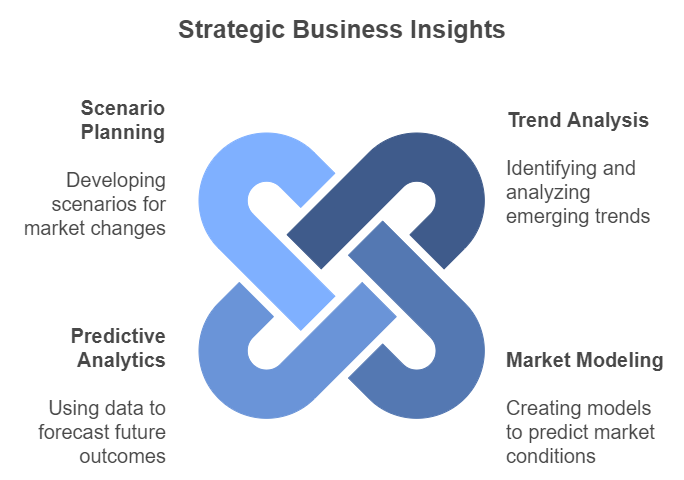
- Trend Analysis: Identifying and analyzing emerging trends that could impact a business’s performance. SIS International leverages its deep market expertise to provide insights into industry trends, helping companies prepare for future changes.
- Market Modeling: Creating models that predict future market conditions based on current data. Market modeling helps businesses understand potential scenarios and make data-driven decisions to stay ahead of the competition.
- Predictive Analytics: Using data analytics to forecast future outcomes. Predictive analytics helps businesses identify potential opportunities and risks, allowing them to take proactive measures to maximize success.
- Scenario Planning: Developing different scenarios to prepare businesses for potential market changes. Scenario planning enables companies to be flexible and resilient, ensuring they are ready for any challenges that may arise.
What Sets Top B2B Industry Trends Forecasting Companies Apart?
A top B2B industry trends forecasting company is differentiated by its industry-specific expertise, advanced analytical tools, and access to real-time data. SIS International, for instance, has conducted projects in over 120 countries and serviced more than 70% of the Fortune 500, giving us unmatched experience in the B2B sector.
Our global reach and superior B2B market expertise make SIS International truly special. We use advanced technology and human expertise to provide the most accurate forecasts. Our data-driven approach and in-depth understanding of industry dynamics allow us to deliver strategic and actionable insights, ensuring our clients are well-prepared for future changes.
How Trends Forecasting Informs B2B Strategy and Innovation

By leveraging insights from a top B2B industry trends forecasting company, businesses can align their strategic direction with future market demands, positioning themselves for success in an ever-evolving landscape.
Guiding Strategic Planning with Proactive Insights
Trends forecasting provides B2B companies with a forward-looking perspective, enabling them to develop strategies that anticipate rather than simply react to market changes.
Enhancing Product and Service Innovation
Forecasting industry trends offer B2B companies insights into how to drive product and service innovation. For example, if trends indicate a growing demand for sustainable solutions, a business can explore eco-friendly product designs or services that minimize environmental impact.
Strengthening Competitive Positioning
Staying ahead of competitors requires a keen awareness of where the industry is headed. Trends forecasting enables B2B companies to benchmark their positioning against anticipated industry standards, ensuring they are prepared to deliver value that aligns with future expectations.
Mitigating Risks Through Informed Decision-Making
With industry trends forecasting, B2B companies can identify potential risks before they impact operations. For instance, trends may reveal potential regulatory shifts, technological disruptions, or shifts in customer behavior that could affect demand.
Optimizing Marketing and Sales Strategies
Trends forecasting also plays a pivotal role in shaping effective marketing and sales strategies. For example, suppose data indicates a shift toward digital purchasing in a specific sector. In that case, businesses can adjust their marketing efforts to emphasize online channels, aligning with customer preferences and increasing reach.
Why SIS International Is the Top B2B Industry Trends Forecasting Company for Your Business
Partnering with the right trends forecasting company can be the key to staying ahead in the B2B landscape. SIS International, with its extensive experience, global reach, and superior market expertise, is uniquely positioned to help businesses navigate future industry shifts. Here’s why SIS International is the top choice for B2B industry trends forecasting.
Unmatched Experience and Global Reach
SIS is the top B2B industry trends forecasting company due to our extensive experience and global reach. With over 40 years of experience in the industry, we have conducted projects in more than 135 countries and serviced over 70% of the Fortune 500. This extensive experience enables us to provide unique insights into the B2B sector, helping businesses make informed decisions and stay ahead of their competition.
Superior Market Expertise
Our team of 150+ employees and collaborators possesses in-depth knowledge of various industries, allowing us to deliver customized insights tailored to the specific needs of our clients. Whether a small start-up or a Fortune 500 company, our expertise can help you navigate industry trends and capitalize on market opportunities.
Advanced Technology and Data-Driven Insights
SISl uses advanced technology and data analytics to provide the most accurate forecasts. Our data-driven approach ensures our clients receive actionable insights based on real-time data and advanced market analysis. By leveraging predictive analytics, trend analysis, and market modeling, we help businesses make proactive decisions that drive growth and success.
Proven Methodologies for Success
Our proven methodologies have been refined over the past four decades to ensure our clients receive the highest-quality insights. We evaluate market trends using qualitative and quantitative analysis and provide strategic and practical recommendations. Our methodologies are designed to help businesses mitigate risks, identify opportunities, and stay ahead of industry changes.
Client-Focused Approach
At SIS International, our clients are at the heart of everything we do. Our client-focused approach ensures our services align with each business’s unique needs. Our customized solutions are designed to address our clients’ specific challenges and opportunities, helping them achieve their strategic goals and maintain a competitive edge in the market.
Long-Term Support and Partnership
Our commitment to our clients goes beyond providing initial forecasts. We offer long-term support and partnership to ensure our clients’ strategies remain effective and adaptable in a rapidly changing market environment. We are dedicated to being a trusted partner in your business’s growth journey, providing ongoing insights and adjustments to keep you ahead of industry trends.
Our Facility Location in New York
11 E 22nd Street, Floor 2, New York, NY 10010 T: +1(212) 505-6805
About SIS International
SIS International offers Quantitative, Qualitative, and Strategy Research. We provide data, tools, strategies, reports, and insights for decision-making. We also conduct interviews, surveys, focus groups, and other Market Research methods and approaches. Contact us for your next Market Research project.