
Electronics Industry Automation and Artificial Intelligence Consulting
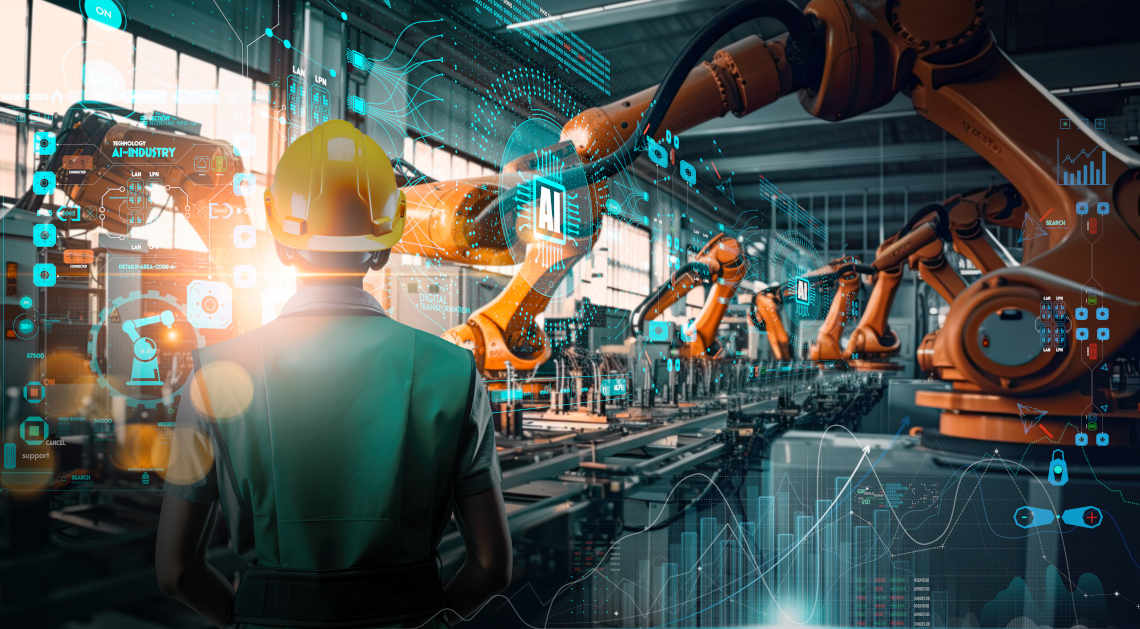
Electronics industry automation and artificial intelligence consulting are transforming the manufacturing, design, and distribution of electronic goods… And the fusion of technology and expertise offers a new horizon of efficiency and innovation in this field.
Overview of Electronics Industry Automation and Artificial Intelligence Consulting
Electronics industry automation and artificial intelligence consulting integrate advanced technologies like AI, machine learning, and robotics into the manufacturing and design processes of electronic goods. It aims to enhance efficiency, reduce errors, and streamline operations, leading to increased productivity and innovation in the electronics sector.
Why Do Businesses Need Electronics Industry Automation and Artificial Intelligence Consulting?
Electronics industry automation and AI consulting provide the agility and responsiveness businesses need to adapt quickly to market changes. It leads to higher efficiency and consistent quality in product assembly, crucial in an industry where precision is key.
AI-driven analytics can also forecast demand more accurately, manage inventory levels, and optimize logistics. This helps in reducing costs and ensuring that supply chains are resilient and responsive to market dynamics. Additionally, AI tools are essential for managing and analyzing this data, turning it into actionable insights that can drive business strategies… But, it has many other benefits, including:
- Improved Product Quality: AI-driven quality control systems can detect flaws and inconsistencies with greater accuracy than manual inspections, ensuring high-quality products.
- Supply Chain Optimization: AI helps in predictive demand planning, inventory management, and logistics optimization, making supply chains more efficient and responsive to market needs.
- Personalized Marketing and Sales Strategies: AI tools analyze customer data to create personalized marketing campaigns and sales strategies, improving customer engagement and conversion rates.
- Innovation in Product Features: AI enables the integration of innovative features in electronic products such as voice assistants and smart connectivity, enhancing product appeal.
- Cost Reduction: By streamlining operations and reducing manual labor, automation, and AI can lead to significant cost reductions in various areas of the electronics business.
When to Seek Electronics Industry Automation and Artificial Intelligence Consulting Services
Conducting electronics industry automation and AI consulting at the right time is crucial for maximizing its effectiveness and aligning with business objectives – and here are several scenarios indicating when a business should consider these technologies:
- Scaling Production: When a business is scaling up its production and needs to increase efficiency and output while maintaining or improving product quality, electronics industry automation and AI consulting become essential.
- Facing Competitive Pressure: If competitors are leveraging advanced technologies to gain market share, it’s time to embrace AI and automation to stay competitive.
- Managing Complex Supply Chains: If managing a complex, global supply chain is becoming increasingly challenging, electronics industry automation and AI consulting can offer solutions for optimization and risk management.
How Does Electronics Industry Automation and Artificial Intelligence Consulting Differ from Traditional Market Research?
Electronics industry automation and artificial intelligence consulting significantly diverge from traditional market research. This divergence is rooted in the advanced technologies and analytical methods used in AI consulting compared to conventional research techniques – and here’s how they differ:
- Predictive and Real-Time Insights: Electronics industry automation and artificial intelligence consulting excel in predictive analytics and real-time market monitoring, providing forward-looking insights and the ability to react quickly to market changes. Traditional market research typically offers a retrospective view based on historical data.
- Integration with Operational Processes: AI consulting in electronics is often directly integrated with operational processes, influencing manufacturing, quality control, and supply chain management. Traditional market research usually serves as a separate, standalone process primarily for strategic decision-making.
- Actionable Insights for Strategic Decisions: Electronics industry automation and artificial intelligence consulting provide actionable insights that can directly influence production strategies, product development, and market positioning. Traditional market research often requires additional interpretation to inform strategic decisions.
What to Expect from Electronics Industry Automation and Artificial Intelligence Consulting
Engaging in electronics industry automation and AI consulting brings optimal results for businesses. These advancements streamline operations and enhance market competitiveness. Here’s what businesses can expect from such consulting:
- Enhanced Manufacturing Efficiency: Businesses can expect significant improvements in manufacturing processes, including increased production speeds, reduced downtime, and minimized errors.
- Improved Product Quality and Consistency: AI-driven quality control systems can detect and correct issues more accurately, ensuring a higher standard of product quality and consistency across the board.
- Informed Strategic Decision-Making: AI’s ability to analyze vast amounts of data translates into more informed decision-making. This includes insights into market trends, operational efficiencies, and customer preferences, aiding in strategic planning.
- Optimized Supply Chain Management: AI and automation can revolutionize supply chain management, providing predictive insights for inventory management, demand forecasting, and logistical optimization.
- Increased Competitiveness: By leveraging AI and automation, businesses can gain a competitive edge in innovation, efficiency, and market responsiveness.
Current Trends in Electronics Industry Automation and Artificial Intelligence Consulting
Staying at the forefront of current trends in electronics industry automation and AI consulting is essential for businesses seeking to thrive in this dynamic sector – and here are some of the noteworthy trends shaping the industry:
- Robotics and Cobots Integration: Collaborative robots (cobots) are becoming integral to electronics manufacturing. They work alongside human operators, enhancing efficiency and safety. These cobots are equipped with AI for tasks like precision assembly and quality control.
- Predictive Maintenance: AI-driven predictive maintenance systems are on the rise. These systems monitor machinery and equipment in real-time, predicting when maintenance is needed to prevent breakdowns and optimize uptime.
- AI in Quality Control: Electronics manufacturers are increasingly using AI-powered computer vision systems for quality control. These systems can detect defects and anomalies in real-time, reducing defects and waste.
- IoT and Smart Factories: The Internet of Things (IoT) is enabling the creation of smart factories. Sensors and connected devices collect data throughout the manufacturing process, allowing for real-time monitoring, analysis, and optimization.
- AI in Semiconductor Manufacturing: Semiconductor manufacturers are leveraging AI for wafer inspection, defect detection, and yield optimization, critical in an industry with stringent quality requirements.
Technologies and Tools Used in Electronics Industry Automation and Artificial Intelligence Consulting
In the emerging field of electronics industry automation and artificial intelligence consulting, various technologies and tools play a crucial role in driving innovation and efficiency. Let’s explore some of these technologies and tools:
- Design Optimization Software: Tools like Autodesk Fusion 360 and Siemens NX use AI algorithms to assist engineers in optimizing product designs for manufacturability, cost-effectiveness, and performance.
- Supply Chain Analytics: Solutions such as SAS Supply Chain Intelligence and Oracle Supply Chain Planning use AI-driven analytics to enhance supply chain visibility, demand forecasting, and inventory management.
- Chatbots and Virtual Assistants: Platforms like Google Dialogflow empower electronics companies to implement AI-driven chatbots and virtual assistants for customer support and engagement.
- Semiconductor Yield Enhancement Software: Brands like KLA Corporation offer AI-based yield management and optimization solutions for semiconductor manufacturing, helping companies improve yield rates and reduce costs.
- Data Analytics Platforms: Data analytics tools like Tableau enable electronics businesses to analyze large datasets, gain insights, and make data-driven decisions for process improvement.
What Are the Current Opportunities in Electronics Industry Automation and Artificial Intelligence Consulting for Businesses
The integration of automation and artificial intelligence in the electronics industry presents numerous opportunities for businesses to thrive and stay competitive – and these are some of the main opportunities for businesses today:
- Quality Assurance: AI-driven inspection systems can identify defects and anomalies in electronic components with high precision. This ensures that only high-quality products reach the market, reducing recalls and warranty costs.
- Sustainable Manufacturing: Electronics industry automation and artificial intelligence consulting can help electronics manufacturers reduce their environmental footprint. It can optimize resource utilization, energy consumption, and waste management, aligning with sustainability goals.
- Product Innovation: Electronics industry automation and artificial intelligence consulting can assist in product design and development by simulating scenarios, optimizing designs, and predicting performance. This leads to the creation of innovative, cutting-edge electronic devices.
- Global Expansion: Electronics industry automation and artificial intelligence consulting can facilitate global expansion by streamlining operations, ensuring consistent quality, and adapting products for different markets.
- Talent Development: The growth of AI in the electronics industry creates opportunities for talent development in AI-related fields. Upskilling employees in AI can lead to a more skilled workforce.
SIS Solutions: Electronics Industry Automation and Artificial Intelligence Consulting
We provide strategic insights and tailored solutions to enhance efficiency, innovation, and competitiveness in the electronics industry through the integration of AI, machine learning, and robotics. Our researchers offer actionable insights for informed decision-making, ensuring a comprehensive market view.
- Improved product quality through AI-driven systems
- Supply chain optimization using AI analytics
- Personalized marketing and sales strategies
- Innovation in product features with AI integration
- Significant cost reductions across operations
- Enhanced manufacturing efficiency and product consistency
- Optimized supply chain management for responsiveness and efficiency
Our extensive industry connections and strategic analysis empower businesses to navigate the complexities of automation and AI in electronics, ensuring sustainable growth and competitive advantage.
About SIS International
SIS International offers Quantitative, Qualitative, and Strategy Research. We provide data, tools, strategies, reports and insights for decision-making. We conduct interviews, surveys, focus groups and many other Market Research methods and approaches. Contact us for your next Market Research project.