
Investment Opportunities in NEOM Real Estate

The future isn’t just coming—it’s being bulldozed into existence right now in the scorching deserts of Saudi Arabia.
NEOM, that mind-melting $500 billion mega-project is actual concrete being poured, earthshaking deals being inked, and investment opportunities in NEOM real estate multiplying faster than crypto scams during a bull market.
✅ Listen to this PODCAST EPISODE here:
The NEOM Vision: More Than Just Desert Dreams
When Crown Prince Mohammed bin Salman announced investment opportunities in NEOM real estate back in 2017, skeptics didn’t just roll their eyes—they practically dislocated their optical nerves from excessive eye-rolling.
Fast forward to today, NEOM represents something so fundamentally new that comparing it to traditional real estate is like comparing the iPhone to a rotary dial. It’s a chance to invest in a city being built from absolute scratch with technologies that most urban centers won’t implement for decades (or possibly ever):
- THE LINE – A mind-bending 170km linear city without roads, cars, or emissions that looks like it was ripped straight from a sci-fi movie set in 2150
- OXAGON – The world’s largest floating industrial complex that makes traditional ports look like kiddie pools
- TROJENA – A mountain destination with year-round skiing… IN THE ARABIAN DESERT. Let that sink in for a minute.
- SINDALAH – A luxury island destination that’s positioning itself to make the Maldives look like a public beach with too many tourists
Why Now Is the Critical Moment for NEOM Investment
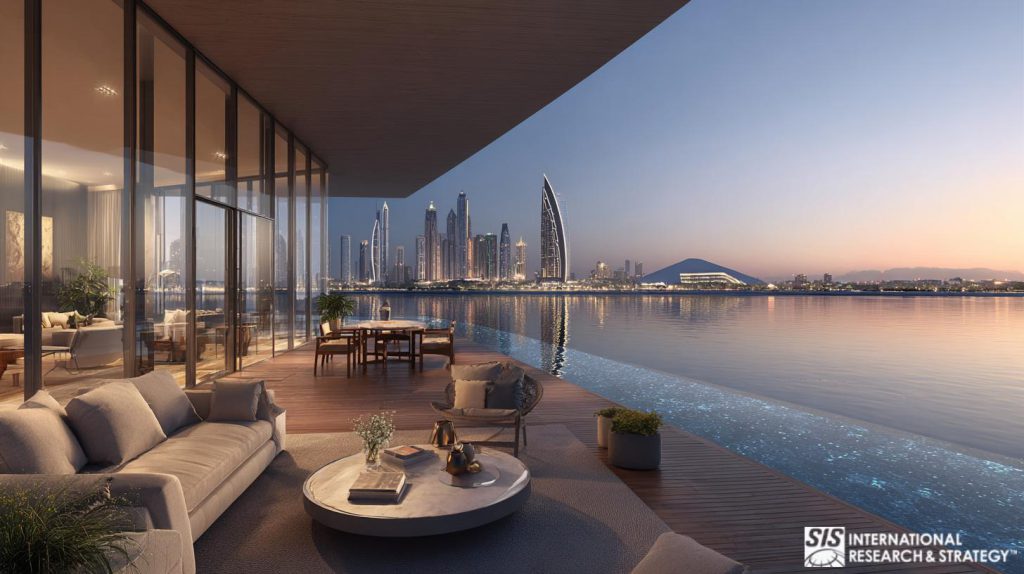
Construction on NEOM isn’t some future fantasy—bulldozers are literally reshaping the earth as you read this. Major contracts worth not millions but billions have been awarded to firms that aren’t exactly waiting around to break ground.
Let me slap you with a historical reality check: early investors in Dubai’s Palm Jumeirah—a project that was once also dismissed as desert madness—saw their property values skyrocket by over 300% within the first decade. And that was a man-made island shaped like a palm tree, not a half-trillion-dollar reimagining of human civilization.
Breaking Down Investment Opportunities in NEOM Real Estate by District
THE LINE: Vertical Urban Living Reimagined
THE LINE is urbanism reimagined by someone who looked at traditional city design and said “nah, I’m good.” This isn’t a building or a district; it’s a 170km-long mirrored vertical city stretching across the desert like a gleaming lightsaber, with absolutely no roads, cars, or carbon emissions.
Investment opportunities in THE LINE aren’t playing in the same universe as your parents’ rental properties:
- Residential modules ranging from “merely luxury” to “I didn’t know humans could live like this” tiers
- Commercial spaces within mixed-use zones designed for businesses that probably don’t even exist yet
- Premium units with views that’ll make your Instagram followers question if you’re posting AI-generated content or actual photos of the Red Sea and desert landscapes
- Healthcare and education-focused real estate that makes current facilities look like they’re operating in the Stone Age
What makes THE LINE particularly mind-bending (beyond, you know, its entire concept) is its modular construction approach.
OXAGON: Industrial and Commercial Powerhouse That Makes Traditional Business Parks Look Like Child’s Play
This is one of the best investment opportunities in NEOM real estate. OXAGON revolutionizes the entire concept and rebuilds it from scratch as a floating, octagon-shaped complex that makes traditional ports and industrial zones appear to be operating in a different century. This is potentially the most advanced industrial facility human beings have ever attempted to build.
Here, investment opportunities in NEOM real estate transcend traditional commercial real estate and venture into what can only be described as industrial futurism:
- Logistics hubs connected to a port system so advanced it makes Rotterdam look like a fishing village
- Research and development facilities designed specifically for industries that are actively being invented
- Manufacturing spaces engineered from the ground up for Industry 4.0, with integrated AI, robotics infrastructure, and circular economy principles baked into the physical buildings themselves
- Commercial offices for companies establishing regional headquarters that will come with connectivity and technological integration that would make a Silicon Valley campus seem technologically primitive
Here’s where it gets really interesting for investors who care about actual returns instead of just architectural renderings: OXAGON offers perhaps the most immediate return potential in the entire NEOM project. Why? Because industrial and logistics operations can kick off and start generating cash flow before a single resident moves into THE LINE. While residential buyers will be purchasing future potential, OXAGON investors can potentially start seeing operational returns within a substantially shorter timeframe.
TROJENA: Luxury Tourism and Seasonal Residences
This mountain destination within NEOM doesn’t just focus on luxury tourism; it’s creating an entirely new category of luxury that has never existed before: alpine experiences in the Arabian Peninsula.
- Ski chalets and mountain villas that will command prices that would make Aspen real estate agents choke on their après-ski cocktails
- Boutique hotels and branded residences targeting a class of traveler who thinks St. Moritz is becoming “a bit common”
- Retail spaces in the Mountain Village that global luxury brands are already fighting over before construction has even completed
- Entertainment venues and sports facilities designed to host events that currently don’t exist because no other destination combines these specific climate and infrastructure characteristics
With Saudi Arabia maniacally pushing to diversify from oil (because even they know that party has a limited shelf life) and dramatically expand its tourism sector as exhaustively detailed in recent strategy consulting reports that cost six figures to commission, TROJENA represents a vertical with the kind of upside potential that sophisticated investors discuss only in private conversations, not in public forums.
Navigating Regulatory and Financing Landscapes (Where the Real Magic Happens)
Let’s address the room-filling elephant that most investment seminars conveniently ignore: investing in an emerging market like Saudi Arabia presents regulatory considerations that would give most corporate lawyers night sweats and anxiety dreams.
NEOM doesn’t just operate under Saudi law; it functions essentially as its own jurisdiction with special economic zone regulations specifically engineered to entice foreign capital that might otherwise be skittish about the region. These include:
- 100% foreign ownership allowances for most property types—no mandatory local partners or shadowy ownership structures required
- Streamlined visa processes for investors that make obtaining residency about as complex as ordering delivery food
- Tax incentives and customs duty exemptions that would make Singapore blush
- Special dispute resolution mechanisms intentionally modeled after international standards rather than traditional Saudi procedures
Risk Factors and Mitigation Strategies for Investment Opportunities in NEOM Real Estate
No honest discussion about investment opportunities in NEOM real estate would be complete without ripping the band-aid off and addressing the risks that most glossy investment brochures conveniently bury in 6-point font on page 94:
- Timeline uncertainties and potential construction delays that would make your home renovation contractor’s excuses seem quaint by comparison
- Regulatory evolution (or revolution) as the project matures and potentially shifts priorities
- Regional geopolitical considerations that won’t make mainstream news until they’re already impacting asset values
- Market absorption rates for a supply of luxury and commercial real estate so unprecedented that traditional market models quite literally cannot compute it
But here’s where sophisticated investors separate themselves from the herd: they don’t avoid risk—they price it correctly and mitigate it intelligently:
- Phased capital commitments tied to verifiable construction milestones rather than promises and press releases
- Strategic diversification across multiple NEOM districts to create a natural hedge against district-specific setbacks
- Deep partnership with local entities possessing regulatory expertise and—let’s be adults here—relationships with decision-makers
- Laser focus on segments with proven demand (like corporate housing and logistics) rather than the sexiest conceptual offerings
The highest returns in NEOM won’t go to the biggest checkbooks or the most connected players, but to those who approach the opportunity with equal parts ambition and strategic discipline. It’s not about avoiding risk—it’s about ensuring you’re being adequately compensated for the risks you consciously choose to take.
Case Study: The Early Investor Advantage (AKA How to Make Your Investment Buddies Sick with Envy)
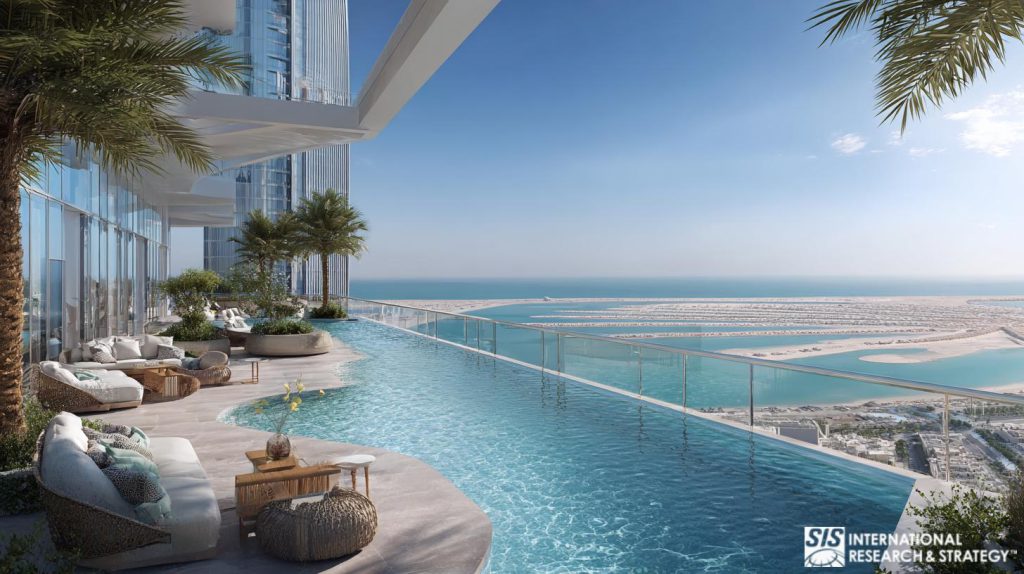
Let me tell you about Khalid (not his real name, but the numbers are painfully real). He’s not a royal, not a billionaire tech founder, just a savvy investor with enough foresight to secure development rights for a mid-sized commercial space in OXAGON’s initial phase while most people were still Googling “where is NEOM located?”
- He acquired development rights at 30% below what similar parcels are trading for today—just 15 months later
- Secured three multinational anchor tenants through advance relationship-building before the official leasing process even began, achieving a jaw-dropping 65% pre-leasing rate that most developers would sacrifice a limb for
- Negotiated financing terms with a Saudi bank that would make you weep with envy—terms that are now completely unavailable to johnny-come-lately investors as demand has skyrocketed
- Established personal relationships with mid-level NEOM authorities who’ve already tipped him off to three additional opportunities not yet publicly announced
Is this speculative? Of course it is. We’re talking about a city that doesn’t fully exist yet. But here’s where it gets interesting: conservative analysts (the kind who probably told people Bitcoin was a scam in 2013) project Khalid’s investment could generate a 250-300% return over the next decade.
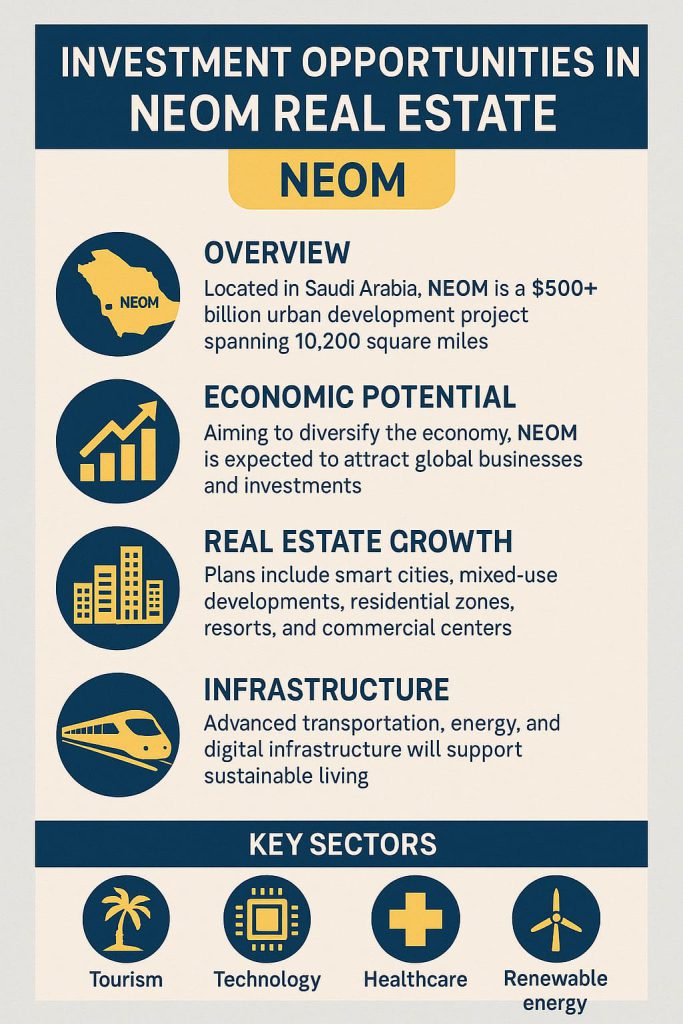
Summary: Investment opportunities in NEOM real estate.
✅ Unprecedented Scale: NEOM represents a $500 billion development unlike anything previously attempted.
✅ District Diversity: Each NEOM district (THE LINE, OXAGON, TROJENA) offers distinct investment profiles and potential returns.
✅ Timing Advantage: Early-mover advantages are substantial but rapidly diminishing as development progresses.
✅ Regulatory Innovation: Special economic zone status creates favorable investment conditions compared to traditional Saudi real estate.
✅ Risk-Return Profile: Higher potential returns come with corresponding risks that require sophisticated mitigation strategies.
✅ Market Intelligence Critical: Success depends heavily on specialized market knowledge and local connections.
✅ Global Significance: NEOM isn’t just reshaping Saudi Arabia—it’s creating an entirely new model for urban development that could influence global real estate trends.
What Makes SIS International a Top Resource for NEOM Real Estate Investment
Looking to navigate the complex landscape of NEOM investment opportunities? Here’s why leading investors turn to specialized market intelligence to pick the best investment opportunities in NEOM real estate.:
- CUSTOMIZED APPROACH: Each NEOM district requires tailored investment strategies based on specific market dynamics, regulatory considerations, and risk profiles.
- THE 40+ YEARS OF EXPERIENCE: Firms with decades of Middle Eastern market experience like SIS International Research provide historical context crucial for evaluating new market opportunities.
- THE GLOBAL DATABASES FOR THE RECRUITMENT: Access to comprehensive tenant, developer, and contractor databases allows for thorough due diligence before commitment.
- PROJECTS GET DONE FAST: Rapid market intelligence gathering enables investors to move quickly on time-sensitive opportunities that emerge in fast-developing projects like NEOM.
- AFFORDABLE RESEARCH: Cost-effective market analysis options make professional intelligence accessible even for individual investors exploring NEOM opportunities.
- DEEP REGIONAL EXPERTISE: Understanding Saudi Arabia’s Vision 2030 and its implications for NEOM development provides critical context for investment timing.
- NETWORK ACCESS: Connections to key decision-makers, developers, and government liaisons streamline the investment process.
FAQ: Investment Opportunities in NEOM Real Estate
What minimum investment is typically required for NEOM real estate opportunities?
Let’s get real about the numbers—they’re not small, but neither is the opportunity. Investment minimums vary wildly by district and project type. Individual residential units in THE LINE may eventually be available from approximately $500,000 USD (though that’ll likely get you something roughly the size of a Manhattan studio), while commercial development rights in OXAGON or TROJENA aren’t playing in the kiddie pool—they typically start from $5-10 million for anything meaningful. Institutional-grade investment opportunities?
How do NEOM’s special economic zone regulations differ from mainstream Saudi real estate laws?
NEOM doesn’t just tweak Saudi real estate laws—it operates in what amounts to an entirely separate legal universe. The independent regulatory framework wasn’t casually designed; it was meticulously engineered specifically to overcome the precise objections that have historically kept international capital from flooding into the Kingdom.
Key differences? They’re fundamental. We’re talking 100% foreign ownership allowances that eliminate the need for local partners entirely (a revolutionary concept in the region), streamlined residency options for investors that bypass traditional Saudi visa complexities, independent dispute resolution mechanisms that operate more like Singapore’s courts than traditional Saudi procedures, and tax incentives so specific and generous they’d be politically impossible to implement nationwide.
What financing options are available for foreign investors interested in NEOM?
Several Saudi banks have created specialized lending products for NEOM investments with competitive terms. International investors can access these through local partnerships or established banking relationships. Additionally, developer financing is becoming available for certain projects, particularly in TROJENA and SINDALAH. Islamic financing structures are also prominent, offering Sharia-compliant investment vehicles with unique characteristics that may benefit certain investor profiles.
How can investors conduct proper due diligence on NEOM opportunities?
Thorough due diligence for NEOM investments should include legal review of the specific regulatory framework applying to your target investment, comprehensive market analysis of comparable projects (though limited), verification of development timelines and contingencies, and assessment of exit strategy options. Many investors work with specialized consulting firms to conduct this due diligence, particularly those with established Saudi Arabian expertise.
What potential exit strategies exist for early NEOM investors?
Exit strategies vary by investment type but include: selling to institutional investors as projects mature, refinancing once cash flow stabilizes, creating REIT structures for partial liquidity, joint venture restructuring, and of course, long-term hold strategies to maximize appreciation. The optimal exit strategy depends on investment objectives, market timing, and the specific NEOM district. Market analysis suggests premium valuations for early investors who reach appropriate exit timing.
How might regional geopolitical factors impact NEOM investments?
While NEOM benefits from strong sovereign backing and Saudi Arabia’s substantial financial resources, regional geopolitical considerations remain relevant. The project’s strategic importance to Saudi Vision 2030 provides significant insulation from political disruption. However, investors should monitor broader regional stability, international relations, global economic conditions, and energy market dynamics as external factors that could influence development pace. Economic research specialists can provide ongoing assessment of these factors.
Our Facility Location in New York
11 E 22nd Street, Floor 2, New York, NY 10010 T: +1(212) 505-6805
About SIS International
SIS International offers Quantitative, Qualitative, and Strategy Research. We provide data, tools, strategies, reports, and insights for decision-making. We also conduct interviews, surveys, focus groups, and other Market Research methods and approaches. Contact us for your next Market Research project.