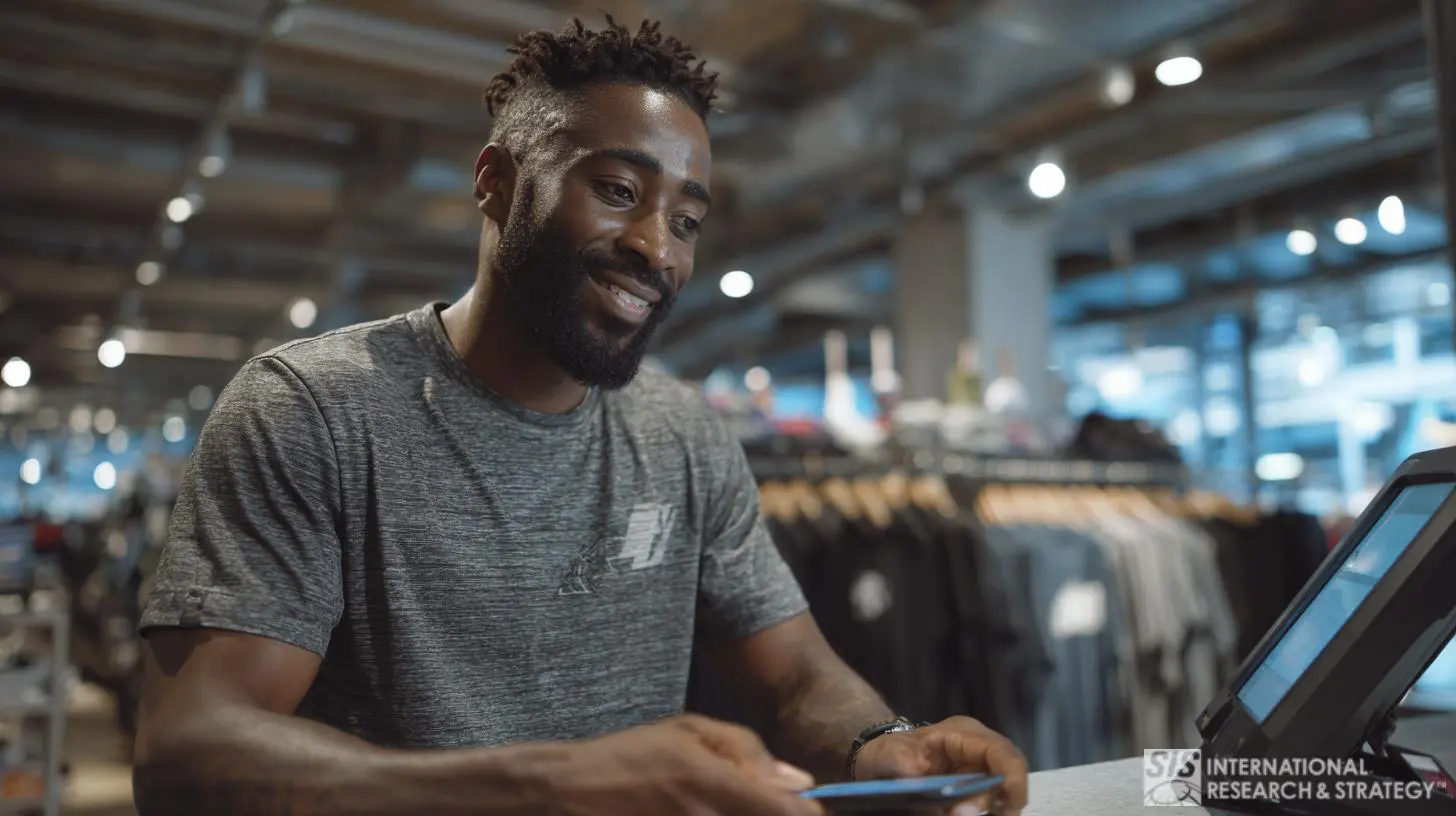
Harnessing Technology in Retail: The Leader’s Playbook

ルース・スタナート

Harnessing Technology in Retail: The Leader’s Playbook

SIS 国際市場調査と戦略

テクノロジーは長い間、小売業界の原動力となってきました。サプライ チェーンの促進、支店間のコミュニケーションの確立、顧客の利便性の提供など、テクノロジーは小売部門を今日の数兆ドル規模のグローバル ビジネスへと成長させました。

在庫管理技術

世界最大かつ最高の業績を誇る小売業者であるウォルマートは、この事実を認識しており、テクノロジーが成功の鍵であると頻繁に主張しています。たとえば、同社の日常業務はデジタル テクノロジーによって最適に調整されています。コンピューター化されたスマート補充システムを使用することで、ウォルマートの在庫管理部門は多額の費用を節約し、在庫が滞留するのを防いでいます。多くのプロセスも自動化できるため、運用コストを削減し、従業員の生産性を向上させることができます。一方、小売分析に関する高度なソフトウェアにより、ウォルマートはサプライヤーとの卸売価格の交渉において大きな優位性を獲得しています。

Harnessing Technology in Retail: How Leading Operators Build Durable Advantage

Retail’s winners are widening the gap. They are doing it by treating technology as an operating discipline, not a procurement event.

The strategic question for VP-level leaders has shifted. It is no longer whether to digitize, but which capabilities compound and which decay on contact with reality. Harnessing technology in retail rewards operators who connect store, supply chain, and consumer data into a single decision system, and who validate every deployment against shopper behavior before scaling.

The Capability Stack Behind Modern Retail Performance

The retailers pulling ahead share a common architecture. They run a unified commerce platform that treats inventory as a single pool, exposed through APIs to store associates, marketplace listings, and DTC channels. Walmart’s GoLocal, Target’s Shipt integration, and Inditex’s stock-as-a-network model show what becomes possible when fulfillment logic decouples from physical location.

Layered above that pool sits a customer data platform that resolves identity across loyalty, payment, and digital touchpoints. Below it, computer vision and RFID feed real-time on-shelf availability into replenishment models. The result is not a technology stack. It is a feedback loop that measures every assortment, price, and promotion decision against observed behavior.

The shift in net revenue retention logic matters here. Retailers who once optimized basket size now optimize lifetime margin per identified shopper. That reframing changes which technologies justify capital and which do not.

Where Capital Compounds: Five Technology Categories Worth the Investment Case

Not all retail technology pays back. The categories with defensible ROI cluster around decisions that are made thousands of times per day at scale.

  • AI-driven assortment and price optimization. Kroger’s 84.51° and Albertsons’ partnerships with retail media networks turn first-party data into pricing precision that private equity comparables cannot match.
  • Computer vision in stores. On-shelf availability gains of several percentage points translate directly into recovered sales, with payback typically inside two planogram cycles.
  • Micro-fulfillment and goods-to-person automation. Ocado, AutoStore, and Symbotic deployments reduce pick costs meaningfully when SKU velocity and order density support throughput.
  • Retail media networks. Amazon, Walmart Connect, and Carrefour Links demonstrate how shopper data monetizes at margins that approach software economics.
  • Conversational and visual commerce. Generative interfaces shorten the path from intent to checkout, particularly in apparel, beauty, and home categories.

Technology Categories Ranked by Strategic Defensibility

カテゴリ Defensibility Primary Value Driver
Retail media networks High First-party data monetization
AI assortment and pricing High Margin per identified shopper
Micro-fulfillment automation Medium-High Pick cost and last-mile economics
Computer vision and RFID Medium On-shelf availability recovery
Conversational commerce Medium Conversion lift in considered categories

Source: SIS International Research

What Distinguishes Leaders From Fast Followers

The conventional approach treats technology selection as a vendor evaluation. The better practice treats it as a hypothesis test against shopper behavior.

According to SIS International Research, retailers that pair quantitative basket analysis with ethnographic store observation and structured shopper journey analytics consistently identify higher-value automation targets than those relying on vendor benchmarks alone. The reason is mechanical. Vendor case studies report averages. Shopper journey analytics reveal which moments actually drive conversion in a specific banner.

SIS International’s proprietary research across luxury, fashion, and FMCG retail engagements indicates that perceived experience quality, not feature parity, determines whether a digital deployment translates into repeat visitation. Shoppers describe technology as additive only when it removes friction they had already named in unaided interviews.

This is why category management optimization that ignores qualitative signal underperforms. The data tells the operator what happened. Voice of customer work tells the operator why, and whether the pattern will hold when competitors copy the feature.

The Global Picture: Where Retail Technology Investment Pays Back Fastest

Geography matters more than most capital plans assume. Asia’s retail technology curve runs ahead of North America in payments, social commerce, and live shopping. China’s integration of WeChat, Douyin, and Meituan has produced unit economics in conversational commerce that Western retailers are now adapting through TikTok Shop and Instagram partnerships.

India’s organized retail expansion, anchored by Reliance Retail and Tata’s acquisition strategy, demonstrates how leapfrog adoption of UPI and ONDC reshapes the technology stack required to compete. Latin America’s Mercado Libre shows the same pattern in payments and logistics integration.

For Fortune 500 leaders, the implication is direct. Technology bets validated only against domestic shopper data underprice the speed at which capabilities migrate across borders. Market entry assessments that combine competitive intelligence with in-market B2B expert interviews surface the local enablers that determine whether a global platform actually performs.

An Original Framework: The Retail Technology Defensibility Matrix

SIS uses a two-axis view to separate capital-worthy technology from capital-destroying technology.

  • Axis one: data exclusivity. Does the technology generate proprietary first-party data, or does it consume vendor-supplied data available to all buyers?
  • Axis two: decision frequency. Does the technology improve a decision made millions of times per day, or one made quarterly?

High exclusivity plus high frequency defines the compounding zone: retail media, dynamic pricing, personalized recommendations. Low exclusivity plus low frequency defines the commodity zone: most ERP modules, generic POS upgrades, off-the-shelf chatbots. The matrix forces honest classification before the business case is built.

Where Voice of Customer Research Closes the Gap

Technology investment cases routinely model conversion lift, basket size, and operational savings. They less often model what happens to brand perception when the deployment underperforms.

In SIS focus groups and ethnographic research conducted across US luxury and fashion retail, customers consistently distinguished between technology that signaled brand confidence and technology that signaled cost-cutting. The same self-checkout deployment was read as convenience in one banner and as service withdrawal in another, depending on staffing visibility and store cues.

This is not a minor effect. It determines whether automation investment compounds loyalty or accelerates churn. Central location tests, shopper journey mapping, and competitive intelligence work that runs parallel to deployment, not after it, give leadership the read it needs before sunk costs harden.

The Path Forward for VP-Level Decision Makers

Harnessing technology in retail is becoming the central operating capability of the next decade. The retailers gaining ground share three habits. They classify every technology bet against data exclusivity and decision frequency. They validate deployments through structured shopper research, not vendor claims. They treat global signal as leading-indicator data for domestic strategy.

The capital is available. The vendors are mature. The differentiator is the quality of the evidence behind the decision.

SISインターナショナルについて

SISインターナショナル 定量的、定性的、戦略的な調査を提供します。意思決定のためのデータ、ツール、戦略、レポート、洞察を提供します。また、インタビュー、アンケート、フォーカス グループ、その他の市場調査方法やアプローチも実施します。 お問い合わせ 次の市場調査プロジェクトにご利用ください。

著者の写真

ルース・スタナート

SIS International Research & Strategy の創設者兼 CEO。戦略計画とグローバル市場情報に関する 40 年以上の専門知識を持ち、組織が国際的な成功を収めるのを支援する信頼できるグローバル リーダーです。

自信を持ってグローバルに展開しましょう。今すぐ SIS International にお問い合わせください。

専門家に相談する