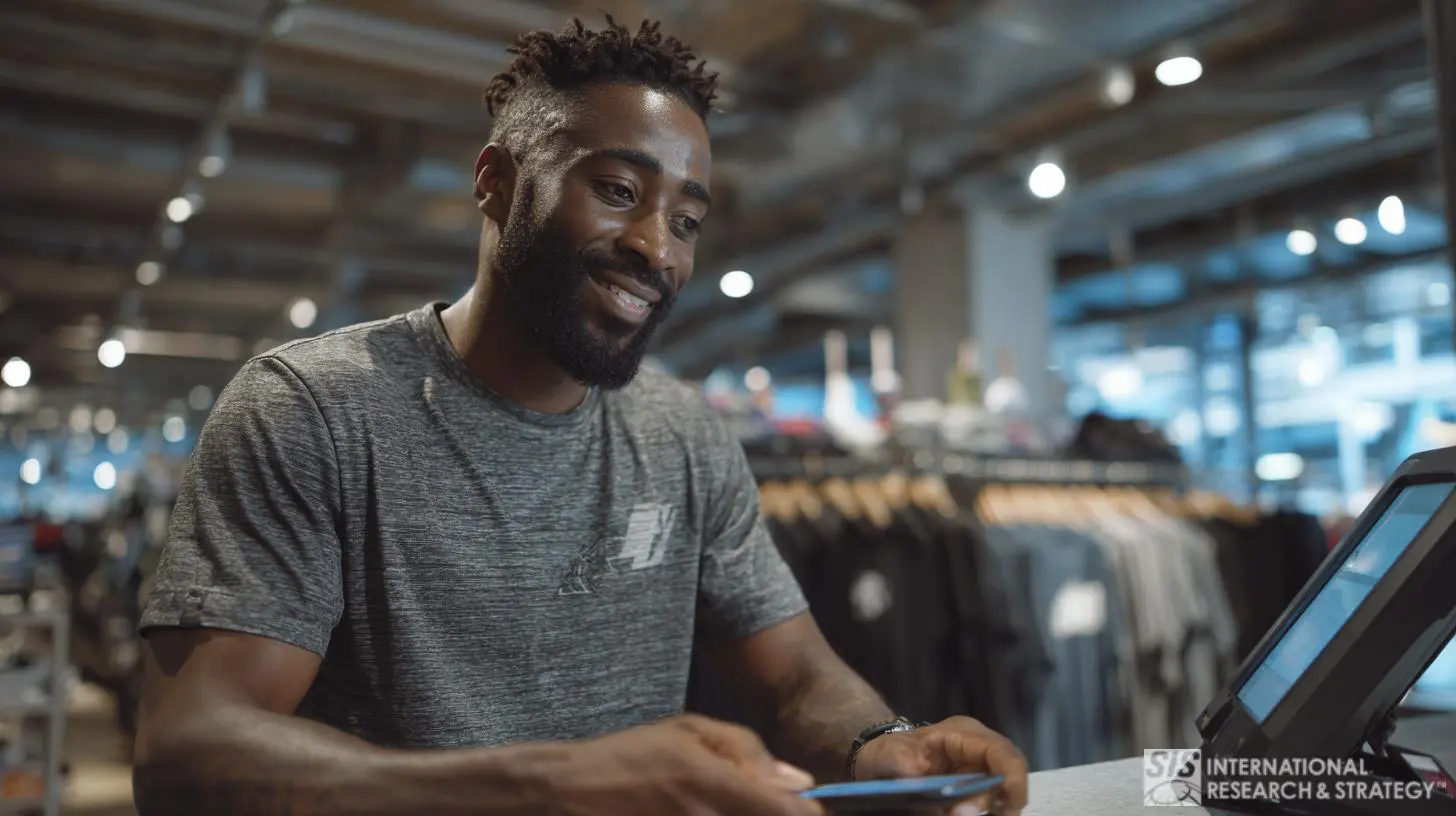
기술은 오랫동안 소매 산업의 원동력이었습니다. 공급망 촉진, 지점 간 커뮤니케이션 구축, 고객 편의 제공 등 기술을 통해 소매 부문은 오늘날 수조 달러 규모의 글로벌 비즈니스로 성장할 수 있었습니다.
재고관리 기술
세계 최대이자 최고의 성과를 내는 소매업체인 월마트(Wal-Mart)는 이러한 사실을 인식하고 기술이 성공에 필수적이라는 주장을 자주 공개해 왔습니다. 예를 들어, 회사의 일상적인 운영은 디지털 기술을 통해 최적으로 조정됩니다. 컴퓨터화된 스마트 보충 시스템을 사용하는 Wal-Mart의 재고 관리 장치는 상당한 비용을 절약하고 정체된 상품의 축적을 방지하는 데 도움이 됩니다. 또한 많은 프로세스를 자동화하여 운영 비용을 절감하고 작업자 생산성을 높일 수 있습니다. 한편, 소매 분석에 대한 고급 소프트웨어는 공급업체와 도매 비용을 협상할 때 Wal-Mart에 상당한 영향력을 제공합니다.
Harnessing Technology in Retail: How Leading Operators Build Durable Advantage
Retail’s winners are widening the gap. They are doing it by treating technology as an operating discipline, not a procurement event.
The strategic question for VP-level leaders has shifted. It is no longer whether to digitize, but which capabilities compound and which decay on contact with reality. Harnessing technology in retail rewards operators who connect store, supply chain, and consumer data into a single decision system, and who validate every deployment against shopper behavior before scaling.
The Capability Stack Behind Modern Retail Performance
The retailers pulling ahead share a common architecture. They run a unified commerce platform that treats inventory as a single pool, exposed through APIs to store associates, marketplace listings, and DTC channels. Walmart’s GoLocal, Target’s Shipt integration, and Inditex’s stock-as-a-network model show what becomes possible when fulfillment logic decouples from physical location.
Layered above that pool sits a customer data platform that resolves identity across loyalty, payment, and digital touchpoints. Below it, computer vision and RFID feed real-time on-shelf availability into replenishment models. The result is not a technology stack. It is a feedback loop that measures every assortment, price, and promotion decision against observed behavior.
The shift in net revenue retention logic matters here. Retailers who once optimized basket size now optimize lifetime margin per identified shopper. That reframing changes which technologies justify capital and which do not.
Where Capital Compounds: Five Technology Categories Worth the Investment Case
Not all retail technology pays back. The categories with defensible ROI cluster around decisions that are made thousands of times per day at scale.
- AI-driven assortment and price optimization. Kroger’s 84.51° and Albertsons’ partnerships with retail media networks turn first-party data into pricing precision that private equity comparables cannot match.
- Computer vision in stores. On-shelf availability gains of several percentage points translate directly into recovered sales, with payback typically inside two planogram cycles.
- Micro-fulfillment and goods-to-person automation. Ocado, AutoStore, and Symbotic deployments reduce pick costs meaningfully when SKU velocity and order density support throughput.
- Retail media networks. Amazon, Walmart Connect, and Carrefour Links demonstrate how shopper data monetizes at margins that approach software economics.
- Conversational and visual commerce. Generative interfaces shorten the path from intent to checkout, particularly in apparel, beauty, and home categories.
Technology Categories Ranked by Strategic Defensibility
| 범주 | Defensibility | Primary Value Driver |
|---|---|---|
| Retail media networks | High | First-party data monetization |
| AI assortment and pricing | High | Margin per identified shopper |
| Micro-fulfillment automation | Medium-High | Pick cost and last-mile economics |
| Computer vision and RFID | Medium | On-shelf availability recovery |
| Conversational commerce | Medium | Conversion lift in considered categories |
Source: SIS International Research
What Distinguishes Leaders From Fast Followers
The conventional approach treats technology selection as a vendor evaluation. The better practice treats it as a hypothesis test against shopper behavior.
According to SIS International Research, retailers that pair quantitative basket analysis with ethnographic store observation and structured shopper journey analytics consistently identify higher-value automation targets than those relying on vendor benchmarks alone. The reason is mechanical. Vendor case studies report averages. Shopper journey analytics reveal which moments actually drive conversion in a specific banner.
SIS International’s proprietary research across luxury, fashion, and FMCG retail engagements indicates that perceived experience quality, not feature parity, determines whether a digital deployment translates into repeat visitation. Shoppers describe technology as additive only when it removes friction they had already named in unaided interviews.
This is why category management optimization that ignores qualitative signal underperforms. The data tells the operator what happened. Voice of customer work tells the operator why, and whether the pattern will hold when competitors copy the feature.
The Global Picture: Where Retail Technology Investment Pays Back Fastest
Geography matters more than most capital plans assume. Asia’s retail technology curve runs ahead of North America in payments, social commerce, and live shopping. China’s integration of WeChat, Douyin, and Meituan has produced unit economics in conversational commerce that Western retailers are now adapting through TikTok Shop and Instagram partnerships.
India’s organized retail expansion, anchored by Reliance Retail and Tata’s acquisition strategy, demonstrates how leapfrog adoption of UPI and ONDC reshapes the technology stack required to compete. Latin America’s Mercado Libre shows the same pattern in payments and logistics integration.
For Fortune 500 leaders, the implication is direct. Technology bets validated only against domestic shopper data underprice the speed at which capabilities migrate across borders. Market entry assessments that combine competitive intelligence with in-market B2B expert interviews surface the local enablers that determine whether a global platform actually performs.
An Original Framework: The Retail Technology Defensibility Matrix
SIS uses a two-axis view to separate capital-worthy technology from capital-destroying technology.
- Axis one: data exclusivity. Does the technology generate proprietary first-party data, or does it consume vendor-supplied data available to all buyers?
- Axis two: decision frequency. Does the technology improve a decision made millions of times per day, or one made quarterly?
High exclusivity plus high frequency defines the compounding zone: retail media, dynamic pricing, personalized recommendations. Low exclusivity plus low frequency defines the commodity zone: most ERP modules, generic POS upgrades, off-the-shelf chatbots. The matrix forces honest classification before the business case is built.
Where Voice of Customer Research Closes the Gap
Technology investment cases routinely model conversion lift, basket size, and operational savings. They less often model what happens to brand perception when the deployment underperforms.
In SIS focus groups and ethnographic research conducted across US luxury and fashion retail, customers consistently distinguished between technology that signaled brand confidence and technology that signaled cost-cutting. The same self-checkout deployment was read as convenience in one banner and as service withdrawal in another, depending on staffing visibility and store cues.
This is not a minor effect. It determines whether automation investment compounds loyalty or accelerates churn. Central location tests, shopper journey mapping, and competitive intelligence work that runs parallel to deployment, not after it, give leadership the read it needs before sunk costs harden.
The Path Forward for VP-Level Decision Makers
Harnessing technology in retail is becoming the central operating capability of the next decade. The retailers gaining ground share three habits. They classify every technology bet against data exclusivity and decision frequency. They validate deployments through structured shopper research, not vendor claims. They treat global signal as leading-indicator data for domestic strategy.
The capital is available. The vendors are mature. The differentiator is the quality of the evidence behind the decision.
SIS 인터내셔널 소개
SIS 국제 정량적, 정성적, 전략 연구를 제공합니다. 우리는 의사결정을 위한 데이터, 도구, 전략, 보고서 및 통찰력을 제공합니다. 또한 인터뷰, 설문 조사, 포커스 그룹, 기타 시장 조사 방법 및 접근 방식을 수행합니다. 문의하기 다음 시장 조사 프로젝트를 위해.