
Tractor Market 研究
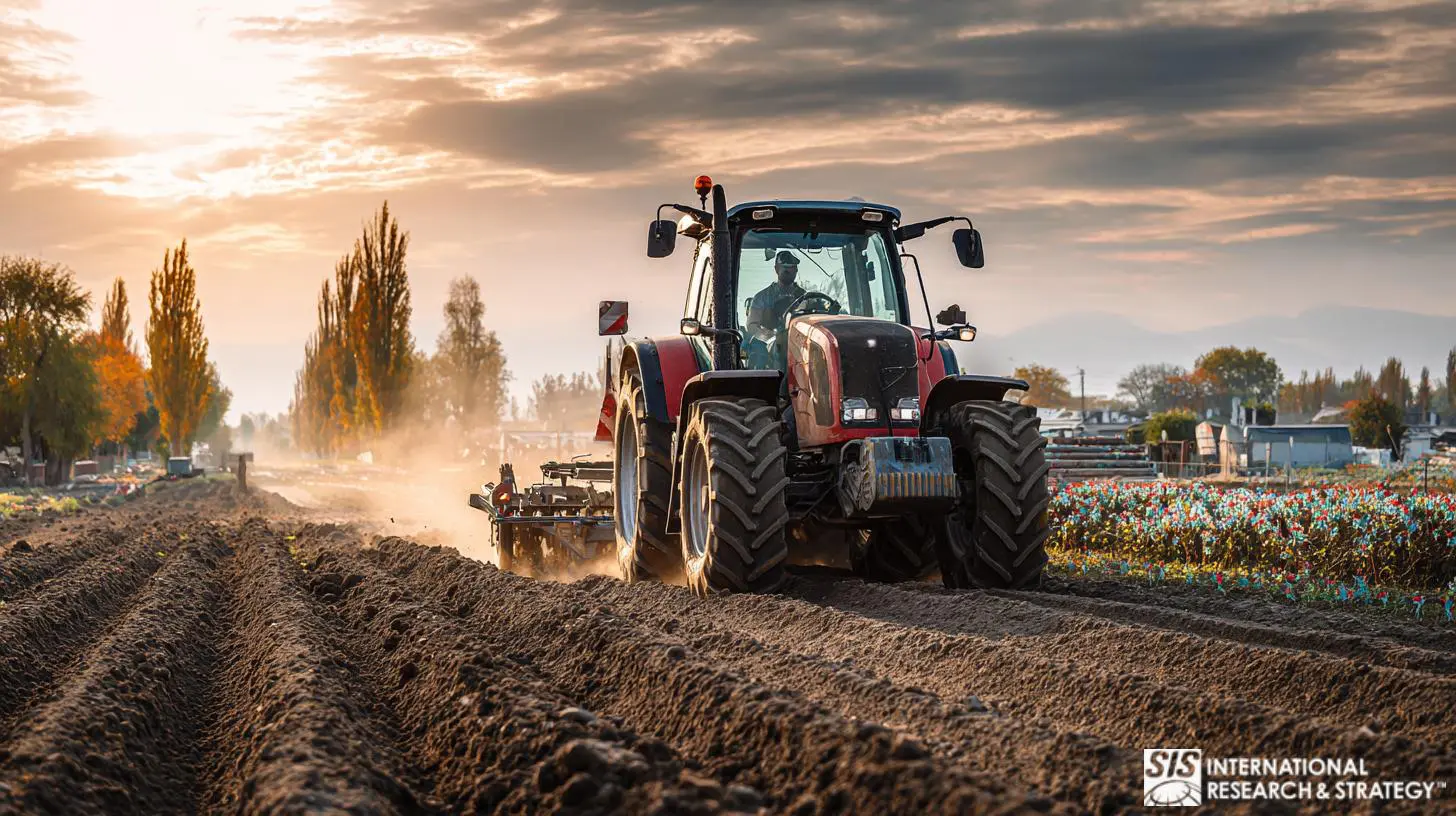
拖拉机市场研究收集并分析有关拖拉机行业和拖拉机市场的数据。这项研究可能包含有关拖拉机销售、生产、定价和行业趋势的信息。它还可能收集有关市场重要参与者(如生产商和分销商)以及拖拉机最终用户(如农民和建筑企业)的信息。拖拉机市场研究旨在全面概述拖拉机市场并发现发展和扩张前景。
为什么拖拉机市场研究对于行业成功至关重要
拖拉机市场研究是拖拉机行业企业必不可少的工具。它使企业能够了解当前的市场情况,识别行业趋势和可能性,并就产品开发、营销和销售策略做出明智的决策。
拖拉机市场研究是必要的,因为它提供了有关拖拉机行业现状的宝贵信息。其中包括销售量、市场份额和价格趋势统计数据。这些数据可以帮助公司确定哪些产品需求量大,哪些产品需求量小,从而使他们能够相应地调整产品供应。此外,它还有助于企业了解竞争格局,这对于制定有效的营销和销售策略必不可少。
Another essential advantage of tractor market research is that it enables businesses to uncover new growth and expansion opportunities. For instance, research can discover untapped markets or innovative applications for tractors that companies may have overlooked. Businesses can increase their revenue sources and diversify their product lines.
此外,拖拉机市场研究可以帮助企业预测行业趋势和变化。例如,研究可以揭示影响行业的新技术或法规;企业可以利用这些信息来规划未来。
拖拉机市场行业的关键职位

拖拉机市场行业涉及广泛的角色和职责,并且几个关键职位对于该行业的运作至关重要。 其中包括:
- 拖拉机销售代表:这些人向农民、建筑公司和其他最终用户销售拖拉机。他们通常具有农业或建筑行业背景,并且一定了解他们销售的产品。
- 拖拉机维修技术员:这些人员负责维护和修理拖拉机。他们必须对拖拉机的机械和电子有深入的了解,并具备诊断和修复问题的能力。
- 拖拉机产品经理:这些人负责管理拖拉机的开发和生产。他们与工程师、设计师和其他团队成员密切合作,将新型拖拉机推向市场。
- 拖拉机营销经理:这些人员负责制定和实施拖拉机营销策略。他们必须对拖拉机市场和目标受众有深入的了解,并能够制定有效的营销活动。
- 拖拉机研发工程师:这些人员负责设计和开发新型拖拉机技术。他们必须具有工程背景,并能够与其他团队成员密切合作,将新产品推向市场。
- 拖拉机经销商:这些人员负责管理拖拉机向最终用户的分销。他们必须熟悉所销售的产品,并能够提供优质的客户服务。
这些只是拖拉机市场行业的一些职位。其他职位包括供应链经理、物流经理、运营经理、财务分析师等等。这些职位中的每一个对于拖拉机市场行业及其内部企业的繁荣都至关重要。
Tractor Market Research: How Leading OEMs Win in a Shifting Global Fleet
Tractor market research has moved from horsepower benchmarking to a deeper question: who controls the data, the dealer, and the drivetrain. The buyers have changed. The machines have changed. The competitive set has changed. The firms gaining share are the ones treating tractors as connected platforms with twenty-year revenue tails, not annual unit sales.
Demand patterns now split sharply by region. Sub-100 horsepower compact and utility segments dominate India, Southeast Asia, and parts of Africa. High-horsepower row-crop and articulated four-wheel-drive units anchor North America, Brazil, and Australia. European demand concentrates in mid-range with strict Stage V emissions compliance. A serious tractor market research program reads each of these as a distinct game with distinct margins.
What Tractor Market Research Reveals About the New Buyer
The farmer-buyer is no longer the only decision unit. Custom harvesters, contract operators, equipment rental fleets, and agribusiness conglomerates now drive a meaningful share of high-horsepower purchases. Their economics differ. They run hours per season two to three times higher than owner-operators and weight total cost of ownership above sticker price.
This shift rewards manufacturers who price on uptime, not iron. John Deere’s See & Spray, CNH Industrial’s acquisition of Raven, AGCO’s PTx Trimble joint venture, and Kubota’s investment in autonomous platforms all point to the same conclusion: the value is moving into the software stack and the implement interface. Tractor market research that still leads with brand preference scoring misses where the margin actually sits.
SIS International Research engagements across agricultural OEM clients in North America, Europe, and Asia-Pacific consistently show that dealer service capability, not product specification, is the primary switching barrier among fleet buyers operating ten or more units. Spec sheets converge. Service networks do not.
The Methodology Behind Credible Tractor Market Research
Surveys alone produce thin results in this category. Buyers under-report price sensitivity and over-report loyalty. Dealers filter what they tell the OEM. Useful tractor market research combines four streams.
B2B expert interviews with fleet managers, agronomists, and independent dealers expose the real purchase logic. Ethnographic research at the farm and on the headland reveals operator pain points the brochure never captures. Competitive intelligence on dealer network density, parts availability, and finance terms quantifies the structural moat. Total cost of ownership modeling, built from telematics-grade duty cycles, reframes the conversation from list price to lifetime economics.
In structured expert interviews SIS conducted with senior procurement leaders at large agricultural operations across three continents, residual value at hour five thousand emerged as a stronger predictor of repeat purchase than initial purchase price, dealer proximity, or financing rate. Resale signals quality in a way the original transaction cannot.
Where Growth Concentrates in the Global Tractor Market
Three vectors carry the next decade of opportunity.
Electrification of compact and specialty tractors. Monarch Tractor, Solectrac, and Fendt’s e100 Vario have established the category. Vineyard, orchard, dairy, and municipal applications offer duty cycles that match battery economics today. High-horsepower electrification remains constrained by energy density, but the compact segment is commercially live.
Autonomy and operator scarcity. Skilled operator shortages across North America, Western Europe, Japan, and Australia have moved autonomy from feature to necessity. Retrofit kits from Sabanto, Bear Flag (Deere), and others compete with OEM-native solutions. Tractor market research now must size the retrofit channel separately from new-unit autonomy.
India and Africa. India remains the largest tractor market by volume, led by Mahindra, TAFE, Sonalika, and Escorts Kubota. Sub-Saharan mechanization is accelerating off a low base, with structured rental models from Hello Tractor and similar platforms expanding access. Aftermarket revenue strategy in these markets follows a different curve than OECD benchmarks.
The Aftermarket Is Where the Real Margin Lives
New unit margins compress with every cycle. Parts, service, extended warranty, precision-ag subscriptions, and used-equipment financing carry two to four times the gross margin of the original sale. Installed base analytics, predictive maintenance sizing, and connected-machine data monetization are no longer adjacent topics. They are the core of any serious OEM strategy review.
The bill of materials tells one story. The twenty-year revenue stream from a single high-horsepower tractor tells another. Tractor market research that ignores the second story produces conclusions that age badly.
A Framework for Evaluating Market Position
| Dimension | Commodity Position | Defensible Position |
|---|---|---|
| 产品 | Horsepower and price | Implement compatibility and data interoperability |
| Channel | Dealer count | Service response time and parts fill rate |
| 顾客 | Owner-operator focus | Fleet and contractor segmentation |
| Revenue | Unit sale | Connected services and aftermarket annuity |
| 地理 | Single-region depth | Tiered global portfolio with local sourcing |
Source: SIS International Research
What Separates Winning OEM Strategies

The manufacturers gaining share share three traits. They segment by operator economics, not by farm size. They invest in dealer enablement before product feature expansion. They treat the telematics platform as a P&L, not a marketing benefit.
SIS International’s competitive intelligence work in the agricultural equipment sector has documented a consistent pattern: OEMs that align dealer incentives to uptime metrics rather than unit volume see measurably stronger repeat purchase among fleet customers. The compensation model writes the customer experience.
The opportunity for Fortune 500 leadership teams is concrete. Tractor market research grounded in primary fieldwork, dealer-level competitive intelligence, and segment-specific TCO modeling produces decisions that hold up across cycles. The firms doing this work now will define the installed base for the next two decades.
Key Questions

What does tractor market research cover beyond unit sales forecasting? It covers segment-specific buyer economics, dealer network competitive intelligence, aftermarket and connected-services revenue modeling, autonomy and electrification adoption curves, and total cost of ownership across duty cycles.
Which tractor segments offer the strongest growth? Compact electric tractors in specialty agriculture, autonomous and retrofit autonomy in operator-scarce regions, and mechanization in India and Sub-Saharan Africa carry the strongest near-term growth vectors.
Why is dealer network analysis central to tractor market research? Dealer service response time, parts fill rate, and fleet enablement determine switching costs more than product specifications, particularly for buyers operating ten or more units.
How should OEMs measure aftermarket opportunity? Through installed base analytics, predictive maintenance sizing, parts attach rates, and connected-services subscription economics, modeled across the twenty-year tractor service life rather than the initial sale.
关于 SIS 国际
SIS 国际 提供定量、定性和战略研究。我们提供决策所需的数据、工具、战略、报告和见解。我们还进行访谈、调查、焦点小组和其他市场研究方法和途径。 联系我们 为您的下一个市场研究项目提供帮助。

 ZH
ZH  EN
EN  AR
AR  ZH_HK
ZH_HK  NL
NL  FR
FR  DE
DE  IT
IT  JA
JA  KO
KO  PL
PL  PT
PT  ES
ES