Market Research in the Republic of Kiribati | SIS

キリバス共和国における市場調査

SIS 国際市場調査と戦略

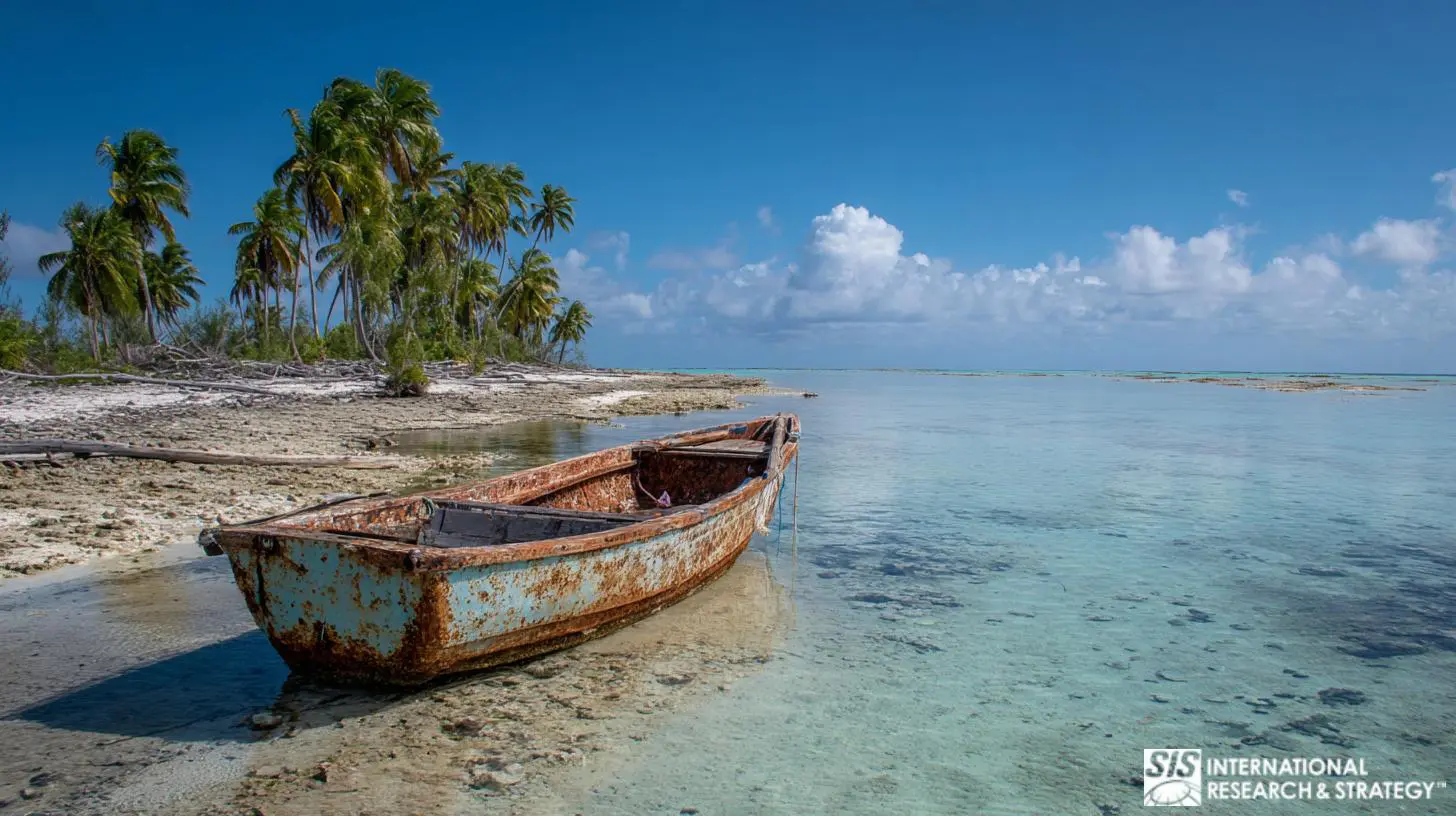
キリバス共和国(Ki. ri. bas)は、太平洋に浮かぶ島国です。33 の島から構成されていますが、人が住んでいるのはそのうちの 20 島だけです。人が住んでいるのは、16 のギルバート諸島と 3 つのライン諸島です。ライン諸島の大部分は、サンゴ礁と環礁です。

近隣地域

キリバスの首都はタラワです。タラワは土手道と道路でつながれた島々の連なりです。タラワは島々の中で最も開発が進んでいる地域です。そのため、他の島々から多くの人々が首都に移住します。

In the urban areas, the people build their houses with materials such as blocks and concrete. But in the villages, the houses have thatched roofs and raised floors. There are also Western-style churches and hospitals throughout the island.

Market Research in the Republic of Kiribati: Strategic Entry into a Pacific Frontier

The Republic of Kiribati offers a narrow but defensible commercial opening for industrial firms positioning around climate adaptation, maritime infrastructure, and donor-funded procurement.

Kiribati spans 33 atolls across 3.5 million square kilometers of ocean, with a population concentrated on South Tarawa. The geography that complicates logistics also creates the commercial logic. Every container, every diesel generator, every desalination unit must be sourced offshore. For Fortune 500 industrial suppliers, the question is not whether Kiribati imports. It is which procurement channels, donor pipelines, and local partners convert market presence into installed base.

Market research in the Republic of Kiribati requires methodologies built for thin data environments. Census frequency is low. Trade statistics lag. Buyer concentration is extreme, with the government, state-owned enterprises, and a handful of donor agencies driving most capital flows. Conventional desk research yields outdated inputs. Primary intelligence is the only reliable input.

Why the Republic of Kiribati Rewards Patient Industrial Entrants

Three structural forces shape the opportunity. First, climate adaptation capital from the Green Climate Fund, the Asian Development Bank, and the World Bank is funding seawall construction, water security, and renewable microgrids. Second, the Kiribati 20-Year Vision (KV20) prioritizes fisheries, tourism, and human capital, which pulls demand for cold chain logistics, port upgrades, and digital connectivity. Third, the Pacific geopolitical contest between traditional partners and new entrants has accelerated infrastructure pledges across the region.

The result is a procurement environment where capital availability outpaces local execution capacity. Suppliers who solve the execution gap, not just the product specification, win the IDIQ-style framework agreements that follow.

SIS International Research’s pattern across small island developing state engagements indicates that successful industrial entrants treat donor procurement cycles, not consumer demand signals, as the primary forecasting input. The bill of materials for a single seawall package or solar hybrid system can exceed several years of conventional private-sector demand.

What Primary Intelligence Reveals That Desk Research Cannot

Public data on the Republic of Kiribati is sparse and dated. The Kiribati National Statistics Office publishes core indicators, and UN ESCAP, SPC, and the Pacific Community supplement them. None capture procurement intent, supplier qualification status, or the political economy of contract award.

B2B expert interviews close that gap. Senior officials at the Ministry of Infrastructure and Sustainable Energy, the Public Utilities Board, Kiribati Ports Authority, and the Ministry of Fisheries hold the operational view. Donor agency program managers in Suva, Sydney, and Manila hold the pipeline view. Triangulating both produces a procurement forecast that trade statistics cannot.

In structured expert interviews SIS has conducted across Pacific markets, recurring themes include preference for suppliers with regional after-sales presence in Fiji or Australia, weighted scoring favoring total cost of ownership over lowest bid, and increasing scrutiny of carbon footprint disclosures in donor-funded tenders.

The Sectors Driving Industrial Demand

Four verticals concentrate the addressable market.

Climate-resilient infrastructure. Seawalls, causeways, and elevated road systems require marine-grade aggregates, geotextiles, and prefabricated concrete. The South Tarawa Road Rehabilitation Project established the procurement template. Follow-on packages favor suppliers already qualified under ADB and World Bank standards.

Water and sanitation. South Tarawa Water Supply Project is anchoring desalination, distribution network rehabilitation, and metering. Reverse osmosis specialists with Pacific service footprints hold the qualification advantage.

Energy transition. Diesel dependence is shifting toward solar PV with battery storage. The Kiribati Solar Energy Company and PUB tenders favor integrators offering predictive maintenance and remote monitoring, not equipment alone.

Fisheries and maritime. Tuna licensing under the Parties to the Nauru Agreement (PNA) generates significant government revenue. Cold chain, vessel monitoring, and port handling equipment follow the licensing economics.

セクタ Primary Buyer Capital Source
Coastal protection Ministry of Infrastructure GCF, World Bank, ADB
Water security Public Utilities Board ADB, World Bank, DFAT
Solar hybrid systems KSEC, PUB NZ MFAT, EU, ADB
Fisheries infrastructure Ministry of Fisheries, KPA World Bank, JICA

Source: SIS International Research analysis of Pacific donor procurement patterns

How Leading Industrial Firms Approach Market Entry Assessments

The conventional approach treats Kiribati as a sub-line in a Pacific regional plan, with Fiji or Samoa as the operating hub. That model captures distribution efficiency but misses the qualification process. Donor-funded tenders in the Republic of Kiribati apply specific country experience as a scoring criterion. Regional presence does not substitute.

The stronger approach pairs a regional service hub with a country-specific qualification strategy. That means registering with the Ministry of Finance and Economic Development, securing local agent representation aligned with i-Kiribati ownership norms, and building a reference project, even at modest margin, to anchor future bids.

SIS International’s market entry assessments across small economies typically combine four inputs: donor pipeline mapping, ministerial expert interviews, competitor qualification audits, and total cost of ownership modeling against incumbent suppliers. The output is a sequenced entry plan, not a market sizing deck.

The Kiribati Entry Sequencing Framework

Four stages convert interest into installed base.

Stage 1: Pipeline mapping. Identify donor packages in concept, design, and tender phases over a 36-month horizon. Pipeline visibility, not market size, determines bid economics.

Stage 2: Qualification positioning. Align certifications, financial guarantees, and local content commitments to the dominant funder’s procurement standards.

Stage 3: Reference project capture. Win one anchor contract, accept thin margin, and document performance for subsequent best-value scoring.

Stage 4: Aftermarket revenue strategy. Convert installed base into spares, service contracts, and capacity expansion. Aftermarket margin compensates for entry margin compression.

The Risks That Shape Bid Decisions

Three risks recur across Pacific industrial engagements. Logistics cost volatility, where shipping schedules through Suva or Majuro can shift project economics by double-digit percentages. Currency exposure, given the Australian dollar peg and import inflation. Political continuity, where ministerial transitions can re-sequence procurement priorities.

The mitigation is structural, not contractual. Suppliers who pre-position inventory in regional hubs, hedge currency at the bid stage, and maintain relationships across both political coalitions absorb these risks more efficiently than competitors who price them in.

Why the Republic of Kiribati Belongs on the Pacific Strategy Map

SIS 国際市場調査と戦略

Kiribati will not anchor a Pacific revenue plan. It can anchor a qualification credential that compounds across Tuvalu, the Marshall Islands, the Federated States of Micronesia, and Nauru, where donor procurement architectures share scoring logic. Firms that build i-Kiribati reference projects gain preferential positioning across the broader Micronesian and Polynesian tender flow.

The Republic of Kiribati rewards patient capital and disciplined intelligence. Market presence built through donor-funded reference projects, regional service infrastructure, and rigorous primary research outperforms opportunistic bidding by a wide margin over a five-year horizon.

SISインターナショナルについて

SISインターナショナル offers Quantitative, Qualitative, and Strategy Research. We provide data, tools, strategies, reports, and insights for decision-making. We also conduct interviews, surveys, focus groups, and other Market Research methods and approaches. お問い合わせ 次の市場調査プロジェクトにご利用ください。

著者の写真

ルース・スタナート

SIS International Research & Strategy の創設者兼 CEO。戦略計画とグローバル市場情報に関する 40 年以上の専門知識を持ち、組織が国際的な成功を収めるのを支援する信頼できるグローバル リーダーです。

自信を持ってグローバルに展開しましょう。今すぐ SIS International にお問い合わせください。