Emballage Étude de marché

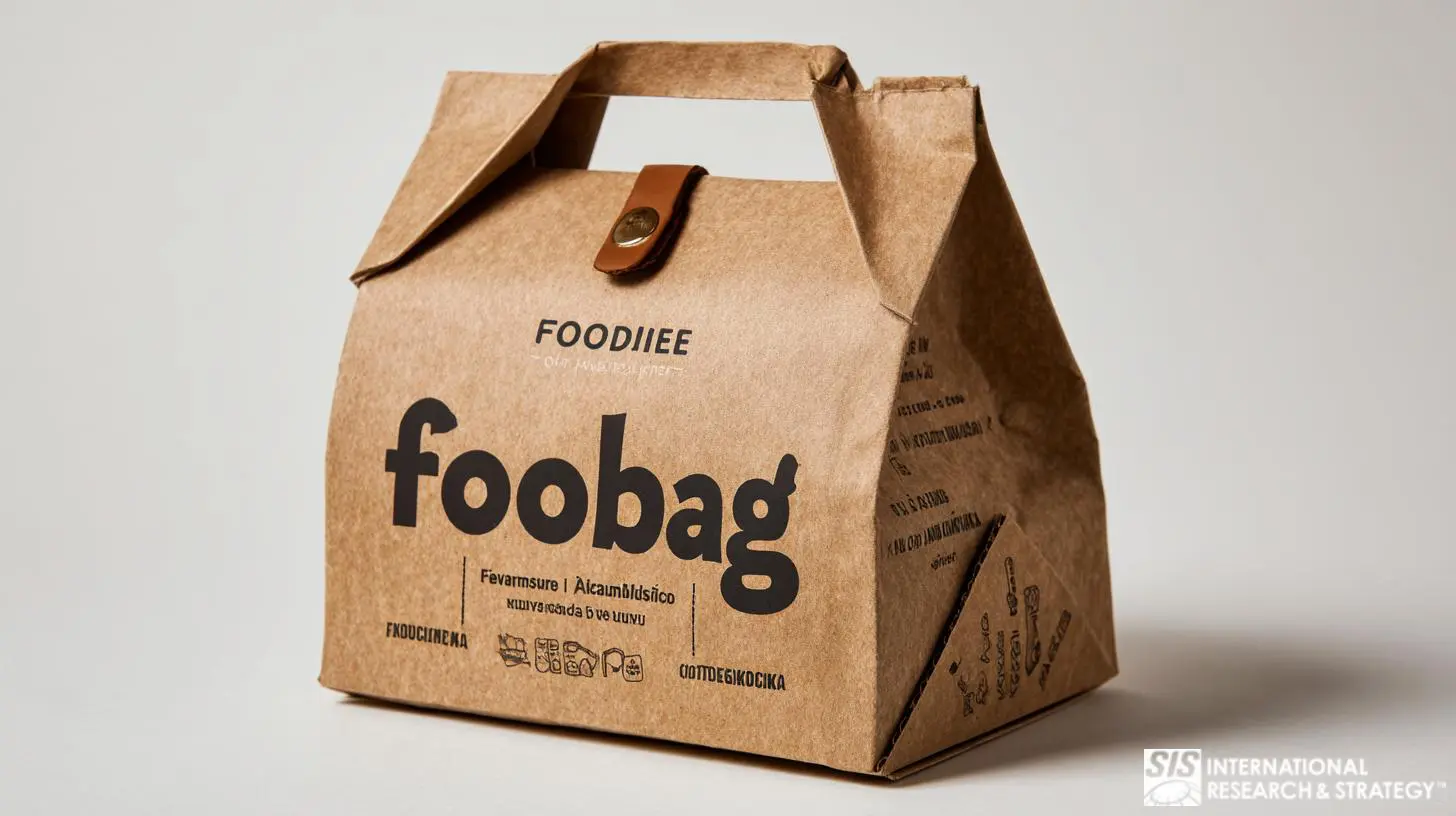
Packaging is also known as the packing function. Another way to look at it is as the art of placing and protecting products for storage, sale, delivery, and use. In other words, packaging prepares products for storage or transport. It has become further developed in recent years. Packaging became popular during the last century, and marketers use it in many different ways to boost sales.
Packaging dates back to 1035 when merchants visited markets in other countries. The sellers wrapped their spices, veggies, and hardware in paper packages for customers. Over time people got better ways to pack things. They started using natural materials like baskets, wooden boxes, pottery vases, and woven bags. The field progressed when Michigan State began to offer degree courses in the subject of packaging. From there on, it started getting the attention of buyers.
Pourquoi l’emballage est-il important ?
L’emballage présente de nombreux avantages. C’est pratique pour de nombreuses entreprises dans le monde. La principale utilisation de l’emballage est de protéger les produits de la chaleur et du froid extrêmes. De plus, cela les protège de l’écrasement et des vibrations et de la perte de qualité. En outre, il protège le produit des fuites, des bris, de la poussière et de l’humidité.
Un emballage approprié profite également aux clients et aux manutentionnaires. L’affichage sur l’emballage leur permet de transporter facilement leurs marchandises. Les différents conteneurs et styles d’emballage facilitent également le travail des manutentionnaires.
D'autres raisons sont :
- Pour permettre le marketing
- Générer des bénéfices
- Ajouter à l'image de marque
- Fournissez un identifiant de produit simple
- Empêcher les produits de se détériorer
Packaging Market Research: How Leading Manufacturers Win Specification Battles
Packaging is bought on specification, not preference. The firms that win consistently understand the buyer’s qualification path before the RFQ ever lands.
Specification capture happens upstream of procurement. Brand owners, contract packagers, and OEM equipment integrators shape material decisions months before sourcing teams compare bids. Packaging market research that targets only purchasing departments arrives late. The decisions are already made.
This is the central asymmetry in industrial packaging. Suppliers selling resin, paperboard, flexibles, rigid plastics, or filling equipment compete on technical fit, total cost of ownership, and sustainability claims. Procurement consolidates the choice. Engineering, packaging development, and brand teams set the criteria. Research that maps the full decision chain reveals where the next contract is actually won.
What Drives Material Substitution in Packaging Market Research
Substitution dynamics define the category. Glass loses to PET when fill-line speed dominates the cost equation. Paperboard gains against rigid plastic when retailer ESG scorecards weigh recyclability. Flexible films displace cans when shelf-life parity is proven through accelerated shelf-life testing. Each shift creates a window. Suppliers who quantify the window capture share.
According to SIS International Research, decision-making in FMCG packaging diverges sharply between small and large brand owners. Small firms weight packaging quality and machinability above price. Large firms run cross-functional sustainability committees where category managers, packaging engineers, and procurement negotiate trade-offs that no single buyer controls. Selling into the wrong node of that committee is the most common reason qualified suppliers lose specifications they should win.
Substitution research has to interrogate three dimensions at once: line compatibility, unit economics, and brand risk. A material that runs slower on existing fillers fails on total cost of ownership even when its per-unit price is lower. A material that meets sustainability targets but lacks barrier performance fails on shelf-life and triggers reformulation costs that brand teams refuse to absorb.
Where Growth Concentrates in Industrial Packaging
The high-margin pockets are narrower than category data suggests. Intermediate Bulk Container (IBC) liners and Bag-in-Box (BIB) systems serve high-value liquids in food and beverage, automotive lubricants, agricultural inputs, and pharmaceuticals. Each vertical buys for different reasons. Pharmaceutical buyers care about extractables and leachables certification. Lubricant blenders care about residue and discharge. Wine and dairy buyers care about oxygen transmission rate and aseptic compatibility.
Generic share data treats these as one market. They are not. Bag-in-Box for boxed wine, oil reservoirs for engine assembly, and aseptic dairy each demand distinct specifications, certifications, and route-to-market structures. The competitive set differs in each. So does the margin.
SIS International’s structured B2B expert interviews with packaging engineers and procurement leads across European converters identified consistent gaps where established suppliers underinvest in technical sales coverage of mid-tier brand owners. These accounts buy at lower volumes than tier-one FMCG but convert specifications faster and accept premium pricing for proven barrier performance. The opening is consistent across geographies and vertical end-uses.
How Regulation Reshapes the Competitive Set
Packaging regulation is now a primary driver of supplier qualification, not a compliance afterthought. The EU Packaging and Packaging Waste Regulation (PPWR) tightens recyclability thresholds and recycled-content minimums. Extended Producer Responsibility (EPR) schemes in France, Germany, Spain, and the United Kingdom price externalities that once sat off the brand owner’s P&L. The U.S. FDA’s food contact notification process governs which barrier coatings can ship into food applications.
The Machinery Directive in Europe and ISO 13849-1 functional safety standards govern packaging line equipment qualification. A filler or cartoner that fails a risk assessment audit cannot be commissioned, regardless of throughput claims. Equipment OEMs that document compliance through transparent technical files convert sales cycles measurably faster than peers who treat certification as paperwork.
Suppliers who internalize regulation as a sales asset, rather than a cost center, change the conversation with brand owners. The qualification audit becomes the differentiator. Competitors selling on price get filtered out before the technical evaluation begins.
The Sustainability Premium Is Real, But Conditional
Brand owners pay for verified sustainability. They do not pay for claims. Mondi, Smurfit Kappa, Tetra Pak, and Amcor have built specification advantages around documented life-cycle assessments, third-party certifications, and recycled-content traceability. Suppliers without that documentation lose to suppliers who have it, even at higher per-unit cost.
The premium evaporates when sustainability data lacks third-party validation. ISO 14040 life-cycle assessment, FSC chain-of-custody, and ASTM D6400 compostability standards are the currency. Marketing claims without these credentials produce the worst outcome: brand teams want them, procurement refuses to underwrite them, and the supplier is dropped during scorecard review.
A Framework for Packaging Specification Capture
| Decision Layer | Primary Buyer | Winning Evidence |
|---|---|---|
| Material qualification | Packaging engineering | Line trial data, barrier performance, ASLT results |
| Sustainability scorecard | ESG and brand teams | LCA, recycled content traceability, certifications |
| Total cost of ownership | Operations and finance | Throughput, scrap rate, conversion cost modeling |
| Commercial terms | Approvisionnement | Volume commitments, supply continuity, indexed pricing |
Source: SIS International Research
Suppliers who address all four layers in parallel shorten qualification cycles. Those who address only commercial terms are the ones writing proposals that never close.
Where Packaging Market Research Pays Back
The highest-return engagements concentrate on three questions. Which mid-tier accounts in a target geography are actively re-specifying? What is the substitution math, line by line, for the incumbent material? Which regulatory or sustainability shift will force a new RFQ within the next procurement cycle?
SIS International Research has conducted packaging market assessments across Scandinavian, Western European, and North American converter networks, combining competitive intelligence on incumbent suppliers with structured interviews of brand-owner packaging decision-makers. The pattern is consistent: specification windows open predictably around regulatory inflection points and sustainability scorecard updates, and the suppliers who arrive with documented evidence convert at materially higher rates than those leading with price.
The discipline that separates winning packaging market research from category reports is the willingness to interview the engineers, not just the buyers. Procurement confirms decisions. Engineering makes them. The research that captures both produces pipeline. The research that captures only one produces a filing.
What Leading Manufacturers Do Differently
The packaging suppliers gaining share are running their commercial intelligence as a continuous program, not a one-time study. They track regulatory calendars, monitor brand-owner sustainability commitments, and maintain expert networks inside converter operations. They know which lines are due for re-tooling before the RFQ is published. Packaging market research becomes the early-warning system for the sales pipeline, not a deliverable filed after a strategy offsite.
The opportunity is concentrated and time-bound. Specification windows close. The firms that build the intelligence muscle around packaging market research win the windows. The rest write proposals against decisions that were settled months earlier.
À propos de SIS International
SIS International propose des recherches quantitatives, qualitatives et stratégiques. Nous fournissons des données, des outils, des stratégies, des rapports et des informations pour la prise de décision. Nous menons également des entretiens, des enquêtes, des groupes de discussion et d’autres méthodes et approches d’études de marché. Contactez nous pour votre prochain projet d'étude de marché.