
Food and Beverage Ingredient Market Forschung
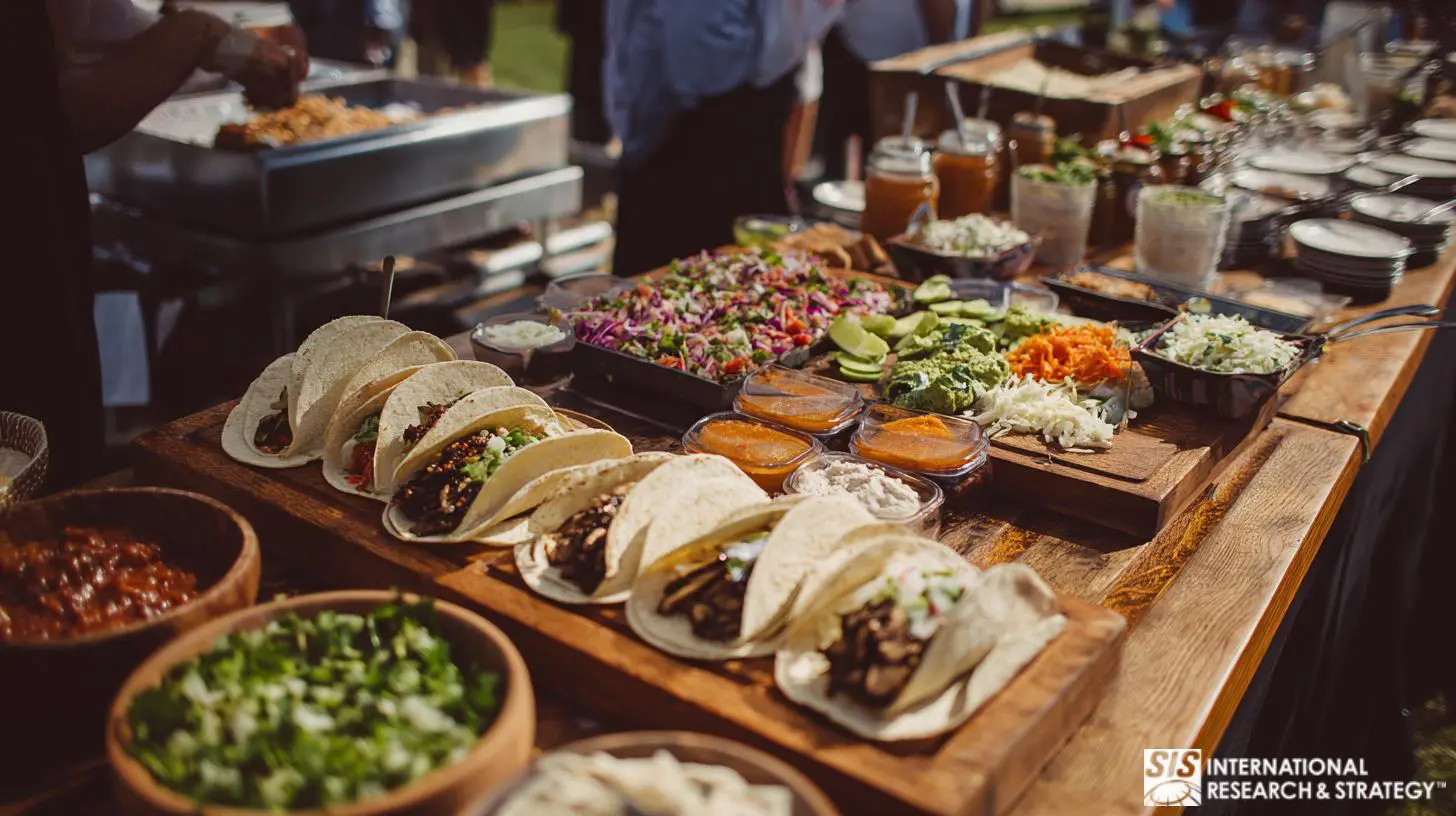
Marktforschung für Lebensmittel- und Getränkezutaten: Marktübersicht
Die Marktforschung zu Lebensmittel- und Getränkezutaten liefert wichtige Einblicke in wichtige Informationen für bedeutende Akteure der globalen Lebensmittel- und Getränkeindustrie. Lebensmittelzutaten sind Substanzen, die Lebensmitteln während der Verarbeitung zugesetzt werden, um deren Geschmack, Textur, Aussehen, Stabilität und Nährstoffgehalt zu verbessern. Sie können natürlich oder synthetisch sein und werden in einer breiten Palette von Lebensmitteln und Getränken verwendet, darunter Backwaren, Milchprodukte, Getränke, Süßwaren, Saucen, Dressings und mehr.
Food Beverage Ingredient Market Research: How Category Leaders Win Reformulation Bets
Reformulation cycles have compressed. Ingredient decisions now shape brand equity, margin structure, and shelf velocity within a single planning year. Food beverage ingredient market research is how category leaders separate signal from noise before committing capital to a new protein source, sweetener system, or clean label transition.
The discipline has moved past concept tests and price elasticity curves. The firms winning shelf space are pairing sensory science with shopper economics, then pressure-testing both against private label parity. The ones losing are still treating ingredient selection as an R&D handoff rather than a commercial decision.
The Reformulation Window Is Narrower Than Procurement Thinks
Ingredient swaps used to live inside a two-year stage-gate process. Pressure from private label, regulatory action on titanium dioxide and synthetic dyes, and ingredient cost volatility have collapsed that window. Nestlé, Kraft Heinz, and General Mills have each accelerated reformulation calendars across portfolio brands in recent years, often pushing changes through in two or three quarters.
The risk is not the reformulation itself. The risk is launching a reformulated SKU without sensory validation against the original. SIS International Research has observed that brands which skip paired comparison testing between legacy and reformulated versions show measurable velocity declines within the first eight weeks of relaunch, even when blind hedonic scores look acceptable in isolation. The discrimination test catches what the affective test misses.
This is where food beverage ingredient market research earns its keep. A triangle test or duo-trio test against the legacy formulation tells you whether loyal buyers will notice. A penalty analysis on JAR scales tells you which attributes drove the gap. Without both, the launch is a guess.
Sensory Science Is the Cheapest Insurance in the Category
Sensory budgets typically run a fraction of media spend, yet they govern whether the media works. Three methodologies separate disciplined operators from the rest.
Descriptive analysis panel calibration. A trained QDA panel produces a quantitative flavor and texture profile that survives across batches, plants, and supplier changes. This is what allows a beverage brand to switch a stevia supplier without the consumer noticing.
Temporal dominance of sensations (TDS). Static hedonic scales miss what happens between first sip and aftertaste. TDS captures the sequence, which matters disproportionately for sugar reduction, alternative sweeteners, and plant-based protein systems where off-notes appear late.
CATA and napping. Check-all-that-apply and projective mapping let consumers describe products in their own language. The output feeds claim development and pack copy with words shoppers actually use, not the language R&D defaults to.
Coca-Cola, PepsiCo, and Danone run these protocols as standing programs. Mid-tier brands that match the rigor on a project basis, through partners running CLT (central location test) facilities and recruited consumer panels, close the gap faster than they expect.
The Clean Label Gap Is a Pricing Opportunity, Not a Cost Problem
Clean label is often framed as a margin compressor. The data tells a different story when read carefully. Shoppers will pay a premium for recognizable ingredients, but only when the sensory experience holds. The penalty for a clean label reformulation that tastes worse is roughly double the premium consumers will pay for one that tastes the same.
SIS International’s proprietary research across packaged food categories indicates that concept-product fit testing, where the on-pack claim is evaluated alongside the actual eating experience, predicts repeat purchase more reliably than either concept testing or product testing alone. The disconnect between claim and product is where launches fail. The alignment is where pricing power lives.
This applies with particular force to functional ingredient positioning. Adaptogens, postbiotics, and protein fortification command premiums when the sensory delivery matches the claim. When the product tastes medicinal, the claim becomes a liability.
Private Label Has Changed the Benchmark
Costco’s Kirkland Signature, Trader Joe’s, Aldi’s exclusive brands, and Whole Foods 365 have moved private label from value tier to quality benchmark. Shoppers no longer treat the store brand as the trade-down option. They treat it as the parity option.
| Research Question | Methodik | Decision Supported |
|---|---|---|
| Will loyal buyers detect the reformulation? | Triangle test, duo-trio test | Go/no-go on supplier swap |
| Which attributes drove the liking gap? | JAR scales, penalty analysis | Formulation refinement |
| How does our product compare to private label? | Blind paired comparison, QDA | Pricing and claim strategy |
| Does the claim match the experience? | Concept-product fit testing | Pack copy and media spend |
| Will the product survive shelf life? | ASLT with sensory checkpoints | Distribution footprint decisions |
Source: SIS International Research
Private label taste parity testing is now a standing requirement for any branded launch above a certain price point. The blind comparison against the dominant private label SKU in each retailer is the honest read on whether the brand premium is defensible.
Shelf-Life Sensory Benchmarking Decides Distribution Footprint
Accelerated shelf-life testing (ASLT) is treated as a regulatory checkbox in many organizations. It should be treated as a commercial input. The sensory degradation curve determines which retailers, which regions, and which DSD versus warehouse models the product can support.
A reformulated beverage that holds for ninety days at ambient temperature opens national warehouse distribution. The same product holding sixty days restricts the footprint to regional DSD. The reformulation decision and the distribution decision are the same decision, made at the same time, on the same evidence.
The SIS Approach to Ingredient Intelligence

SIS International runs ingredient and reformulation engagements through a layered protocol: B2B expert interviews with ingredient suppliers and category buyers, CLT-based sensory testing with recruited consumer panels, ethnographic research in home and out-of-home consumption settings, and competitive intelligence on supplier shifts across the bottler and co-manufacturer network.
In structured expert interviews conducted by SIS with senior R&D and procurement leaders across North American and European beverage manufacturers, the consistent pattern is that reformulation programs which integrate sensory and shopper research from project initiation deliver faster shelf entry and higher retention than those that treat the two streams sequentially. The integration is the differentiator.
What Category Leaders Do Differently

Three patterns separate the brands gaining share from the ones holding ground.
They run sensory programs as continuous infrastructure, not project spend. Trained panels stay calibrated. Reformulation cycles compress because the baseline is already documented.
They test the claim and the product together. Concept-product fit testing replaces the older sequence of concept screen, then product test, then pack test. The integrated read is more honest and faster.
They benchmark against private label as a standing practice. The Kirkland, Trader Joe’s, and 365 SKUs sit in every blind comparison set. The brand premium is defended with evidence, not assumed.
Food beverage ingredient market research is the connective tissue between R&D, procurement, and commercial. The brands that treat it that way move faster on reformulation, defend pricing more confidently, and read private label pressure earlier than competitors do.
Über SIS International
SIS International bietet quantitative, qualitative und strategische Forschung an. Wir liefern Daten, Tools, Strategien, Berichte und Erkenntnisse zur Entscheidungsfindung. Wir führen auch Interviews, Umfragen, Fokusgruppen und andere Methoden und Ansätze der Marktforschung durch. Kontakt für Ihr nächstes Marktforschungsprojekt.

 DE
DE  EN
EN  AR
AR  ZH
ZH  ZH_HK
ZH_HK  NL
NL  FR
FR  IT
IT  JA
JA  KO
KO  PL
PL  PT
PT  ES
ES