
Bulk Chemicals Market Research | SIS International

散裝化學品市場研究

散裝化學品市場研究

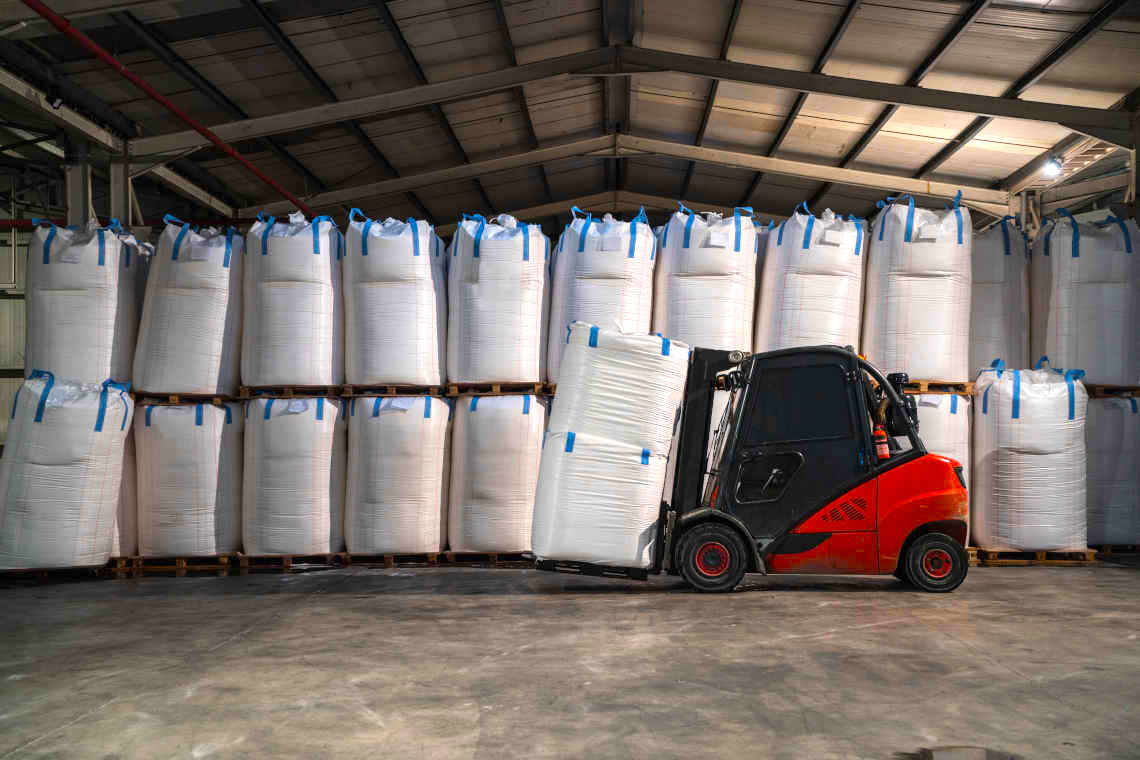
大宗化學品是指大量生產的化學品。許多行業將它們用於各種目的。大型工廠供應這些化學品。他們大量散裝或以桶、袋或罐等標準化包裝出售。

大宗化學品包括多種物質。它們可以是基本無機化學品,如硫酸、氫氧化鈉和氯。或者它們也可以是有機化學品,如乙烯、丙烯、苯和甲苯。它們是生產各種消費品的原料。這些商品包括塑膠、藥品、化肥、紡織品等。

大宗化學品通常是透過複雜的化學反應產生的。它們的生產需要大量的能源和資源。因此,擁有專業設施和設備的大公司通常會供應大宗化學品。

為什麼散裝化學品很重要?

出於多種原因,需要散裝化學品。它們是製造的重要原料。例如,塑膠生產需要乙烯和丙烯。生產肥料需要硫酸。大宗化學品使這些產品的製造成為可能。

加工廠大量生產大宗化學品。因此,他們可以以較低的單位成本製造它們。因此,大宗化學品比生產少量特種化學品更具成本效益。

大宗化學品的大規模生產可以提高一致性和品質控制。這些屬性對於依賴這些化學物質作為原材料的行業至關重要。品質或質地的變化可能導致製造缺陷或產品故障。

大宗化學品供應全球。不同地區的公司因此可以獲得所需的原料。因此,它們對於促進國際貿易和經濟成長至關重要。

大宗化學品生產流程和技術取得了進展。這些進步可以促進新產品和應用的開發。它們還可以推動創新和經濟成長。

Bulk Chemicals Market Research: How Leading Producers Build Pricing Power

Bulk chemicals market research separates producers who set prices from those who follow them. The discipline has shifted. Spot price tracking and capacity databases no longer explain why one ethylene producer earns a margin premium over a structurally identical competitor. The answer sits inside buyer behavior, feedstock optionality, and downstream substitution thresholds that only primary research surfaces.

For VP-level operators at Fortune 500 producers and converters, the question is no longer whether to commission deeper intelligence. It is what to commission, against which decisions, and how to convert findings into commercial advantage before the next contract cycle.

What Bulk Chemicals Market Research Reveals That Price Indices Cannot

Published indices like ICIS, Argus, and Platts report transactions. They do not report intent. A polyethylene buyer signing at a quoted spread may be three months from qualifying an alternative resin, switching to a Middle Eastern supplier on a long-term offtake, or reformulating to reduce intensity per unit. None of that appears in a benchmark.

Bulk chemicals market research closes that gap through structured B2B expert interviews with procurement directors, plant engineers, and formulation chemists at the buyer organizations. The output is a forward read on switching probability, qualification timelines, and the price elasticity that index data flattens into a single number.

SIS International Research, drawing on B2B expert interviews with petrochemical executives across Saudi Arabia and the Gulf, has documented a structural shift in how integrated producers evaluate downstream investment under Vision 2030, with feedstock advantage being redeployed into specialty derivatives rather than commodity expansion. That redirection changes the competitive math for every olefins and aromatics producer outside the region.

The Five Decisions Bulk Chemicals Market Research Should Inform

Generic market sizing fails VP-level buyers because it answers no specific question. Effective programs are scoped against named decisions with capital or commercial consequences.

Decision Research Method Output
Capacity expansion or debottlenecking Demand segmentation, installed base analytics Tonnage forecast by end-use, region, grade
Geographic market entry Distributor mapping, regulatory scan, expert interviews Channel economics, registration timeline, white space
Contract renegotiation Voice-of-customer, willingness-to-pay analysis Price ceiling by segment, switching cost map
Specialty migration from commodity Application studies, formulator interviews Premium capture potential, technical gap audit
M&A or asset divestiture Competitive intelligence, supplier qualification audit Asset value drivers, customer transferability

Source: SIS International Research

Feedstock Optionality Is the Margin Story Most Producers Underprice

Naphtha, ethane, propane, and increasingly bio-based feedstocks each carry different cost curves and different carbon profiles. The producers earning premium multiples have built feedstock flexibility into cracker design and into commercial contracts. Dow’s flexible cracker strategy on the U.S. Gulf Coast, SABIC’s ethane advantage at Jubail, and INEOS’s North Sea ethane import infrastructure are not accidents of geography. They are intelligence-driven capital decisions.

Bulk chemicals market research quantifies the option value. Total cost of ownership modeling against feedstock scenarios, paired with primary interviews on regional supply reliability, produces a defensible bill of materials view that procurement and corporate development can both act on.

The Substitution Threshold That Index Watchers Miss

Every commodity chemical has a substitution threshold. Above a certain price, a converter qualifies an alternative material, redesigns the part, or accepts a performance trade-off. That threshold is not visible in spot data. It is visible in formulator interviews, OEM procurement analysis, and structured willingness-to-pay studies.

In structured expert interviews SIS International has conducted with downstream converters and OEM procurement teams across automotive, packaging, and construction value chains, the substitution threshold for high-volume polymers consistently sits 8 to 14 percent above prevailing contract pricing before formal qualification programs initiate. Producers who price within that band capture share. Producers who breach it fund their competitors’ R&D programs.

Where Voice-of-Customer Programs Pay for Themselves

The strongest bulk chemicals producers run continuous VOC programs against their top fifty accounts. The objective is not satisfaction scoring. It is early detection of three signals: qualification of secondary suppliers, reformulation projects underway, and aftermarket revenue strategy shifts at the buyer that will alter volume mix.

Detection windows matter. A converter qualifying a second source typically completes the process in nine to fifteen months. A producer who learns about it in month two has time to defend. A producer who learns about it on the next RFQ does not.

Competitive Intelligence Beyond Capacity Tracking

Capacity databases tell you what exists. They do not tell you which assets run at design rate, which are constrained by logistics or feedstock contracts, or which carry undisclosed turnaround schedules. Competitive intelligence at the operating level requires plant-by-plant primary collection: supplier interviews, logistics provider triangulation, and reverse engineering of customer shipment patterns.

For a Fortune 500 polymer producer evaluating a $2 billion expansion, the difference between nameplate capacity and effective supply in the target region is the difference between a project that meets hurdle rate and one that destroys value. Generic reports rarely close that gap.

Regional Intelligence: Where the Opportunity Concentrates

The Gulf, China, India, and the U.S. Gulf Coast each present distinct opportunity profiles. Saudi Arabia’s diversification under Vision 2030 is opening specialty and conversion investments that complement, rather than duplicate, existing olefins capacity. China’s dual-circulation policy is reshaping import dependency for high-purity grades. India’s polymer demand is growing faster than domestic capacity additions in several segments.

SIS International’s proprietary research with senior petrochemical operators in Saudi Arabia indicates the private sector is actively seeking joint venture partners for downstream specialty assets, particularly in segments where local feedstock advantage can be paired with foreign formulation know-how. That creates an entry window for Western and Asian specialty players who previously viewed the region as commodity-only.

The SIS Approach to Bulk Chemicals Market Research

Across four decades and 135 countries, SIS International has built bulk chemicals intelligence programs around five integrated methodologies: B2B expert interviews with named operators, competitive intelligence at the asset level, market entry assessments with channel economics, voice-of-customer programs against named accounts, and total cost of ownership modeling tied to specific capital decisions. Each engagement is scoped against a decision the client has already named.

That scoping discipline is what separates intelligence from data. A capacity database is a starting point. A decision-grade answer requires primary collection from the people who buy, sell, formulate, and move the product.

What Leading Producers Do Differently

Three patterns recur among producers earning sustained margin premiums. They commission research against named capital and commercial decisions, not calendar cycles. They invest in continuous VOC programs at top accounts rather than periodic studies. They integrate feedstock, demand, and competitive intelligence into a single decision view, rather than running them as parallel workstreams.

Bulk chemicals market research, scoped this way, is a margin instrument. It informs pricing, defends share, and surfaces the geographic and segment opportunities that benchmark data obscures.

關於 SIS 國際

SIS國際 提供定量、定性和策略研究。我們為決策提供數據、工具、策略、報告和見解。我們也進行訪談、調查、焦點小組和其他市場研究方法和途徑。 聯絡我們 為您的下一個市場研究項目。

作者照片

露絲·史塔納特

SIS 國際研究與策略創辦人兼執行長。她在策略規劃和全球市場情報方面擁有 40 多年的專業知識,是幫助組織取得國際成功值得信賴的全球領導者。

滿懷信心地在全球擴張。立即聯繫 SIS International!

與專家交談