
Badania rynku chemikaliów luzem
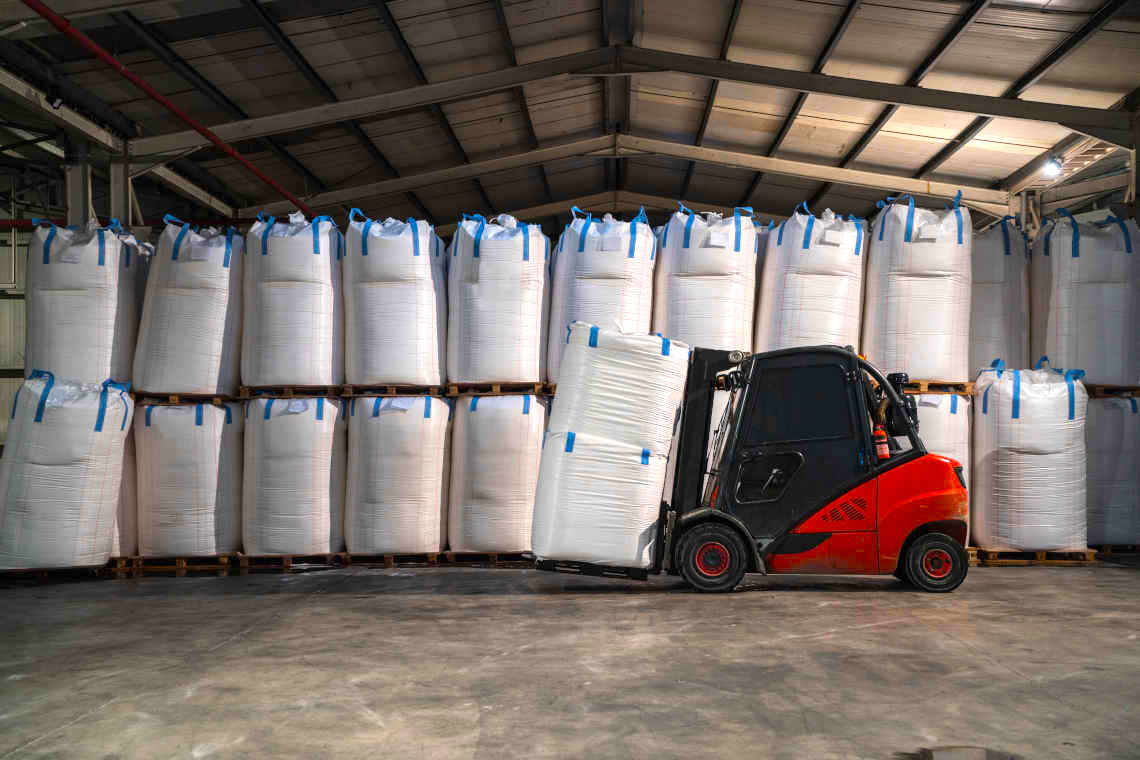
Bulk chemicals are chemicals produced in large quantities. A wide range of industries uses them for various purposes. Large-scale plants supply these chemicals. They sell them in large amounts in bulk or in standardized packaging like drums, bags, or tanks.
Bulk chemicals include a diverse range of substances. They can be basic inorganic chemicals like sulfuric acid, sodium hydroxide, and chlorine. Or they can also be organic chemicals like ethylene, propylene, benzene, and toluene. They serve as raw materials for producing a wide range of consumer goods. These goods include plastics, pharmaceuticals, fertilizers, textiles, and more.
Bulk chemicals are often produced through complex chemical reactions. Their production requires significant amounts of energy and resources. As such, large companies with specialized facilities and equipment typically supply bulk chemicals.
Why are Bulk Chemicals Important?
Bulk chemicals are necessary for several reasons. They are essential raw materials for manufacturing. For example, plastic production requires ethylene and propylene. Sulfuric acid is needed to produce fertilizers. Bulk chemicals make the manufacturing of these products possible.
The processing plants produce bulk chemicals in large quantities. Thus, they can manufacture them at a low cost per unit. As a result, bulk chemicals are more cost-effective than producing smaller amounts of specialty chemicals.
The large-scale production of bulk chemicals allows for greater consistency and quality control. These attributes are essential for industries that rely on these chemicals as raw materials. Variations in quality or texture can lead to manufacturing defects or product failures.
Bulk chemicals are available globally. Companies in different regions can thus access the raw materials they need. Therefore, they are essential for promoting international trade and economic growth.
There have been advances in bulk chemical production techniques and technologies. These advances can lead to the development of new products and applications. They can also drive innovation and economic growth.
Kluczowe stanowiska
There are several key job titles within the chemical industry, including:
- Chemical Engineer. This engineer designs the processes and equipment to produce chemicals. They ensure the safety, efficiency, and quality of chemical processes.
- Analytical Chemist. An analytical chemist analyzes chemical compounds and products. Thus, they determine their chemical composition and properties. These chemists use specialized equipment and techniques. They also identify and measure chemical components and impurities.
- Research and Development (R&D) Chemist. An R&D chemist develops new chemical compounds and products. These chemists conduct experiments and tests to identify unknown compounds with specific properties. The tests also serve to optimize the performance of existing ones.
- Quality Control Chemist. A quality control chemist ensures that chemical products meet industry standards. The products must also follow safety, purity, and quality regulations. The chemist also tests and inspects chemical products for defects or impurities.
- Sales and Marketing Manager. A sales and marketing manager promotes chemical products to potential customers. They also develop sales strategies to increase market share. They work with customers to understand their needs. They then create products that meet their specific requirements.
- Environmental Health and Safety (EHS) Manager. An EHS manager ensures that chemical production processes and facilities meet environmental, health, and safety regulations. They develop policies and procedures to minimize risks. They also ensure compliance with applicable laws and regulations.
- Production Manager. A production manager oversees the day-to-day operations of a chemical production facility. They manage production schedules and monitor production processes. They also meet production targets while maintaining quality and safety standards.Why do
Why do Businesses Need Bulk Chemicals?
Businesses need bulk chemicals for several reasons. Firstly, the production of bulk chemicals is generally more cost-effective than producing smaller quantities of specialty chemicals. When manufacturers turn out large amounts of bulk chemicals, it reduces the per-unit production costs.
Large-scale chemical plants use specialized equipment and processes to produce bulk chemicals, allowing for greater consistency and quality control. Consistency is essential for industries that rely on these chemicals as raw materials. So, of course, is quality.
Bulk chemicals make it easy for businesses to scale up their production, allowing them to meet increased demand without worrying about sourcing. They also don’t have to transport small quantities of chemicals.
Kluczowe czynniki sukcesu
The chemical industry has several critical success factors, including product innovation. Bulk chemical companies always need to develop new and innovative chemical products, which makes them more likely to succeed in the market. Thus, they need to invest in research and development. They also must have a deep understanding of customer needs and market trends.
Companies that can optimize their chemical production processes are more likely to succeed. Thus, companies must consider reducing costs, increasing efficiency, and improving quality, which requires ongoing investment in process engineering, automation, and digital technologies.
Chemical production requires a complex and regulated supply chain. This chain includes raw materials, transportation, storage, and distribution. Companies must manage their supply chain. Then they can ensure reliable and cost-effective production.
The chemical industry has many regulations. These regulations are to ensure safety, environmental protection, and quality control. Companies that follow these regulations while maintaining profitability are more likely to succeed.
The chemical industry requires skilled and specialized talent. For example, it needs chemical and process engineers and quality control chemists. It also needs people for environmental health and safety management.
Companies that can attract and retain top talent are more likely to be successful.
Chemical companies must develop strong relationships with their customers. The ones that understand customers’ needs are more likely to succeed. These companies need a deep understanding of customer requirements, which requires effective communication. It also requires the ability to deliver quality products and services.
About Bulk Chemicals Market Research
All businesses must do Quantitative and Qualitative Market Research to survive. Bulk chemical manufacturers are no exception. They also need Strategy Market Research because it provides knowledge and insights. UX Market
Research will help these companies learn about their customers. Competitive Analysis will tell them what rival companies are doing. Market Opportunity Research will help them find new business opportunities.
SIS International offers all these types of market research and much more. We also provide Market Entry Research, Market Sizing Research, Focus Groups, Surveys, and Interviews. We can also help you plan your Go to Market Strategy. Contact us today for a consultation!

 PL
PL  EN
EN  AR
AR  ZH
ZH  ZH_HK
ZH_HK  NL
NL  FR
FR  DE
DE  IT
IT  JA
JA  KO
KO  PT
PT  ES
ES