
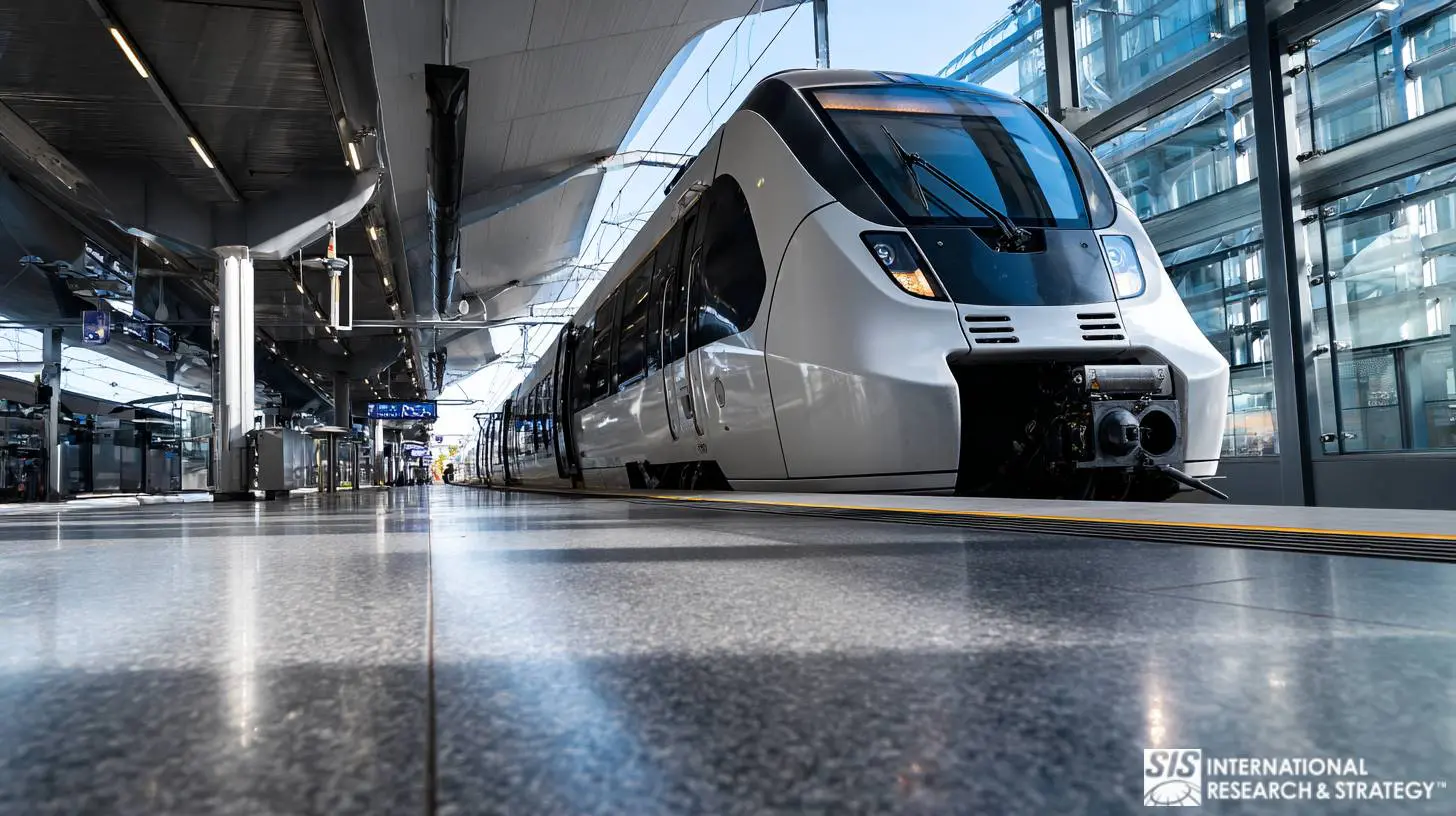
为知名铁路公司提供多元文化广告服务

本案例研究描述了为 知名铁路公司目标是优化其营销策略,以提高品牌知名度,吸引多样化的客户群,并提高其旗舰产品的市场渗透率。
主要成果和效益
- 提高主要市场的品牌知名度。
- 通过有针对性的内容增强客户参与度。
- 提高潜在客户的产生率和转化率。
- 加强与目标受众的情感联系。
Multicultural Advertising Services for a Well-Known Railroad Company: How Class I Operators Capture Diverse Ridership and Freight Demand
North American rail demand is shifting faster than the marketing organizations that serve it. Hispanic, Asian American, and Black households now drive a disproportionate share of population growth in the corridors where Class I railroads and intermodal operators move freight and passengers. Multicultural advertising services for a well-known railroad company convert that demographic momentum into measurable lift in passenger revenue, intermodal partnerships, workforce recruitment, and community license to operate.
The opportunity is concrete. Sun Belt corridors served by BNSF and Union Pacific, Northeast Regional and Acela markets operated by Amtrak, and commuter networks like Metra, Metrolink, and the LIRR sit on top of consumer bases where English-only campaigns reach a shrinking majority. Operators that segment by language, generation, and cultural context are pulling ahead on ridership recovery, brand favorability, and hiring funnel quality.
Why Multicultural Advertising Services Drive Rail Revenue Growth
Rail marketing has historically been corridor-driven and schedule-driven. The category leaders are now layering cultural segmentation on top of OD pair analysis, treating Spanish-dominant, bilingual, and English-dominant Hispanic riders as three distinct audiences rather than one. The same logic applies to Chinese, Vietnamese, Korean, and South Asian segments along West Coast and Northeast corridors.
The mechanism matters. A bilingual creative is not a translated creative. Transcreation rebuilds the message around cultural reference points, family decision dynamics, and trust signals specific to each community. SIS International Research has consistently found in B2B expert interviews with transportation marketing leaders that transcreated campaigns outperform translated campaigns on unaided recall and intent-to-ride by margins large enough to reset media mix assumptions.
For freight and intermodal, the audience is different but the principle holds. Shipper decision-makers at Hispanic-owned logistics firms, Asian American import-export brokers, and minority-owned 3PLs respond to category-specific trade media, in-language LinkedIn content, and relationship-led account development that generic enterprise campaigns miss entirely.
The Four Audiences a Class I Railroad Cannot Afford to Treat as One
Multicultural advertising services for a well-known railroad company work when the audience architecture is built correctly. Four distinct buyer and rider groups sit inside what most rail marketing decks still call “general market.”
Passenger riders in dense multicultural metros, including Los Angeles Union Station, Chicago Union Station, and New York Penn, where Spanish, Mandarin, Cantonese, Tagalog, and Haitian Creole shape daily commute decisions. Freight shippers and BCOs with cultural and linguistic ties to specific trade lanes, particularly transpacific and cross-border Mexico flows handled by Canadian Pacific Kansas City, Union Pacific, and BNSF. Workforce candidates for conductor, engineer, signal maintainer, and mechanical roles, where diverse hiring pipelines reduce the qualification cost per hire and improve retention past the eighteen-month mark. Community stakeholders in trackside neighborhoods where safety campaigns, grade crossing education, and Operation Lifesaver messaging require in-language delivery to land.
Each audience has a different media diet, a different trust hierarchy, and a different conversion path. Treating them as one is the single largest source of waste in rail marketing budgets.
What Leading Rail Marketers Do Differently
The conventional approach buys Spanish-language radio, calls it multicultural, and reports impressions. The leaders run a tighter playbook.
They build segmentation on acculturation level rather than ethnicity alone, distinguishing unacculturated, bicultural, and acculturated consumers because their channel preferences and purchase triggers diverge sharply. They commission qualitative work, including in-language focus groups and ethnographic ride-alongs, before creative development rather than after. They run synchronized general market and multicultural campaigns with shared brand architecture but distinct cultural insights, avoiding the “afterthought translation” problem that flattens response rates.
Based on SIS International’s analysis across transportation, infrastructure, and B2B industrial engagements, multicultural campaigns built on primary qualitative research, including bilingual focus groups and ethnographic observation, deliver materially stronger creative testing scores than campaigns built on syndicated demographic data alone.
Amtrak’s expansion of Spanish-language digital and OOH along the Northeast Corridor and California services, BNSF’s community engagement programs in Hispanic-majority Texas and California subdivisions, and CPKC’s bilingual safety and recruitment work along the new Mexico-US-Canada single-line corridor all reflect this shift toward audience-specific intelligence rather than generic translation.
The Revenue Levers Multicultural Marketing Unlocks for Rail Operators
Five revenue and cost levers move when multicultural advertising services are executed at the level Class I and commuter rail operators require.
| Lever | Mechanism | Where It Shows Up |
|---|---|---|
| Passenger yield | Higher load factors on leisure and VFR trips driven by in-language fare promotions | Acela, Amtrak long-distance, commuter weekend service |
| Intermodal volume | Stronger relationships with minority-owned drayage and 3PL partners | LA/Long Beach, Houston, Chicago, Kansas City |
| Hiring funnel | Lower cost per qualified applicant, higher 18-month retention | Conductor, MOW, signal, mechanical roles |
| Safety outcomes | Reduced grade crossing incidents through in-language Operation Lifesaver delivery | Trackside communities in CA, TX, FL, IL |
| Community license | Faster permitting, stronger response to derailment and service disruption events | Urban subdivisions and yard-adjacent neighborhoods |
Source: SIS International Research, synthesized from B2B expert interviews and competitive intelligence engagements across North American transportation operators.
Building the Intelligence Layer Before the Media Plan
The sequencing question separates strong multicultural programs from expensive ones. Media planning before audience research locks in assumptions that are expensive to unwind once creative is in market.
The intelligence layer covers three domains. Demand-side: who rides, who ships, who could ride or ship, and what cultural and linguistic factors gate the decision. Competitive: how trucking, intercity bus carriers including FlixBus and Greyhound, low-cost air, and other freight modes are courting the same multicultural audiences. Brand: where the railroad sits on awareness, favorability, and consideration within each segment, measured against the operator’s own historical baseline rather than cross-industry norms.
SIS International has run this intelligence layer for transportation, infrastructure, and B2B industrial clients across more than one hundred and thirty-five countries, using bilingual focus groups, ethnographic research, B2B expert interviews with shippers and 3PLs, and competitive intelligence on adjacent mode marketing. The methodologies are not interchangeable. Concept testing for a passenger fare promotion uses a different instrument than a shipper persona study or a community safety message pretest.
The Framework: SIS Rail Multicultural Marketing Maturity Model
Operators tend to sit at one of four levels.
Level 1, Translated: English creative translated into Spanish or Mandarin, run on ethnic media, measured on impressions. Level 2, Adapted: Creative adjusted for cultural references, audience selected by demographic data, measured on reach and frequency. Level 3, Researched: Audience architecture built on primary qualitative work, creative developed in-language by bilingual teams, measured on brand lift and intent. Level 4, Integrated: Multicultural insights inform general market strategy, segmentation drives media planning, ridership and freight outcomes are tied directly to multicultural KPIs.
Most North American rail operators sit between Level 1 and Level 2. The economic distance between Level 2 and Level 3 is the largest single marketing improvement available to a Class I or commuter railroad over the next planning cycle.
What This Means for VP-Level Decision Makers

Multicultural advertising services for a well-known railroad company are not a discretionary brand exercise. They are a revenue, cost, safety, and license-to-operate program that compounds across passenger, freight, workforce, and community outcomes. The operators that build the intelligence layer first, segment on acculturation rather than ethnicity, and run synchronized general market and multicultural campaigns are the ones converting demographic shift into commercial advantage.
The right next step is a feasibility and audience architecture assessment grounded in primary research, not a media buy.
关于 SIS 国际
SIS 国际 提供定量、定性和战略研究。我们提供决策所需的数据、工具、战略、报告和见解。我们还进行访谈、调查、焦点小组和其他市场研究方法和途径。 联系我们 为您的下一个市场研究项目提供帮助。


