
能源与电力战略咨询市场研究

能源与电力战略咨询是咨询领域的一个专业领域。它为能源和电力行业的客户提供战略指导和专业知识。这些客户包括能源生产商、公用事业公司和可再生能源公司。
Energy and power strategy consultants are different from other consultants. They help clients make informed decisions about their energy and power needs. These consultants also educate them about sustainability, regulatory compliance, risk management, and cost optimization. They may also help clients with market research, business planning, and investment analysis.
Energy Power Strategy Consulting Market Research: How Leaders Capture the Transition Premium
The energy transition is rewarding operators who price risk with better evidence than their competitors. Capital is moving toward firms that can defend project economics across decades of policy shifts, fuel volatility, and grid topology changes. Energy Power Strategy Consulting Market Research has become the discipline that separates speculative bets from disciplined capital allocation.
Utilities, IPPs, oil majors, and infrastructure funds now compete on intelligence quality. The winners build proprietary views on interconnection queues, levelized cost of energy, and load growth that the consensus has not priced in. The laggards rely on syndicated forecasts and find themselves entering markets at peak valuation.
Why Energy Power Strategy Consulting Market Research Now Drives Capital Allocation
Three forces have moved primary research from a procurement line item to a board-level input. Hyperscaler load growth has rewritten utility integrated resource plans across PJM, ERCOT, and MISO. Inflation Reduction Act tax credit transferability has reshuffled project sponsorship economics. Battery chemistry shifts toward LFP and sodium-ion have changed the competitive position of every gigafactory under construction.
Each of these forces creates valuation gaps that public datasets cannot close. The grid interconnection queue in MISO alone holds more capacity than will ever be built, which means the published pipeline overstates supply by a factor most spreadsheets never adjust. SIS International Research has observed that operators who commission structured expert interviews with transmission planners and queue reform stakeholders consistently identify viable projects 12 to 18 months before competitors recognize the same opportunity.
The Decisions That Justify Custom Intelligence
Five decision types now command primary research budgets. Site selection for data center power purchase agreements. Bid strategy for capacity auctions in PJM and ISO-NE. Acquisition diligence on distributed energy portfolios. Market entry for European hydrogen offtake. Repowering economics for legacy wind fleets entering their second PTC cycle.
Each requires inputs that syndicated reports cannot produce: counterparty intent, regulator posture, queue reform expectations, and demand-side willingness to pay. These are interview-driven outputs.
What Leading Firms Do Differently in Energy Strategy Research
The conventional approach treats 能源市场研究 as a forecasting exercise. The best firms treat it as a counterfactual exercise. They commission research that tests what would have to be true for a project to clear hurdle rates under three or four policy and price scenarios.
This shifts the question from “what will the LCOE be” to “which counterparties will accept the contract structure that protects our return.” That question is answered by people, not models. Developers running this approach win bids at lower implied prices because they understand which offtakers will accept indexation, which will not, and why.
Examples from the field: NextEra has built scale by identifying corporate offtakers willing to sign tenors that utilities would not. Brookfield has acquired transition assets at prices the strategics rejected because their diligence read regulatory trajectory more accurately. Engie has exited geographies where its proprietary intelligence flagged structural margin compression two cycles ahead of consensus.
The Five-Layer Framework for Energy Decision Intelligence
SIS uses a layered approach when scoping engagements for energy clients. Each layer answers a question that public data cannot.
| Layer | Question Answered | Method |
|---|---|---|
| Regulatory trajectory | Where will the rules be when this asset commissions? | Expert interviews with former regulators and intervenors |
| Counterparty intent | Who will sign at what tenor and what indexation? | B2B interviews with offtaker procurement leads |
| 竞争定位 | Who else is bidding and at what implied IRR? | Competitive intelligence on developer pipelines |
| Technology economics | Which configuration wins at the relevant capacity factor? | OEM benchmarking and supply chain validation |
| Demand realism | How much of the announced load is bankable? | Hyperscaler and industrial load qualification |
Source: SIS International Research
Where the Transition Premium Is Concentrated

Three segments offer disproportionate returns for operators with superior intelligence. Behind-the-meter generation paired with hyperscaler load. Grid-forming battery storage in markets transitioning to inverter-based resources. Renewable natural gas and low-carbon fuels with policy-linked offtake.
Each segment has the same structural feature: published forecasts converge on a consensus that misprices the variance. SIS International’s proprietary research across European and North American energy engagements indicates that demand-side qualification, specifically validating which announced industrial loads will actually materialize at sited locations, is the single highest-leverage input in current site selection decisions. Announced load and bankable load diverge by a factor that surprises even experienced developers.
The European Opportunity
European markets reward operators who understand national regulatory divergence inside the EU framework. Germany’s Kraftwerksstrategie, the UK’s Capacity Market reforms, Finland’s nuclear-linked industrial corridors, and Switzerland’s hydrogen import strategy each create different value pools. Operators treating Europe as a single market miss the corridors where returns are concentrated.
SIS has conducted strategic market assessments across Germany, the UK, Finland, and Switzerland for industrial and energy clients evaluating expansion. The pattern is consistent: regulatory and procurement culture differ enough that go-to-market strategies built for one geography fail in the next without local primary research.
What Distinguishes High-Quality Energy Strategy Research

Three signals separate research that informs capital decisions from research that decorates board decks.
Source quality. Interviews with former FERC staff, ISO planners, and offtaker procurement leads carry weight that vendor surveys do not. The strategic question is whether the research firm can access these sources at scale.
Scenario discipline. Strong research tests asset economics against named scenarios with explicit assumptions, not vague “base, high, low” cases. Each scenario must be defensible to a credit committee.
Decision linkage. Every finding must connect to a decision the client is making. Research disconnected from decisions becomes shelfware regardless of analytical quality.
In structured expert interview programs SIS has run for energy and industrial clients across the chemical, mining, and power sectors, the highest-impact findings consistently came from second-tier interviewees: operations directors, plant managers, and former regulators rather than C-suite spokespeople. This is the practitioner pattern that separates surface research from decision-grade intelligence.
The Conversion Path for Energy Power Strategy Consulting Market Research
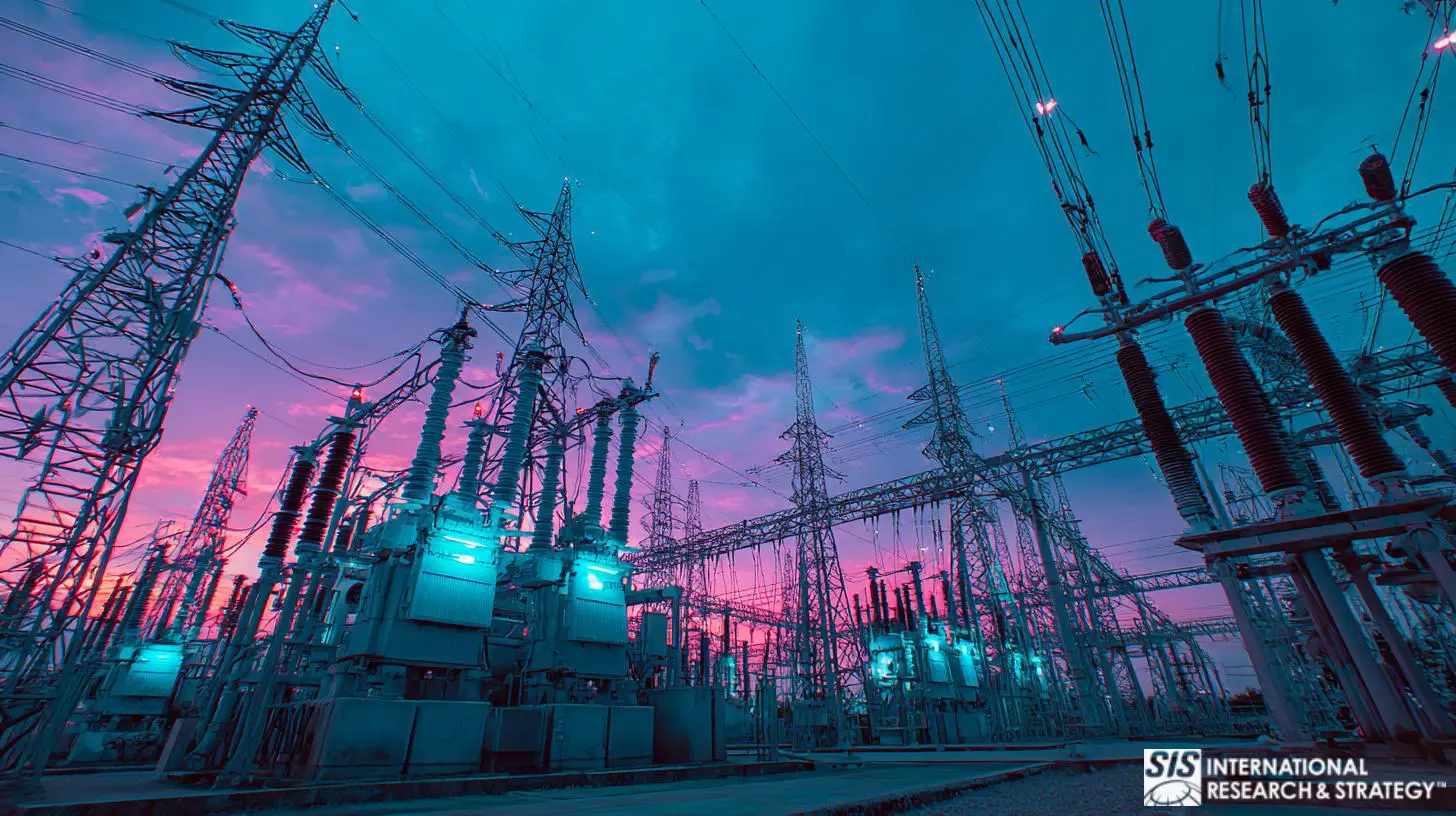
Operators evaluating capital deployment in generation, storage, transmission, or low-carbon fuels face the same constraint: the data needed to defend the decision is not in any database. It sits with regulators, offtakers, OEMs, and operators who will only share it in structured primary research conducted under confidentiality.
Energy Power Strategy Consulting Market Research that connects regulatory trajectory, counterparty intent, and demand realism produces decisions that survive board scrutiny and credit committee review. This is the work SIS conducts for utilities, IPPs, infrastructure funds, and industrial offtakers across 135 countries.
The firms capturing the transition premium are not the ones with the best models. They are the ones with the best primary intelligence feeding those models.
关于 SIS 国际
SIS 国际 提供定量、定性和战略研究。我们提供决策所需的数据、工具、战略、报告和见解。我们还进行访谈、调查、焦点小组和其他市场研究方法和途径。 联系我们 为您的下一个市场研究项目提供帮助。

 ZH
ZH  EN
EN  AR
AR  ZH_HK
ZH_HK  NL
NL  FR
FR  DE
DE  IT
IT  JA
JA  KO
KO  PL
PL  PT
PT  ES
ES