
丁烷市场研究

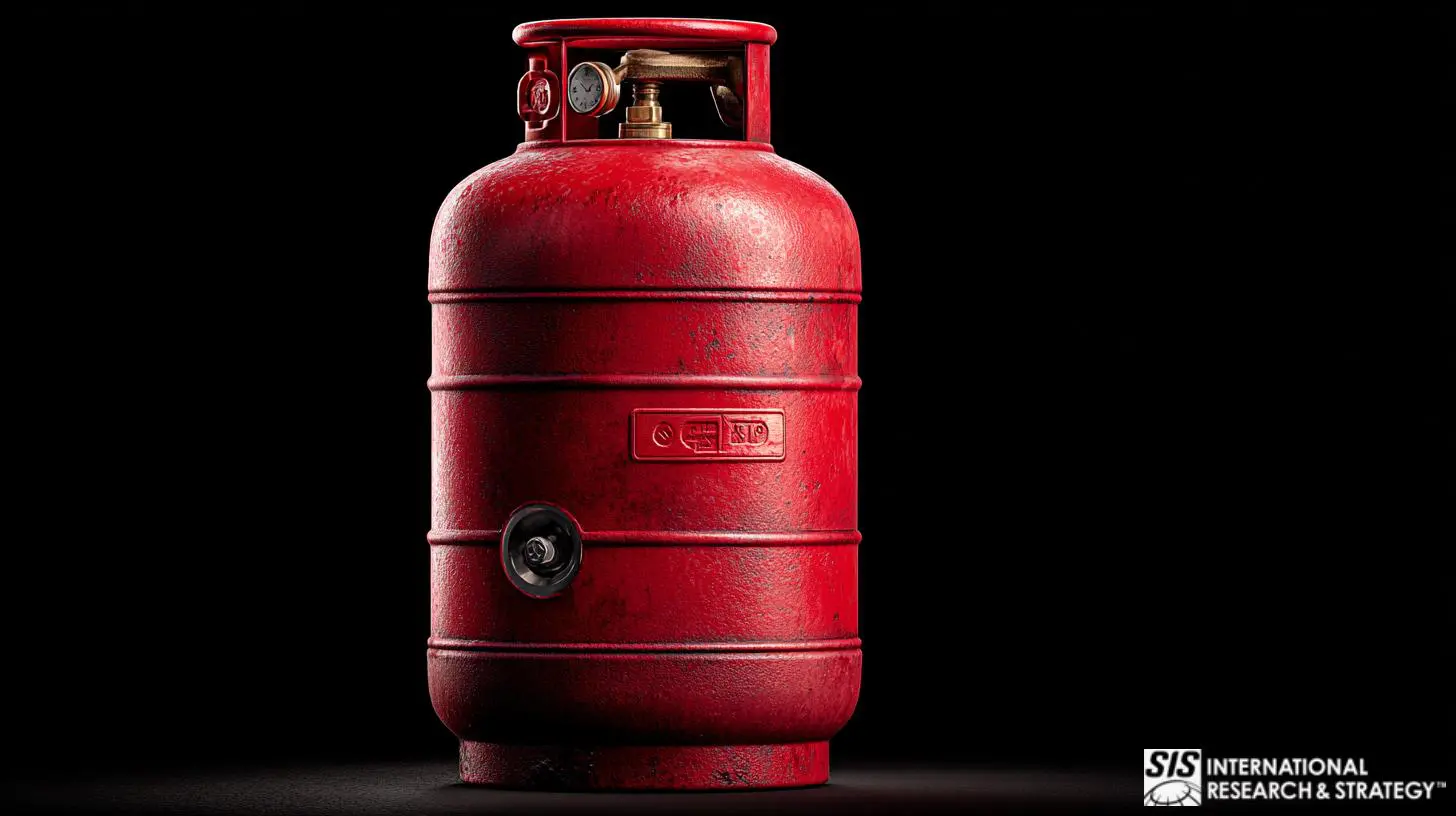
The butane market is a vital part of the global energy structure, and the demand for butane has been growing exponentially around the world due to an increasing number of customers from different sectors. As a result, today, butane market 研究 is essential to stay abreast of current trends and gain valuable insights in this industry, including its challenges, opportunities, future prospects, new technologies, among many other factors.
进行丁烷市场研究的重要性
丁烷市场研究对于有效决策至关重要。它提供了有关当前趋势、困难和前景的必要信息,组织可以使用这些信息来制定或完善其业务战略。有了这些数据,公司可以促进决策过程,并充满信心和方向地向前迈进。
此外,丁烷市场研究可帮助公司发现其主要竞争对手并了解市场份额的大小。通过获取有关竞争格局的这些信息,企业可以在埃克森美孚、英国石油、荷兰皇家壳牌和雪佛龙等主要参与者激烈竞争的环境中取得成功。
同样,进行市场调研可以让企业了解客户的喜好、产品特点和定价。它可以让市场参与者更有效地定制他们的产品,不仅可以提高满意度,而且从长远来看还可以提高客户保留率。
Butane Market Research: How Leading Firms Capture the Next Wave of Demand
Butane has quietly become one of the most strategically important hydrocarbons in the global energy mix. Demand from petrochemical crackers, residential LPG blends, refrigerants, and aerosol propellants is reshaping pricing power across the value chain. Butane Market Research now sits on the agenda of procurement chiefs, refining strategists, and downstream investors who once treated the molecule as a commodity afterthought.
The firms gaining ground are the ones reading the molecule’s structural shifts early. Shale-driven NGL output in the Permian and Marcellus, the 中东’s pivot toward propane dehydrogenation (PDH) and butane dehydrogenation (BDH) capacity, and Asia’s swelling LPG import appetite have rewritten the trade flow map. The winners are positioning against the new flow, not the old one.
Why Butane Market Research Drives Margin Capture
Butane sits at the intersection of three demand engines: petrochemical feedstock, residential and commercial fuel, and specialty industrial use. Each engine moves on different cycles. Petrochemical demand follows ethylene and butadiene economics. LPG demand tracks heating degree days and rural electrification rates. Aerosol and refrigerant demand follows regulatory shifts on HFCs and VOCs.
Operators who model these three engines separately, then layer them, see arbitrage windows that single-curve forecasters miss. A normal butane cargo redirected from a US Gulf export terminal to a Japanese isomerization unit instead of an Indian bottling plant can swing landed margin by double digits. The intelligence required to call that swing is granular, current, and rarely sits inside any single trading desk.
Mont Belvieu and Saudi Aramco’s contract price (CP) remain the global anchors, but regional premiums are widening. North West Europe, Chiba, and Fujairah now trade on differentials that reflect specific cracker slate flexibility and storage cavern availability. Reading those differentials requires primary intelligence from terminal operators, shipowners, and offtake counterparties.
The Demand Shifts Reshaping Butane Strategy
Three structural shifts are creating the next decade of opportunity. First, on-purpose butadiene production through BDH and oxidative dehydrogenation is decoupling butadiene supply from naphtha cracker output, giving butane a direct seat at the synthetic rubber and ABS resin tables. Reliance Industries, SABIC, and Formosa Plastics are among the operators evaluating or expanding capacity tied to this pathway.
Second, residential LPG penetration in Sub-Saharan Africa, India, and Southeast Asia continues to expand under clean cooking initiatives. India’s PMUY program and Indonesia’s kerosene-to-LPG conversion have permanently reset import baselines. Butane content in winter LPG blends carries seasonal premiums that disciplined buyers hedge through forward storage contracts.
Third, the refrigerant transition under the Kigali Amendment is pulling isobutane (R-600a) into domestic refrigeration as a low-GWP alternative to HFC-134a. Whirlpool, Haier, and BSH have already standardized on hydrocarbon refrigerants across European production. The purity specification for R-600a sits well above fuel-grade butane, which creates a separate pricing tier that most commodity reports ignore.
What Effective Butane Market Research Delivers
The conventional approach treats butane as a price-tracking exercise: pull NYMEX, Argus, and Platts, layer in EIA inventory, run a regression. That works until the structure breaks, which it now does regularly. Trade flow disruptions through the Panama Canal, Red Sea reroutes, and Chinese PDH utilization swings have made historical correlations unreliable.
The better approach combines secondary price data with primary intelligence: structured interviews with terminal operators, cracker schedulers, LPG distributors, and ship brokers across the corridors that matter. Bill of materials analysis at the downstream converter level reveals which specifications command premiums and which substitutions are technically viable. Total cost of ownership models for storage, shipping, and quality adjustment expose where margin actually accrues.
According to SIS International Research, B2B expert interviews with senior procurement and trading executives across LPG importing markets in Asia and West Africa consistently surface a gap between published price benchmarks and the effective landed cost paid by mid-tier buyers. The gap typically reflects quality adjustments, demurrage exposure, and bilateral contract terms that public indices do not capture.
Competitive Intelligence Across the Butane Value Chain
Supplier qualification audits remain the most underused tool in butane procurement. Specifications drift. A cargo certified at loading can arrive with elevated mercaptan sulfur, olefin contamination, or moisture that disqualifies it from isomerization or aerosol-grade use. Buyers who run independent quality verification at discharge negotiate from a different position than those who accept loadport certificates.
Installed base analytics on downstream conversion assets reveal where butane demand is genuinely sticky versus where it is one substitution decision away from disappearing. A steam cracker with naphtha-butane swing capability behaves differently from a dedicated BDH unit. Mapping that flexibility across the top 200 global consuming assets is the foundation of any credible long-term demand forecast.
SIS International’s competitive intelligence engagements in petrochemical feedstock markets indicate that aftermarket revenue strategy for NGL fractionators increasingly depends on capturing specialty-grade butane streams rather than selling everything as fuel-grade. The margin uplift from isomerization-grade and refrigerant-grade segregation justifies modest capex at fractionation trains that previously ran a single spec.
The SIS Approach to Butane Market Research
SIS International conducts butane market research through three integrated workstreams: market entry assessments for new importing or exporting geographies, B2B expert interviews with the buyer and seller universe, and competitive intelligence on producers, traders, and downstream converters. Engagements typically cover 40 to 80 structured interviews across producing regions, trading hubs, and consuming markets, paired with secondary analysis of trade flows, capacity additions, and regulatory pipelines.
The deliverable is not a report. It is a decision document that answers the specific question on the table: where to build, where to buy, where to hedge, where to exit. Forty years of cross-border industrial research across 135 countries means the interview network is already in place when the engagement starts.
Where Opportunity Concentrates Next

Three regions warrant disciplined attention. The US Gulf Coast retains structural cost advantage on NGL extraction and will remain the marginal export supplier to Asia and Europe through the late 2020s and beyond. The Middle East, particularly Saudi Arabia, Qatar, and the UAE, is converting upstream advantage into downstream BDH and PDH integration that will absorb regional volumes previously available for export. Asia, led by India and Indonesia, will continue to pull import volume even as domestic refining capacity expands.
Operators who treat Butane Market Research as a continuous intelligence function, rather than a one-time procurement exercise, position to act on these shifts before they reprice. The molecule rewards conviction backed by primary evidence.
Key Questions

Decision-makers evaluating butane strategy typically focus on a small set of high-stakes questions. Direct answers below.
关于 SIS 国际
SIS 国际 提供定量、定性和战略研究。我们提供决策所需的数据、工具、战略、报告和见解。我们还进行访谈、调查、焦点小组和其他市场研究方法和途径。 联系我们 为您的下一个市场研究项目提供帮助。

 ZH
ZH  EN
EN  AR
AR  ZH_HK
ZH_HK  NL
NL  FR
FR  DE
DE  IT
IT  JA
JA  KO
KO  PL
PL  PT
PT  ES
ES