
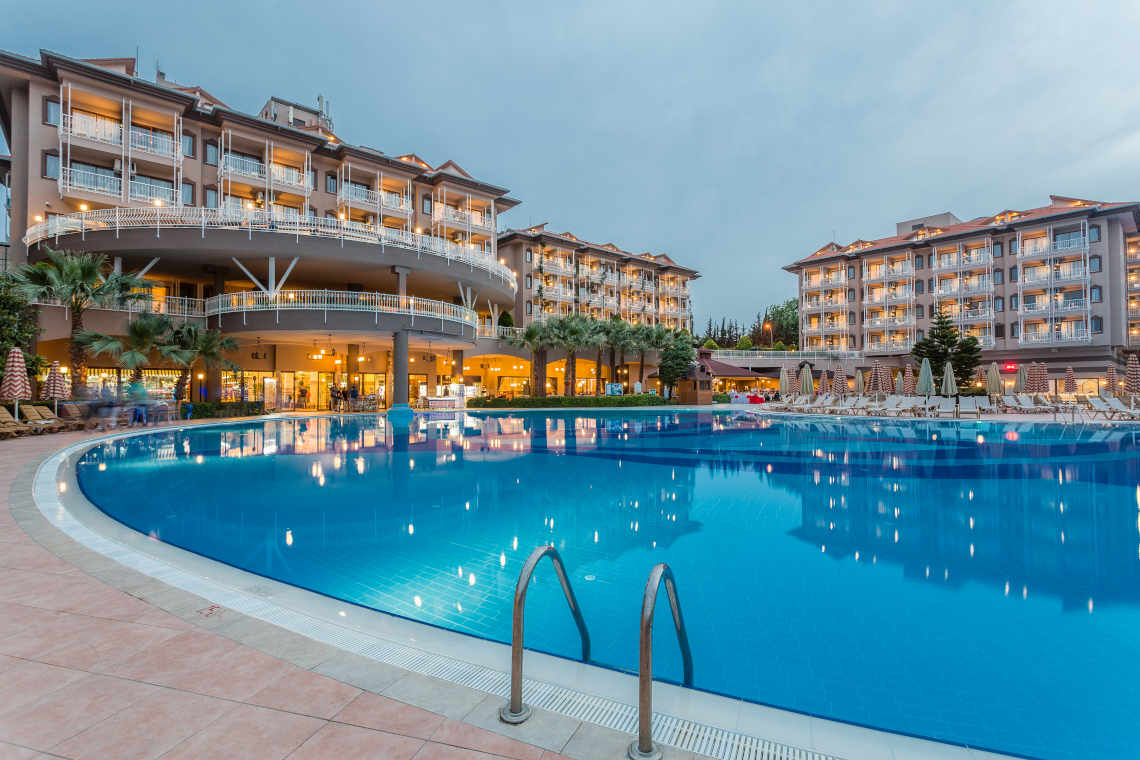
豪华酒店品牌重塑

What does it mean for a luxury hotel to reinvent itself in an era where guest expectations are as diverse as they are demanding? Luxury hotel rebranding delves into the very essence of what luxury means in the modern context.
什么是豪华酒店品牌重塑?
奢华酒店品牌重塑需要深入研究酒店的独特之处,以及如何在拥挤的市场中脱颖而出。这是关于以一种与当今客人息息相关且能引起共鸣的方式重新定义奢华。这可能意味着整合尖端技术以提供无缝的客人体验,采用可持续的做法来吸引具有环保意识的旅行者,或打造独特的本地化体验以提供地方感。
Luxury Hotel Rebranding: How Leading Operators Reposition for Premium Yield
Luxury hotel rebranding succeeds when operators treat repositioning as a yield strategy, not a creative exercise. The properties that command sustained ADR lift after a flag change share a discipline: they validate guest perception before they touch a logo.
The opportunity is substantial. A repositioned property can shift its competitive set, escape commodity pricing pressure, and capture demand from segments that previously screened it out. The mechanism is precise. Brand equity moves the booking decision earlier in the consideration funnel, where price sensitivity is lower and corporate negotiated rates are more favorable.
What Distinguishes Effective Luxury Hotel Rebranding
The conventional approach treats rebranding as a renovation announcement. New name, refreshed lobby, updated website, press release. The competitive set does not change. The booking algorithms do not reweight. The rate ceiling holds.
The operators producing real RevPAR lift work the other direction. They identify the perception gap first, then engineer the physical and service changes that close it. Marriott’s Edition line, Hyatt’s Andaz, and Accor’s MGallery were not repositioned by design alone. Each was validated through structured guest research that mapped the attributes a target traveler associated with the next price tier.
SIS International Research has observed across hospitality repositioning engagements that the strongest predictor of post-relaunch ADR performance is not the capital invested in the renovation. It is the precision with which the brand promise aligns with the booking trigger of the highest-yielding guest segment.
The Perception Audit That Anchors Repositioning
Before a property selects a new flag or commissions creative work, leading operators commission a perception audit. The instrument is direct. Blind brand association exercises with current guests, competitive set guests, and aspirational guests. The output is a perceptual map showing where the property sits today versus where the operator believes it sits.
The gap is almost always wider than ownership expects. A four-star urban property targeting business travelers may discover its name carries connotations closer to extended-stay than boutique. A heritage resort may find its strongest equity is held by a generation that no longer travels in volume. These findings reshape the brief before a single design decision is made.
SIS conducts these audits through a combination of focus groups, structured B2B expert interviews with corporate travel buyers, and quantitative brand tracking studies. The corporate travel manager interviews are particularly useful because they reveal the RFP screening criteria that determine whether a property even appears in negotiated rate programs.
Segment Economics Drive the Repositioning Brief
Luxury hotel rebranding works when the operator selects the target segment before selecting the brand. The segments differ sharply in unit economics.
| Segment | Booking Lead Time | Rate Sensitivity | Ancillary Spend |
|---|---|---|---|
| Transient luxury leisure | Long | Low | High |
| Negotiated corporate | Short | Medium | Low |
| Group and MICE | Very long | Low at contract | Very high |
| Bleisure hybrid | Medium | Medium | Medium |
Source: SIS International Research
A property repositioning toward transient luxury leisure needs a different physical product, service model, and distribution strategy than one targeting negotiated corporate. The brand identity is downstream of that economic decision. Operators that invert the sequence, choosing the brand first and the segment second, end up with positioning that does not match the asset’s catchment or competitive reality.
Validating the Concept Before Capital Commitment
The capital commitment in a luxury repositioning is significant. Soft brand conversions, hard brand changes, and independent-to-collection moves all carry different cost structures and contractual obligations. The financial risk justifies pre-launch validation that goes beyond design review.
In structured concept testing conducted by SIS across hospitality clients, properties that ran prototype testing of repositioned room product, service touchpoints, and brand collateral with target guests before construction consistently outperformed RevPAR forecasts in the first eighteen months post-relaunch. Properties that skipped this step met forecasts less reliably and required tactical discounting to fill the gap.
The testing protocol matters. Static concept boards underperform immersive prototype experiences. The most predictive instrument SIS deploys for hospitality is a hybrid central location test where target guests evaluate physical room mockups, service scenarios, and rate cards in sequence. The output identifies which elements of the repositioning carry the rate, which are neutral, and which actively suppress willingness to pay.
Distribution and Loyalty Integration Determine the Ceiling
A repositioned property reaches its rate ceiling when its distribution architecture matches its new tier. The mechanics are concrete. GDS chain codes, OTA merchandising tier, loyalty program integration, and corporate RFP eligibility all gate access to higher-yield demand.
This is where soft brand collections, including Marriott’s Autograph, Hilton’s Curio, and IHG’s Vignette, have changed the calculus for independent luxury operators. The collection model preserves design distinctiveness while plugging the property into enterprise distribution and loyalty infrastructure. The trade-off is a fee structure that compresses owner margin in exchange for booking volume the independent property could not generate alone.
The right answer depends on the asset, the market, and the owner’s hold period. A trophy asset in a primary gateway market with a long hold period may capture more value as a true independent. A repositioning property in a secondary market with a five-to-seven year hold typically benefits from collection affiliation.
The Repositioning Sequence That Works
The sequence leading operators follow is consistent across geographies. Perception audit. Segment selection. Concept development. Prototype testing. Distribution architecture. Then construction and brand launch. Each stage produces a decision that constrains the next, which is what keeps the project from drifting into a creative exercise disconnected from yield.
Luxury hotel rebranding rewards operators who treat the brand as the visible expression of an underlying economic decision. The brand carries the rate. The rate funds the repositioning. The repositioning earns the brand. The sequence is what compounds.
Where SIS Adds Value
SIS International Research supports hotel owners, operators, and private equity sponsors through perception audits, guest segmentation studies, concept testing, and competitive intelligence on adjacent flags. Engagements span gateway markets across North America, Europe, the Middle East, and Asia Pacific. The work answers the questions that determine whether a luxury hotel rebranding produces sustained yield or a temporary halo.
关于 SIS 国际
SIS 国际 提供定量、定性和战略研究。我们提供决策所需的数据、工具、战略、报告和见解。我们还进行访谈、调查、焦点小组和其他市场研究方法和途径。 联系我们 为您的下一个市场研究项目提供帮助。

