
European Food and 음료 시장 조사
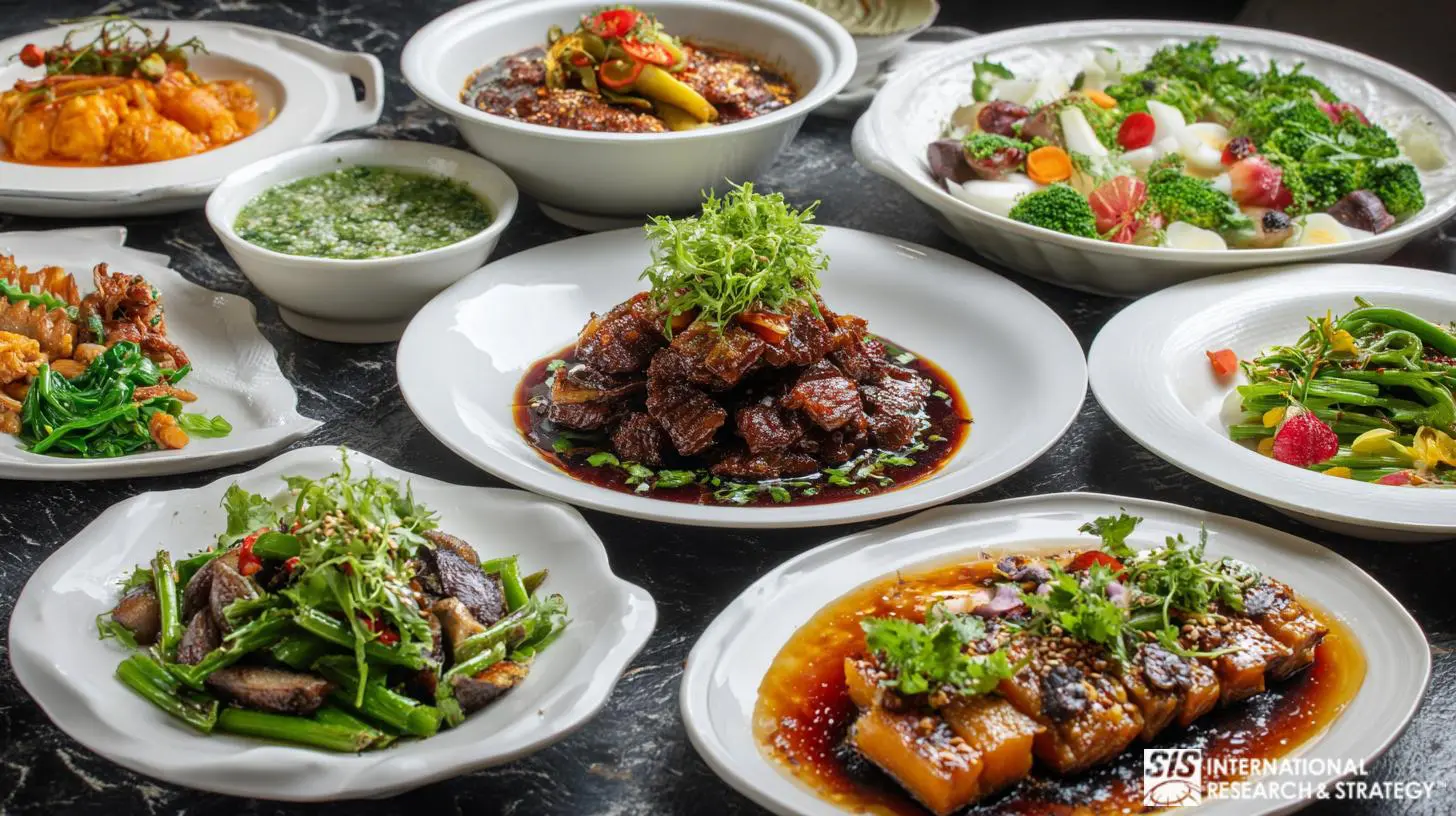
다양한 문화와 취향을 아우르는 유럽 요리는 유럽의 역사적인 태피스트리를 보여주는 살아있는 증거입니다. 하지만 이러한 다양한 요리의 즐거움이 오늘날 글로벌 시장에서 어떻게 작용할까요? 기업은 유럽 식음료 시장 조사를 심층적으로 조사하여 유럽 대륙의 미식 미래를 형성하는 추세, 변화 및 선호도를 파악할 수 있습니다.
실제로 유럽 식음료 시장 조사는 유럽의 다양한 요리 환경에서 동향, 선호도 및 기회를 이해하는 데 중요한 역할을 하며, 기업은 소비자 행동, 시장 동향 및 경쟁을 분석하여 정보에 입각한 결정을 내릴 수 있습니다. 유럽(및 전 세계) 소비자의 취향과 요구.
유럽 식음료 시장 조사의 중요성
Conducting thorough European food and beverage market research is vital for businesses operating in the European food industry. Here are some key reasons why this market research is essential:
- 소비자 선호도 이해: European and global consumers have diverse tastes, and their preferences vary from one country to another. Thus, European food and beverage market research helps businesses identify the most popular dishes, ingredients, and culinary traditions in different European regions, enabling them to tailor their products or services accordingly.
- 경쟁사 평가: European food and beverage market research provides insights into the strategies and offerings of competitors. By analyzing their strengths and weaknesses, businesses can position themselves effectively, differentiate their products or services, and identify gaps in the market that can be exploited.
- 올바른 잠재고객 타겟팅: Understanding the demographics, lifestyles, and buying behaviors of consumers is crucial for effective marketing and targeting. European food and beverage market research helps businesses identify their target audience and develop suitable marketing strategies to reach them.
European Food Beverage Market Research: How Leading Brands Win Across Fragmented Markets
Europe rewards brands that read its fragmentation correctly. Twenty-seven member states, distinct retail structures, divergent palate profiles, and overlapping regulatory regimes make it the most analytically demanding region in the world for food and drink. The brands that compound share here treat fragmentation as signal, not friction.
European Food Beverage Market Research separates the operators from the optimists. The leaders pair sensory science with retailer-channel intelligence, then sequence launches against the regulatory and shopper realities of each corridor. The work is granular. The payoff is durable margin.
What Makes European Food Beverage Market Research Structurally Different
The European shopper is not one shopper. Discounter penetration in Germany, hard-discount expansion of Aldi and Lidl across the Iberian peninsula, the Tesco-Carrefour-Edeka private label arms race, and the dominance of cooperatives like Coop Italia and Migros in Switzerland produce category economics that look nothing alike. Trade spend that lifts volume in France can erode margin in the Netherlands.
Regulation compounds the complexity. Nutri-Score adoption varies by market. The EU Farm to Fork strategy reshapes claims permitted on pack. HFSS rules in the United Kingdom restrict in-store placement for products that pass cleanly in Poland. Front-of-pack signaling, country-of-origin labeling, and recyclability mandates under the Packaging and Packaging Waste Regulation each carry shopper-perception consequences that show up in CATA (check-all-that-apply) results long before they show up in scan data.
Palate fragmentation is the third axis. A descriptive analysis panel calibrated in Milan will score bitterness, astringency, and mouthfeel on scales that a Stockholm panel weights differently. Hedonic scaling that travels poorly across borders is the single most common cause of failed pan-European launches.
The Methodology Stack That Performs in European Categories
Concept-product fit testing in Europe demands sequential monadic design across at least three country cells, with JAR (just-about-right) scale analysis run separately by market. Pooling the data hides the diagnostic. A sweetness level scored optimal in Spain often lands above JAR in Denmark, and the penalty analysis explains why a single SKU cannot serve both shelves.
For sensory discrimination, triangle tests and duo-trio protocols remain the workhorses when reformulating against sugar reduction targets or replacing palm oil. QDA (quantitative descriptive analysis) panels with cross-country calibration sessions reduce the noise that kills pan-regional reformulation programs. Temporal dominance of sensations (TDS) is increasingly used for functional beverages where the order of flavor perception drives repeat purchase more than peak liking.
Central location tests work well in dense urban European markets. Home-use tests outperform CLTs for products consumed in social or ritual contexts: aperitivo formats in Italy, fika pastries in Sweden, Sunday roast accompaniments in the United Kingdom. The methodology has to match the consumption occasion, not the convenience of the fieldwork team.
Where the Growth Is Concentrated
Plant-based protein has matured past the early adoption phase. The plant-based protein sensory gap, measured against animal references on texture and aftertaste, remains the binding constraint on repeat purchase. Brands closing that gap, including Oatly in barista applications and La Vie in plant-based charcuterie, are taking shelf from incumbents who treated the category as a marketing exercise rather than a sensory one.
Functional ingredient positioning is the second growth corridor. Adaptogens, postbiotics, and protein fortification command price premiums when the consumer perception of efficacy is supported by clean label cues. Clean label consumer perception research consistently shows that European shoppers parse ingredient lists more skeptically than North American shoppers, which raises the bar on claim substantiation.
Private label parity is the third. Private label taste parity studies across Mercadona, Albert Heijn, and Marks & Spencer demonstrate that retailer brands have closed the quality gap in dairy, ambient, and frozen categories. National brand defense now rests on innovation cadence and emotional brand equity, not formulation superiority alone.
The Channel and Regulatory Layer
Category management optimization in European retail requires shelf space allocation models that account for hard-discount assortment compression. A 6-SKU assortment at Lidl forces a different innovation logic than a 24-SKU planogram at Carrefour Hyper. Assortment rationalization that ignores the discounter ceiling produces innovation pipelines the trade will not list.
Promotional lift measurement in the United Kingdom and Germany has to be modeled net of HFSS placement restrictions and the Schuldenbremse-driven consumer caution that has reshaped basket composition. Trade spend optimization that treats Europe as a single P&L destroys margin. The discipline is country-by-country, channel-by-channel, with shopper journey analytics layered on retailer loyalty data where available.
According to SIS International Research, food and beverage manufacturers expanding into Europe consistently underestimate the variance in private label sensory benchmarks across retailers within the same country, leading to launch SKUs that under-index against the reference product on the shelf they actually compete on. The corrective is a private label parity audit conducted before concept lock, not after.
How SIS International Approaches European Food and Beverage Engagements
SIS International has conducted food and beverage research across the United Kingdom, Germany, France, the Netherlands, Belgium, Luxembourg, Finland, Switzerland, Italy, Spain, and the Nordics for four decades. The work spans CLTs, home-use tests, descriptive analysis panel calibration, B2B expert interviews with category buyers at major European retailers, and shopper ethnographies in discount, hyper, and convenience formats.
SIS International’s qualitative and quantitative work across European food and beverage categories shows that the highest-return engagements combine sensory diagnostics with retailer-buyer interviews and shopper ethnography in the same study design, rather than commissioning each as a separate workstream. Integrated designs cut decision latency by half and produce launch plans that survive contact with the trade.
The output is decision-ready: which SKUs to list, which markets to sequence first, which formulations require country-specific adjustment, and where private label exposure is most acute. European Food Beverage Market Research delivered this way replaces opinion with evidence at the price points that matter.
The SIS European Launch Sequencing Framework
| Stage | 방법론 | Decision Output |
|---|---|---|
| Concept screen | CATA, sequential monadic across 3 countries | Concept-product fit by market |
| Sensory optimization | QDA, JAR, penalty analysis, TDS | Country-specific formulation calls |
| Shopper validation | CLT, HUT, shopper ethnography | Pack, price, occasion fit |
| Trade validation | B2B buyer interviews, planogram review | Listing probability, assortment fit |
| Launch sequencing | Market prioritization model | Country rollout order and pacing |
Source: SIS International Research
European Food Beverage Market Research is most valuable when it answers the sequencing question, not just the concept question. Which market first, which SKU, at which price, through which retailer, against which private label benchmark. The brands compounding share in Europe ask the question in that order.
SIS 인터내셔널 소개
SIS 국제 정량적, 정성적, 전략 연구를 제공합니다. 우리는 의사결정을 위한 데이터, 도구, 전략, 보고서 및 통찰력을 제공합니다. 또한 인터뷰, 설문 조사, 포커스 그룹, 기타 시장 조사 방법 및 접근 방식을 수행합니다. 문의하기 다음 시장 조사 프로젝트를 위해.

 KO
KO  EN
EN  AR
AR  ZH
ZH  ZH_HK
ZH_HK  NL
NL  FR
FR  DE
DE  IT
IT  JA
JA  PL
PL  PT
PT  ES
ES