
Frozen Food Market Research
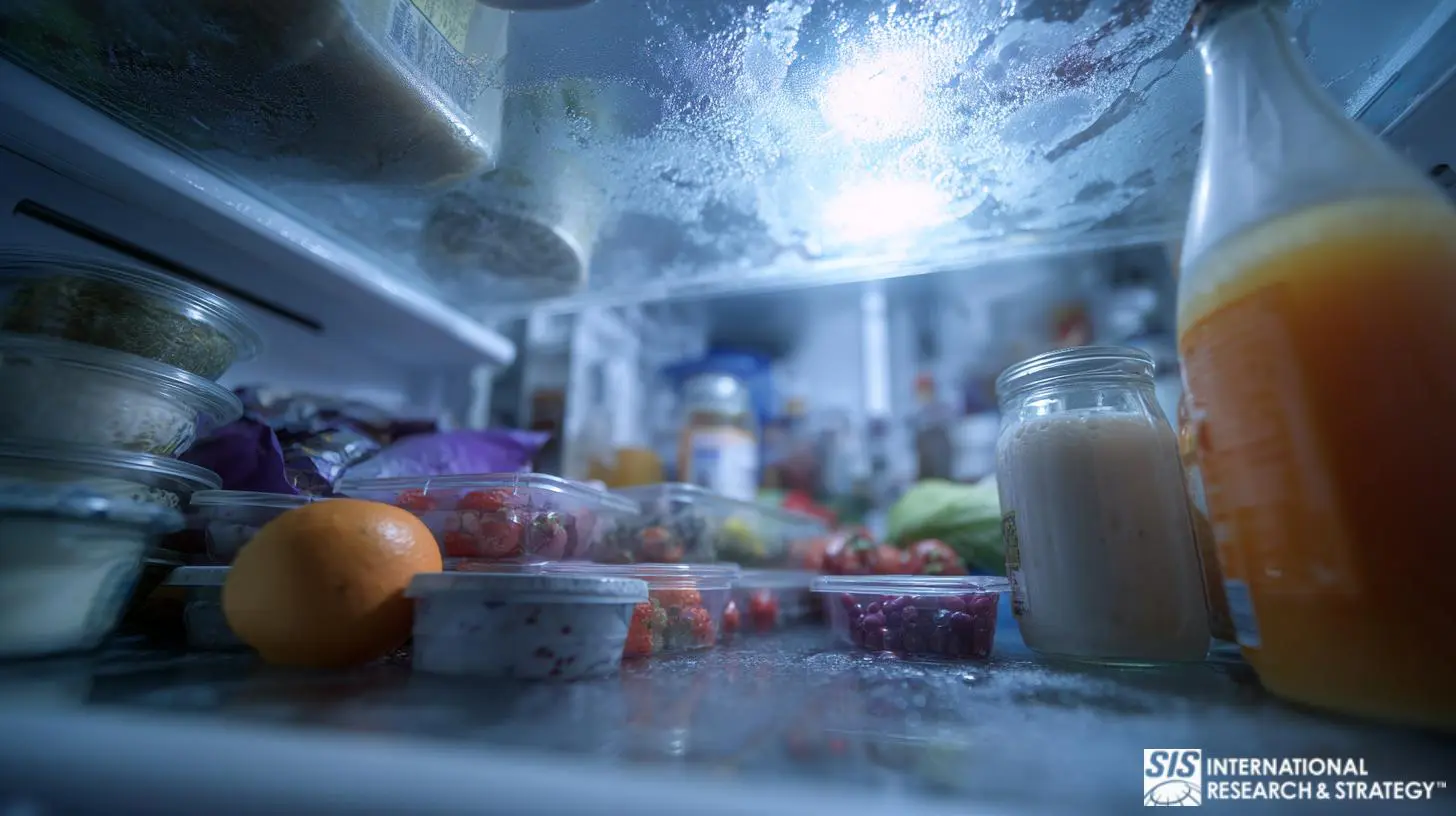
Frozen food market research is useful for discovering trends and gathering data and strategies that businesses can use. Results from market research provide insights into the different components of the frozen food sectors, including the production of goods, distribution of products, and the various establishments involved, such as restaurants, convenience stores, and local and international retailers.
この市場調査では、冷凍食品市場のさまざまな企業が、製品の提供、製品の品質、販売、マーケティングの面で競合他社とどのように比較されるかも明らかにしています。冷凍食品分野の統計とアプローチは、企業や主要プレーヤーの意思決定の指針となり、ビジネス環境に関する最新の詳細情報も提供します。
冷凍食品市場調査の定義
冷凍保存され、調理前に冷凍庫で保管された食品や飲料は、冷凍食品とみなされます。当初、冷凍食品は、細菌が 15 °F 以下では増殖しないため、食品の劣化を防ぐのに十分なため、追加の防腐剤は必要ありません。製品を長期保存するには、さらに低い温度で食品を保管する必要がある場合があります。
Freezing is one of the earliest and most extensively utilized ways of food preservation. It offers the best preservation technique for retaining the original flavor, texture, and nutritional content. The freezing process combines the advantageous effects of low temperatures at which microorganisms cannot grow, slow chemical processes, and postpone cellular metabolic reactions.
冷凍は食品の腐敗の原因となる細菌が低温で死滅したり急速に増殖しないため、優れた食品保存方法です。そのため、冷凍食品は保存期間が長く利便性も高いことから消費者に人気があります。
Frozen Food Market Research: How Category Leaders Build Winning Portfolios
Frozen food has moved from convenience aisle to growth engine. Premium meals, plant-based proteins, ethnic cuisines, and clean-label formulations are pulling shoppers who once dismissed the category. The brands gaining share are the ones treating frozen food market research as a continuous discipline, not a launch-gate exercise.
The freezer case rewards specificity. Consumers buy frozen for different reasons than chilled or shelf-stable, and those reasons vary by daypart, household composition, and cuisine literacy. Winning portfolios are built on sensory science, shopper data, and disciplined concept testing, calibrated to the conditions that frozen products actually face: long supply chains, freeze-thaw cycles, and a moment-of-truth that happens after reheating in a home microwave.
Why Frozen Food Market Research Drives Category Leadership
The category’s reputation problem has flipped. Frozen meals from Conagra’s Healthy Choice, Nestlé’s Stouffer’s, Nomad Foods’ Birds Eye, and Kraft Heinz’s Devour now compete on culinary credibility, not price. Strivectin brands like Daily Harvest and Kevin’s Natural Foods entered the freezer because clean-label shoppers stopped equating fresh with better.
This shift creates a research mandate. Concept-product fit testing matters more in frozen than in any other CPG category because the gap between concept appeal and post-reheat experience is wider. A concept can win on a board and lose in a microwave. Quantitative descriptive analysis (QDA) and accelerated shelf-life testing (ASLT) catch that gap before a product ships.
SIS International Research has observed across frozen food engagements that the strongest launches pair central location tests on prepared product with home-use tests under realistic reheating conditions, since shoppers judge frozen on what comes out of their own appliances, not what comes out of a test kitchen.
Sensory Methods That Predict Repeat Purchase
Repeat rate is the only metric that matters in frozen. Trial is cheap and seasonal. Repeat is built on sensory consistency across the freeze-thaw cycle, packaging integrity, and reheating tolerance. The methodologies that predict it are specific.
Hedonic scaling on a nine-point scale captures overall liking but masks diagnostic detail. Pairing it with JAR (just-about-right) scales on salt, sauce viscosity, protein doneness, and vegetable texture surfaces the levers that move the score. Penalty analysis then quantifies which deviations cost the most repeat intent. Triangle tests and duo-trio tests handle reformulation work, particularly when sodium reduction or protein substitution risks shifting the flavor profile beyond consumer tolerance.
Temporal dominance of sensations (TDS) has become standard for premium frozen entrees because eating experience unfolds in seconds, not in a single overall score. A lasagna that peaks in cheese intensity at second three and collapses by second twelve performs differently than one that holds. CATA (check-all-that-apply) batteries on descriptors like “homemade,” “restaurant quality,” and “kid-friendly” connect sensory output to positioning claims marketing teams can defend.
Shopper Behavior at the Freezer Door
The frozen aisle is the most physically demanding shopping environment in grocery. Cold doors limit dwell time. Fogged glass limits package legibility. Frozen food market research that ignores these constraints overstates the value of crowded packaging and understates the value of color blocking and category navigation cues.
Shopper journey analytics tied to in-store ethnography show that decisions in frozen happen in two to four seconds per door. Premium pizza brands like California Pizza Kitchen and Newman’s Own win by treating the door as the unit of analysis, not the SKU. Assortment rationalization based on SKU velocity analysis often reveals that the bottom third of frozen entree assortments cannibalizes the top third without expanding the buyer base.
In structured shopper interviews and at-shelf observation conducted by SIS across frozen categories in North America, Western Europe, and East Asia, retailers consistently underestimate how much fogged-glass legibility shapes brand consideration, and how much private label gains when national brands fail the two-second test.
Where Growth Is Concentrating
Three vectors are pulling category growth. Each requires its own research design.
| Growth Vector | Research Priority | Decision Supported |
|---|---|---|
| Premium ethnic and global cuisine | Cuisine literacy mapping, authenticity benchmarking against fresh and restaurant references | Concept selection, chef partnership strategy |
| Plant-based and alternative protein | Plant-based protein sensory gap analysis vs. animal benchmark, clean label perception testing | Reformulation roadmap, claims hierarchy |
| Functional and better-for-you | JAR diagnostics on protein, fiber, and sodium; penalty analysis on health-taste trade-off | Portfolio architecture, price tier definition |
Source: SIS International Research
Ethnic frozen meals from brands like Tattooed Chef, Saffron Road, and Maya Kaimal are converting fresh-meal-kit shoppers, not just frozen-meal shoppers. That requires benchmarking against fresh references, not only against frozen incumbents. Plant-based frozen has a different problem. The sensory gap to animal protein narrows in formats where sauce and seasoning carry the experience, which is why frozen handhelds and skillet meals are outperforming plant-based frozen burgers in repeat rate.
Cross-Border Considerations for Global Portfolios

Frozen food does not travel well without local sensory calibration. Sodium tolerance, sauce viscosity preferences, spice intensity, and protein cut preferences differ sharply across markets. A frozen entree calibrated for German retail will underperform in Singapore, where rice-based formats and bolder spice profiles dominate. A product built for the United States will struggle in the United Kingdom, where vegetable doneness expectations are firmer.
Regulatory frameworks shape the research agenda. The Singapore Food Agency enforces strict hygiene requirements for frozen imports. EU regulations on novel foods affect plant-based protein launches. FDA labeling rules in the United States govern claims like “natural” and “no preservatives” that drive premium frozen positioning. Frozen food market research conducted without regulatory awareness produces concepts that cannot ship.
SIS International’s multicountry sensory work in frozen categories indicates that descriptive analysis panels calibrated locally outperform centrally calibrated panels for cross-border launches, because trained panelists anchor on local culinary references that consumer panels cannot articulate but reliably react to.
Building a Research Program That Compounds

One-off studies decay. The frozen food brands gaining durable share run continuous programs that link concept testing, sensory science, shopper research, and post-launch tracking into a single evidence base. Each launch sharpens the next. Each reformulation is anchored in panel data that already exists.
The practical architecture has three layers. A trained descriptive analysis panel for product fingerprinting. A consumer panel rotation for hedonic, JAR, and CATA work. A shopper research stream tied to retailer scan data and at-shelf observation. Brands that maintain all three move faster on reformulation, expand into new cuisines with less risk, and defend shelf space when retailers rationalize assortment.
Frozen food market research, executed with this discipline, becomes a competitive asset rather than a cost center. The category is rewarding brands that know their consumers at a level of sensory and behavioral specificity their competitors cannot match.
SISインターナショナルについて
SISインターナショナル 定量的、定性的、戦略的な調査を提供します。意思決定のためのデータ、ツール、戦略、レポート、洞察を提供します。また、インタビュー、アンケート、フォーカス グループ、その他の市場調査方法やアプローチも実施します。 お問い合わせ 次の市場調査プロジェクトにご利用ください。

 JA
JA  EN
EN  AR
AR  ZH
ZH  ZH_HK
ZH_HK  NL
NL  FR
FR  DE
DE  IT
IT  KO
KO  PL
PL  PT
PT  ES
ES