
Beauty Market Research
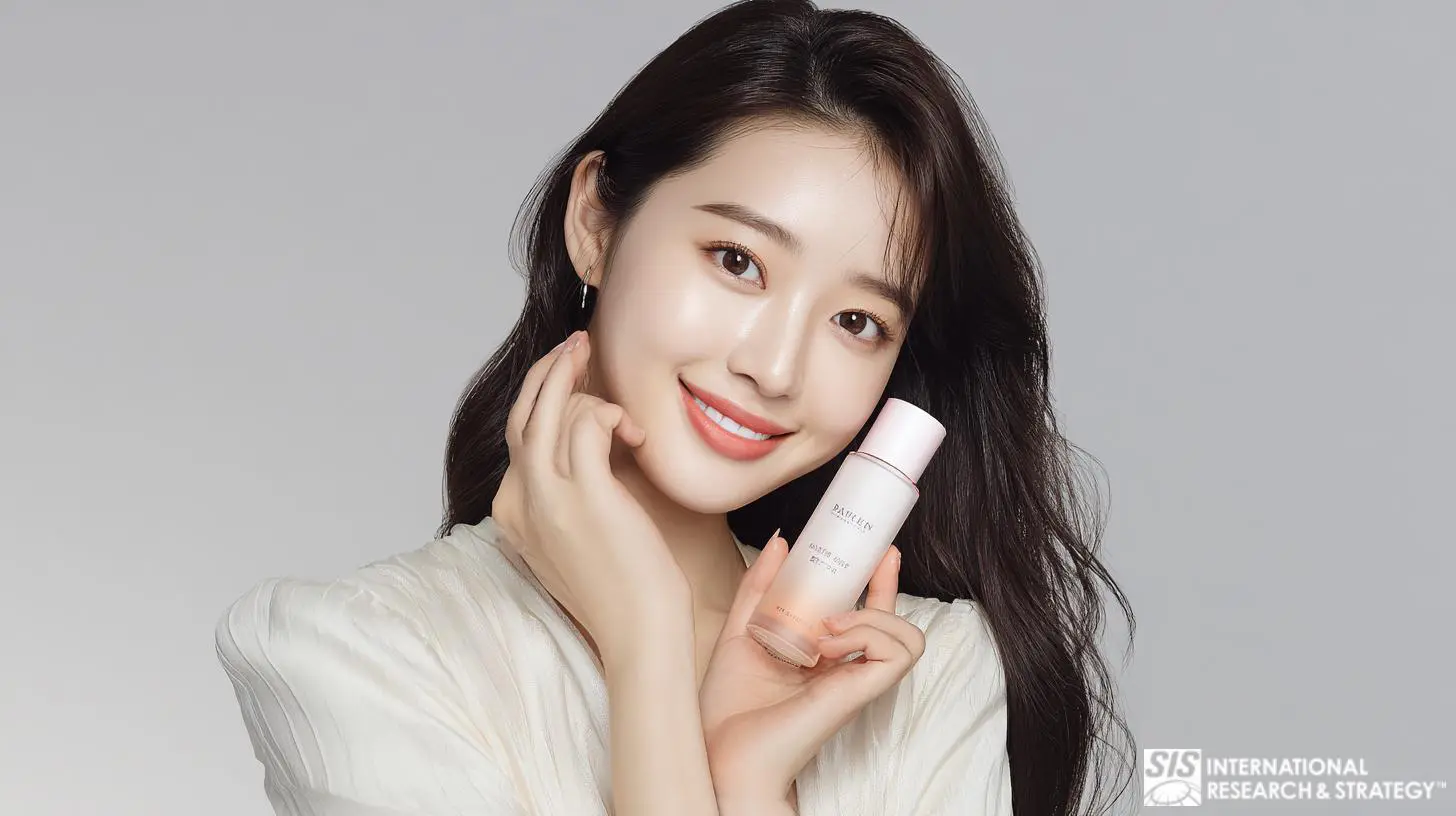
White space in beauty is shrinking fast.
The brands gaining share are not the ones with the largest R&D budgets. They are the ones that connect formulation decisions to unmet consumer needs before competitors recognize those needs exist. That connection is what separates productive consultoría de innovación en belleza from expensive guesswork.
Table of Contents
✅ Listen to this PODCAST EPISODE here:
Where Beauty White Space Analysis Creates Real Advantage
Most beauty companies define white space as an unfilled shelf position. A missing SKU in a subcategory. That framing is too narrow. The more productive definition treats white space as an unmet job the consumer is trying to accomplish, mapped against current category solutions that fall short.
Consider the clean beauty segment. When focus group participants discuss clean beauty, their definitions vary wildly. Some equate it with ingredient transparency. Others mean sustainable sourcing. Still others mean packaging recyclability. A brand that treats “clean beauty” as a single positioning claim misses the segmentation underneath it. In consumer focus groups conducted by SIS International Research with beauty consumers and influencers, participants consistently distinguished between ingredient-level cleanliness and supply-chain-level sustainability, revealing that these represent separate purchase motivations rather than a single trend.
Brands like Drunk Elephant built entire portfolios around one slice of that distinction: ingredient exclusion lists. Fenty Beauty captured a different white space altogether, building shade-range inclusivity into a performance positioning. Neither found its opportunity through trend reports. Both found it through structured consumer need-state analysis.
Consumer Behavior and Psychographic Warfare

The most sophisticated beauty market research has completely abandoned outdated demographic models in favor of psychographic profiling so precise it borders on mind-reading. While your competitors still target meaningless age brackets, the market leaders are mapping psychological vulnerabilities with surgical precision.
Gen Z beauty consumers don’t just consult different information sources – they inhabit an entirely different reality. This hyper-researched approach creates completely different paths to purchase requiring fundamentally reimagined marketing strategies.
But here’s what nobody wants to admit: Gen Z isn’t just researching differently – they’re experiencing beauty differently at a neurological level.
Social media doesn’t just influence beauty purchases. It’s completely hijacked the decision process. Beauty market research confirms TikTok now drives more beauty purchasing decisions than all traditional advertising combined. Let that sink in.
Additionally, they’re seeking emotional reassurance, not scientific understanding.
Why Cosmetic Formulation Trends Mislead Without Consumer Testing
Ingredient-forward development is the dominant approach in prestige skincare. Brands chase the next hero molecule: bakuchiol, polyglutamic acid, tranexamic acid. The assumption is that novel ingredients create differentiation. They do not. Consumer perception of efficacy creates differentiation. The ingredient is the vehicle, not the destination.
Central location tests (CLTs) reveal this gap consistently. A formulation that benchmarks well on viscosity, absorption rate, and dermatological scoring can still lose a paired comparison test against a simpler product that “feels” more effective. Hedonic scaling in blind product evaluations often shows that texture and immediate sensory response drive preference more than active ingredient concentration.
The implication for beauty innovation consulting is specific: concept-product fit testing must happen before a brand commits to scale-up. The concept promises a benefit. The product must deliver it in a way consumers perceive on first application. When those two do not align, the launch underperforms regardless of marketing spend. Penalty analysis on JAR (just-about-right) scales exposes exactly where that misalignment sits, whether the product feels too heavy, absorbs too slowly, or carries an off-note in fragrance.
The Private Label Competitive Threat Reshaping Prestige Strategy
Retailers with strong private label programs have closed the formulation gap in skincare to an uncomfortable degree. Target’s private beauty brands, Sephora Collection, and Amazon’s growing portfolio all use contract manufacturers with access to the same active ingredient libraries as prestige brands. The result: the “ingredient story” alone no longer justifies a price premium.
Prestige brands that maintain margin do so through three mechanisms that private label cannot easily replicate. First, clinical trial evidence tied to specific claims (Estée Lauder’s investment in longitudinal efficacy data for Advanced Night Repair is the template). Second, experiential retail environments that create brand meaning beyond the product (Aesop’s store design philosophy, now scaling under L’Oréal ownership). Third, community-driven DTC channel economics where customer acquisition cost payback is shortened through organic social advocacy rather than paid media.
The Future of Beauty Market Research: The Coming Revolution

Beauty market research won’t just evolve – current approaches will become embarrassingly obsolete virtually overnight as three revolutionary forces converge:
Predictive personalization that actually works – Forget today’s crude segmentation models. Advanced beauty market research is creating predictive frameworks that anticipate individual preferences with accuracy that borders on clairvoyance.
Neural decoding – The most explosive frontier in beauty market research bypasses the fundamental unreliability of stated preferences entirely. Instead, it accesses neurological responses through non-invasive monitoring that reveals what the brain unconsciously desires before conscious awareness even registers.
Table 1. Beauty Market Research: Key Statistics & Data Points
Beauty Market Research: Key Statistics & Data Points
Comprehensive market intelligence from authoritative industry sources
WordPress Integration: Use Custom HTML block in WordPress. Copy the entire HTML code and paste into a Custom HTML block to maintain formatting.
| Key Metric | 2024-2025 Data | Authoritative Source |
|---|---|---|
| GLOBAL MARKET SIZE & GROWTH | ||
| Global Beauty Market Value (2023) | $446 billion | McKinsey Global Beauty Report 2024 |
| Projected Market Value (2025) | $673.70 billion | Statista Market Forecast |
| Annual Growth Rate (CAGR 2025-2029) | 3.35% | Statista Market Forecast |
| Expected Market Value by 2027 | $580 billion | McKinsey State of Fashion: Beauty 2023 |
| REGIONAL MARKET PERFORMANCE | ||
| US Market Leadership (2025) | $104 billion | Statista Global Market Analysis |
| China Market Projection (2027) | $96 billion | McKinsey State of Fashion: Beauty |
| Middle East & Africa Growth (2023) | 18% YoY | McKinsey Beauty Industry Analysis |
| Africa Market Value (2023-2028) | $62B → $83B | Cosmoprof Industry Report |
| DIGITAL TRANSFORMATION & E-COMMERCE | ||
| Online Sales Share by 2025 | 38.4% | Statista Digital Commerce Report |
| E-commerce Growth Rate (2022-2027) | 12% annually | McKinsey Digital Beauty Trends |
| Expected Online Share by 2030 | 33% | McKinsey State of Beauty 2025 |
| Beauty E-commerce Revenue (2024) | $47.02 billion | OSF Digital Beauty Tech Report |
| SOCIAL MEDIA & CONSUMER BEHAVIOR | ||
| Social Media Influence on Purchases (2023) | 46% of US consumers | Sprinklr Social Media Impact Study |
| Gen Z Influenced by Influencers | 74% | Sprinklr Beauty Consumer Research |
| TikTok Beauty Learning (Gen Z) | 69% | Mintel Gen Z Consumer Report |
| Livestream Shopping Openness | 58% | Firework Video Commerce Research |
| GEN Z MARKET IMPACT | ||
| Gen Z Global Consumer Share by 2025 | 40% | BeBold Digital Market Analysis |
| Gen Z Annual Beauty Spending (Female) | $368 | In-Cosmetics Consumer Study |
| Affordability as Purchase Driver | 55% | Attest Gen Z Beauty Research |
| Sustainability Importance | 67.7% | Attest Sustainability Study |
| TECHNOLOGY & AI ADOPTION | ||
| Beauty Tech Market Revenue (2024) | $4.74 billion | OSF Digital Technology Report |
| AR/VR Conversion Rate Increase | 32% | SIS International Research |
| AI Regular Usage by Executives | 10% | McKinsey State of Beauty 2025 |
| AI Conversational Potential (Beauty Professionals) | 77% | Perfect Corp AI Beauty Report |
| MARKET SEGMENTS & CATEGORIES | ||
| Personal Care Segment (2025) | $293.00 billion | Statista Market Segmentation |
| Skincare Market Share | 40% | Statista Industry Overview |
| Cosmetics Market (2025) | $113.2 billion | Oberlo Market Statistics |
| Clean Beauty Search Volume (#CleanBeauty) | 1.9B TikTok views | Attest Social Media Analysis |
WordPress Setup: Add a Custom HTML block in your WordPress editor, then copy and paste this entire HTML code. This prevents block dimension conflicts and maintains professional styling.
Beauty Market Research in the AI Era: Extinction or Evolution
The AI revolution isn’t just changing beauty market research – it’s completely obliterating traditional approaches.
While most beauty executives remain hypnotized by ChatGPT headlines, the real revolution happens behind closed doors as the industry’s most sophisticated players deploy machine learning systems that make conventional research approaches look like archaeological artifacts.
Beauty market research in the AI era operates at fundamentally different levels:
Real-time sentiment analysis – The days of quarterly tracking studies are ancient history. AI-powered beauty market research now monitors hundreds of millions of beauty-related conversations daily across multiple platforms, using natural language processing to identify emerging trends, sentiment shifts, and competitive vulnerabilities months before they manifest in sales data.
Predictive formulation engines – Beyond conventional product development, AI-powered beauty market research has completely transformed how formulations are created.
The most disturbing revelation? In blind testing, AI-generated formulations consistently outperform human-developed alternatives by margins exceeding 30%.
Extreme personalization ecosystems – The personalization revolution remains stunningly misunderstood by most beauty executives. While every brand claims to personalize, advanced beauty market research exposes the harsh reality: most “personalization” programs deliver experiences consumers find laughably generic.
Sustainable Beauty Packaging Research as a Growth Driver
Packaging sustainability in beauty has moved from a marketing claim to a procurement requirement. Sephora’s Clean + Planet Positive program, Credo Beauty’s Sustainable Packaging Guidelines, and the EU’s Packaging and Packaging Waste Regulation all impose specific criteria on materials, recyclability, and post-consumer recycled content. Brands that treat packaging sustainability as a compliance exercise miss the growth opportunity.
The growth opportunity sits in the gap between what consumers say they want and what they will actually accept. Refillable systems (Hourglass, Kjaer Weis) succeed in prestige because the refill mechanism reinforces the luxury aesthetic. The same model fails in mass because the price-per-use math does not work at lower price points. CATA (check-all-that-apply) methodology applied to packaging concept testing reveals which sustainability attributes consumers actually value versus which they claim to value in unaided surveys. That distinction determines whether a sustainable packaging investment generates trade-up or merely costs more.
The most productive approach to beauty innovation consulting integrates consumer sensory research, channel economics, and competitive positioning into a single strategic framework. Formulation decisions inform packaging decisions inform channel decisions inform pricing decisions. Treating these as sequential workstreams rather than interconnected variables is the primary source of misalignment in beauty launches.
The Beauty Innovation Decision Framework
A useful way to evaluate innovation readiness is through four interconnected lenses: consumer need-state validation (does the unmet need actually exist at scale?), formulation-perception fit (does the product deliver on the concept promise in blind testing?), channel-margin viability (does the unit economics work in the intended distribution model?), and competitive defensibility (can private label or fast-followers replicate within eighteen months?). Brands that score well on all four proceed to launch with confidence. Weakness in any single lens signals where further research investment has the highest return.
SIS International’s Beauty Innovation practice was built specifically around these interconnected lenses, combining idea generation, product testing through CLTs and paired comparison protocols, and go-to-market strategy consulting with access to beauty influencer networks in New York, London, Milan, and Shanghai. The methodology reflects the reality that beauty innovation is not a linear funnel. It is a system of interdependent decisions where evidence at each stage reduces risk at every subsequent stage.
For leadership teams evaluating where to place their next beauty bet, the question is not whether to invest in innovation. It is whether the evidence base supporting that investment is strong enough to justify the capital at risk.
Inside the Beauty Market Research Toolbox

Key Insights Summary
✅ Market power has fractured dramatically, with the “Big 7” conglomerates watching their collective dominance plummet from 73% to 51% market share in just over a decade
✅ Digital transformation creates ruthless winners and losers, with AR/VR virtual try-on and AI-driven recommendations delivering measurable conversion advantages that determine survival
✅ Beauty market research methodologies have evolved beyond traditional approaches, with neurological measurement, AI-powered analytics, and biometric testing creating competitive intelligence advantages impossible to match through conventional means
✅ AI-powered beauty research has transformed product development economics, with machine learning algorithms consistently outperforming human chemists in formulation development
✅ The personalization revolution has exposed most brands’ failures, with truly personalized experiences driving 3x higher conversion rates than generic approaches masquerading as customization
✅ Extreme psychological targeting has replaced demographic segmentation, with the most sophisticated brands mapping emotional vulnerabilities rather than simplistic age brackets
✅ The beauty market’s future belongs to brands with superior neurological insight – understanding consumers better than they understand themselves
What Makes SIS International a Top Beauty Market Research Provider?
Most research firms deliver dusty PowerPoints. SIS Internacional delivers transformational intelligence that reshapes entire categories. Seven reasons beauty disruptors trust SIS for beauty market research that actually matters:
🔹CUSTOMIZED APPROACH: SIS designs research architectures specifically for beauty market challenges—fusing quantitative precision with psychological depth that exposes the emotional drivers behind purchase decisions.
🔹40+ YEARS OF EXPERIENCE: Four decades of SIS International beauty market research spans multiple industry revolutions—from department store dominance to specialty retail to digital transformation to algorithmic beauty.
🔹GLOBAL DATABASES FOR RECRUITMENT: SIS maintains proprietary global consumer panels giving instant access to thousands of beauty enthusiasts across every demographic segment, psychographic profile, and purchase behavior. This recruitment capability transforms beauty market research from superficial surveys into statistically bulletproof intelligence that stands up to executive scrutiny.
🔹PROJECTS GET DONE FAST: SIS streamlined processes deliver complex multi-market beauty intelligence in timeframes that align with the industry’s breakneck innovation cycles, not academic publishing schedules.
🔹AFFORDABLE RESEARCH: SIS operational efficiency enables sophisticated beauty market research without the bloated pricing most specialized firms demand. Scalable solutions mean emerging brands access the same caliber insights as industry titans—creating competitive research parity regardless of organizational size.
🔹COMPREHENSIVE MULTI-MARKET COVERAGE: Beauty trends obliterate geographic boundaries with unprecedented speed. SIS research capabilities span 120+ countries, uncovering emerging patterns, preference shifts, and competitive threats across developed and emerging markets simultaneously.
🔹INDUSTRY-SPECIFIC EXPERTISE: General consumer researchers consistently miss category-specific nuances that determine success or catastrophic failure in beauty. SIS fields specialized analysts focused exclusively on beauty and personal care—professionals who understand the technical, emotional, aspirational, and sensory dimensions unique to this category.
Frequently Asked Questions About Beauty Market Research
What methodologies deliver the most valuable insights for beauty brands?
The highest-value beauty market research fuses multiple approaches into integrated intelligence ecosystems working in concert: quantitative surveys establish behavioral baselines across statistically significant consumer panels; qualitative deep-dives through ethnographic immersion expose emotional triggers invisible to surveys; retail audit data tracks real-world performance without self-reporting bias; social listening identifies emerging sentiment shifts weeks before they impact sales data; and competitive intelligence maps strategic positioning across complex battlefields.
For executives seeking maximum return on research investment, this integrated approach delivers substantially higher value than single-methodology studies. Learn more about our research methodologies and how they drive strategic advantage.
What beauty trends are emerging from Asia that will impact global markets?
Beauty market research identifies several Asian trends poised for global disruption: microbiome-focused formulations (already representing 17% of Korean skincare launches but just beginning to penetrate Western markets); single-ingredient “skip-care” products replacing elaborate multi-step routines; technology-integrated beauty devices achieving 47% household penetration in Japan versus 12% in North America; and medicinal herb formulations backed by clinical studies rather than traditional claims.
The most significant emerging pattern? Beauty market research documents a radical reversal of innovation flow, with Asian consumer preferences increasingly driving global product development rather than Western trends expanding eastward—a fundamental shift from historical patterns that’s reshaping R&D priorities at major conglomerates still struggling to adapt to this new reality.
How can smaller beauty brands compete effectively against established players?
Beauty market research reveals David vs. Goliath advantages emerging across multiple dimensions: digital-native brands achieve 43% lower customer acquisition costs through hyper-targeted social strategies versus mass marketing; specialized positioning creates tribal consumer communities with 3.7x higher engagement rates than generalist brands; agile production capabilities enable 71% faster concept-to-market timelines; and authentic founder stories generate 58% higher emotional connection scores compared to corporate brands consumers increasingly view with suspicion.
What regulatory challenges pose the greatest threats to beauty innovation?
Beauty market research identifies four critical regulatory vulnerabilities creating innovation nightmares: ingredient restriction fragmentation across regions forcing multiple formulations of identical products; claims substantiation requirements becoming increasingly stringent while varying dramatically between markets; animal testing bans creating market access barriers for brands selling in regions requiring such testing; and “clean beauty” definition inconsistency creating consumer confusion that undermines credibility.
How is the neuroscience revolution transforming beauty marketing?
Forget traditional marketing models. The neuroscience revolution has fundamentally transformed how leading beauty brands approach consumer engagement.
Beauty market research incorporating advanced neurological measurement has exposed uncomfortable truths about traditional marketing approaches: most advertising content fails to register neurologically, with consumers showing minimal brain activation despite claiming interest in surveys. The most effective communications trigger specific reward pathways invisible to conventional testing but readily identifiable through neurological measurement.
What role does AI play in modern beauty market research?
Artificial intelligence has revolutionized beauty market research through three transformative capabilities: pattern recognition across disparate data sources, natural language processing of unstructured consumer feedback, and predictive modeling of emerging trends.
But the most profound impact isn’t technological – it’s organizational. Beauty market research powered by AI doesn’t just deliver better insights; it delivers them exponentially faster, compressing research timelines from months to days or even hours. This velocity creates competitive advantages previously impossible to achieve regardless of budget.
What research approaches best capture Gen Z beauty consumers?
Beauty market research targeting Gen Z requires fundamentally different methodologies from those effective with previous generations. Traditional survey approaches yield minimal insight with this cohort, while digital ethnography, social listening, and peer-to-peer methodologies reveal previously invisible behavioral drivers.
Most importantly, research design must acknowledge Gen Z’s fundamentally different relationship with beauty itself – not just different channel preferences. For this generation, beauty serves identity exploration and community signaling functions previous generations never experienced.
Nuestra ubicación de instalaciones en Nueva York
11 E 22nd Street, Piso 2, Nueva York, NY 10010 T: +1(212) 505-6805
Acerca de SIS Internacional
SIS Internacional ofrece investigación cuantitativa, cualitativa y estratégica. Proporcionamos datos, herramientas, estrategias, informes y conocimientos para la toma de decisiones. También realizamos entrevistas, encuestas, grupos focales y otros métodos y enfoques de investigación de mercado. Póngase en contacto con nosotros para su próximo proyecto de Investigación de Mercado.

 ES
ES  EN
EN  AR
AR  ZH
ZH  ZH_HK
ZH_HK  NL
NL  FR
FR  DE
DE  IT
IT  JA
JA  KO
KO  PL
PL  PT
PT