
Investigación sobre bienes de consumo envasados

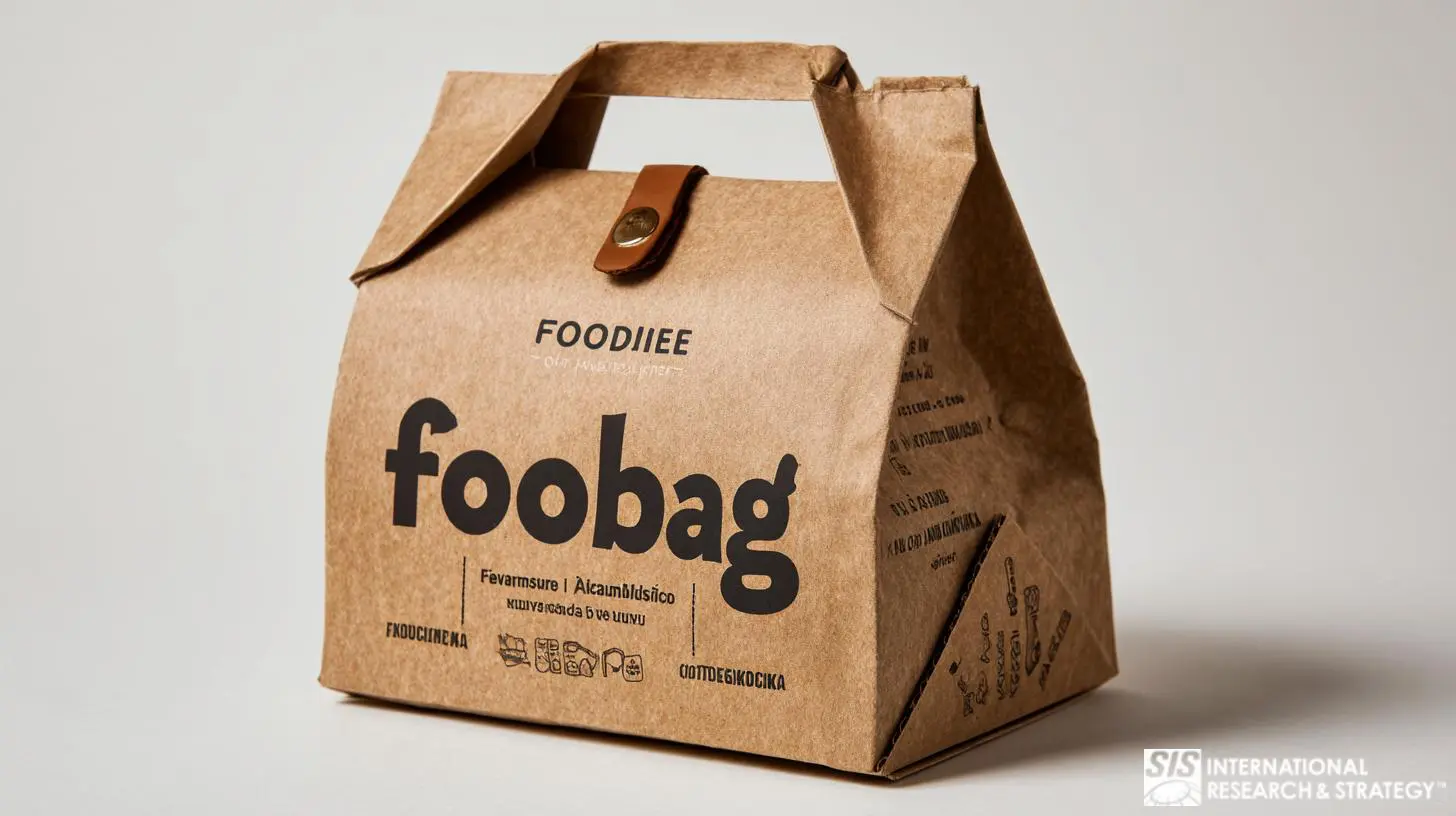
Some people obsess about the products they buy, sometimes unaware that it was the packaging that tipped the scales in their decision to purchase – and that’s why the best packaging firms (and the ones that intend to be) consult regularly with SIS International Investigación for expert consumer packaged goods research.
What Is Consumer Packaged Goods Research?
Consumer packaged goods (CPG) research is essential for businesses in this sector to stay competitive, innovative, and aligned with consumer needs and preferences. It provides crucial insights into consumer behavior, market trends, emerging technologies, and competitive strategies.
… And our unparalleled primary and secondary market research teams can provide the insight to make tactical decision-making easier. With accurate data and market analysis, each link in the supply chain is strengthened. Our competitive intelligence services open windows into the winning ways of business adversaries, while our knowledge of international markets and people bridges difficult cultural divides.
Consumer Packaged Goods Research: How Category Leaders Win Shelf and Share
The CPG firms gaining share in flat categories share one trait: they treat Consumer Packaged Goods Research as a profit-and-loss instrument, not a marketing expense. Their research budgets fund pricing decisions, assortment calls, and innovation gates that move quarterly numbers. Everyone else commissions tracking studies and waits.
The gap between these two postures has widened as private label encroachment, retail media network economics, and direct-to-consumer attribution have rewritten category management optimization. Brands that read these shifts early are pulling away. The discipline behind their decisions is recoverable, and the methodologies are well established.
What Separates High-Performing Consumer Packaged Goods Research Programs
The conventional CPG research program runs awareness trackers, an annual U&A, and concept tests gated to innovation milestones. It produces decks. It rarely produces decisions.
The high-performing program inverts the orientation. It starts with the commercial decision, then engineers the instrument. A trade spend optimization question gets a controlled promotional lift measurement against matched stores, not a survey on perceived value. An assortment rationalization question gets shopper journey analytics linked to loyalty data, not a focus group on variety perception.
Across SIS International Research engagements in packaged food and beverage categories, the brands generating the strongest shelf productivity gains run research as a continuous decision pipeline, with sensory work, shopper insight, and competitive intelligence sequenced against specific category review cycles rather than calendar quarters. The discipline is not exotic. It is timing.
Sensory and Product Testing That Predicts Repeat, Not Just Trial
Most product testing forecasts trial. Repeat is where margin lives, and repeat correlates with sensory drivers that standard concept tests miss. This is where the category leaders apply pressure.
Central location tests using hedonic scaling produce overall liking scores that flatter weak products. Penalty analysis built on JAR (just-about-right) scales reveals which attributes suppress repurchase. Temporal dominance of sensations (TDS) shows how flavor evolves across a single use, exposing the third-bite problem that kills subscription beverages and snack lines after launch. Accelerated shelf-life testing (ASLT) catches the degradation curve before the first reorder cycle.
Plant-based protein, functional beverage, and clean label launches fail disproportionately on these measures. PepsiCo, Nestlé, and Danone have rebuilt internal sensory panels around QDA (quantitative descriptive analysis) calibration precisely because concept-product fit testing without descriptive analysis produces false positives. The instruments exist. Most mid-tier brands underuse them.
Shopper Insight Beyond the Purchase Funnel
Shopper journey analytics has moved past intercept surveys and pantry audits. The useful work now combines ethnographic observation with loyalty-card transaction data and retail media network exposure logs. The triangulation reveals what the shopper does, not what the shopper reports.
SIS International ethnographic research in sporting goods and home goods retail environments has consistently shown that shoppers describe store navigation in terms that contradict their actual path data, with self-reported decision points occurring 30 to 60 seconds later than observed behavior. The implication for CPG is direct. Shelf set decisions based on stated preference under-weight the role of adjacency, signage hierarchy, and packaging color blocking at the shelf.
CATA (check-all-that-apply) methodology and napping exercises layered onto in-store ethnography close the gap between what shoppers say drives choice and what actually does. Private label parity testing using the same instruments tells the brand manager whether the price gap is defending real differentiation or subsidizing perception alone.
Competitive Intelligence That Anticipates Category Reviews
Retailer category reviews run on cycles. The brands that win incremental facings prepare evidence dossiers timed to those cycles, not to their own marketing calendars. This is competitive intelligence in its operational form.
The dossier the buyer responds to contains four elements: velocity data adjusted for distribution, shopper switching behavior pulled from panel sources, promotional lift net of cannibalization, and a credible private label competitive threat assessment. The brand that arrives with this packet displaces the one that arrives with a creative deck. Unilever, Mondelez, and Reckitt have institutionalized this preparation. Smaller brands often lose listings they could have defended.
| Research Application | Conventional Approach | Decision-Linked Approach |
|---|---|---|
| New product validation | Concept test, hedonic scaling | QDA panel + JAR penalty analysis + ASLT |
| Assortment rationalization | Variety perception survey | Shopper journey analytics + loyalty data linkage |
| Pricing decisions | Van Westendorp on stated intent | Promotional lift measurement against matched stores |
| Category review preparation | Brand health tracker | Velocity, switching, lift, private label dossier |
Source: SIS International Research
The DTC Feedback Loop as Research Infrastructure
Direct-to-consumer channels are research instruments before they are revenue channels. The economics rarely justify DTC on a contribution basis at scale, and category leaders know this. They run DTC for the data: SKU velocity by cohort, price elasticity at the individual level, and rapid concept-product fit testing without retailer gatekeeping.
Procter & Gamble, L’Oréal, and Coca-Cola operate DTC properties whose primary KPI is learning velocity, not channel margin. The research output feeds shelf decisions in mass channels. Brands that treat DTC as a standalone P&L miss the higher-order value, which is the closed feedback loop between formulation change and consumer response measured in days rather than category review cycles.
Building Research That Scales Across Geographies
Consumer Packaged Goods Research that works in one market frequently fails when transplanted. Hedonic scales calibrate differently across cultures. JAR midpoints shift. Triangle test discrimination thresholds vary with category familiarity. The brands running global launches without local panel calibration generate confident wrong answers.
SIS International’s work across 135 countries indicates that descriptive analysis panel calibration is the single most under-budgeted line item in global CPG launches, and it is also the one most predictive of regional repeat purchase variance. The fix is procedural, not technological. Local panel recruitment, local calibration, local benchmark anchoring.
The SIS Decision-Linked Research Framework

The framework that consistently produces commercial outcomes operates on four sequenced layers. Decision definition: the specific commercial choice the research will resolve. Instrument selection: the methodology matched to that decision, not to category convention. Evidence integration: triangulation across sensory, shopper, and competitive data. Decision execution: the research output enters a named meeting on a named date with a named decision owner.
The fourth layer is where most programs fail. Research that does not have a scheduled decision destination becomes inventory.
Where Consumer Packaged Goods Research Investment Compounds

The brands separating from the pack are not spending more on Consumer Packaged Goods Research. They are spending against decisions with shorter feedback loops and instruments calibrated to the commercial question. Sensory work that predicts repeat. Shopper insight that exposes stated-versus-actual gaps. Competitive intelligence timed to category reviews. DTC infrastructure operated as a learning instrument.
The methodologies are mature. The differentiator is sequencing and decision linkage. Category leadership over the next decade will accrue to the brands that treat research as the operating system of category management optimization rather than as a quarterly deliverable.
Acerca de SIS Internacional
SIS Internacional ofrece investigación cuantitativa, cualitativa y estratégica. Proporcionamos datos, herramientas, estrategias, informes y conocimientos para la toma de decisiones. También realizamos entrevistas, encuestas, grupos focales y otros métodos y enfoques de investigación de mercado. Póngase en contacto con nosotros para su próximo proyecto de Investigación de Mercado.

 ES
ES  EN
EN  AR
AR  ZH
ZH  ZH_HK
ZH_HK  NL
NL  FR
FR  DE
DE  IT
IT  JA
JA  KO
KO  PL
PL  PT
PT