
Lunch Food and Getränkemarktforschung
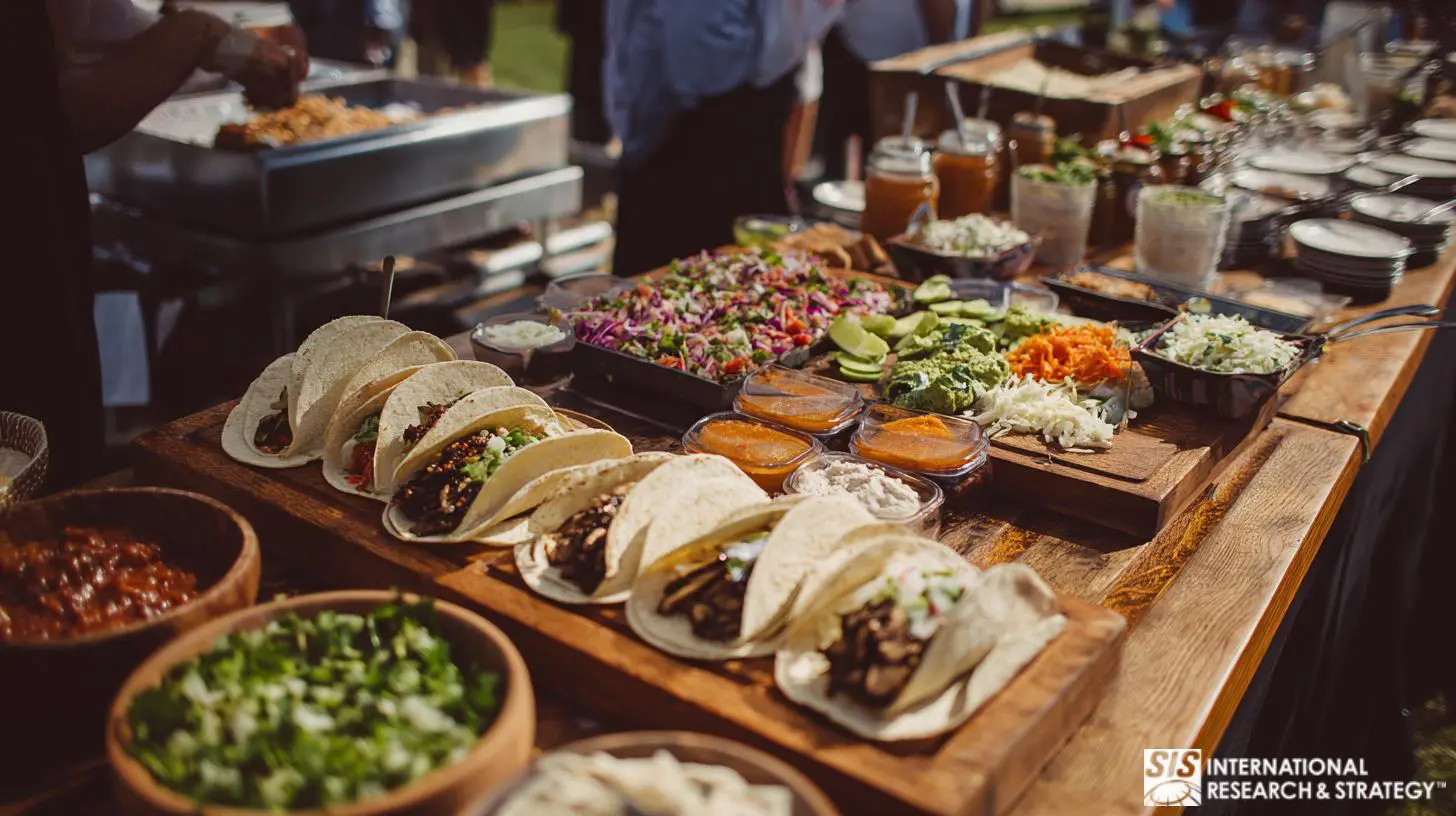
Have you ever wondered what influences your choices when it comes to deciding on a lunch meal? Is it habit, cultural influence, health consciousness, or the effect of advertisements? In a world that’s constantly evolving and with consumer preferences shifting rapidly, understanding the intricacies of lunch choices is no mere feat. This is where Lunch Lebensmittel- und Getränkemarktforschung comes into play.
Lunch food and beverage market research seeks to understand these patterns, determine the reasons behind our choices, and predict future trends. Additionally, it empowers companies to make informed decisions, innovate, and remain at the forefront of the industry.
Was ist Marktforschung für Mittag- und Getränkespeisen?
Lunch food and beverage market research is the process that analyzes the various aspects of lunch consumption patterns, preferences, and the factors influencing them. It is not just about determining which sandwich or pasta dish is most popular, but about uncovering the deeper, often unseen layers of the lunch food landscape.
It helps businesses understand what consumers are choosing to eat, why they are making those choices, and what influences these decisions. Lunch food and beverage market research also involves a study of the current market size, growth potential, emerging niches, and dominant sectors.
Lunch Food Beverage Market Research: How Leading Brands Win the Midday Occasion
The lunch occasion is the most contested daypart in food and beverage. It is also the most misunderstood. Lunch Food Beverage Market Research separates brands that grow share from those that hold flat in a category where consumer behavior shifts faster than category management cycles can track.
Lunch is no longer a single occasion. It is a fragmented set of micro-moments: the desk meal, the commuter grab, the school-adjacent pickup, the work-from-home reheat, the post-gym refuel. Each carries different price elasticity, different sensory expectations, and different channel economics. Brands that treat lunch as one segment leave revenue on the table.
Why the Lunch Daypart Rewards Precise Consumer Intelligence
Breakfast has habit. Dinner has ritual. Lunch has neither. It is decided in under four minutes, often in transit, frequently under budget pressure. That decision window is where assortment rationalization, promotional lift measurement, and shopper journey analytics converge.
The strongest performers in QSR, grab-and-go retail, and frozen meals share one trait: they treat lunch as an occasion-based portfolio rather than a SKU lineup. Chipotle built throughput around digital pickup. Pret A Manger calibrated assortment to commuter density. Sweetgreen indexed pricing against weekday office traffic. Each used granular consumer data to shape the offer, not the other way around.
According to SIS International Research, lunch decision drivers diverge sharply by occasion type, with speed and portability outweighing flavor preference for commuter and desk-meal segments, while sensory satisfaction and perceived freshness dominate the work-from-home reheat occasion. Brands that segment by occasion rather than demographic consistently outperform on repeat purchase.
The Sensory Methods That Predict Lunch Repeat Purchase
Concept testing alone does not predict lunch performance. The category is driven by texture stability, aroma retention, and reheat tolerance, attributes that surface only through structured sensory work.
Central location tests (CLTs) anchored in sequential monadic design reveal how a sandwich, salad, or beverage performs against context. Hedonic scaling, paired comparison analysis, and JAR (just-about-right) scale analysis identify which attributes drive overall liking and which drive penalty. Penalty analysis on a “too salty” or “not crunchy enough” attribute often explains 60 to 80 percent of the gap between two competing SKUs without changing the recipe wholesale.
Triangle tests and duo-trio tests matter most when reformulating to remove sodium, reduce sugar, or substitute plant-based protein. The clean label consumer perception gap is real. Quantitative descriptive analysis (QDA) panels calibrate the actual sensory shift, while CATA (check-all-that-apply) methodology captures consumer language for marketing claims.
Accelerated shelf-life testing (ASLT) is non-negotiable for prepared lunch. A sandwich that scores well at hour two and fails at hour eight will be returned, marked down, or wasted. Shelf-life sensory benchmarking against the category leader sets the threshold.
Where Channel Economics Reshape the Lunch Portfolio
Lunch is sold across QSR, fast casual, convenience, club, grocery prepared, vending, and increasingly through ghost kitchens and aggregator-only brands. Each channel carries distinct trade spend optimization requirements and distinct shopper journeys.
Convenience and grocery prepared have absorbed the largest share gain over the past decade as foodservice prices climbed faster than retail. Wawa, Sheetz, and 7-Eleven moved from fuel margin to food margin by treating lunch as the strategic category. Costco’s rotisserie-anchored prepared section now competes directly with QSR on perceived value per dollar.
The frozen aisle is the quiet winner. Premium frozen entrees from Amy’s, Kevin’s Natural Foods, and Daily Harvest captured the work-from-home reheat occasion that QSR could not serve at acceptable economics. Private label taste parity has closed in this aisle, and shelf space allocation now turns on velocity rather than brand equity.
| Lunch Occasion | Primary Channel | Dominant Decision Driver |
|---|---|---|
| Commuter grab | Convenience, QSR drive-thru | Speed, portability |
| Desk meal | QSR delivery, fast casual | Perceived freshness, value |
| Work-from-home reheat | Grocery prepared, frozen | Sensory satisfaction, variety |
| School-adjacent pickup | QSR, grocery | Speed, child acceptance |
| Post-gym refuel | Fast casual, DTC | Protein, functional positioning |
Source: SIS International Research
The Beverage Pairing Lever Most Brands Underuse
Beverage attach is the highest-margin lever in the lunch occasion and the most under-researched. The pairing decision happens in the final 30 seconds of the purchase. Concept-product fit testing on the entree without testing the paired beverage misses the actual revenue model.
Functional ingredient positioning has shifted beverage selection at lunch. Olipop, Liquid Death, Poppi, and Celsius captured share that traditional CSDs assumed was permanent. The shift is sensory and semiotic, not just functional. Temporal dominance of sensations (TDS) work shows that perceived gut-health benefit is delivered through carbonation profile and finish, not just ingredient deck.
SIS International’s qualitative work with beverage manufacturers indicates that pairing intent forms before the entree is selected in roughly one-third of lunch occasions, which inverts the assumed category logic and reframes how beverage technologists, brand teams, and retail buyers should sequence assortment decisions.
What the Best Lunch Portfolios Get Right
The brands compounding share treat Lunch Food Beverage Market Research as a continuous feedback loop, not a pre-launch checkpoint. They run descriptive analysis panel calibration quarterly. They use napping and projective mapping to track competitive sensory drift. They benchmark private label taste parity in every market they sell into.
They also resist the temptation to over-segment by demographic. Occasion segmentation, validated through ethnographic research and shopper journey analytics, predicts purchase behavior more reliably than age or income cuts. A Fortune 500 prepared foods manufacturer working with SIS used ethnographic research across commuter, home-office, and school-pickup occasions to rebuild its lunch assortment around moment of consumption rather than product format. The reassortment outperformed the prior portfolio on velocity within the first national reset.
Building the Intelligence Stack for Sustained Lunch Growth
The intelligence stack for lunch should integrate four layers: occasion segmentation through qualitative and ethnographic research, sensory validation through CLTs and descriptive panels, channel economics through trade spend optimization analysis, and competitive sensory benchmarking through QDA and CATA work. Each layer answers a different question. Together they explain why a SKU wins or loses at the shelf, on the app, or in the cooler.
Lunch Food Beverage Market Research is most valuable when it connects sensory truth to commercial decisions. The brands that win the midday occasion are the ones that ask the right questions early, validate with structured methods, and act before the category resets.
Über SIS International
SIS International bietet quantitative, qualitative und strategische Forschung an. Wir liefern Daten, Tools, Strategien, Berichte und Erkenntnisse zur Entscheidungsfindung. Wir führen auch Interviews, Umfragen, Fokusgruppen und andere Methoden und Ansätze der Marktforschung durch. Kontakt für Ihr nächstes Marktforschungsprojekt.

 DE
DE  EN
EN  AR
AR  ZH
ZH  ZH_HK
ZH_HK  NL
NL  FR
FR  IT
IT  JA
JA  KO
KO  PL
PL  PT
PT  ES
ES