
Marktforschung für Luxushotels
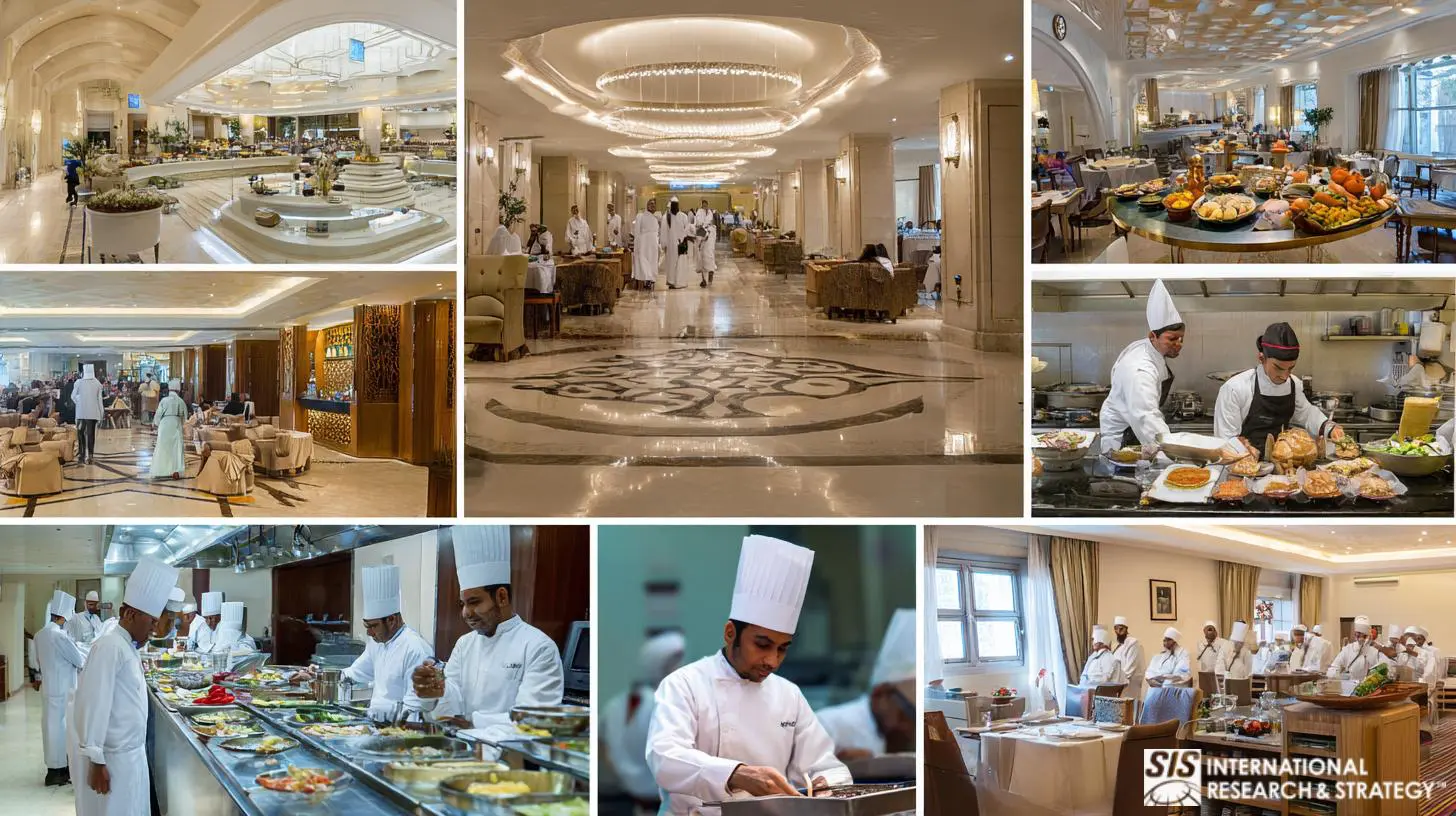
With luxury hotel market research, hotels can meticulously analyze consumer preferences, industry trends, and competitive dynamics to gain invaluable insights into shaping their strategies, elevating service standards, and exceeding guest expectations. As the hospitality sector expands worldwide, luxury hotels are expected to remain well-positioned.
Um jedoch den Markttrends voraus zu sein und die Bedürfnisse der Verbraucher zu erfüllen, müssen diese Hotels die Kundenpräferenzen erkennen und entsprechende Anpassungen mithilfe einer umfassenden Marktforschung für Luxushotels vornehmen. Nur so können sie wettbewerbsfähig bleiben und verfügen über alle Daten, die sie benötigen, um sich an die sich ständig verändernde Weltwirtschaft anzupassen.
What Is Luxury Hotel Market Research?
This type of research involves gathering and analyzing data to comprehend customer behavior, needs, and expectations. Its purpose is to offer valuable insight into the hospitality luxury niche, detect trends and growth opportunities, and evaluate the competition in the marketplace.
Darüber hinaus kann es ein tieferes Verständnis dafür vermitteln, welche Annehmlichkeiten oder Dienstleistungen für Gäste relevant sind, sowie den allgemeinen Grad der Zufriedenheit mit ihrem Erlebnis. Andere Bereiche wie Segmentierungsanalyse, Analyse der Verbraucherdemografie, Bewertung von Preisstrategien, Optimierung von Vertriebskanälen, Bewertung von Treueprogrammen und Markenbekanntheit sind ebenfalls wichtig, um in dieser hart umkämpften Branche langfristigen Erfolg zu erzielen.
Therefore, by leveraging Hotelmarktforschung, businesses can make well-informed decisions about pricing, services, marketing initiatives, and growth paths. With these insights, they will stay ahead of the curve to meet ever-changing consumer needs while delivering remarkable experiences that evoke customer loyalty and recurring business.
Luxury Hotel Market Research: How Leading Operators Capture the High-Net-Worth Guest
The luxury hotel category is expanding faster than its operators can decode it. New wealth corridors in the Gulf, Southeast Asia, and Latin America are reshaping demand patterns, and the guest who paid for a suite a decade ago expects something materially different now. Luxury hotel market research is how the leading brands stay ahead of that drift rather than chase it.
The operators winning share are not the ones with the largest portfolios. They are the ones with the sharpest read on what high-net-worth guests value, what they tolerate, and what they quietly defect over. That read does not come from STR benchmarks or post-stay surveys. It comes from primary research designed around the specific economics of the luxury segment.
Why Luxury Hotel Market Research Demands a Different Methodology
Mid-scale hospitality research relies on volume. Net Promoter scores, OTA review scraping, RevPAR benchmarking. The luxury segment breaks all three. Sample sizes are small by definition. Guests do not complete surveys. Reviews are written by aspirational travelers, not the repeat clientele who drive ADR.
The methodology that works is qualitative-led and recruited carefully. One-on-one interviews with verified guests at the Aman, Rosewood, Belmond, and Four Seasons tier. Ethnographic observation during stays. Concept testing with HNW panels screened on liquid net worth, not income. The instrument matters less than the recruit. A luxury study with the wrong panel is a mid-scale study with a higher invoice.
According to SIS International Research, recruitment screening for luxury hospitality studies typically requires three to five layers of qualification beyond standard demographic filters, including verified travel frequency at five-star properties, household liquid assets, and category-specific behaviors such as private aviation use or branded residence ownership. Studies that skip these layers consistently produce findings that mirror the upper-mid-scale guest, not the luxury guest.
What the High-Net-Worth Guest Actually Buys
The conventional view treats luxury as a service ladder. More staff, more thread count, more amenities. The leading operators have moved past this. Their research shows the HNW guest is buying three things the mid-scale guest is not: discretion, time compression, and cultural access.
Discretion shows up in arrival protocols, staff training on recognition without intrusion, and physical design that separates routes for residents and event guests. Time compression is why Aman invested in pre-arrival concierge AI and why Four Seasons restructured its private jet program. Cultural access is the chef’s table at Noma, the after-hours Uffizi tour, the introduction to the gallerist. None of these show up in a TripAdvisor review. All of them drive repeat stays.
The operators that grasp this design their guest research around purchase drivers, not satisfaction metrics. Satisfaction is a lagging indicator. Driver analysis is forward-looking and tells the asset manager which capex unlocks rate.
Where Branded Residences and Hotel Operations Converge
The fastest-growing revenue stream in luxury hospitality is not rooms. It is branded residences. Mandarin Oriental, Ritz-Carlton, Bulgari, and Six Senses now generate licensing fees, branding premiums, and HOA management revenue that often exceed the underlying hotel’s NOI. Research informs three decisions in this category.
The first is brand stretch. How far can the flag travel before the hotel guest perceives dilution? The second is buyer profile divergence. The residence buyer is rarely the hotel’s repeat guest, and the amenity stack they value differs. The third is service overlap pricing. Residents expect hotel service at marginal cost, which compresses operator margin if not modeled accurately at the LOI stage.
SIS International’s qualitative research with branded residence buyers across North America, the Gulf, and Southeast Asia indicates that the brand premium decays sharply when a flag licenses more than a small number of residential projects in a single metro, and that buyers consistently undervalue the service-cost obligations they will inherit. Both findings have direct implications for residual land value calculations and development pro forma stress testing on mixed-use luxury assets.
The Geographic Repricing of Luxury Demand
Luxury demand is migrating. The traditional flow from North America and Western Europe into Mediterranean and Caribbean resorts is now competing with intra-Asia, intra-Gulf, and intra-LatAm flows that operate on different booking windows, length-of-stay norms, and channel preferences. A property in Mykonos optimized for the British family is leaving rate on the table from the Riyadh and Mumbai segments.
Smart operators run market entry assessments before they refresh positioning. The questions are concrete. Which feeder cities are growing? What is the cultural calendar that drives peak demand? What payment infrastructure, dietary protocols, and language capabilities are table stakes? Properties from the Maldives to Provence have repositioned around answers to these questions, and the rate lift has been material.
A Framework for Luxury Hospitality Intelligence

The structure below organizes the research questions an asset manager, brand executive, or developer should be able to answer before a major capital decision.
| Decision Layer | Core Question | Primary Methodology |
|---|---|---|
| Markenpositionierung | What does the HNW guest associate with this flag versus its closest peer? | Verified-guest depth interviews, brand equity mapping |
| Capex Allocation | Which physical or service investments unlock ADR versus protect occupancy? | Driver analysis, conjoint with luxury panels |
| Markteintritt | Is the feeder demand sufficient and culturally aligned with the asset thesis? | Market entry assessment, competitive intelligence |
| Branded Residences | What is the brand-stretch ceiling and the buyer-versus-guest profile gap? | HNW buyer interviews, residual land value modeling |
| Loyalty Economics | What drives repeat stays at the top decile of guest spend? | Ethnographic research, longitudinal VOC programs |
Source: SIS International Research
What the Best Operators Do Differently

The differentiator is not budget. The differentiator is the willingness to investigate a small number of guests deeply rather than a large number shallowly. A study of forty verified HNW guests, recruited correctly and interviewed by a researcher who understands the segment, will outperform a thousand-respondent online survey on every decision that matters in this category.
The same applies to competitive intelligence. Mystery shopping at the luxury tier requires shoppers who can pass as the clientele, not researchers reading from scripts. The properties that get this right learn things their competitors will not see for a full cycle.
The Research Path Forward

Luxury hotel market research is moving toward integrated programs. Annual VOC waves with verified guests. Quarterly competitive audits at peer properties. Pre-capex driver studies before any renovation over a defined threshold. Residence buyer panels that update as the development pipeline matures. The operators building this infrastructure are pulling away from those still relying on TripAdvisor sentiment and STR comp sets.
Luxury hotel market research is the discipline that connects the asset’s capital plan to the guest’s actual purchase logic. Done well, it informs every decision from flag selection to F&B concept to residence pricing. Done poorly, or skipped, it leaves the operator optimizing for a guest who left a long time ago.
Über SIS International
SIS International bietet quantitative, qualitative und strategische Forschung an. Wir liefern Daten, Tools, Strategien, Berichte und Erkenntnisse zur Entscheidungsfindung. Wir führen auch Interviews, Umfragen, Fokusgruppen und andere Methoden und Ansätze der Marktforschung durch. Kontakt für Ihr nächstes Marktforschungsprojekt.

 DE
DE  EN
EN  AR
AR  ZH
ZH  ZH_HK
ZH_HK  NL
NL  FR
FR  IT
IT  JA
JA  KO
KO  PL
PL  PT
PT  ES
ES