
Mystery Shopping for Beauty Products

They walk in. They browse. They leave without buying anything.
Want to know why? Mystery shopping for beauty products reveals the painful truth that most brands are too afraid to confront.
Table of Contents
✅ Listen to this PODCAST EPISODE here:
Mystery Shopping for Beauty Products: How Leading Brands Decode the Counter Experience
Beauty is sold at the counter, the screen, and the sample. Mystery Shopping for Beauty Products reveals what happens at each touchpoint when no one from headquarters is watching.
The category has shifted. Sephora, Ulta, and Mecca have changed how prestige beauty reaches consumers. Direct-to-consumer brands like Glossier and Drunk Elephant have rewritten conversion economics. Department store counters compete with TikTok Shop and Amazon Premium Beauty. Every channel produces a different brand experience, and most marketing teams see only the aggregated NPS score.
The brands gaining share treat the in-store and online encounter as a measurable system. They use mystery shopping as a continuous diagnostic, not an annual audit.
Why Mystery Shopping for Beauty Products Drives Category Leadership
Beauty is a high-touch category sold through a low-margin retail floor. A skincare regimen that converts at one Sephora may stall at another because of a single beauty advisor’s product knowledge. The variance is invisible in sell-through data.
Mystery shopping isolates that variance. A trained shopper executes a defined scenario, requests a product recommendation, raises a specific objection, and scores the encounter against a calibrated rubric. The output is not anecdote. It is structured behavioral data tied to SKU, store, advisor, and shift.
SIS International Forschung has found that beauty advisor product knowledge gaps explain a meaningful portion of conversion drop-off at prestige counters, particularly for newly launched serums and actives where consumers ask technical questions about ingredients like retinaldehyde, niacinamide concentrations, and peptide stacks. The advisor either translates the science or loses the sale. Aggregate satisfaction surveys never surface this.
The Five Touchpoints That Determine Conversion
A complete Mystery Shopping for Beauty Products program covers the full purchase architecture. Sampling these touchpoints in isolation produces fragmented insight.
| Touchpoint | What It Measures | Common Variance |
|---|---|---|
| Counter and floor | Advisor knowledge, regimen building, cross-sell | Door-to-door within same banner |
| Sampling and trial | Quality of skin diagnostic, shade matching, sample relevance | Tool availability, training depth |
| E-commerce chat and virtual try-on | Response latency, recommendation accuracy, return guidance | Bot vs human handoff quality |
| Loyalty and CRM | Tier benefit clarity, replenishment prompts, birthday gift execution | Regional program drift |
| Returns and post-purchase | Adverse reaction handling, dermatologist referral, refund friction | Policy interpretation |
Source: SIS International Research
Brands that audit only the counter miss the chat experience where Gen Z buyers actually convert. Brands that audit only digital miss the BA who decides whether a $180 cream gets recommended over a competitor sitting two shelves away.
What Separates Diagnostic Programs From Compliance Audits
Most beauty mystery shopping is run as compliance. A shopper checks whether the planogram matches the schematic, the tester is filled, and the BA wears the uniform. This is useful for operations. It does not explain why one store sells the launch and another does not.
Diagnostic programs are different. They are built around hypotheses. If a brand believes its new vitamin C serum is losing to La Roche-Posay at the dermocosmetics counter, the scenario tests that exact head-to-head. The shopper presents a specific concern, hyperpigmentation in a Fitzpatrick IV skin type, and records which brand the advisor recommends, in what order, with what justification, and against which objection.
In structured mystery shopping engagements SIS has conducted across prestige and masstige beauty channels in North America, Europe, and East Asia, brands that linked scenario design to specific commercial questions, launch performance, competitor displacement, premium tier upsell, generated decisions within the cycle. Those running generic service audits produced reports that sat unused.
The Channels Reshaping Beauty Discovery
Three shifts are changing what mystery shopping must cover.
Travel retail recovery. Airport beauty has rebounded with Asian outbound travel. The shopper profile, language capability, and tax-free pricing dynamic require a separate scenario library from domestic prestige.
Clinic and derm channels. SkinCeuticals, Obagi, and ZO Skin Health are sold through medical practices where the recommendation comes from an aesthetician or nurse injector. The mystery shop must credibly enter the consultation funnel, often requiring a paid initial visit and follow-up.
Live commerce and creator partnerships. On TikTok Shop, Douyin, and Instagram Live, the brand experience is delivered by an affiliate the brand does not employ. Mystery shopping here means structured monitoring of creator scripts, claim accuracy, and dispute handling when shipments arrive damaged or counterfeit.
The SIS Approach to Beauty Mystery Shopping
SIS International deploys a layered methodology combining mystery shopping, ethnographic research, and B2B expert interviews with beauty advisors, regional trainers, and category managers. The shopper data shows what happened. The ethnography shows why. The expert interviews show whether the gap is training, incentive design, or assortment.
Across recent SIS engagements with global cosmetics manufacturers, the highest-leverage finding has consistently been incentive misalignment. Beauty advisors are often paid SPIFs by competing brands, which quietly redirects recommendations away from the brand commissioning the audit. Mystery shopping surfaces the symptom. Expert interviews with former BAs surface the cause. Fixing the SPIF structure produced larger conversion gains than retraining.
Building a Program That Produces Decisions
A program worth funding has four elements. Calibrated shoppers matched to category demographics, including Fitzpatrick range, age, and prior brand affinity. Scenario libraries tied to active commercial questions. Statistical sample sizes that allow store-level comparison, not just regional rollups. A reporting cadence that lands in front of merchandising and education leaders before assortment reviews.
The deliverable is not a dashboard. It is a ranked list of interventions, each tied to expected revenue impact and the operational owner who can execute. Mystery Shopping for Beauty Products earns its budget when the VP of retail can point to three decisions made because of it in the last quarter.
The Competitive Intelligence Layer
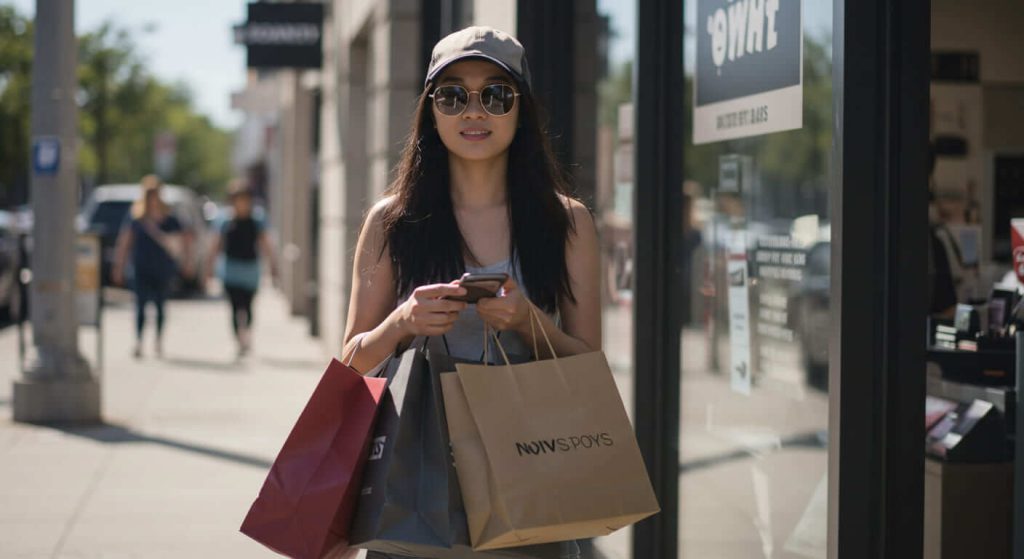
The same shopper visit that audits your counter audits the counter next to yours. Brands underuse this. A well-designed Mystery Shopping for Beauty Products program captures competitor pricing, promotional cadence, GWP structure, new SKU placement, and advisor pitch language at the same cost as a single-brand audit. This converts a service measurement spend into a competitive intelligence asset.
The brands winning shelf, share, and loyalty in beauty are running this loop continuously. Mystery Shopping for Beauty Products is no longer a quarterly checkup. It is the operating system for a category where the encounter is the product.
Über SIS International
SIS International bietet quantitative, qualitative und strategische Forschung an. Wir liefern Daten, Tools, Strategien, Berichte und Erkenntnisse zur Entscheidungsfindung. Wir führen auch Interviews, Umfragen, Fokusgruppen und andere Methoden und Ansätze der Marktforschung durch. Kontakt für Ihr nächstes Marktforschungsprojekt.

 DE
DE  EN
EN  AR
AR  ZH
ZH  ZH_HK
ZH_HK  NL
NL  FR
FR  IT
IT  JA
JA  KO
KO  PL
PL  PT
PT  ES
ES