
Professional Focus Group Services

Every day, business leaders make decisions worth millions. Some succeed spectacularly. Others? They crash and burn because they ignored one crucial element – the voice of their actual customers.
Most business failures share one tragic flaw. Leaders fell in love with their own ideas instead of listening to their customers.
Don’t become another statistic. Professional focus group services are your insurance policy against market disasters and your roadmap to consumer hearts and minds. While your competitors rely on hunches and outdated market reports, you’ll have real-time insights from the people who actually buy products and services.
Table of Contents
✅ Listen to this PODCAST EPISODE here:
Professional Focus Group Services: How Industrial Leaders Extract Decision-Grade Insight
Professional focus group services have evolved into a strategic intelligence function inside industrial enterprises. The work no longer ends at consumer reaction. It now drives OEM procurement analysis, aftermarket revenue strategy, and supplier qualification decisions that move nine-figure capital allocations.
The Fortune 500 buyers commissioning this work want more than transcripts. They want signal that holds up in front of a board, an investment committee, or a product steering group. That requires moderators who understand the category, recruiters who can field qualified senior buyers, and analysts who connect qualitative output to total cost of ownership and installed base economics.
What Professional Focus Group Services Deliver in Industrial B2B
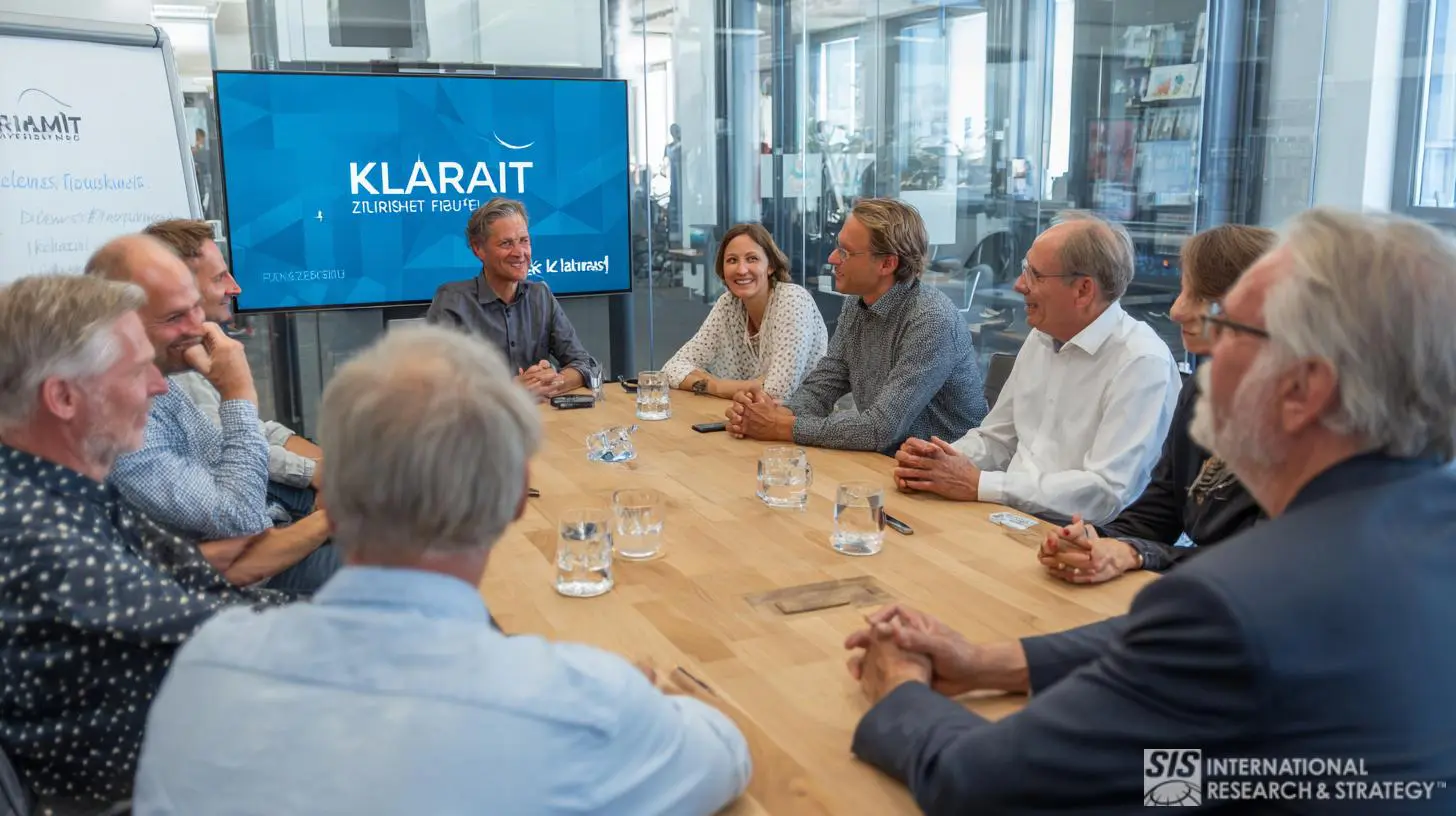
In industrial settings, a focus group is rarely eight consumers behind a one-way mirror. It is a structured discussion among plant managers, maintenance engineers, procurement directors, or specifying contractors. The output informs bill of materials optimization, predictive maintenance sizing, and the value story a sales force takes to the field.
The strongest sessions combine three elements. A discussion guide built from prior expert interviews. A moderator fluent in the technical vocabulary of the category. Stimulus material grounded in real product, real pricing, and real competitive context. When any of these is missing, the session produces opinion. When all three are present, it produces decision-grade evidence.
Across SIS International Research engagements with industrial manufacturers, the highest-yield focus groups pair end-user operators with the procurement officers who sign their purchase orders, in separate sessions, then reconcile the gaps. The divergence between what operators value and what procurement weights in scoring rubrics is often where pricing power is won or lost.
How Leading Firms Structure Industrial Focus Group Research
Conventional practice treats focus groups as a standalone deliverable. Leading industrial firms treat them as one phase in a sequenced design. A typical structure runs expert interviews first to map terminology and decision criteria, focus groups second to pressure-test concepts, then quantitative validation to size the opportunity.
This sequencing matters because industrial buyers do not behave like consumers. A facilities director at a Caterpillar dealer, a process engineer at a BASF plant, a fleet manager evaluating Cummins powertrains: each operates inside formal evaluation frameworks. Focus groups surface the unwritten weight these buyers place on uptime guarantees, parts availability, and supplier responsiveness. Survey instruments built without that input miss the variables that actually drive selection.
The recruit is the lever most often underestimated. Securing eight senior maintenance engineers at heavy equipment OEMs requires panel relationships built over years, not days. Generic recruiters fielding from open consumer panels cannot reach this audience at the seniority required.
Where Professional Focus Group Services Create Competitive Advantage
Three application areas consistently produce outsized return for industrial clients.
Concept testing for capital equipment. Before tooling investments, focus groups with target specifiers reveal which features justify premium pricing and which add cost without willingness to pay. The output feeds directly into total cost of ownership models the sales team will later present to procurement.
Aftermarket and service design. Parts, service contracts, and remote monitoring carry margin profiles that dwarf original equipment. Focus groups with installed base customers identify which service tiers buyers will pay for, which they expect bundled, and which competitor offerings have already reset expectations.
Channel and distributor strategy. Sessions with independent distributors and dealer principals expose where channel conflict erodes margin and where exclusivity terms create pricing discipline. This input shapes dealer network optimization decisions that direct surveys rarely capture honestly.
The Methodology Mix That Defines Quality

Professional focus group services in B2B industrial contexts increasingly blend formats. In-person sessions remain superior for product handling, prototype evaluation, and trust-building with senior participants. Virtual sessions extend geographic reach and lower the cost of fielding niche audiences across multiple regions.
SIS International Research has run hybrid formats where a core group convenes in person while distributed specialists join via secured video, allowing a single session to combine a domestic OEM perspective with input from European and Asian counterparts. The approach compresses fielding timelines by weeks compared with sequential single-market work.
Mini-groups of four to five participants outperform full groups of ten when the audience is highly technical. Senior engineers do not perform for an audience. They reason through problems, and that reasoning surfaces in smaller settings. Dyads and triads work even better for sensitive procurement topics where competitors share the room.
The SIS Industrial Focus Group Quality Framework
| Dimension | Standard Practice | Leading Practice |
|---|---|---|
| Recruit source | Open consumer panels | Curated B2B specialist panels with verification |
| Moderator | Generalist qualitative | Category-fluent with technical vocabulary |
| Discussion guide | Built from client brief | Built from prior expert interviews |
| Stimulus | Concept boards | Working prototypes plus competitive product |
| Ausgabe | Topline themes | Themes linked to TCO, BOM, and pricing models |
| Validierung | Standalone deliverable | Sequenced into quantitative phase |
Source: SIS International Research
Why Industrial Buyers Choose Specialist Providers

Three capabilities separate specialist providers from general qualitative firms.
First, panel depth in narrow industrial verticals. Reaching specifying engineers at Siemens, Rockwell, or Honeywell requires relationships that take years to build and cannot be assembled on a project timeline.
Second, moderators who arrive fluent. A moderator who must ask what an MRO contract is, or what LOTO means, loses senior participants in the first ten minutes. Category fluency is not optional at this level.
Third, analytical translation. Raw qualitative output has limited utility for a VP of Strategy. The value emerges when themes are mapped to commercial decisions: pricing tiers, feature roadmaps, channel terms, warranty structures.
In SIS International Research engagements across heavy equipment, industrial chemicals, and process automation, the clients who extract the most value treat focus groups as the qualitative anchor in a broader competitive intelligence program rather than a one-off study. The same panel relationships supply expert interviews, win/loss analysis, and supplier qualification audits across multiple business units.
What Strong Engagements Look Like

A well-run professional focus group services engagement begins with a hypothesis worth testing. The brief specifies the decision the research will inform, the threshold of evidence required, and the stakeholders who will use the output. Without that specification, sessions drift into general exploration and produce themes no one acts on.
The fielding plan covers participant verification, session protocols, recording infrastructure, and confidentiality terms that hold up under NDA scrutiny. The analysis plan is set before fielding begins, not improvised after transcripts arrive. The deliverable connects findings to the original decision with named recommendations and dissenting views preserved for the audit trail.
Industrial clients commissioning professional focus group services should expect this level of rigor as the baseline. Anything less produces interesting reading and weak decisions.
Über SIS International
SIS International offers Quantitative, Qualitative, and Strategy Research. We provide data, tools, strategies, reports, and insights for decision-making. We also conduct interviews, surveys, focus groups, and other Marktforschung methods and approaches. Kontakt für Ihr nächstes Marktforschungsprojekt.

 DE
DE  EN
EN  AR
AR  ZH
ZH  ZH_HK
ZH_HK  NL
NL  FR
FR  IT
IT  JA
JA  KO
KO  PL
PL  PT
PT  ES
ES