
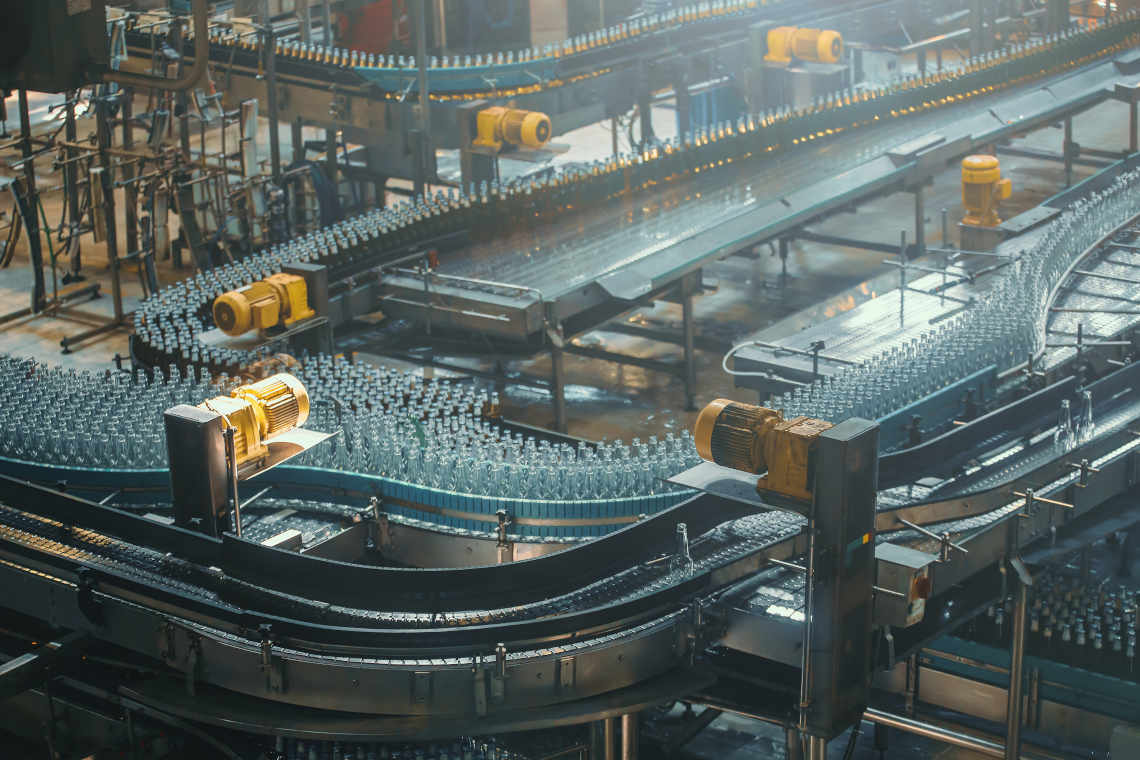
Beverage Automation Artificial Intelligence Consulting

Beverage Automation and Artificial Intelligence Consulting

SIS 国際市場調査と戦略

飲料自動化と人工知能コンサルティングという新興分野は、この変革の時代を雄弁に証明しています。飲料自動化への AI の統合はパラダイムシフトであり、効率、カスタマイズ、持続可能性の新たな地平を切り開きます。

新興飲料自動化と人工知能コンサルティング

飲料の自動化と人工知能コンサルティングは、AI を戦略的に活用して、飲料の生産、流通、マーケティングのあらゆる側面を変革し、向上させることです。

Consultants in this field possess a deep understanding of both the beverage sector and AI technologies. They work closely with beverage companies to identify areas where AI can bring the most significant benefits, such as production optimization, quality control, supply chain management, and consumer engagement. Consultants guide companies through this integration, ensuring that AI solutions are compatible with existing infrastructure and workflows.

Beverage Automation Artificial Intelligence Consulting: Where the Margin Is Hiding

The beverage industry runs on tight margins, perishable inventory, and consumer taste shifts that move faster than capital plans. Beverage Automation Artificial Intelligence Consulting addresses all three at once. The category has matured beyond pilot projects into measurable P&L contribution across bottling, blending, distribution, and direct-to-consumer dispense.

The companies pulling ahead are not the ones buying the most technology. They are the ones sequencing it correctly: data infrastructure first, computer vision and predictive models second, autonomous decisioning third. That sequence is the consulting question.

Why Beverage Automation Artificial Intelligence Consulting Now Drives Enterprise Value

Three forces converged. SKU proliferation in functional beverages, energy drinks, and ready-to-drink coffee pushed manual changeover economics past the breaking point. Cold chain integrity audits became insurable events rather than operational checkboxes. And consumer-facing dispense systems, from Coca-Cola Freestyle to PepsiCo’s Spire, generated telemetry that traditional ERPs were never designed to absorb.

The opportunity sits where these data streams converge. Computer vision on bottling lines catches fill-level variance before a pallet ships. Demand sensing models reweight production schedules against retailer point-of-sale feeds nightly. Predictive maintenance on CIP (clean-in-place) cycles extends mean time between failures on filler heads, which is where most beverage plants lose throughput.

According to SIS International Research, beverage manufacturers that integrate sensory panel data with line telemetry detect quality drift roughly two production shifts earlier than those running QA and operations as separate functions. The insight is not the AI. It is the decision to merge the data sets.

The Four Layers of Beverage AI That Actually Compound

Most beverage AI investments fail to compound because they are deployed as point solutions. The vertical SaaS sizing for beverage-specific tools is real, but stacking vendors without an architectural view produces brittle systems. Four layers, in order, build durable advantage.

Layer one: instrumentation. Flow meters, refractometers, vision systems on labelers, and IoT sensors on cold chain assets. Without this, every model downstream is guessing. Diageo, Anheuser-Busch InBev, and Nestlé Waters have spent the last decade building this substrate.

Layer two: data unification. A common ontology across MES, ERP, retailer EDI feeds, and consumer telemetry from connected dispensers. This is the layer most firms underestimate. The API monetization potential of a unified beverage data layer is what platform players like SAP and Siemens are now positioning against.

Layer three: predictive models. Demand forecasting at the SKU-store-day level, predictive maintenance, yield optimization in blending, and shelf-life sensory benchmarking against accelerated shelf-life testing (ASLT) results. Net revenue retention on these tools tracks closely with model retraining cadence.

Layer four: autonomous decisioning. Closed-loop control on filling lines, dynamic pricing on smart vending, and automated promotional lift measurement. This is where product-led growth metrics start showing up in operating margin rather than just in IT dashboards.

Where Beverage Automation Artificial Intelligence Consulting Generates Measurable Lift

The highest-return engagements concentrate in five areas. Each has a defensible mechanism, not just a software story.

応用 Mechanism Typical Margin Source
Demand sensing and replenishment Retailer POS plus weather plus promotional calendar Reduced obsolescence on short-shelf-life SKUs
Computer vision QA Inline detection of fill, cap, label, and code defects Lower hold-and-release inventory
Predictive maintenance Vibration and thermal signatures on fillers, blenders Throughput recovery on bottleneck assets
Flavor and formulation AI Sensory panel data plus ingredient cost modeling Reformulation speed under input volatility
Connected dispense analytics Pour-level telemetry from smart equipment Mix optimization and operator labor reduction

Source: SIS International Research

SIS International’s qualitative interviews with senior operations leaders across North American and Asian beverage manufacturers indicate that flavor and formulation AI delivers the fastest payback when paired with descriptive analysis panel calibration. The model only performs as well as the sensory ground truth feeding it.

The Consulting Question Most Beverage Executives Ask Wrong

The common framing is “which AI vendor should we select.” That question produces a bake-off and a procurement decision. The better framing is “which decisions do we want to automate, and what data do we need to trust the automation.”

Reframed that way, the engagement starts with decision mapping, then moves to data audit, then to vendor selection. The sequence cuts implementation time roughly in half because integration scope is defined before contracts are signed. It also exposes which decisions should not be automated yet, which is often more valuable than the build list.

The leading beverage manufacturers run this exercise across three horizons. Near-term: line-level QA and maintenance. Medium-term: demand sensing and trade spend optimization. Longer-term: closed-loop reformulation and autonomous category management with retail partners. Each horizon has different data requirements and different governance demands.

The SIS Original Framework: The Beverage AI Readiness Matrix

The matrix scores a beverage operation across two axes. Data maturity runs from siloed systems to unified telemetry. Decision velocity runs from quarterly planning cycles to real-time control loops. Investments placed in the wrong quadrant underperform regardless of vendor quality.

  • Quadrant 1 (low data, slow decisions): Instrument first. AI investment is premature.
  • Quadrant 2 (high data, slow decisions): Predictive analytics deliver immediate ROI.
  • Quadrant 3 (low data, fast decisions): Risk zone. Automation without ground truth.
  • Quadrant 4 (high data, fast decisions): Autonomous decisioning compounds.

Most Fortune 500 beverage operations sit in Quadrant 2 and overspend on tools designed for Quadrant 4. The consulting work is identifying the gap and sequencing the move.

What Separates Effective Beverage AI Consulting Engagements

Three characteristics show up consistently in engagements that produce P&L impact rather than slide decks.

First, the consulting team brings beverage-specific operational knowledge. Generic AI strategy work misses the texture of CIP cycle constraints, brix targeting, and carbonation variance. Beverage Automation Artificial Intelligence Consulting that treats a juice line and a craft brewery as the same problem produces generic outputs.

Second, the engagement is grounded in primary research with operators, not just executive interviews. SIS conducts B2B expert interviews with plant managers, master blenders, and trade marketing leads alongside C-suite stakeholders. The friction points that determine adoption sit at the operator level.

Third, vendor evaluation is decoupled from strategy. Win/loss analysis on prior technology deployments inside the client’s own portfolio surfaces patterns that no vendor reference call will reveal.

The Strategic Read

Beverage Automation Artificial Intelligence Consulting is no longer a digital transformation conversation. It is a margin architecture conversation. The companies treating it that way are pulling away from the field, and the gap widens with every harvest cycle, every promotional window, and every reformulation under ingredient cost pressure.

The question for a Fortune 500 beverage VP is not whether to invest. It is whether the current sequencing of investments matches the company’s actual position on the readiness matrix, and whether the data foundation will support the autonomous decisioning that competitors are already building.

SISインターナショナルについて

SISインターナショナル offers Quantitative, Qualitative, and Strategy Research. We provide data, tools, strategies, reports, and insights for decision-making. We also conduct interviews, surveys, focus groups, and other Market Research methods and approaches. お問い合わせ for your next Market Research プロジェクト。

著者の写真

ルース・スタナート

SIS International Research & Strategy の創設者兼 CEO。戦略計画とグローバル市場情報に関する 40 年以上の専門知識を持ち、組織が国際的な成功を収めるのを支援する信頼できるグローバル リーダーです。

自信を持ってグローバルに展開しましょう。今すぐ SIS International にお問い合わせください。