
Conseil en automatisation des biotechnologies et intelligence artificielle
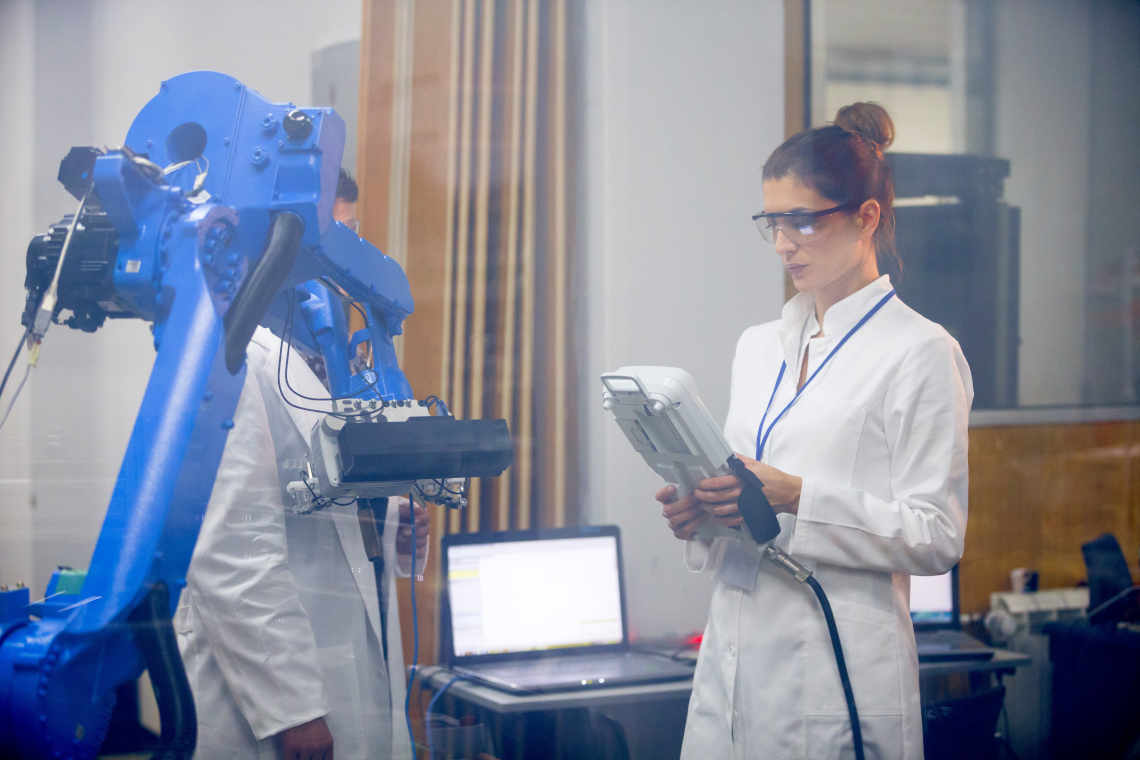
Alors que le secteur de la biotechnologie continue de repousser les limites de la découverte scientifique et de l’innovation, l’intégration de l’intelligence artificielle et de l’automatisation apparaît comme une force essentielle. Il redéfinit ce qui est possible en biotechnologie, ouvrant la voie à une ère où la recherche et la production biologiques sont plus efficaces, précises et innovantes que jamais.
Comprendre l'automatisation des biotechnologies et le conseil en intelligence artificielle
Le conseil en automatisation et intelligence artificielle en biotechnologie se concentre sur l’exploitation de la puissance de l’IA pour stimuler les progrès de la biotechnologie, en proposant des solutions allant de la découverte de médicaments et de la recherche génétique à l’optimisation des processus de laboratoire et à la gestion de la chaîne d’approvisionnement.
Le rôle de l’automatisation des biotechnologies et du conseil en intelligence artificielle consiste à traduire des données biologiques complexes en informations exploitables. Il utilise l’IA pour passer au crible de vastes ensembles de données, identifiant des modèles et des corrélations qui pourraient ne pas être apparents avec les méthodes d’analyse traditionnelles. Cette capacité est particulièrement précieuse dans des domaines comme la recherche génomique, où le volume de données peut être écrasant.
Pourquoi les entreprises du secteur de l'automatisation des biotechnologies ont-elles besoin de conseils en intelligence artificielle ?
En biotechnologie, la précision est primordiale – et même des erreurs mineures peuvent avoir des conséquences importantes. L'automatisation des biotechnologies et le conseil en intelligence artificielle peuvent aider les entreprises à mettre en œuvre des solutions d'IA et à analyser les données avec un niveau de précision qui dépasse de loin les capacités humaines, réduisant ainsi le risque d'erreurs et augmentant l'efficacité des processus de recherche.
Au-delà de la recherche, les entreprises de biotechnologie doivent gérer des opérations complexes – et le conseil en IA fournit des solutions pour optimiser ces opérations, ce qui se traduit par des économies de coûts et une productivité améliorée. Le conseil en automatisation des biotechnologies et en intelligence artificielle peut également aider à naviguer dans le paysage réglementaire complexe de l'industrie de la biotechnologie, en garantissant la conformité aux diverses normes et réglementations internationales, ce qui est crucial pour l'accès au marché et la sécurité des consommateurs.
Facteurs clés de succès
Pour que l’automatisation des biotechnologies et le conseil en intelligence artificielle réussissent, plusieurs facteurs clés doivent être abordés avec diligence. Voici quelques-uns des facteurs clés de succès à prendre en compte :
- Qualité et intégrité des données : Le succès de la biotechnologie basée sur l’IA repose en grande partie sur la qualité et l’intégrité des données utilisées. Des ensembles de données précis, bien organisés et complets sont fondamentaux pour une analyse et une application efficaces de l’IA.
- Collaboration et communication efficaces : La collaboration entre biologistes, experts en IA, data scientists et autres parties prenantes est cruciale. Une communication efficace entre ces diverses disciplines garantit une approche holistique de la résolution de problèmes et de l’innovation.
- Solutions d'IA personnalisées : Compte tenu des défis et des besoins uniques de chaque projet de biotechnologie, la personnalisation des solutions d'IA est vitale. Des applications d’IA sur mesure peuvent améliorer considérablement la pertinence et l’efficacité de la recherche ou du développement de produits.
- Considérations éthiques et conformité réglementaire : Le respect des normes éthiques et des exigences réglementaires, en particulier dans des domaines tels que le traitement des données génétiques et la confidentialité des patients, est crucial pour la crédibilité et la durabilité des applications de l’IA en biotechnologie.
- Infrastructure technologique évolutive et sécurisée : La mise en œuvre d’une infrastructure technologique évolutive et sécurisée garantit que les systèmes d’IA peuvent gérer de grands ensembles de données de manière efficace et sûre, ce qui est vital dans la recherche et le développement en biotechnologie.
À quoi s'attendre du conseil en automatisation des biotechnologies et en intelligence artificielle
S'engager dans l'automatisation des biotechnologies et le conseil en intelligence artificielle apporte plusieurs avantages transformateurs et avancées stratégiques pour les entreprises du secteur des biotechnologies. Les entreprises qui s’aventurent dans cette collaboration peuvent s’attendre à plusieurs résultats marquants tels que :
- Efficacité et productivité accrues : L'automatisation des tâches routinières et complexes dans les processus biotechnologiques, telles que la collecte et l'analyse de données, les expériences en laboratoire et la tenue de registres, conduit à une efficacité et une productivité accrues. Cela permet aux scientifiques et aux chercheurs de se concentrer davantage sur la pensée critique et l’innovation.
- Informations et prise de décision basées sur les données : Le conseil en IA fournit les outils et l’expertise nécessaires pour analyser de grands ensembles de données biotechnologiques complexes. Cela conduit à une prise de décision plus éclairée, avec des informations qui peuvent guider le développement de médicaments, la recherche génétique et les stratégies de médecine personnalisée.
- Processus opérationnels rationalisés : Au-delà de la recherche et du développement, l’IA peut rationaliser divers processus opérationnels au sein des entreprises de biotechnologie, tels que la gestion de la chaîne d’approvisionnement, la surveillance de la conformité et le contrôle qualité.
- Avantage concurrentiel sur le marché : En tirant parti des dernières technologies et méthodologies d’IA, les entreprises de biotechnologie peuvent acquérir un avantage concurrentiel significatif, se positionnant comme leaders en matière d’innovation et de progrès technologique.
- Amélioration continue et adaptation : Les services de conseil fournissent un support et des mises à jour continus, garantissant que les entreprises de biotechnologie peuvent s'adapter aux nouvelles avancées et améliorer continuellement leurs opérations et leurs recherches.
Technologies et outils utilisés dans le conseil en automatisation des biotechnologies et en intelligence artificielle
Le domaine de l’automatisation des biotechnologies repose sur un large éventail de technologies et d’outils avancés. Ces solutions logicielles font partie intégrante de la recherche et de la production biotechnologiques modernes, permettant une efficacité, une précision et une innovation accrues. Voici un aperçu de certaines des technologies et outils clés utilisés dans l’automatisation de la biotechnologie :
- Plateformes d'apprentissage automatique : Ceux-ci sont utilisés pour analyser des données biologiques complexes, telles que des séquences génomiques ou des structures protéiques. Les algorithmes d’apprentissage automatique peuvent identifier des modèles et faire des prédictions qu’il serait impossible pour les humains de discerner manuellement.
- Systèmes d'automatisation de laboratoire : Les équipements de laboratoire automatisés tels que les robots de manipulation de liquides, les microscopes automatisés et les systèmes de criblage à haut débit accélèrent considérablement les flux de travail expérimentaux, réduisent les erreurs manuelles et augmentent la reproductibilité.
- Outils d'analyse génomique : Les outils d’analyse génomique, notamment les logiciels de séquençage de nouvelle génération (NGS) et les plateformes bioinformatiques, sont essentiels à la recherche moderne en génétique. Ils permettent l’analyse et l’interprétation rapides des informations génétiques.
- Modèles de simulation basés sur l'IA : Ces modèles simulent des processus biologiques ou des interactions médicamenteuses, fournissant ainsi des informations précieuses sans nécessiter d’expériences physiques. Cela permet non seulement d’économiser du temps et des ressources, mais permet également d’explorer des hypothèses qui seraient difficiles à tester dans la réalité.
- Algorithmes d'IA personnalisés : Souvent, les solutions d’IA disponibles dans le commerce ne suffisent pas à relever les défis uniques de la biotechnologie. Des algorithmes personnalisés conçus pour des applications spécifiques peuvent fournir une solution plus efficace.
Opportunités dans l’automatisation des biotechnologies
Ces opportunités renforcent non seulement les capacités des entreprises de biotechnologie, mais ouvrent également de nouvelles voies d'innovation et de progrès dans le secteur. Voici quelques-unes des principales opportunités en matière d’automatisation des biotechnologies :
- Médecine personnalisée : Avec l’aide de l’automatisation des biotechnologies et du conseil en intelligence artificielle, il existe une opportunité croissante de développer des traitements médicaux personnalisés. En analysant les données spécifiques aux patients, les entreprises de biotechnologie peuvent adapter les thérapies et les médicaments aux profils génétiques et aux problèmes de santé individuels.
- Recherche génétique et génomique : L’automatisation basée sur l’IA ouvre de vastes possibilités dans la recherche génétique et génomique. Il permet une analyse plus approfondie des données génétiques, ouvrant la voie à de nouvelles connaissances dans des domaines tels que la thérapie génique, le traitement des maladies génétiques et même l'agriculture.
- Outils de diagnostic améliorés : L’automatisation des biotechnologies et le conseil en intelligence artificielle ouvrent la voie au développement d’outils et de techniques de diagnostic avancés. L’IA peut aider à interpréter des images médicales complexes, à détecter les maladies plus tôt et à prédire les risques pour la santé avec une plus grande précision.
- Processus de production durables : Dans la fabrication biotechnologique, l’automatisation et l’IA peuvent optimiser les processus de production, les rendant plus efficaces et durables. Cela inclut la réduction des déchets, la conservation de l’énergie et la minimisation de l’empreinte carbone.
- Solutions de santé mondiale : L’automatisation des biotechnologies et le conseil en intelligence artificielle ont le potentiel de relever les défis de santé mondiaux, notamment le développement de vaccins, la compréhension des pandémies et la lutte contre les maladies rares.
Les défis de l’automatisation des biotechnologies
Si l’intégration de l’intelligence artificielle dans l’automatisation des biotechnologies offre de nombreuses opportunités, elle présente également un ensemble de défis – et voici quelques-uns des principaux défis :
- Complexité des données biologiques : Les données biologiques sont intrinsèquement complexes et diverses. Analyser et interpréter efficacement ces données à l’aide de l’IA pose des défis importants en raison de la variabilité et des subtilités inhérentes aux systèmes biologiques.
- Intégration avec les systèmes existants : L’intégration des technologies d’IA et d’automatisation aux systèmes et processus biotechnologiques existants peut s’avérer difficile. Cela nécessite une planification et une exécution minutieuses pour garantir la compatibilité et minimiser les perturbations.
- Manque de compétences et besoins de formation : La nature spécialisée de l’IA en biotechnologie nécessite une main-d’œuvre possédant un mélange unique de compétences en biologie, en science des données et en IA. Combler le déficit de compétences et offrir une formation adéquate constitue un défi pour de nombreuses organisations.
- Suivre le rythme des progrès technologiques rapides : Le domaine de l’IA évolue rapidement et suivre le rythme de ces évolutions technologiques est un défi mais essentiel pour rester compétitif.
- Perception et acceptation du public : Le public peut s’inquiéter de l’utilisation de l’IA dans des domaines sensibles comme la génétique et la médecine. Répondre à ces préoccupations et gagner la confiance du public est important pour une plus large acceptation de l’IA dans la biotechnologie.
Solutions SIS : Conseil en automatisation des biotechnologies et intelligence artificielle
Nous fournissons des solutions qui exploitent l’IA pour améliorer l’efficacité, la précision et l’innovation dans le domaine de la biotechnologie, transformant ainsi la recherche et la production. Nos analyses stratégiques transforment des données biologiques complexes en informations exploitables, en se concentrant sur la découverte de médicaments, la recherche génétique et l'optimisation des processus de laboratoire et de la gestion de la chaîne d'approvisionnement.
- Efficacité et productivité accrues dans les processus biotechnologiques
- Informations et prise de décision basées sur les données pour le développement de médicaments et la recherche génétique
- Processus opérationnels rationalisés au sein des entreprises de biotechnologie
- Un avantage concurrentiel grâce aux dernières technologies d'IA
- Amélioration continue et adaptation aux nouvelles avancées
- Aide à la navigation dans le paysage réglementaire complexe
- Des solutions sur mesure qui répondent aux défis uniques de la biotechnologie
Nos relations avec des spécialistes de l'industrie et notre orientation stratégique sur les derniers développements en matière de biotechnologie et d'IA permettent à SIS de fournir des solutions complètes et personnalisées.
À propos de SIS International
SIS International propose des recherches quantitatives, qualitatives et stratégiques. Nous fournissons des données, des outils, des stratégies, des rapports et des informations pour la prise de décision. Nous menons des entretiens, des enquêtes, des groupes de discussion et de nombreuses autres méthodes et approches d'études de marché. Contactez-nous pour votre prochain projet d'étude de marché.

 FR
FR  EN
EN  AR
AR  ZH
ZH  ZH_HK
ZH_HK  NL
NL  DE
DE  IT
IT  JA
JA  KO
KO  PL
PL  PT
PT  ES
ES