
Soap Market Forschung

Soap Market Research: How Category Leaders Convert Hygiene Trends Into Margin
The soap category looks mature on the surface and dynamic underneath. Premiumization, refill economics, antimicrobial claims, and sustainability commitments are reshaping what shoppers buy and what institutional buyers specify. Soap market research is how leading manufacturers separate durable shifts from packaging noise.
The winners treat soap as three distinct businesses inside one aisle: personal cleansing, hand hygiene, and away-from-home dispensing. Each has different buyers, different decision criteria, and different margin structures. Conflating them produces strategy that underperforms in all three.
Why Soap Market Research Now Drives Category Strategy
Hand hygiene moved from background utility to active purchase consideration after the pandemic and has not retreated. Buyers read ingredient panels. Procurement teams at hotel groups, hospital systems, and quick-service operators rewrote specifications around touch-free dispensing, bulk-fill economics, and verified sustainability claims.
That shift created openings. Unilever, Henkel, and Reckitt have expanded refill formats. Method, Dr. Bronner’s, and Blueland built share on concentrate and tablet formats that reframe water as freight cost. Private label has moved from value play to formulation parity in liquid hand wash and bar soap, particularly in European grocery.
Soap market research clarifies which of these moves are structural and which are SKU proliferation. The question is not whether refill is growing. The question is which channels, price tiers, and dispenser formats convert trial into repeat at a rate that justifies the slotting investment.
The Three Buyer Segments That Define the Category
Retail consumers, B2B institutional buyers, and away-from-home specifiers operate on different logic. Confusing their preferences is the most common error in category planning.
Retail shoppers respond to fragrance, skin claims, and shelf aesthetics. Institutional buyers at hospital systems and food service operators optimize total cost of ownership across cartridge cost, labor to refill, and compliance with infection control protocols. Hospitality specifiers, particularly at branded hotel groups, weight guest experience and ESG narrative against per-occupied-room cost.
SIS International Forschung conducted multi-phase quantitative work on the hotel soap dispenser category for a major food service distributor and found that traveler preference splits along predictable demographic lines: container preferrers skew female, older, and price-sensitive, while dispenser-acceptors skew younger, frequent, and amenity-driven. The implication for hotel groups was that dispenser conversion succeeds property-by-property based on guest mix, not as a chain-wide mandate.
That kind of segmentation only emerges from primary research. Syndicated panel data shows what sold. It does not show which guests would have paid more, switched brands, or filed a complaint.
What Leading Manufacturers Test Before They Launch
The discipline behind successful soap launches is sensory and behavioral, not promotional. Lather density, rinse-off feel, fragrance bloom in cold versus warm water, and skin tightness twenty minutes after use predict repeat purchase more reliably than concept scores.
Best-in-category manufacturers run central location tests with hedonic scaling on lather, scent intensity, and after-feel, then validate with home-use trials over a two-week window. Just-about-right scaling on fragrance strength catches the most expensive launch error in the category: a scent that tests well at first sniff and fatigues by day four.
Triangle tests confirm whether reformulations for cost-down or sustainability are detectable to consumers. A surfactant swap that saves three cents per unit and fails a triangle test at ninety percent confidence is a margin gain. The same swap that produces a perceptible difference in lather is a churn event waiting to happen.
According to SIS International Research, institutional buyers in food service and hospitality weigh dispenser hygiene, refill labor, and eco-positioning above unit cost when guest-facing, and reverse that order in back-of-house applications. The same buyer applies different decision rules to the lobby restroom and the kitchen handwash station.
The Refill and Concentrate Opportunity
Refill is the most commercially significant shift in the category in two decades. The economics favor it: water is heavy, freight is expensive, and shoppers increasingly read packaging volume claims as waste rather than value.
The opportunity is not refill itself. The opportunity is the dispenser-and-cartridge architecture that locks in repeat purchase. Brands that own the dispenser at the point of use, whether on the bathroom counter or above the commercial sink, capture refill revenue at margins closer to razor-and-blade economics than to commodity liquid soap.
Aesop, L’Occitane, and Grown Alchemist demonstrate the premium end. Blueland and Ecover demonstrate the mass-eco end. The middle, where most volume sits, is where category leaders are competing for shelf and counter placement now.
An SIS Framework for Soap Category Decisions
The Three-Lens Soap Strategy Model separates decisions that often get bundled in planning sessions:
- Sensory lens. Does the product win on lather, scent, and after-feel against the named in-category benchmark, validated through CLT and home-use testing?
- Specification lens. Does the product meet the procurement criteria of the institutional channels that anchor volume, including refill labor, dispenser compatibility, and verifiable sustainability claims?
- Shelf lens. Does the pack architecture, price ladder, and claim hierarchy convert at the shelf and on the digital product page against the specific competitors in the planogram?
A product that wins one lens and loses another is a launch that misses plan. The framework forces the trade-offs into view before the slotting fee is paid.
Where International Soap Market Research Pays Off
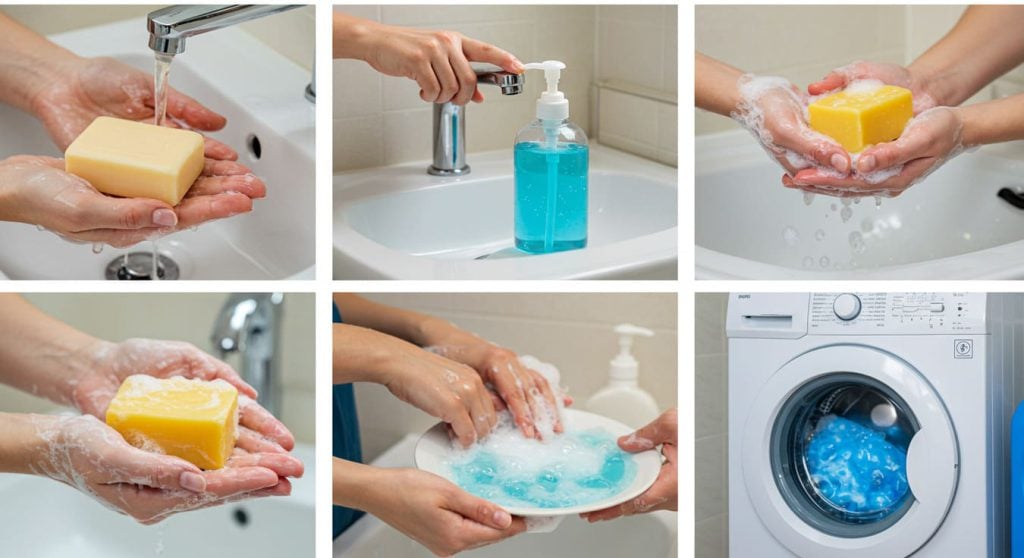
Fragrance preference, lather expectation, and skin-claim salience vary materially across geographies. Floral and powdery profiles index higher in parts of East Asia. Citrus and herbal profiles index higher in Southern Europe and Latin America. North American consumers weigh moisturizing claims more than antibacterial claims in personal cleansing, and reverse the weighting in hand wash.
Manufacturers expanding from a home market frequently underweight these differences. The result is global SKUs that perform in three markets and stall in seven. Soap market research that includes in-market sensory panels and shopper observation, not just translated surveys, prevents that outcome.
SIS International has conducted soap and personal care studies across more than 135 countries using qualitative ethnographic research, central location testing, and B2B expert interviews with procurement leaders at hospitality, healthcare, and food service operators. The pattern across that work is consistent: category strategy built on local sensory data outperforms strategy built on extrapolated brand equity.
What Decision-Ready Soap Market Research Delivers
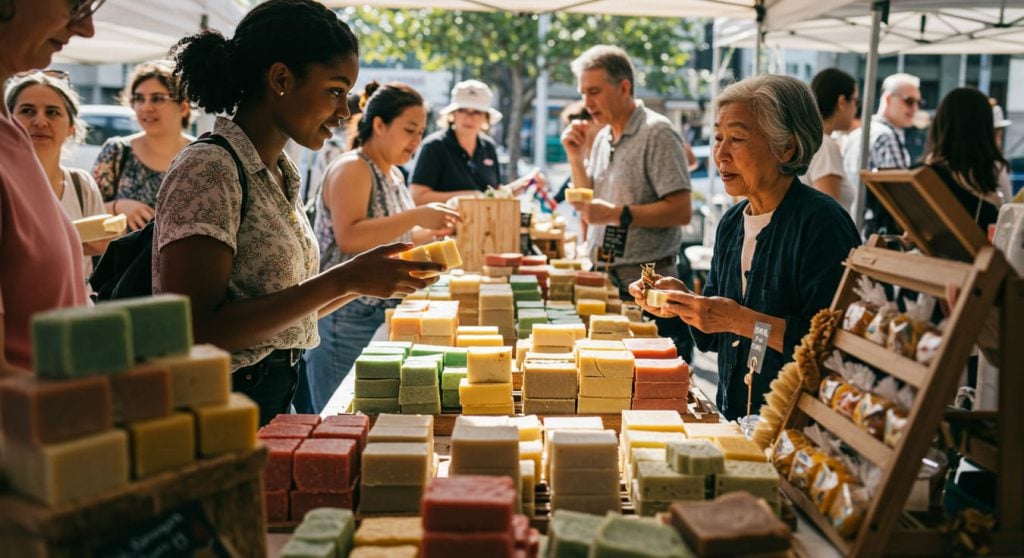
Useful research answers specific questions executives are about to act on. Which dispenser format wins in mid-scale hotels? Which fragrance family commands a price premium in the Brazilian mass channel? Which sustainability claim moves volume in German grocery without triggering greenwashing scrutiny?
Generic category reports cannot answer those questions. The answers come from primary work: sensory panels, shopper intercepts, B2B procurement interviews, and competitive shelf audits run against the brand’s actual decision calendar.
Soap market research, done at this level, becomes the input to portfolio decisions worth tens or hundreds of millions in lifetime category value. That is the standard the category leaders are now operating to.
Über SIS International
SIS International bietet quantitative, qualitative und strategische Forschung an. Wir liefern Daten, Tools, Strategien, Berichte und Erkenntnisse zur Entscheidungsfindung. Wir führen auch Interviews, Umfragen, Fokusgruppen und andere Methoden und Ansätze der Marktforschung durch. Kontakt für Ihr nächstes Marktforschungsprojekt.

 DE
DE  EN
EN  AR
AR  ZH
ZH  ZH_HK
ZH_HK  NL
NL  FR
FR  IT
IT  JA
JA  KO
KO  PL
PL  PT
PT  ES
ES