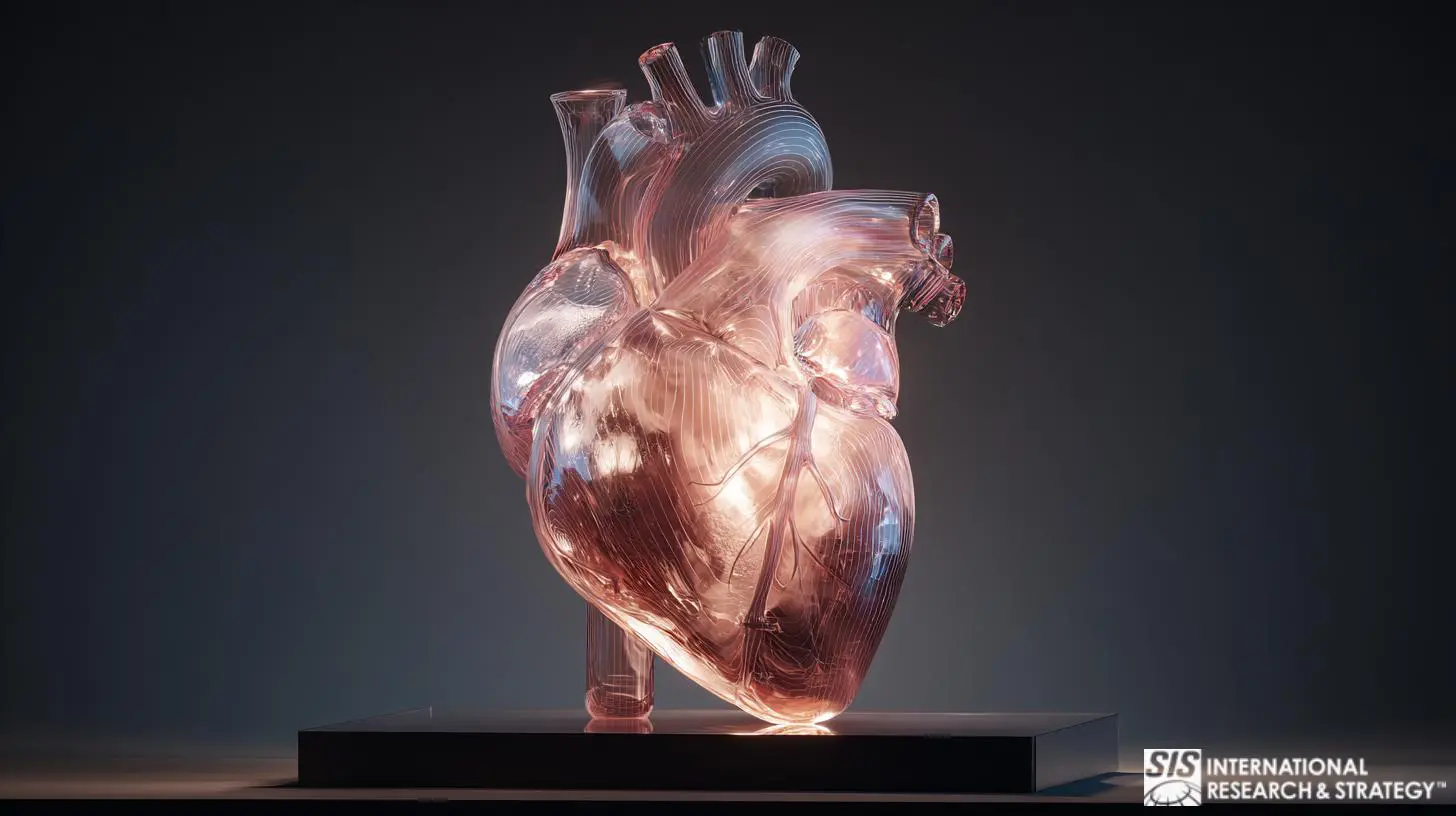
Organ transplants are currently the only way for patients who need replacements to obtain them. There are unfortunately problems with this method. Many die simply from not obtaining an organ in time. Others see their body reject the transplant, the immune system of the body seeing the new organ as a threat and moving to suppress it.
Advances within science have now begun to create the possibility of alternatives. Within the biotechnology field the area of organ creation is of great interest. The printing of human tissue via 3-D printers has advanced to the point that printing an entire organ is within reach. The company Organovo, based in San-Diego, expects to be able to print a liver by the end of 2014.
關於器官創建
The basic concept of organ printing is simple, laying down layer after layer of human cells to create an organ. An immediate obstacle is cell death as the tissue may die before the fully formed organ is removed from the table. The problem of the creation of a vascular system, which provides the cells with oxygen and nutrients, has proven difficult but is now partly solved. Mike Renard, the executive vice president of commercial operations, has stated that the company has maintained liver tissue with a thickness greater than 500 microns fully functioning for 40 days.
Researchers at Organovo were capable of joining together fibroblasts and endothelial cells which help in the creation of vascular networks. Organovo is immediately concerned with cell tissue creation for drug research. Many such companies are working on the smaller scale, using the 3-D printing method to allow for better pharmaceutical testing of drugs. Bio-printing receives less money on average from the government. Currently less than $500 million is given in aid to bio-printing as opposed to $5 billion for cancer and $2.8 billion for HIV/AIDS. This sets the field back as progress is only gained through more testing.
Four tissue types can be created. In order of simplest to most complex they are: flat, tubular, hollow non tubular, and solid. Flat tissues are used for skin, which doctors have used to create skin grafts to act as bandages. Tubular is used for windpipes and blood vessels. Hollow non-tubular is used for the stomach and bladder. Finally solid is used for the kidney, liver, and heart. While scientists have implanted the first three the final section eludes them. The solid organs have the most cells per area, the largest number of type of cells, as well as a larger blood supply, which requires a more complex vascular system.
The Advanced Manufacturing Technology Group at the University of Iowa is focused on the bio-printing of tissue to support organs. One their current projects are to graft healthy pancreas tissue onto the organ to allow it to produce the amount of insulin the body needs. This method sidesteps the need for a whole new organ by making tissue that accompanies the organ.
Many companies will still wish to end up at full organ creation, the first fully printed one possibly coming this year. But there are still two obstacles to face. The first is aid and grants, which are necessary for the testing to be done to allow for the creation of a fully implantable organ. The second obstacle is the rigorous testing to be done before allowing the organs to be transplanted.
Organ Creation by 3D Printers: The Market Strategy Behind Bioprinting’s Industrial Phase
Organ creation by 3D printers has moved from laboratory curiosity to capital investment thesis. The shift is structural, not speculative.
Vascularized tissue constructs, bioink formulation IP, and GMP-compliant bioprinting suites now define competitive position. The companies winning this category are not the ones with the most patents. They are the ones with the clearest read on where regulatory pathways, payer reimbursement, and clinical adoption intersect.
This article maps the commercial logic for VP-level decision-makers evaluating entry, partnership, or acquisition in bioprinting. The frame is industrial, not scientific.
Why Organ Creation by 3D Printers Has Reached an Industrial Inflection
Three forces have converged. Bioink chemistry has standardized around a small set of hydrogel systems including GelMA, alginate-collagen blends, and decellularized extracellular matrix formulations. Printer architectures have consolidated into extrusion, stereolithography, and inkjet platforms with predictable resolution envelopes. The FDA’s regenerative medicine advanced therapy designation has created a faster pathway for tissue products with credible clinical evidence.
The result is that bioprinting has crossed from research instrumentation into a manufacturing problem. Manufacturing problems reward scale, supply chain control, and yield optimization. That is a different game than the one most early entrants prepared for.
Organovo, Aspect Biosystems, CELLINK, and Prellis Biologics have each staked distinct positions: liver tissue patches for drug toxicity testing, pancreatic cell delivery, hardware-plus-bioink platforms, and vascularized tissue scaffolds. The category is bifurcating between tissue-as-a-service models and printed-product-as-therapy models. Each demands a different commercial architecture.
What Leading Firms Are Doing Differently in Bioprinting Strategy
The conventional approach treats organ creation by 3D printers as a hardware sale supported by consumables. Hardware-led strategies generate placement revenue but ceiling out at academic and pharmaceutical research budgets. The installed base is shallow.
The firms gaining durable position are inverting the model. They sell printed tissue outputs to pharma for ADME-Tox screening, license bioink IP to instrument vendors, and reserve full organ constructs for regulated therapeutic pathways. The hardware becomes infrastructure, not the product.
Based on SIS International Research engagements with additive manufacturing decision-makers across North America and Europe, the buyers who anchor category economics are not procurement officers. They are principal investigators with grant authority, hospital innovation directors, and pharma discovery leads who treat bioprinted tissue as a substitute for animal models. The purchasing logic is closer to a reagent contract than a capital equipment cycle.
This reframes total cost of ownership. The bioink subscription, technical service contract, and validated cell line supply chain matter more than printer unit price. Vendors structuring around recurring revenue and validated workflows compound faster than those competing on resolution specifications.
The Regulatory and Reimbursement Architecture
The FDA regulates bioprinted constructs under a combination product framework spanning CBER, CDER, and CDRH depending on cellular content and intended use. Skin, cartilage, and bone constructs follow more established 361 HCT/P or 351 BLA paths. Solid organs face an open regulatory frontier where the agency has signaled willingness to engage through the INTERACT and pre-IND programs.
The EMA’s ATMP classification creates a parallel but distinct pathway in Europe. Japan’s PMDA conditional approval framework, established under the Act on the Safety of Regenerative Medicine, has accelerated several cellular therapy approvals and offers a viable first-market strategy for bioprinted tissue products with strong preclinical evidence.
Reimbursement is the harder problem. CMS coverage for cellular and tissue-based products requires ICD-10 coding alignment, CPT or HCPCS Level II assignment, and demonstrated cost-effectiveness against standard of care. The companies running payer evidence work in parallel with clinical development are positioning for adoption. The companies treating reimbursement as a post-approval task are accepting a multi-year revenue gap.
Market Sizing and Application Tiers
The addressable market splits into four tiers with very different economics and timelines.
| Application Tier | Commercial Maturity | Primary Buyer | Margin Profile |
|---|---|---|---|
| Drug discovery tissue models | Commercial | Pharma R&D, CROs | High recurring |
| Skin, cartilage, bone grafts | Late clinical | Hospital systems, surgeons | Procedure-linked |
| Vascularized tissue patches | Early clinical | Specialty hospitals | Premium therapeutic |
| Solid organs (kidney, liver, heart) | Preclinical | Transplant centers | Category-defining |
Source: SIS International Research analysis of bioprinting commercial pipelines
Capital allocators frequently overweight the solid organ tier because the headlines are largest. The near-term return concentrates in tiers one and two, where revenue can be booked against existing procurement codes and clinical workflows.
The Supply Chain Most Investors Underestimate
Bioprinting depends on inputs that have nothing to do with printer engineering. Pharmaceutical-grade hydrogels, GMP-qualified primary cells, induced pluripotent stem cell lines with documented provenance, and cold chain logistics for live-cell shipment determine whether a printed construct reaches a patient or a pharma client viable.
The bottleneck is qualified cell supply. FUJIFILM Cellular Dynamics, Lonza, and Thermo Fisher control significant share of the iPSC and primary cell market, and their lead times directly govern bioprinting production schedules. Vendors with vertically integrated cell sourcing or exclusive supply agreements hold structural advantage that printer specifications cannot overcome.
SIS International’s structured expert interviews with additive manufacturing principals across German technical universities and U.S. research hospitals indicate that institutions running advanced bioprinting programs operate three to four printers concurrently, with the highest-spec unit accounting for the majority of throughput. Procurement is increasingly framed around validated workflow continuity rather than instrument capability in isolation.
An SIS Framework for Bioprinting Market Entry
Decision-makers evaluating organ creation by 3D printers as a strategic move benefit from sequencing the question correctly. The order is:
Application anchor. Drug discovery tissue, surgical graft, or therapeutic organ. Each implies different regulatory, sales, and capital intensity.
Position in the stack. Hardware, bioink, cell supply, software, or printed output. The economics differ by an order of magnitude.
Geographic sequencing. Japan’s PMDA pathway, EU ATMP, or U.S. RMAT. First-market choice constrains second-market timing.
Build, partner, or acquire. Bioink IP and validated cell supply are typically faster to acquire than to build. Hardware platforms reward partnership.
What the Next Five Years Reward
The bioprinting category will reward firms that treat it as industrial biotechnology rather than advanced manufacturing. The winners will own validated workflows, regulatory dossiers across multiple geographies, and recurring revenue tied to pharma research budgets and procedure codes. Capital will concentrate on companies that have moved past printer demonstrations into reproducible tissue production with documented chain of identity.
For Fortune 500 leadership evaluating entry, the strategic question is not whether organ creation by 3D printers becomes a major category. It is which layer of the value chain captures the margin once the category matures. SIS International Research has supported additive manufacturing market entry assessments and B2B expert interview programs across Germany, Japan, and North America that map this question to specific buyer economics.
The opportunity favors firms willing to build commercial infrastructure ahead of clinical inflection rather than waiting for it.
關於 SIS 國際
SIS國際 提供定量、定性和策略研究。我們為決策提供數據、工具、策略、報告和見解。我們也進行訪談、調查、焦點小組和其他市場研究方法和途徑。 聯絡我們 為您的下一個市場研究項目。