經濟衰退時期對競爭情報的需求

全球競爭對手永遠不會停止他們的戰略規劃和競爭監控在任何經濟衰退中,公司可能會傾向於相信他們的競爭對手已經「關閉」了他們的市場研究和競爭情報預算。雖然企業預算被削減,但企業可以透過多種方式在今年和未來幾年繼續進行競爭監控… 閱讀更多

全球競爭對手永遠不會停止他們的戰略規劃和競爭監控在任何經濟衰退中,公司可能會傾向於相信他們的競爭對手已經「關閉」了他們的市場研究和競爭情報預算。雖然企業預算被削減,但企業可以透過多種方式在今年和未來幾年繼續進行競爭監控… 閱讀更多

Automotive Sensor Market Research Automotive systems are getting smarter with each passing day. The evolution and inventions for the advanced systems powered by a growing automotive market of Europe are increasing at a high pace. Sensors today define a new wave of automotive comfort and advanced technology. The European automotive sensor industry is in … 閱讀更多

Understand the pros and cons of discounting at super luxury retailers.

By Dmitry Shimanov, General Director of MAR Consult Research Agency
Also accessible on SIS Worldwide Intelligence A famous economic law says: “Demand determines supply”. Is this really true?
Regular consumers take this assumption for granted. In today’s market, however, this law requires further revision and clarification. At first, supply determines demand and only then does demand begin to expand the amount of supply.

As part of our series of marketing-related books, we have reviewed Luke Sullivan’s book “Hey Whipple Squeeze This.” While focused on advertising, the book delves into solving problems and understanding consumers. Likewise, it can be applied to other areas of marketing services. We have structured this review on interesting concepts on which the author focused.
Brainstorming
Sullivan asserts the value in posing the problem as a question. One of our favorite quotes in the book was when Sullivan stated, “A problem well-stated is a problem half-solved.” By focusing on the question, people can facilitate the brainstorming process.

The 2008 US Presidential Election was fascinating for a multitude of reasons, but in particular because of the use of new marketing.

By Dmitry Shimanov, General Director of MAR Consult Research Agency
Also accessible on SIS Worldwide Intelligence Library. One of the common mistakes existing in business circles is that marketing research is necessary only for large companies. As a matter of fact, small businesses require it as much as transnational corporations.
Why? Here are four reasons.
First, in order to expand market share, small companies need to find a suitable niche. This is why market analysis and SWOT analysis of competitors will be required. Second, small companies deal with extreme pressure of competition. They have to keep hold of every client, and to do so, complete information on consumers is necessary (from social and demographic features to psychographic portrait).
 As part of our series of marketing book reviews, we have recently reviewed Jon Steel’s “Truth, Lies and Advertising: the Art of Account Planning.” While focused on advertising, the book’s content can feasibly be applied to other branches of marketing services. In particular, we were eager to read its perspective on market research in Advertising campaigns.
Steel’s goal is to propose a new model of advertising based on the complexity of people and their emotions. The model incorporates a partnership of stakeholders in an advertising campaign:

The fragrance industry worldwide rolls to the beat of its own drum in terms of marketing and consumer purchases.

We reviewed a few chapters in Malcolm Gladwell’s best-seller “Blink”. Why? Thin Slicing reveals insights into human behavior.

 文化可以簡單地定義為特定社會中人們的生活方式。從廣義上講,文化是一種習得行為的配置,其組成元素由特定社群的成員共享和傳播。具有相同文化背景的人們有共同的特質、意識形態、規範、信念、價值體系、消費方式、說相同的語言、使用相同的貨幣。不同的文化在一個社會如何看待產品、想法或服務以及其成員的期望方面表現出巨大的多樣性。
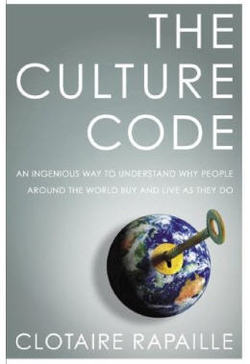 As part of our series of marketing-related books, we have reviewed Clotaire Rappaille’s book “The Culture Code.” In marketing research, Rappaille is known for his style and unique theories on human behavior. He is known for his rejection of the traditional focus group; instead he proposes a 3-hour focus group in which he does unstructured probing of obscure questions to elicit deeply rooted emotions and attitudes. In the book, he talks about how a culture has a code for every concept, and that it is the job of marketers to decode those meanings.
Rapaille lays out 5 central principles that belie his marketing research approach.
在新的國家開展業務充滿挑戰,因為這種情況隨處可見。作為外國人,如果您打算在土耳其開展業務,您首先必須查看並熟悉土耳其於 2003 年推出的《外國直接投資法》(編號:4875)。法律,因為它們設定了土耳其自由投資環境的法律架構。
根據《外商直接投資法》,設立外資公司的條件與義務與設立本地公司相同。因此,過去設立外資公司的各種強制許可現已取消。根據《土耳其商法典》規則,由外資成立的公司被視為土耳其公司。因此,無論公司資本創造的本質如何,所有職責和責任都是相同的。
此外,在新的外商直接投資法中,沒有任何規定要求土耳其參與外資公司的資本或管理。可以用100%外資設立公司,幾乎所有產業都對外資開放。公司設立程序也得到了很大程度的簡化。現在,憑藉高效的手續,在土耳其註冊成立公司只需一天即可完成。公司必須在一個地點提交標準表格,無需向多個機構提交申請以獲得批准。此外,法律也規定不再強制設立有限責任公司或股份有限公司。這些都是計劃在土耳其開展業務的外國投資者需要考慮的重要事項。
 English English
  العربية
 简体中文
简体中文
 香港中文
香港中文
 Nederlands
 Français
 Deutsch
 Italiano
 日本語
日本語
 한국어
한국어
 Polski
 Português do Brasil
 Español