
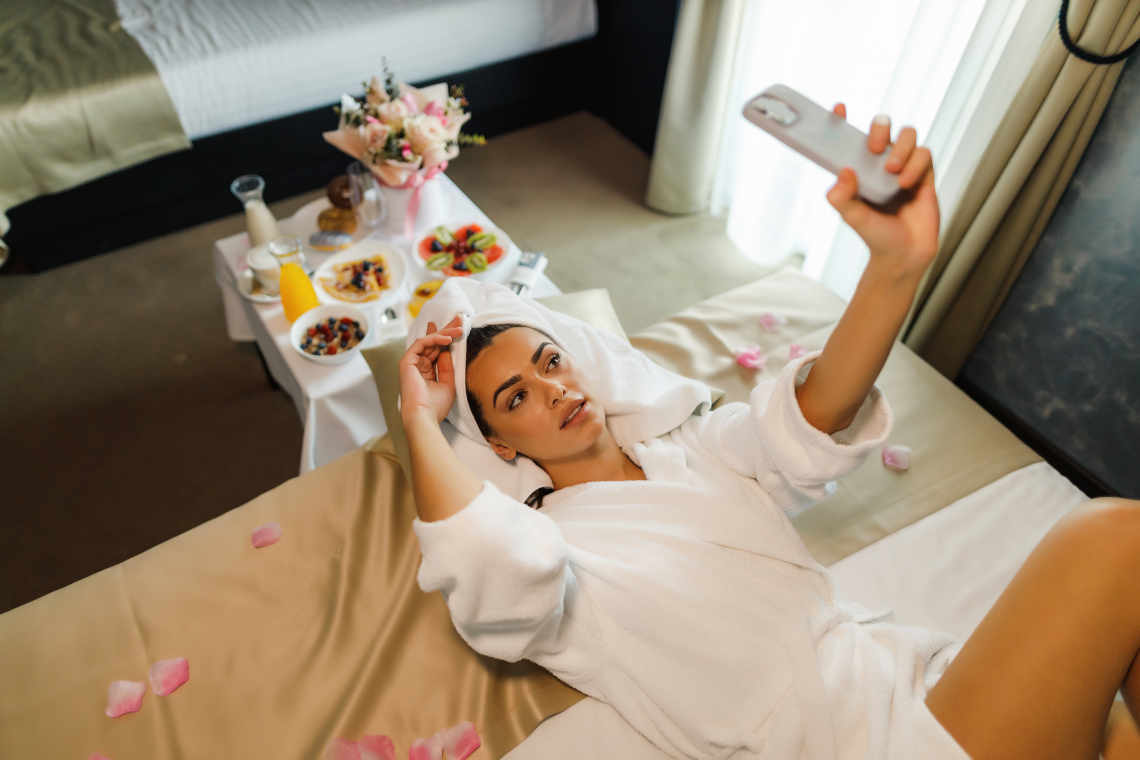
Social Media Hotel Consulting: Direct Booking Strategy

社群媒體飯店諮詢

SIS 國際市場研究與策略


掌握社群媒體的藝術不再是可選的。它是酒店吸引、吸引和留住客人的策略的重要組成部分。因此,社群媒體飯店諮詢代表了傳統行銷的深刻轉變,為飯店提供了一個展示個性、與客人建立聯繫並圍繞其品牌建立社群的動態平台。

什麼是社群媒體飯店諮詢?

Social media hotel consulting focuses on leveraging social media platforms to enhance a hotel’s brand presence, engage with guests, and drive business growth. It develops a comprehensive social media strategy tailored to a hotel’s unique brand identity and target audience. This strategy encompasses choosing the right platforms – be it Instagram, Facebook, X, LinkedIn, or TikTok – and crafting content that resonates with the audience.

此外,社群媒體飯店諮詢創建互動內容,回覆評論和評論,並與用戶互動以建立忠誠的線上社群。這種互動不僅提高了品牌忠誠度,還提供了對客人偏好和趨勢的寶貴見解。

Social Media Hotel Consulting: How Leading Brands Convert Audience Into Occupancy

Social media hotel consulting has matured from content calendars into a revenue discipline. The properties pulling ahead treat platforms as direct booking channels, attribution systems, and competitive intelligence feeds.

The shift matters because the path from inspiration to reservation now compresses inside a single app session. Discovery, social proof, price comparison, and booking happen on Instagram, TikTok, Xiaohongshu, and WeChat before an OTA ever loads. Hotels that organize around this reality recover margin lost to third-party commissions.

Why Social Media Hotel Consulting Sits at the Center of Direct Booking Strategy

Direct bookings carry roughly 15 to 25 percent better contribution margin than OTA channels once commission, parity penalties, and loyalty offsets are netted out. Social platforms have become the highest-intent top of funnel for that direct channel, ahead of metasearch for leisure segments and ahead of email for emerging-market business travel.

The opportunity is structural. Marriott, Accor, and Four Seasons have rebuilt creative operations around vertical video and creator partnerships because organic reach on Reels and TikTok outperforms paid display on cost per qualified arrival. Independents using the same playbook through agencies like Sojern and Cendyn show similar lift on revenue per available room when geo-targeted creator content runs in feeder markets.

According to SIS International Research, hospitality clients who integrate social listening directly into revenue management decisions, rather than treating it as a brand function, capture pricing signals four to six weeks earlier than properties relying on STR comp set data alone.

The Channel Mix Driving Revenue Per Available Room

Channel selection is not a creative decision. It is a feeder market and segment decision. The properties that perform consistently match platform to source market with the same rigor applied to GDS contracting.

Platform Primary Feeder Markets Highest-Yield Segment Booking Path
Instagram US, UK, Gulf, Brazil Leisure, weddings, F&B Link in bio, DM concierge
TikTok US, Southeast Asia, Mexico Gen Z and Millennial leisure In-app browser to brand.com
Xiaohongshu Mainland China, Singapore Outbound Chinese leisure Mini-program or Ctrip handoff
WeChat Mainland China Repeat and corporate Official Account booking flow
領英 North America, DACH, India MICE and corporate negotiated Sales team direct outreach

Source: SIS International Research

The Xiaohongshu and WeChat lines are where most Western brands underinvest. Mandarin-language creator content produced inside China, with KOL contracts structured for performance rather than flat fees, drives the bulk of recovered Chinese outbound demand for properties in Bangkok, Tokyo, Paris, and Dubai.

What Sophisticated Social Media Hotel Consulting Actually Delivers

The work splits into four operational tracks. Each ties to a P&L line, not a vanity metric.

Creator economics. Pricing creator partnerships against incremental room nights rather than impressions. The benchmark sophisticated buyers use is fully loaded cost per booked stay, including hosted comp value, agency fee, and content licensing. Hilton and Hyatt have moved toward retainer-based creator panels with revenue share clauses, replacing one-off campaigns.

Social commerce integration. Connecting Instagram Shops, TikTok Shop, and WeChat mini-programs to the property management system so a Reel can convert to a confirmed reservation without leaving the platform. SiteMinder and Cloudbeds have opened APIs that make this viable for independents.

Reputation as pricing input. Feeding sentiment signals from TripAdvisor, Google, and platform-native comments into the revenue management system alongside ADR and occupancy. SIS International’s B2B expert interviews with revenue directors at luxury and upscale brands indicate that properties incorporating qualitative review signals into their forecasting models adjust rates more accurately during shoulder seasons than properties relying solely on pickup pace.

Crisis and compliance protocols. Pre-built response trees for service failures that go viral, with legal-reviewed language for ADA, data privacy, and food safety incidents. The cost of a single mishandled TikTok grievance now exceeds a typical month of paid social spend.

The Measurement Framework That Replaces Vanity Metrics

Engagement rate is a diagnostic, not a goal. The metrics that move investment committee decisions are different.

  • Cost per booked room night by platform and market, calculated post-attribution with a deduplication rule against paid search and metasearch.
  • Direct share of total bookings indexed against the prior comparable period, segmented by feeder market.
  • Branded search lift following creator activations, measured through Google Search Console and Baidu Index for Chinese campaigns.
  • Sentiment-adjusted ADR ceiling, the maximum rate the market will accept given current review velocity and tone.

The fourth metric is the one large strategy consultancies rarely model and the one that separates operators who hold rate from those who discount into shoulder periods. It requires primary research into how guests in each feeder market interpret review patterns, which varies considerably between Japanese, German, and Brazilian travelers.

The SIS Approach to Social Media Hotel Consulting

SIS International runs hospitality engagements through three connected workstreams: structured B2B expert interviews with revenue and commercial directors across the comp set, ethnographic research with target guest segments in feeder markets, and competitive intelligence on creator and KOL contracts in priority languages.

SIS International’s proprietary research across hospitality and adjacent service categories in Spain, Germany, Japan, and Greater China has consistently shown that channel and content preferences vary more by national market than by guest demographic, which inverts the assumption behind most centralized social strategies. A Fortune 500 hospitality operator working with SIS used this finding to restructure regional content budgets, shifting spend from global creative production toward in-market creator partnerships in three priority feeder markets.

The deliverable is not a content calendar. It is a market-by-market allocation model tied to expected contribution margin, with a measurement plan revenue management can use without translation.

Where the Category Is Heading

Three movements are reshaping the discipline. AI-generated property tours produced by tools integrated into Meta and TikTok ad managers are reducing creative production cost by an order of magnitude, which favors brands with strong brand standards and disciplined asset libraries. Search behavior is splitting, with younger leisure travelers starting hotel research on TikTok and Xiaohongshu rather than Google, which changes SEO economics. And privacy regulation is collapsing third-party attribution, which raises the value of platform-native conversion signals and first-party data captured through DM and mini-program interactions.

Properties and groups that build social media hotel consulting into their commercial operating model, rather than parking it inside marketing, will continue to take share. The capability is becoming a determinant of asset-level NOI, not a brand expense.

關於 SIS 國際

SIS國際 提供定量、定性和策略研究。我們為決策提供數據、工具、策略、報告和見解。我們也進行訪談、調查、焦點小組和其他市場研究方法和途徑。 聯絡我們 為您的下一個市場研究項目。

作者照片

露絲·史塔納特

SIS 國際研究與策略創辦人兼執行長。她在策略規劃和全球市場情報方面擁有 40 多年的專業知識,是幫助組織取得國際成功值得信賴的全球領導者。

滿懷信心地在全球擴張。立即聯繫 SIS International!

與專家交談