
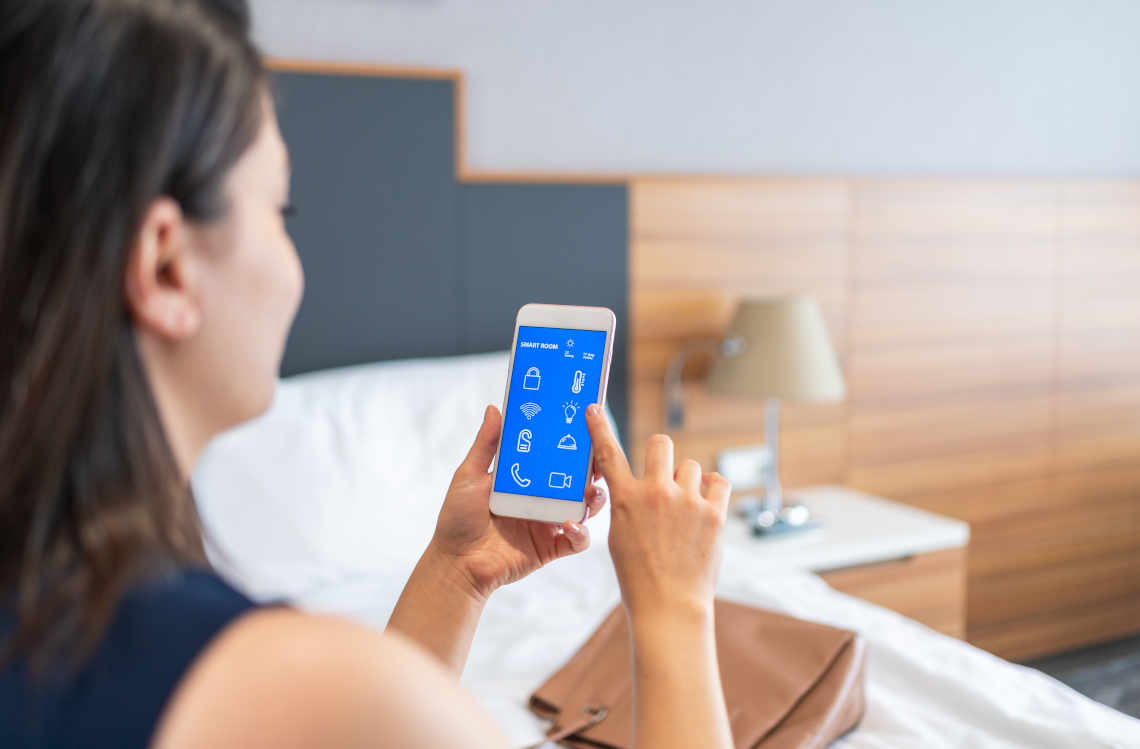
智慧酒店技術諮詢

智慧酒店技術諮詢涉及人工智慧、物聯網和數據分析等尖端技術的集成,為客人創造無縫、直觀和難忘的體驗。事實上,智慧酒店技術的採用正在迅速成為酒店業成功的基準,這使得酒店必須有效地理解、實施和優化這些技術。
了解智慧酒店技術諮詢
Smart hotel technology consulting combines the nuances of hospitality management with the latest technological advancements. It transforms traditional hotel operations into highly efficient, guest-centric, and technologically advanced establishments.
這涉及為每位客人打造更個人化、引人入勝且無縫的旅程。從人工智慧驅動的房間定製到行動入住和退房,技術被用來預測和迎合每位客人的獨特偏好。此外,智慧技術可以促進飯店員工和客人之間更好的溝通,確保及時有效地處理請求和回饋。
The adoption of smart hotel technology consulting brings a multitude of benefits to the hospitality sector, including:
- 數據驅動的見解: 智慧技術的使用使酒店能夠收集和分析大量數據。這些見解對於了解客人偏好、優化定價策略以及就飯店營運和行銷做出明智的決策非常寶貴。
- 增加收入的機會: 智慧技術開闢了創造收入的新途徑。例如,追加銷售個人化服務或使用數據分析進行有針對性的行銷活動可以顯著提高飯店的獲利能力。
- 永續性改進: 許多智慧技術都有助於永續發展,例如節能照明和氣候控制系統。
- 增強安全性: 數位鑰匙和先進監控系統等智慧技術可確保賓客和員工更加安全、安心。
Smart Hotel Technology Consulting: How Leading Operators Build Defensible Guest Experience
The hotels gaining share are converting smart technology from amenity into operating system. Property-level deployments are no longer about voice-controlled drapes or RFID locks. They are about unifying the property management system, the guest mobile app, the building management system, and the loyalty data layer into a single intelligence stack that lifts RevPAR, compresses labor cost, and produces structured guest data that competitors cannot replicate.
Smart Hotel Technology Consulting now sits at the intersection of hospitality operations, vertical SaaS, and IoT integration. The decisions made at the property and portfolio level over the next investment cycle will determine which brands command pricing power and which become commodity inventory on OTA shelves.
Why Smart Hotel Technology Consulting Has Moved to the C-Suite
Three forces have pulled this category into executive scope. First, the property management system is becoming an integration hub rather than a folio engine, with open APIs replacing closed Oracle and Sabre stacks. Second, brands like Marriott, Hilton, and Accor are pushing digital key, mobile check-in, and in-room IoT down to franchisees as brand standards rather than optional upgrades. Third, the data exhaust from connected rooms (occupancy patterns, HVAC behavior, F&B requests through voice) is becoming a monetizable asset for dynamic pricing and ancillary revenue.
The operators winning this cycle treat technology selection as a portfolio decision. They evaluate vendors on net revenue retention, API depth, and roadmap alignment with brand identity programs, not on demo-day features. That shift in evaluation criteria is what separates the next generation of branded operators from the legacy buyers who still purchase technology by line item.
The Architecture Decision That Defines the Next Decade
The strategic question is not which thermostat or which mobile key vendor. It is whether the property runs on a composable stack with a clean middleware layer, or on a monolithic suite from a single vendor. Composable architectures, built around vendors like Mews, Apaleon, and Stayntouch with integration through middleware like Hapi or Impala, give operators the ability to swap point solutions as guest expectations evolve. Monolithic stacks lock in pricing power for the vendor.
According to SIS International Research, hospitality operators that adopted composable property management architectures over the past decade reported materially stronger ancillary revenue capture and faster integration timelines for new guest-facing features compared with peers running closed legacy suites. The mechanism is straightforward: composable stacks let revenue management, CRM, and IoT vendors compete on merit at each renewal, which compounds into better unit economics over a five-year horizon.
The conventional approach treats the PMS as the system of record and bolts everything else around it. The better approach treats the guest profile as the system of record and lets the PMS, CRS, and CDP serve that profile. This inversion is what allows brands like Citizen M and Equinox Hotels to deliver the personalization that drives direct-booking share.
Where the Revenue Actually Comes From
Smart hotel deployments produce returns across four distinct lines. Each has different payback dynamics and different vendor ecosystems.
| Value Driver | Mechanism | Typical Payback Horizon |
|---|---|---|
| Labor Productivity | Mobile housekeeping dispatch, predictive maintenance on HVAC and elevators, automated check-in | Short cycle |
| Energy Optimization | Occupancy-linked HVAC, smart lighting, building management system integration | Medium cycle |
| Ancillary Revenue | In-room voice ordering, dynamic upsell at check-in, geofenced F&B promotions | Medium cycle |
| Direct Booking Share | Loyalty-linked mobile app, CDP-driven personalization, reduced OTA dependency | Long cycle |
Source: SIS International Research analysis of hospitality technology deployments across North American and European portfolios.
The mistake that suppresses returns is funding all four through a single capex envelope and measuring them on a blended IRR. The labor and energy lines pay back on operating math. The ancillary and direct-booking lines pay back on commercial math, and require different governance. Operators who separate these cases into two investment tracks consistently outperform on both.
What Guest Research Reveals About Adoption
SIS International’s ethnographic research and in-home interviews on smart technology adoption found that consumers consistently prefer systems that integrate with platforms they already use rather than introducing new interfaces. The same pattern holds in hospitality: digital key adoption rises sharply when the credential lives inside Apple Wallet or Google Wallet rather than a brand-specific app, and voice services see materially higher engagement when they bridge to the Amazon or Google account the guest already uses at home.
This finding reframes the design brief. The instinct of brand technology teams is to build proprietary apps that capture every interaction inside the brand environment. The evidence from primary guest research points the other way. The brands that win on adoption design for the guest’s existing platform behavior and capture data through consented integrations rather than forced app downloads.
The competitive implication is significant. A property running on guest-platform-native services produces better engagement metrics than a property running on brand-native services with similar functionality. Smart Hotel Technology Consulting engagements that begin with primary guest research instead of vendor RFPs tend to converge on this answer.
The Vendor Selection Framework That Holds Up
Most technology selection processes reward demo polish and punish architectural rigor. The reverse is what the asset needs. A defensible selection framework evaluates vendors against four criteria that map to long-term value.
API depth and openness. Read-only APIs are insufficient. The vendor must expose write APIs for reservations, profiles, charges, and room states. Brands like CitizenM built their model on this requirement.
Data ownership terms. Contracts that grant the vendor rights to aggregated guest data for product improvement quietly transfer the most valuable asset on the property. Operators should retain full ownership and audit rights.
Identity and integration with the loyalty graph. The customer data platform must reconcile guest identity across the PMS, the app, the Wi-Fi captive portal, and the F&B point of sale. Without this, personalization stays theoretical.
Roadmap alignment with brand standards. For franchised properties, the vendor’s roadmap must track brand standards from Marriott, Hilton, IHG, or Hyatt without requiring custom development at each release.
The SIS Approach to Smart Hotel Technology Consulting
SIS International conducts B2B expert interviews with hotel CIOs, revenue management leaders, and property general managers, paired with guest ethnographic research and competitive intelligence on vendor roadmaps. This combination produces vendor evaluations grounded in operator experience rather than analyst rankings, and guest experience designs grounded in observed behavior rather than survey claims.
The work typically includes a vendor capability matrix, a reference-call program with operators running the shortlisted stacks, a guest research module covering target segments at the property, and a deployment sequencing plan that separates labor and energy investments from commercial investments. Smart Hotel Technology Consulting done this way replaces vendor marketing with primary evidence at each decision point.
What VP-Level Buyers Should Take From This
The Smart Hotel Technology Consulting category is maturing from a procurement exercise into a strategic capability. The portfolios that build that capability deliberately, anchored on composable architecture, guest-platform-native design, and primary research at the front of vendor selection, will compound advantages across labor cost, energy spend, ancillary revenue, and direct-booking share. The portfolios that continue to buy technology line by line will deliver the productivity gains to their vendors instead of their owners.
關於 SIS 國際
SIS國際 提供定量、定性和策略研究。我們為決策提供數據、工具、策略、報告和見解。我們也進行訪談、調查、焦點小組和其他市場研究方法和途徑。 聯絡我們 為您的下一個市場研究項目。

