
global market research for High-Impact Market Decisions
Reach real consumers worldwide with qualitative, quantitative, and market-entry expertise.

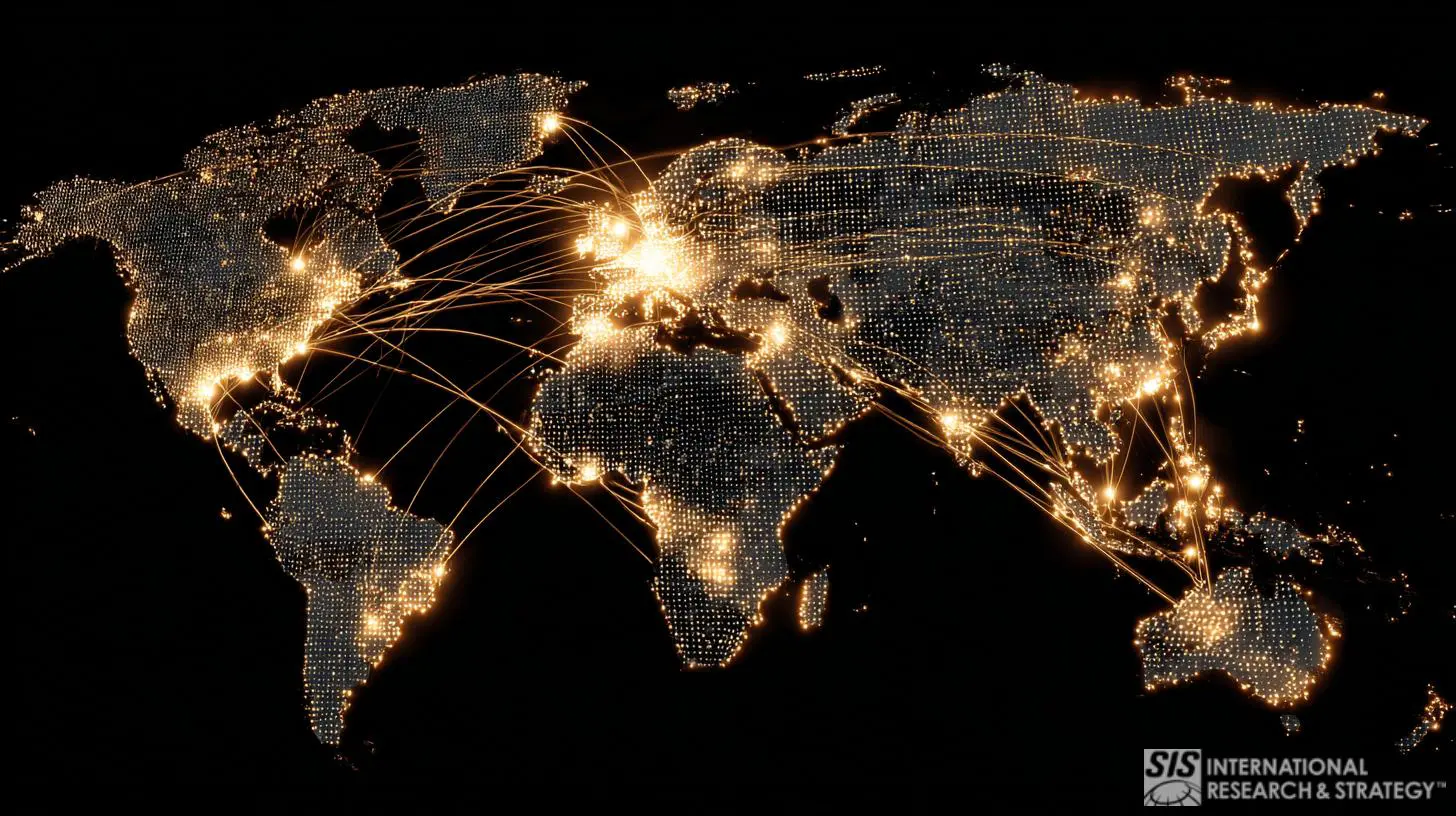
SIS Global Coverage: How Fortune 500 Leaders Build Market Intelligence Across 135+ Countries
Global market entry succeeds when local evidence reaches the boardroom intact. SIS Global Coverage was built around that requirement.
Fortune 500 industrial leaders rarely lose deals because of strategy. They lose them because field intelligence from Jakarta, São Paulo, or Riyadh arrives filtered, delayed, or mistranslated by the time it informs capital allocation. SIS International has spent four decades closing that gap, with in-country teams across 135+ countries running primary research in the language, culture, and procurement context where the buyer actually operates.
This article examines what SIS Global Coverage means in practice for a VP weighing reshoring feasibility, supplier qualification audits, or aftermarket revenue strategy across multiple regions at once.
What SIS Global Coverage Delivers to Fortune 500 Decision-Makers

SIS Global Coverage is the operational footprint behind every cross-border engagement: physical presence and vetted local researchers in the Americas, Europe, Asia Pacific, the Middle East, and Africa. The footprint includes São Paulo, Mexico City, Bogotá, Frankfurt, Milan, Warsaw, Tokyo, Seoul, Shanghai, Singapore, Manila, Mumbai, Dubai, and Johannesburg, among others.
The distinction is not the pin map. Many firms claim global reach through subcontractor networks. SIS runs integrated teams that conduct B2B expert interviews, ethnographic research, competitive intelligence, and market entry assessments under a single methodological standard. A bill of materials benchmarking study spanning German Tier 1 suppliers and Mexican maquiladoras produces comparable data because the same research design governs both.
According to SIS International Research, industrial clients running parallel studies across three or more regions consistently identify procurement and aftermarket pricing variances of 15-30% that single-region research misses entirely. The variance is not noise. It is structural arbitrage that informs sourcing strategy, dealer margin design, and installed base monetization.
Why Multi-Country Industrial Research Requires More Than Translation

Industrial buyers behave differently by geography in ways that distort cross-border strategy when researchers treat regions as interchangeable. A specifying engineer at Siemens evaluates total cost of ownership on a different time horizon than a counterpart at Reliance Industries or Petrobras. Procurement cycles, warranty expectations, and supplier qualification audits follow distinct logic.
SIS Global Coverage addresses this through researcher-buyer matching. The interviewer for a heavy equipment OEM procurement analysis in Saudi Arabia is an Arabic-speaking engineer with petrochemical sector experience, not a generalist with a translated discussion guide. The same standard applies to predictive maintenance sizing in Japan, where access to senior plant managers depends on introductions through the right industry associations.
Three structural elements separate this work from offshore call-center research:
- Native-language fieldwork across 70+ languages, with discussion guides culturally adapted rather than literally translated.
- Sector-matched interviewers drawn from the vertical, not panel rosters.
- Single-source data architecture so a VP sees consistent variables across all geographies in one deliverable.
The Industrial Use Cases Where Global Coverage Changes Outcomes

Four scenarios drive most enterprise demand for SIS Global Coverage in B2B industrial markets.
Reshoring and nearshoring feasibility. A Fortune 500 industrial manufacturer evaluating Mexico, Vietnam, and Poland needs comparable supplier qualification audits, labor cost benchmarks, and logistics infrastructure assessments. Running three independent studies produces three incompatible answers. Integrated coverage produces a decision-ready comparison.
Installed base analytics across regions. Aftermarket revenue strategy depends on knowing how end users in different markets consume parts, service contracts, and software upgrades. Coverage in secondary cities matters more than coverage in capitals because that is where the installed base sits.
Competitive intelligence on regional players. A German automation OEM losing share to a Chinese competitor in Southeast Asia needs structured intelligence on that competitor’s distributor terms, warranty practices, and field service economics. That intelligence does not exist in English-language databases.
Voice of Customer programs at scale. Multi-country VOC programs require harmonized instruments, local recruiting, and centralized analysis. Fragmenting the work across regional vendors destroys comparability.
The SIS Coverage Architecture

SIS International’s proprietary research across industrial sectors indicates that the firms extracting the most value from global coverage treat it as a single operating system rather than a vendor list. They commission one study scope, one methodology, one project lead, and accept regional adaptation only on culturally bound elements like recruiting screeners and incentive structures.
| Coverage Layer | Function | Industrial Application |
|---|---|---|
| Regional hubs | Project management, QA, senior analysis | Cross-border study design and synthesis |
| In-country teams | Fieldwork, recruiting, local QA | B2B expert interviews, site visits, ethnographic research |
| Sector specialists | Technical interviewing, competitive intelligence | OEM procurement, aftermarket, predictive maintenance |
| Central analytics | Cross-country synthesis, executive deliverables | Total cost of ownership benchmarking, market sizing |
Source: SIS International Research
What Strong Global Coverage Looks Like in Practice

The strongest cross-border industrial research engagements share four characteristics. Each is observable in the deliverable, not the proposal.
First, every interview citation includes title, company size, function, and tenure. Anonymized but specific. A finding sourced to “12 procurement directors at Tier 1 automotive suppliers across Germany, Czech Republic, and Mexico” carries weight. A finding sourced to “industry experts” does not.
Second, regional findings are reconciled, not averaged. When German respondents weight reliability above price and Indian respondents weight the inverse, the report explains the structural reasons rather than reporting a meaningless mean.
Third, the deliverable separates what is universally true from what is regionally specific. A VP can act on the first immediately and brief regional GMs on the second.
Fourth, the research team sits on a debrief call with regional leadership, not just headquarters. This is where coverage either creates internal alignment or fails to.
The Decision Frame for Selecting a Global Coverage Partner

Three questions separate genuine coverage from claimed coverage. Whether the in-country team is employed or contracted matters less than whether the same project lead manages all regions. Whether the firm has done sector-specific work in the target market matters more than total country count. Whether the methodology is genuinely consistent across regions or stitched together at the report stage determines whether the findings hold up under board scrutiny.
SIS Global Coverage was built for the third question. Forty years of integrated international fieldwork, 70%+ Fortune 500 client base, and methodological discipline that produces comparable evidence whether the study runs in one country or twenty.
Key Questions

Q: How many countries does SIS Global Coverage span?
A: SIS International conducts primary research in 135+ countries through integrated regional hubs and in-country teams across the Americas, Europe, Asia Pacific, the Middle East, and Africa.
Q: What industries does SIS Global Coverage support?
A: SIS serves B2B industrial, automotive, healthcare, financial services, technology, energy, consumer goods, and FMCG, with sector-specialized interviewers in each vertical.
Q: How does SIS Global Coverage differ from subcontractor networks?
A: SIS runs integrated teams under a single methodological standard with one project lead across all regions, producing comparable data rather than stitched-together regional reports.
Q: What research methods does SIS deploy globally?
A: B2B expert interviews, ethnographic research, focus groups, competitive intelligence, market entry assessments, Voice of Customer programs, and supplier qualification audits, all conducted in native languages by sector-matched researchers.
Q: Which Fortune 500 functions use SIS Global Coverage most?
A: Strategy, M&A, procurement, product management, and corporate development teams use it for reshoring feasibility, installed base analytics, competitive intelligence, and market entry decisions.






SIS 인터내셔널 소개
SIS 국제 정량적, 정성적, 전략 연구를 제공합니다. 우리는 의사결정을 위한 데이터, 도구, 전략, 보고서 및 통찰력을 제공합니다. 또한 인터뷰, 설문 조사, 포커스 그룹, 기타 시장 조사 방법 및 접근 방식을 수행합니다. 문의하기 다음 시장 조사 프로젝트를 위해.

 KO
KO  EN
EN  AR
AR  ZH
ZH  ZH_HK
ZH_HK  NL
NL  FR
FR  DE
DE  IT
IT  JA
JA  PL
PL  PT
PT  ES
ES