
디핑소스 시장 조사
디핑 소스 시장 조사 개요
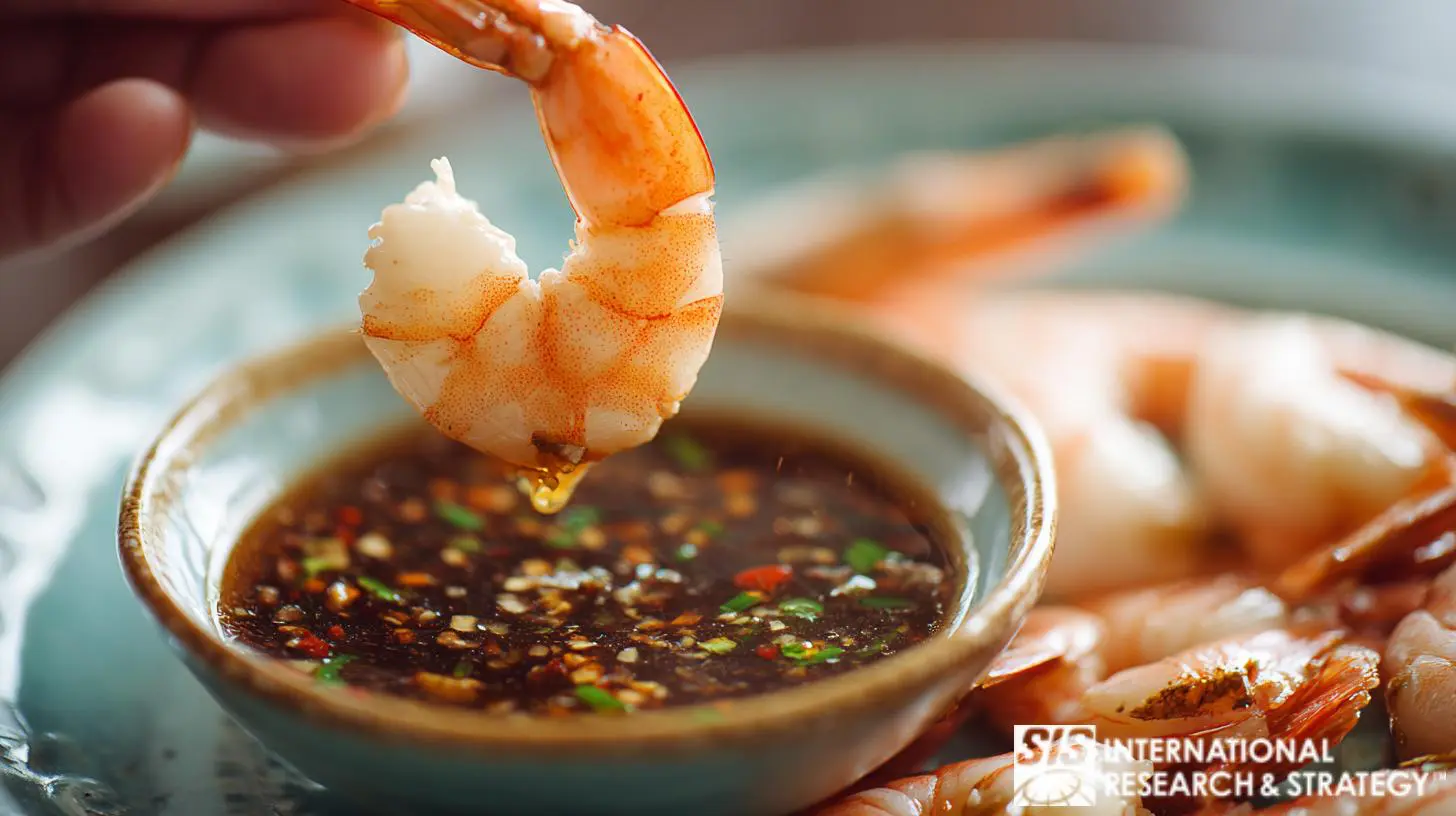
디핑 소스 시장 조사는 경쟁이 치열하고 끊임없이 진화하는 소스 산업에서 기업이 성공하는 데 도움이 되는 통찰력과 전략적 이점을 제공합니다. 디핑 소스 산업은 음식에 풍미를 더하는 데 사용되는 다양한 유형의 소스, 드레싱 및 조미료를 포함하는 광범위한 조미료 및 소스 시장의 일부입니다. 특히 디핑 소스는 일반적으로 스낵, 애피타이저, 핑거 푸드 및 메인 요리와 같은 디핑용 식품과 함께 제공되는 걸쭉하거나 약간 두꺼운 소스입니다. 디핑 소스는 다양한 요리에서 유명하며 일반적으로 패스트푸드, 캐주얼 다이닝, 가정 요리에 사용됩니다.
Dipping Sauce Market Research: How Category Leaders Win Shelf and Share
Dipping sauces have moved from condiment afterthought to category driver. The brands taking share understand something most do not: the dip is no longer an accompaniment. It is the occasion.
Across club, mass, and quick-service channels, dipping sauce velocity now outpaces the proteins and snacks they once supported. The strategic question for category leaders is no longer whether to invest. It is how to size, sequence, and defend a position before private label and challenger brands compress margin further.
What Dipping Sauce Market Research Reveals About Category Economics
The category rewards specificity. A sauce engineered for chicken tenders performs differently from one positioned for crudité, and shopper behavior confirms the split. Dipping sauce market research at the SKU level shows that flavor occasion, not flavor profile, drives repeat purchase.
Three structural shifts are reshaping the category. Heat-forward profiles (gochujang, calabrian chili, hot honey) are migrating from foodservice to retail at a pace that is rewriting assortment rationalization models. Clean label has moved from claim to baseline expectation, with shoppers reading ingredient decks before price tags. Private label parity has closed faster in dipping sauces than in any adjacent condiment subcategory, which means brand equity now carries the full weight of pricing power.
According to SIS International Research, sensory benchmarking across heat-forward dipping sauces consistently shows that consumer preference clusters around viscosity and cling rather than Scoville level, a finding that contradicts how most product development teams brief their R&D groups. The implication for VP-level decision makers is direct. Reformulation budgets aimed at heat intensity often produce no measurable lift, while texture work delivers repeatable wins.
Where Dipping Sauce Market Research Drives Pricing Power
Pricing architecture in dipping sauces is misunderstood. The category supports a three-tier structure (value, mainstream, premium) but the premium tier behaves more like specialty cheese than like ketchup. Shoppers cross-shop on flavor authenticity, not size, which means cost-per-ounce comparisons lose explanatory power above a certain threshold.
Brands that have built defensible premium positions (Mike’s Hot Honey, Truff, Rao’s, Yellowbird) share a common trait. They anchored on a single flavor narrative before extending. The mistake category leaders make is platform-extending too fast, diluting the equity that justified the price point in the first place.
Trade spend efficiency in this category also breaks the rules of adjacent condiments. Promotional lift on dipping sauces decays faster than on ketchup or mustard because the purchase is occasion-driven rather than pantry-driven. A buyer who stocks up during a 2-for-$6 event will not accelerate consumption. They will simply defer the next trip.
The Sensory Methodology That Separates Winners
Most category entrants run a central location test, collect hedonic scores, and ship. The brands that win run sequenced sensory work that distinguishes between liking and discrimination, then layers in concept-product fit testing before final formulation lockdown.
SIS International’s sensory work across dipping sauce categories indicates that triangle test discrimination against the leading benchmark is a stronger predictor of twelve-month repeat than any hedonic scale measurement. The reason is mechanical. Hedonic scales capture momentary preference under controlled conditions. Triangle and duo-trio tests reveal whether the product is genuinely differentiated in the shopper’s pantry, where the comparison set is real and the conditions are not controlled.
JAR (just-about-right) scale analysis paired with penalty analysis remains the most underused tool in the category. It identifies the specific attributes (saltiness, acidity, heat carry) where small reformulation moves produce disproportionate preference shifts. Temporal dominance of sensations work, borrowed from beverage research, is now showing up in the development pipelines of the most disciplined brands because dipping sauces are consumed in repeated bites where flavor evolution matters.
Channel Dynamics and Foodservice-to-Retail Migration
The fastest-growing dipping sauce SKUs in retail were proven in foodservice first. Chick-fil-A sauce, Raising Cane’s sauce, and Cookout-style sauces created consumer expectations that retail brands now monetize. The pattern is repeatable, and the brands that monitor regional QSR menu development have a two-year lead on category buyers.
| Channel | Primary Purchase Driver | Margin Profile |
|---|---|---|
| Club | Format size and trip occasion | Volume-led, thin margin |
| Mass | Promotional cadence and adjacency | Mid-tier, trade-spend sensitive |
| Specialty/Natural | Ingredient story and origin | Premium, equity-led |
| QSR/Foodservice | Operator economics and crave score | Contract-led, scale-dependent |
Source: SIS International Research
Cross-border opportunities are widening. Korean, Mexican, and Levantine flavor systems are converting from ethnic aisle to mainstream condiment, and the brands moving first (Momofuku, Siete, Mina) are establishing reference points that will define the next decade of category reset.
What Dipping Sauce Market Research Should Deliver
A category investment thesis worth presenting to a board needs four evidence layers. Quantified shopper segmentation tied to occasion, not demographic. Sensory benchmarking against the top three competitive sets in each target channel. Concept-product fit testing that links pre-launch concept scores to in-market repeat. Competitive intelligence on private label velocity at the retailer level.
SIS International’s proprietary research in food and beverage indicates that brands combining CATA methodology with penalty analysis at the formulation stage achieve higher first-year velocity than brands relying on hedonic testing alone. The discipline is not exotic. It is sequenced.
An Original Framework: The Dipping Sauce Defensibility Matrix
Category leaders can map their portfolio against two axes: flavor specificity (generic to proprietary) and occasion ownership (shared to dedicated). Brands in the proprietary-dedicated quadrant (hot honey on fried chicken, ranch on wings) command the highest pricing power and the slowest private label encroachment. Brands in the generic-shared quadrant (standard ketchup, basic ranch) face the steepest margin compression.
The strategic move is not to abandon the generic-shared quadrant. It is to use cash from that quadrant to fund proprietary-dedicated bets where defensibility is structural rather than promotional.
Where the Category Goes Next
Three forward signals deserve attention. Functional positioning (probiotic, fermented, low-sodium) is moving from health aisle to mainstream dipping sauce shelves. Co-branded collaborations between sauce brands and protein brands are creating shelf adjacencies that bypass traditional category management. And foodservice operators are launching retail SKUs faster than CPG incumbents can respond, compressing the window for defensive innovation.
Dipping sauce market research, done with sensory rigor and channel specificity, is the difference between a launch that holds shelf and one that gets reset out within four cycles. The category rewards brands that treat the dip as the hero, not the sidekick.
SIS 인터내셔널 소개
SIS 국제 정량적, 정성적, 전략 연구를 제공합니다. 우리는 의사결정을 위한 데이터, 도구, 전략, 보고서 및 통찰력을 제공합니다. 또한 인터뷰, 설문 조사, 포커스 그룹, 기타 시장 조사 방법 및 접근 방식을 수행합니다. 문의하기 다음 시장 조사 프로젝트를 위해.

 KO
KO  EN
EN  AR
AR  ZH
ZH  ZH_HK
ZH_HK  NL
NL  FR
FR  DE
DE  IT
IT  JA
JA  PL
PL  PT
PT  ES
ES