
Heating Oil Market Research
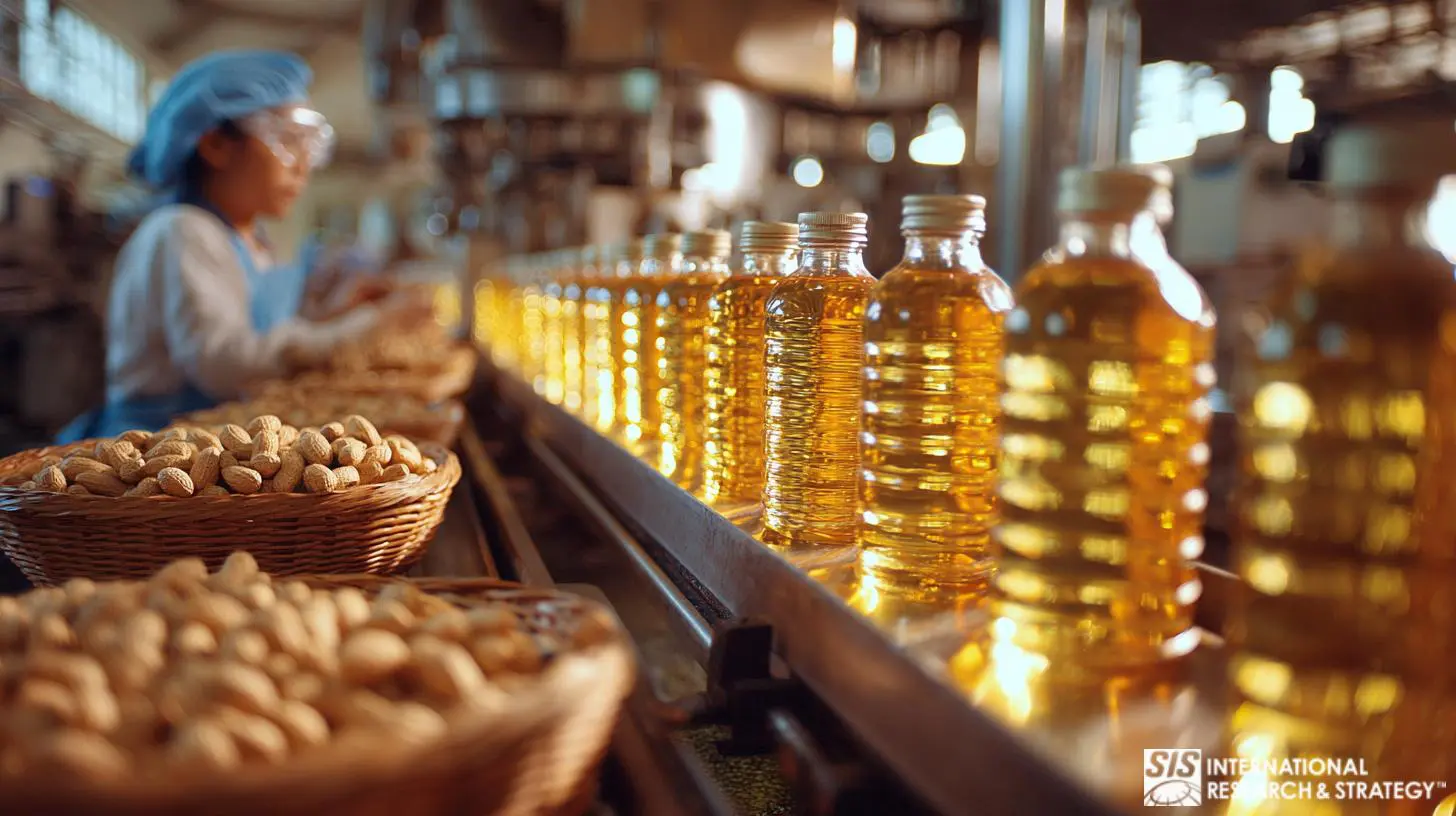
The heating oil market 연구 focuses on the trends, data, and insights on both heating oil for homes and heating oil for businesses. The heating oil industry has grown continuously over the years, especially since it plays a major role in the global economy. The Market Research provides insights into the heating oil industry and its influence on various sectors, and its many uses both for homes and businesses.
난방유 이해
난방유는 석유에서 증류 과정을 거쳐 추출된 액체의 일종입니다. 그 특성은 화학 구조의 작은 차이를 제외하면 디젤과 동일합니다. 난방유의 주요 용도는 용광로, 보일러, 온수기입니다.
Heating Oil Market Research: How Leading Distributors Capture Margin in a Shifting Fuel Mix
Heating oil is no longer a commodity sold on price alone. The distributors gaining share are reading three signals at once: customer retention economics, biofuel blending economics, and the heat pump conversion curve. Each shifts independently, and each rewards a different operating posture.
For Fortune 500 leadership across energy retail, refining, and HVAC manufacturing, heating oil market research now sits at the intersection of fuel transition strategy, installed base analytics, and consumer behavior modeling. The category is not declining linearly. It is bifurcating, and the firms that map the bifurcation early are pricing, acquiring, and converting accordingly.
The Heating Oil Market Research Question Has Changed
The traditional question was straightforward: what drives gallons sold per household per heating degree day. That metric still matters for route density and tank truck scheduling. It no longer predicts profitability.
The sharper question is which households will remain on oil for the next replacement cycle, which will convert to natural gas where mains exist, and which will leapfrog to cold-climate heat pumps under utility rebate programs. The answer varies by Census tract, housing stock vintage, and income band. Aggregated state-level demand forecasts mask the variance that determines retention strategy.
SIS International Research engagements across Northeast U.S. fuel distributors and European heating equipment manufacturers indicate that customer churn correlates more strongly with boiler age and contractor relationships than with heating oil price volatility. The implication is that retention investment belongs in service technician capacity and equipment financing, not in price-lock marketing.
Biofuel Blending Reshapes the Margin Pool
Bioheat blends, ranging from B5 to B20 and higher in jurisdictions like New York City and parts of Rhode Island, change the economics distributors have operated under for decades. Renewable Identification Numbers under the federal Renewable Fuel Standard create a credit revenue stream that did not exist a generation ago. Distributors who track D4 RIN values weekly and adjust blend ratios against spot ULSD pricing are running a different P&L than those buying rack-priced finished product.
The leading operators treat biofuel as a procurement optimization problem rather than a marketing claim. They monitor soybean oil futures, used cooking oil feedstock availability, and the spread between B100 and No. 2 heating oil at the rack. The bill of materials optimization that industrial buyers apply to manufacturing inputs now applies to fuel blending.
Three named dynamics are reshaping the pool. First, the IMO 2020 sulfur cap on marine fuel pulled distillate barrels into bunkering, tightening the heating oil supply curve. Second, renewable diesel capacity additions on the U.S. Gulf Coast and West Coast compete with biodiesel for the same feedstock. Third, state low-carbon fuel standards in California, Oregon, and Washington create premium markets that pull renewable molecules away from Northeast heating customers.
The Heat Pump Conversion Curve Is Not Linear
Heat pump adoption forecasts published by trade associations tend to extrapolate rebate uptake. Field research tells a different story. Cold-climate heat pump performance has improved, but installed cost, electrical panel upgrades, and contractor availability create friction that varies dramatically by market.
Based on SIS International’s structured interviews with HVAC contractors, fuel dealers, and homeowners across the U.S. Northeast and the U.K., the conversion decision is rarely made on operating cost arithmetic alone. Trust in the installing contractor, prior experience with the existing fuel dealer, and the condition of the home’s electrical service drive the timing more than payback period calculations.
This matters for heating oil market research because it means the addressable retention market is larger and more defensible than utility-led conversion forecasts suggest. Distributors who own the service relationship, finance equipment replacements, and offer hybrid systems pairing heat pumps with oil-fired backup are positioned to monetize both sides of the transition rather than lose the customer outright.
What Sophisticated Buyers Demand From Heating Oil Market Research
Generic syndicated demand reports do not answer the questions a VP of strategy at a refiner, a private equity owner of a regional fuel platform, or a boiler OEM actually faces. The useful work is custom and methodologically specific.
| Decision | 연구 방법 | 산출 |
|---|---|---|
| Acquisition target screening | Customer file analytics, route density modeling, churn cohort analysis | Adjusted EBITDA defensibility by zip code |
| Biofuel blend strategy | Procurement interviews, RIN value modeling, feedstock supply mapping | Blend ratio playbook by season and region |
| Heat pump defense | Homeowner ethnographic research, contractor depth interviews | Retention offer design and conversion timing |
| Equipment OEM positioning | Installer focus groups, product clinics, manifold and burner prototype testing | Product roadmap and channel strategy |
Source: SIS International Research
SIS International’s installer focus groups on heating equipment, including underfloor systems and manifold prototypes, consistently reveal that purchase specification is driven by the trade contractor at the point of replacement, not by the homeowner or the brand’s consumer marketing. The implication for OEMs is that share is won in the wholesaler aisle and the training classroom, not in retail-facing campaigns.
The Competitive Intelligence Gap

Most regional heating oil markets are fragmented across hundreds of independent dealers, with consolidators like Star Group, Petro Home Services, and Global Partners assembling platforms through tuck-in acquisitions. Public filings disclose volume and gross profit per gallon at a corporate level. They do not disclose customer-level retention, service contract attach rates, or the share of gallons sold under price protection plans.
The intelligence that matters for acquisition diligence and competitive positioning sits with installers, drivers, dispatchers, and former employees. Structured B2B expert interviews surface what financial statements obscure: which competitors are losing service technicians, which are deferring tank replacements, and which are quietly raising minimum delivery thresholds in ways that will accelerate churn.
Where Heating Oil Market Research Creates Asymmetric Advantage

The firms winning in this category are not the largest. They are the ones who treat the customer file as the primary asset, the contractor relationship as the moat, and the fuel itself as a procurement and blending exercise. Heating oil market research, done at the level Fortune 500 buyers require, quantifies each of those three assets and identifies where competitors are underinvesting.
That work is custom. It combines route-level data analytics, in-person installer focus groups, expert interviews across the value chain, and procurement modeling against the renewable fuels markets. It produces decisions, not dashboards.
SIS 인터내셔널 소개
SIS 국제 정량적, 정성적, 전략 연구를 제공합니다. 우리는 의사결정을 위한 데이터, 도구, 전략, 보고서 및 통찰력을 제공합니다. 또한 인터뷰, 설문 조사, 포커스 그룹, 기타 시장 조사 방법 및 접근 방식을 수행합니다. 문의하기 다음 시장 조사 프로젝트를 위해.

 KO
KO  EN
EN  AR
AR  ZH
ZH  ZH_HK
ZH_HK  NL
NL  FR
FR  DE
DE  IT
IT  JA
JA  PL
PL  PT
PT  ES
ES