
멕시코 티후아나 시장 조사
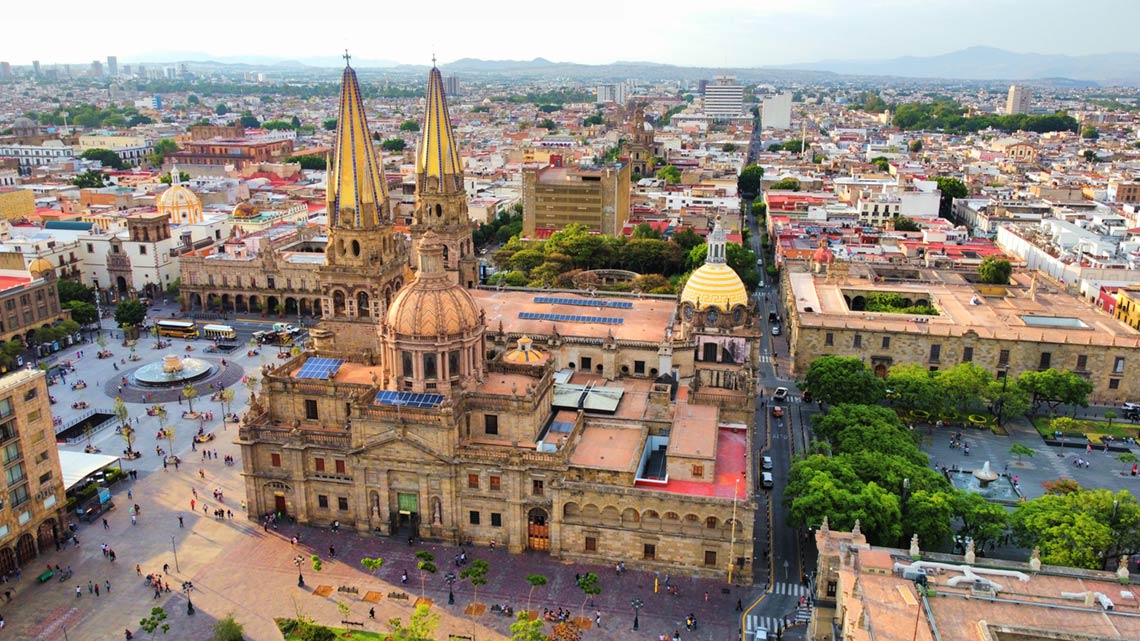
티후아나는 바하칼리포르니아 반도 북쪽, 샌디에고와 가깝고 멕시코-미국 국경에 위치한 도시입니다. 이 번화한 도시는 문화 및 상업 중심지로 인해 글로벌 도시로 분류됩니다.
이웃
티후아나의 주요 거리인 Avenida Revolución은 대개 관광객들로 붐비며 기념품 가게와 바가 늘어서 있습니다. 도시의 많은 경기장에서는 일반적인 엔터테인먼트인 레슬링 경기(Lucha Libre)도 자주 개최됩니다.
가장 잘 알려진 랜드마크는 티후아나 문화 센터와 자이 알라이 궁전입니다. 문화센터는 극장, 콘서트홀, 박물관, 심지어 수족관까지 갖춘 현대적인 건축물입니다. 워크숍, 강좌, 프로그램, 쇼, 문학 행사, 박람회, 컨퍼런스 등이 이곳에서 자주 개최됩니다.
Jai Alai Palace에서는 콘서트, 연극 등 다양한 행사가 열립니다. 그 이름은 바스크 스포츠인 Jai Alai에서 유래되었습니다.
Market Research Tijuana Mexico: How Industrial Leaders Capture the Border Advantage
Tijuana sits at the most active manufacturing border crossing in the Western Hemisphere. For Fortune 500 industrial buyers, it functions as a near-shore production engine with direct line-of-sight to the U.S. consumer. Market research Tijuana Mexico engagements increasingly determine which firms convert that geography into margin and which absorb the cost of getting it wrong.
The city’s maquiladora corridor produces medical devices, aerospace components, electronics, and automotive subassemblies for plants in California, Arizona, and Texas. Capacity is tightening. Industrial vacancy in Otay Mesa and Mesa de Otay has compressed to historic lows, and tier-one suppliers are competing for the same skilled labor pool, the same trucking slots, and the same bonded warehouse footprint.
Why Tijuana Rewards Disciplined Market Research
Tijuana is not a single market. It is a layered industrial cluster with distinct sub-economies: the IMMEX maquiladora program, the Otay Mesa logistics belt, the medical device cluster anchored by firms like Medtronic and Smiths Medical, and a growing electronics base serving Foxconn, Samsung, and Hyundai. Each sub-economy has its own labor dynamics, supplier qualification standards, and total cost of ownership profile.
Generic country-level intelligence misses the operational reality. A reshoring feasibility study built on Mexico City data will overstate available labor and understate cross-border drayage costs by a wide margin. Tijuana-specific primary research is what separates a working pro forma from a stranded investment.
SIS International Research engagements across Mexico’s northern manufacturing belt indicate that successful entrants conduct supplier qualification audits and labor availability assessments at the colonia level, not the city level, because wage premiums, turnover rates, and shift-pattern feasibility vary significantly within a fifteen-kilometer radius.
The B2B Intelligence Stack for Tijuana Market Entry
Industrial buyers entering or expanding in Tijuana need four research layers working together. Each answers a question the others cannot.
Installed base analytics. Map who is already operating in your category, what they manufacture, and which U.S. customers they serve. Public IMMEX registrations, customs filings, and SAT records reveal the operating footprint of competitors like Flex, Jabil, and Sanmina without requiring a single interview.
B2B expert interviews. Plant managers, customs brokers, and CTPAT-certified logistics directors hold the operational knowledge that does not appear in public filings. Drayage cycle times at the Otay Mesa Commercial Vehicle Enforcement Facility, the real cost of a USMCA rules-of-origin audit, the wage drift in skilled CNC operators across the past two hiring cycles. This is interview territory.
Supplier qualification audits. Tier-two and tier-three suppliers in Tijuana range from world-class to non-viable. On-site audits assessing ISO 13485, IATF 16949, and AS9100 readiness separate them. Desk research will not.
Total cost of ownership modeling. Labor is one input. Energy reliability under CFE, water access in a stressed basin, peso-dollar hedging exposure, and cross-border compliance overhead frequently dominate the TCO calculation.
Where the Opportunity Concentrates
Three structural shifts are creating durable advantage for industrial firms that act on disciplined intelligence.
Medical device near-shoring. FDA proximity, USMCA preferential treatment, and a deep installed base of Class II and Class III device manufacturers make Tijuana the strongest medical device cluster in Latin America. Companies expanding here are doing so on the strength of KOL-validated supply chain studies and regulatory pathway mapping, not on cost arbitrage alone.
Automotive electrification components. The powertrain transition is rerouting bill-of-materials sourcing. Battery enclosures, wiring harnesses, and power electronics are migrating to Tijuana suppliers that can serve plants in California, Texas, and central Mexico under a single USMCA umbrella. Buyers running structured competitive intelligence on this segment are signing five-year supply agreements at better terms than late entrants.
Electronics and consumer hardware reshoring. Tariff exposure on China-origin goods has pushed brands to qualify Tijuana alternatives. The winners are firms that ran win/loss analysis against incumbent Asian suppliers before committing capital, not after.
Tijuana Industrial Sub-Markets: A Practitioner’s View
| Sub-Cluster | Anchor Industries | Primary Research Priority |
|---|---|---|
| Otay Mesa / Mesa de Otay | Medical devices, electronics | Labor availability, FDA-aligned supplier audits |
| El Florido | Automotive, white goods | IATF 16949 supplier qualification, drayage cost modeling |
| Pacífico / La Mesa | Aerospace, precision machining | AS9100 readiness, skilled labor wage benchmarking |
| Rosarito corridor | Logistics, bonded warehousing | Cross-border cycle time, CTPAT compliance |
Source: SIS International Research
What the Best Industrial Firms Do Differently
The conventional approach treats Tijuana as a cost play. Firms compare hourly wages against Shenzhen or Vietnam, build a TCO model, and approve capex. The model usually holds for eighteen months and then breaks under labor inflation, USMCA audit costs, and U.S. customer requalification cycles.
The better approach treats Tijuana as a strategic supply chain position and prices the option value of proximity. Firms that have done this well, including several Fortune 500 medical device and aerospace manufacturers, structured their entry around three commitments: in-region B2B expert interviews before site selection, supplier qualification audits before contract signing, and ongoing competitive intelligence after launch.
In B2B expert interview programs SIS has conducted with senior procurement and operations leaders across Mexican border manufacturing, the most consistent finding is that firms which invested in local primary research before capital commitment achieved faster ramp-to-volume and lower attrition among skilled operators than peers who relied solely on consultancy desk studies.
Selecting a Market Research Partner in Tijuana
Three filters separate adequate from useful. First, on-the-ground fieldwork capability in Baja California with bilingual moderators who can run B2B interviews in technical Spanish and English. Second, sectoral depth in the specific cluster, medical device intelligence is not interchangeable with automotive intelligence. Third, methodological breadth covering ethnographic site visits, structured expert interviews, supplier audits, and quantitative panels.
SIS International Research has conducted market entry, supplier qualification, and competitive intelligence engagements across Mexico for global manufacturers, financial institutions, and consumer goods firms for over four decades, with primary research capability in Tijuana, Monterrey, Guadalajara, and Mexico City.
The Decision Ahead
Tijuana’s industrial position is strengthening. Capacity is finite, labor is competitive, and the firms that move with disciplined intelligence are taking the best sites, the best suppliers, and the best workforce. Market research Tijuana Mexico is no longer a feasibility checkbox. It is the difference between a near-shore advantage and a near-shore liability.
SIS 인터내셔널 소개
SIS 국제 정량적, 정성적, 전략 연구를 제공합니다. 우리는 의사결정을 위한 데이터, 도구, 전략, 보고서 및 통찰력을 제공합니다. 또한 인터뷰, 설문 조사, 포커스 그룹, 기타 시장 조사 방법 및 접근 방식을 수행합니다. 문의하기 다음 시장 조사 프로젝트를 위해.

 KO
KO  EN
EN  AR
AR  ZH
ZH  ZH_HK
ZH_HK  NL
NL  FR
FR  DE
DE  IT
IT  JA
JA  PL
PL  PT
PT  ES
ES