
Étude de marché sur le whisky
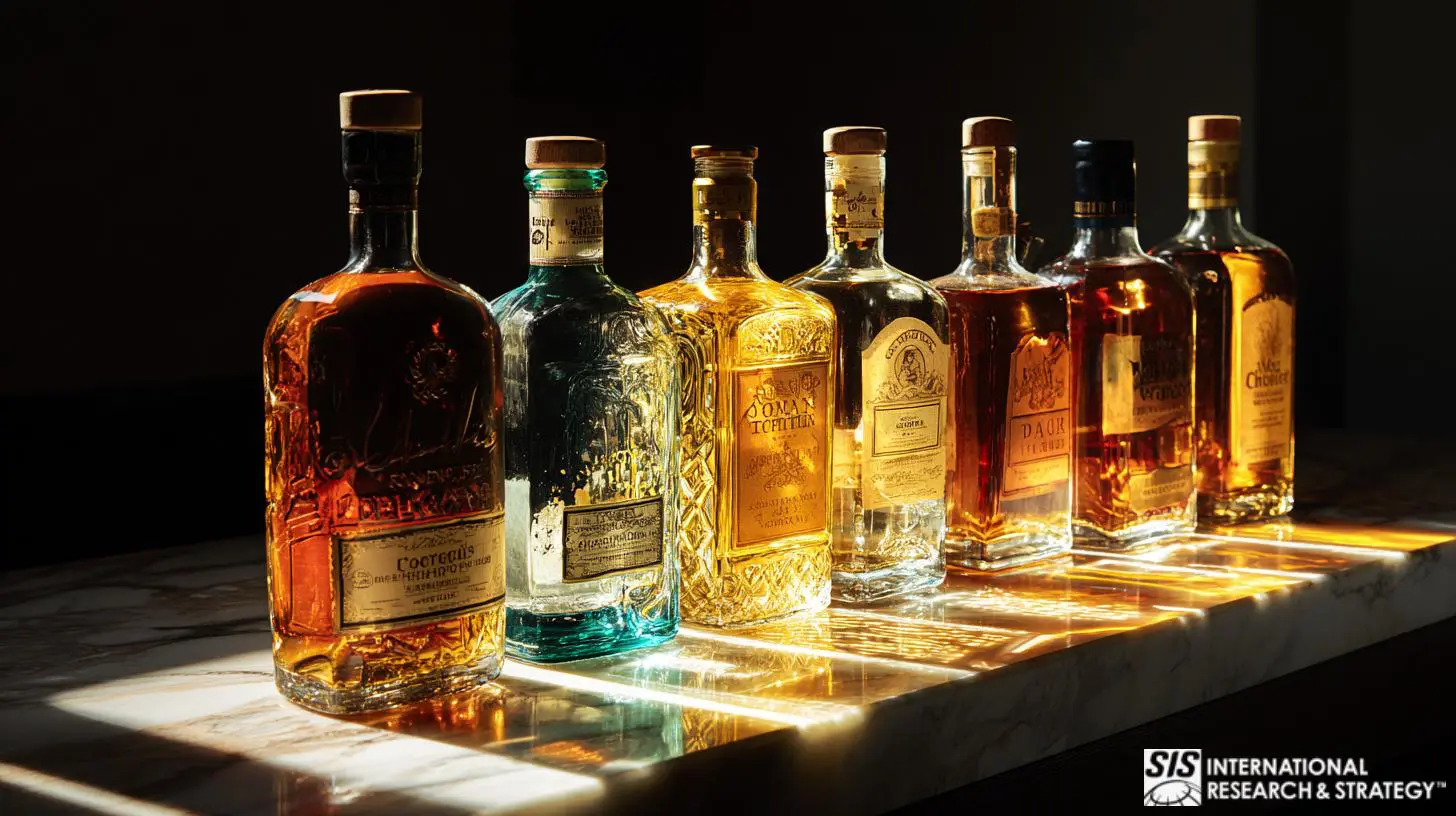
Le whisky est un marché qui existe depuis des siècles et étant donné un secteur très mature, comprendre sa dynamique devient essentiel pour les parties prenantes.
Par conséquent, l’importance des études de marché sur le whisky ne peut être surestimée. Dans une industrie caractérisée par des saveurs complexes, des processus de vieillissement et des variations régionales, il est essentiel de suivre le pouls des tendances du marché, des préférences des consommateurs et du positionnement concurrentiel. C'est pourquoi, grâce aux études de marché sur le whisky, tous les acteurs du marché s'assurent que leurs offres restent pertinentes et demandées.
Qu’est-ce qu’une étude de marché sur le whisky ?
Whiskey market research refers to the systematic collection, analysis, and interpretation of data about the whiskey industry. This research seeks to understand various facets of the whiskey market such as consumer preferences, market size, growth potential, competitive landscape, distribution channels, and emerging trends.
Les informations dérivées de ces recherches permettent aux parties prenantes de prendre des décisions éclairées et d’élaborer des stratégies efficaces, augmentant ainsi leurs chances de succès sur le marché. Voici une description plus détaillée de ce qu’implique une étude de marché sur le whisky :
- La connaissance des consommateurs: Cela se concentre sur la compréhension du comportement, des préférences et des modèles d’achat des consommateurs. Il cherche des réponses à des questions telles que : Quels arômes ou types de whisky sont actuellement populaires ? Quel est le profil démographique du consommateur type de whisky ? Comment les habitudes de consommation évoluent-elles au fil du temps ?
- Segmentation du marché : Cela implique de diviser le marché au sens large en segments distincts en fonction de critères tels que le type de whisky, l'âge du whisky, la fourchette de prix ou les régions géographiques. Comprendre chaque segment aide les marques à adapter plus efficacement leurs produits et leurs efforts marketing.
- Analyse compétitive: An integral part of étude de marché du whisky, this examines the market positioning, product offerings, branding strategies, and strengths and weaknesses of competing whiskey brands in the local or global markets.
- Élasticité des prix et prévision des ventes : En analysant les données de ventes historiques et les conditions du marché, les chercheurs peuvent prédire les ventes futures et comprendre l’impact des changements de prix sur la demande.
- Aperçus du marché mondial : Compte tenu de l’attrait international du whisky, il est crucial de comprendre comment les différentes cultures et régions interagissent avec ce produit. Cela peut impliquer d’étudier la dynamique du marché dans les pays consommateurs de whisky établis et d’identifier les marchés de croissance potentiels.
Whiskey Market Research: How Category Leaders Win Premium Share
Whiskey is no longer a single category. It is a portfolio of premium bourbons, single malts, Japanese imports, Irish revivals, and flavored extensions competing for distinct occasions and palates. Whiskey market research is how leading distillers and importers separate signal from noise across these lanes.
The brands gaining share treat sensory science, occasion mapping, and cultural positioning as one connected discipline. They run consumer panels in parallel with trade interviews. They test liquid before they test packaging. They map the bar call before they price the bottle.
Why Whiskey Market Research Now Drives Premium Strategy
Premiumization has reshaped the economics of the category. Volume growth in standard tiers has flattened in mature markets while super-premium and ultra-premium tiers continue to expand. The margin sits in the top shelf, and the top shelf is where consumer perception is most fragile.
Buyers at the $60 and $120 price points evaluate provenance, mash bill, age statement, cask finish, and brand mythology. Each of those signals can be tested, scored, and refined before launch. Distillers that skip this step often discover at retail that their cask finish reads as gimmick rather than craft.
SIS International’s qualitative work with whiskey drinkers across the United States, Japan, and Ireland indicates that brand familiarity does not translate evenly into trust. Consumers who recognize a heritage label may still hesitate at premium price points if the brand’s cultural narrative feels manufactured rather than earned.
The Sensory Architecture Behind Whiskey Category Winners
Liquid wins or loses on first sip. The discipline behind that judgment is sensory science, and it is where most whiskey programs underinvest.
A serious sensory program uses a calibrated descriptive analysis panel to map the flavor profile against benchmark competitors. It applies QDA (quantitative descriptive analysis) to score attributes such as smoke, vanilla, oak, fruit, and finish length. It runs triangle tests to confirm whether a reformulation is detectable, and paired comparison analysis to test whether detectable means preferred.
Hedonic scaling tells you whether consumers like the product. JAR (just-about-right) scales tell you why, and penalty analysis tells you what to fix. A bourbon that scores high on overall liking but skews “too sweet” on JAR will lose repeat purchase even if the launch test looks strong.
Temporal dominance of sensations (TDS) is the technique that separates serious whiskey research from generic taste testing. TDS captures how flavor evolves second by second across the sip, the swallow, and the finish. For aged spirits, finish length and warmth are the attributes that justify the price ladder.
Occasion Mapping and the Flavored Whiskey Opportunity
Flavored whiskey changed the demographic shape of the category. Brands such as Skrewball, Sheep Dog, Fireball, and Ole Smoky pulled in drinkers who would never have approached a traditional bourbon shelf. The strategic question for established distillers is whether to follow, partner, or hold the line.
SIS International Research central location tests on flavored whiskey across US and UK consumer panels found that flavored expressions are rarely substitutes for traditional whiskey. They occupy different occasions, different serve formats, and different social contexts. The buyer of a peanut butter whiskey shot at a bar is often the same buyer who pours a single malt at home on a Saturday.
This is occasion mapping, and it changes the competitive set. A flavored launch competes with tequila, schnapps, and ready-to-drink cocktails far more than with rye or Scotch. Pricing, ABV, and serve guidance need to reflect that.
Geographic Nuance: Japan, India, and the Premium Import Story
Japanese whisky has redrawn the global premium map. Suntory, Nikka, and Hibiki demonstrated that a non-Scottish, non-American category could command Scotch-equivalent pricing through disciplined craftsmanship and patient brand building. Indian single malts including Amrut, Paul John, and Rampur are now following a similar arc.
For a Fortune 500 importer or distiller, the research questions in these markets differ from Western templates. In India, premium whiskey consumption sits inside a complex regulatory and tax structure that varies by state. In Japan, age-statement scarcity has reshaped consumer expectations of what “premium” means. In China, gifting culture and on-premise consumption drive purchase decisions more than household stocking behavior.
In structured consumer panels conducted by SIS across Indian, Chinese, and UK whiskey buyers, willingness to pay at the premium tier correlated more strongly with perceived authenticity of origin than with age statement alone. Brands that anchored their story to a specific distillery, region, or maker outperformed brands that leaned on generic heritage cues.
The SIS Whiskey Intelligence Stack
A complete whiskey market research program integrates five layers. Each layer answers a question the others cannot.
| Research Layer | Method | Strategic Question Answered |
|---|---|---|
| Sensory benchmarking | QDA panel, TDS, descriptive analysis | How does the liquid compare to category leaders? |
| Consumer acceptance | CLT, hedonic scaling, JAR, penalty analysis | Will buyers prefer it, and why? |
| Occasion and behavior | Ethnographic research, focus groups | When, where, and with whom is it consumed? |
| Trade and channel | B2B expert interviews with distributors and on-premise buyers | Will the trade carry it, and at what price? |
| Veille concurrentielle | Brand tracking, shelf audits, pricing analysis | Where is the white space? |
Source: SIS International Research
Most distillers run two or three of these layers. Category leaders run all five and tie them to a single decision calendar so that sensory findings shape trade narrative and trade narrative shapes consumer messaging.
What Category Leaders Do Differently

The conventional approach treats consumer research and sensory testing as separate workstreams owned by separate teams. Marketing runs concept tests. R&D runs taste panels. The two rarely meet until after launch.
The brands gaining premium share integrate the two from the start. They recruit the same consumer cohort across concept, sensory, and post-trial research so that preference shifts can be tracked against the same palate. They run concept-product fit testing rather than testing concept and product in isolation. They calibrate their descriptive panel against the actual competitive set their bottle will sit beside on the back bar.
This integrated approach also exposes the silent failure mode of whiskey launches: a product that tests well in a blind sensory panel and well in a concept test, but loses the moment those two are paired. Concept-product fit testing surfaces that gap before the print run.
From Liquid to Shelf: Closing the Loop

Whiskey market research only earns its keep when findings translate into commercial decisions. That means pricing the age statement against the demonstrated finish length. It means writing the back-label story to match the cultural cues consumers actually recognize. It means briefing distributors with the occasion data that explains why the product belongs on the steakhouse list rather than the cocktail menu.
The distillers winning the premium tier treat whiskey market research as the connective tissue between cooper, blender, brand, and buyer. Done well, it compresses the gap between what the maker intends and what the consumer perceives. That gap is where margin is won or lost.
À propos de SIS International
SIS International propose des recherches quantitatives, qualitatives et stratégiques. Nous fournissons des données, des outils, des stratégies, des rapports et des informations pour la prise de décision. Nous menons également des entretiens, des enquêtes, des groupes de discussion et d’autres méthodes et approches d’études de marché. Contactez nous pour votre prochain projet d'étude de marché.

 FR
FR  EN
EN  AR
AR  ZH
ZH  ZH_HK
ZH_HK  NL
NL  DE
DE  IT
IT  JA
JA  KO
KO  PL
PL  PT
PT  ES
ES