
Quelle est l'importance des ADAS pour les automobilistes

Vous êtes-vous déjà demandé comment la technologie changeait notre façon de conduire ? Les ADAS (Advanced Driver Assistance Systems) destinés aux automobilistes ont révolutionné l'industrie automobile, transformant la sécurité et le confort de conduite tels que nous les connaissons. Les ADAS offrent une surveillance et une assistance en temps réel aux automobilistes, rendant les trajets plus sûrs et réduisant les risques d'accident. Ces systèmes avancés contribuent à réduire les accidents et garantissent aux conducteurs tout le soutien dont ils ont besoin pour garder le contrôle.
Qu'est-ce que l'ADAS et comment fonctionne-t-il ?
How Important Is ADAS for Car Drivers: The Strategic Value Behind Adoption
ADAS has shifted from a premium upsell to a primary purchase driver across mainstream segments. The question of how important is ADAS for car drivers now sits at the center of OEM product planning, dealer margin strategy, and aftermarket revenue modeling.
Drivers no longer treat adaptive cruise control, lane-keep assist, automatic emergency braking, and blind-spot monitoring as luxury extras. They treat them as table stakes. The OEMs reading consumer signals correctly are restructuring trim ladders, warranty terms, and connected vehicle data monetization strategies around this expectation.
Why ADAS Now Drives Vehicle Purchase Decisions
Three forces converged to elevate ADAS from feature list to decision criterion. Regulatory mandates in the EU under the General Safety Regulation made automatic emergency braking, intelligent speed assistance, and driver drowsiness detection mandatory on new type approvals. NCAP and IIHS rating protocols penalize vehicles without Level 2 features. Insurance carriers have begun adjusting premiums based on ADAS content, creating a residual value signal buyers track.
The behavioral shift matters more than the regulatory one. Drivers who experience adaptive cruise on a single rental or test drive rarely return to vehicles without it. This stickiness compresses the adoption curve in ways traditional powertrain transitions never did. ADAS does not require infrastructure, range planning, or behavior change. It rewards the driver immediately.
According to SIS International Research conducted through in-depth interviews with SUV owners across European markets, drivers consistently rank parking assistance and blind-spot monitoring above infotainment sophistication when ranking features they would refuse to give up on their next purchase. The same interviews surface a quieter pattern: drivers who initially distrust lane-keep assist become its most vocal advocates within ninety days of ownership.
The Hierarchy of Features That Actually Move the Needle
Not all ADAS features carry equal weight in the purchase decision. Tier one features such as automatic emergency braking, adaptive cruise control, and blind-spot monitoring are now expected at price points below thirty thousand euros. Tier two features including traffic jam assist, automated lane change, and 360-degree camera systems remain genuine differentiators. Tier three features such as hands-free highway driving and remote summon parking still command premium pricing power.
The hierarchy varies by market. German drivers weight highway-speed ADAS heavily because of autobahn driving conditions. UK and French drivers prioritize urban features: parking sensors, cross-traffic alert, and pedestrian detection. Asian markets weight 360-degree visibility because of dense parking environments. OEMs that ship a single global ADAS package miss the regional weighting and lose share to competitors who localize.
| ADAS Feature Tier | Purchase Influence | Pricing Power |
|---|---|---|
| Tier 1 (AEB, ACC, BSM) | Expected baseline | Minimal premium |
| Tier 2 (TJA, 360 camera, ALC) | Strong differentiator | Moderate premium |
| Tier 3 (Hands-free, summon) | Halo effect on brand | High premium retained |
Source: SIS International Research
How Important Is ADAS for Car Drivers Across Demographic Segments
Driver age, urbanity, and ownership horizon shape ADAS valuation. Older drivers value collision mitigation and visibility aids most. Younger drivers value highway autonomy features and connected vehicle integration. Urban drivers prioritize parking and low-speed maneuvering systems. Rural drivers prioritize adaptive cruise and lane-keep on long-distance corridors.
Fleet buyers represent a separate logic. Total cost of ownership calculations now include ADAS-driven reductions in collision repair claims, fleet electrification TCO models, and driver retention benefits. Commercial fleet operators in logistics and field service have begun specifying ADAS minimum thresholds in vehicle procurement, which pulls volume upmarket and reshapes residual value curves for off-lease vehicles.
The Revenue Models OEMs Are Building Around ADAS

The most strategic question for VPs is not whether drivers want ADAS. It is how to monetize ADAS over the vehicle lifecycle. Three models are gaining traction. Hardware-included subscription unlocks let OEMs ship sensor suites on every vehicle and activate features through over-the-air payments. Tesla, Mercedes-Benz, BMW, and Stellantis have each tested variants. Tiered trim packaging continues to dominate volume brands. Insurance partnership programs share telematics data to reduce premiums in exchange for activation revenue.
SIS International’s quantitative work with automotive clients across Germany, France, and the United Kingdom indicates that driver willingness to pay for ADAS subscriptions varies sharply by feature category. Safety-coded features face strong consumer resistance to recurring fees because drivers feel safety should be included. Convenience-coded features such as automated parking and traffic jam assist convert at meaningfully higher rates when offered as optional subscriptions or trial-to-paid conversions.
This framing distinction is the difference between a successful and a failed monetization strategy. OEMs that bundle AEB into a paid tier face backlash. OEMs that bundle traffic jam assist into a paid tier face acceptance. The lesson sits in consumer perception of what should be standard versus what should be premium.
What Leading OEMs Are Doing Differently

The OEMs winning the ADAS purchase decision share three patterns. They map ADAS feature value through structured driver research before locking trim configurations, not after. They run car clinics and concept-product fit testing to validate which features justify which price points in each regional market. They treat ADAS dealer training as a margin lever, recognizing that a salesperson who can demonstrate adaptive cruise on a test drive closes at materially higher rates than one who cannot.
The brands losing share treat ADAS as an engineering deliverable rather than a marketing asset. They ship strong technology packages that drivers never discover, never use, and never tell their friends about. The hardware exists. The adoption does not. This is the gap that primary research closes.
The Connected Vehicle Data Layer
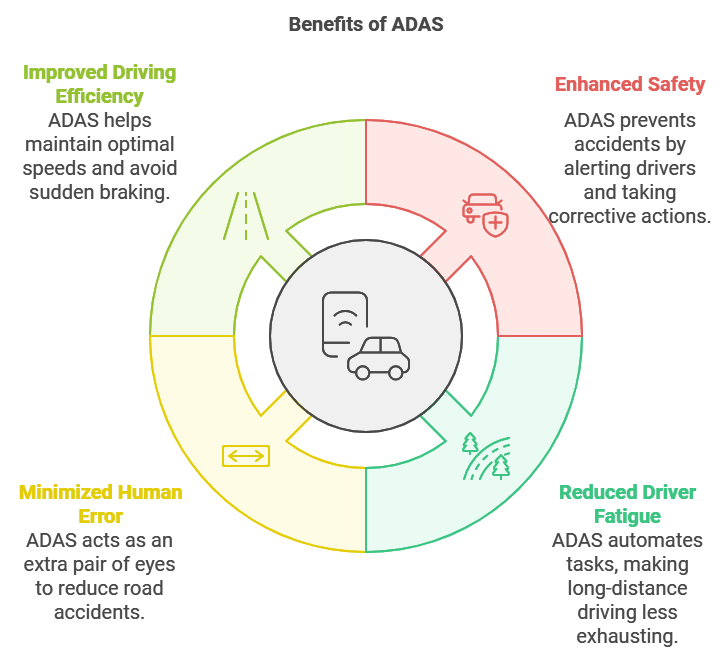
ADAS sensor suites generate the foundational data layer for connected vehicle data monetization. Camera, radar, and lidar inputs feed mapping providers, insurance carriers, infrastructure operators, and city planners. The OEMs treating ADAS as both a customer-facing feature and a B2B data product capture two revenue streams from the same hardware investment. This dual-monetization view is reshaping how product planning teams justify sensor bill of materials cost.
The strategic implication for VP-level decision makers is direct. Understanding how important ADAS is for car drivers in your specific markets, segments, and price tiers determines product roadmap, pricing architecture, and channel strategy. Generic global assumptions do not survive contact with regional driver preferences.
SIS International Research has supported automotive manufacturers and tier-one suppliers across more than 135 countries with structured B2B expert interviews, car clinics, ethnographic research, and quantitative ADAS preference studies. The work consistently shows that the OEMs investing in primary driver research before product lock recover the cost many times over in trim mix optimization and reduced warranty exposure.
À propos de SIS International
SIS International propose des recherches quantitatives, qualitatives et stratégiques. Nous fournissons des données, des outils, des stratégies, des rapports et des informations pour la prise de décision. Nous menons également des entretiens, des enquêtes, des groupes de discussion et d’autres méthodes et approches d’études de marché. Contactez nous pour votre prochain projet d'étude de marché.

 FR
FR  EN
EN  AR
AR  ZH
ZH  ZH_HK
ZH_HK  NL
NL  DE
DE  IT
IT  JA
JA  KO
KO  PL
PL  PT
PT  ES
ES