
Investigación del mercado energético

Los mercados globales actuales de la industria energética son altamente competitivos y dependen de las tendencias macroeconómicas globales.
El éxito continuo de las empresas basadas en la energía depende de los escenarios geopolíticos cambiantes, las realidades regulatorias y la suerte económica de las naciones, regiones y continentes.
The world’s power providers are constantly evolving and adapting to meet the needs of an energy-intensive world. Technology is advancing the extraction and delivery of energy. Rising demand in emerging markets will impact the supply and demand for critical energy sources. The rise of Renewable Energy presents new opportunities.
SIS International Research proporciona a las empresas de energía las respuestas y la información que necesitan para maximizar sus ganancias y prosperar.
La energía es el elemento vital de la sociedad moderna y alimenta nuestros hogares, empresas e industrias. Pero el panorama energético se está transformando profundamente en el mundo rápidamente cambiante de hoy. Con el auge de las energías renovables, las tecnologías digitales y las iniciativas de sostenibilidad, el mercado energético está evolucionando a un ritmo sin precedentes. ¿Cómo pueden las empresas navegar en este panorama complejo y dinámico para mantenerse a la vanguardia?
Energy Market Research: How Leading Operators Convert Transition Risk Into Competitive Advantage
Energy market research has shifted from forecasting fuel prices to mapping the economics of an entire system rebuild. Capital allocation decisions now span hydrogen, long-duration storage, supercritical CO₂ cycles, grid-scale batteries, and gas-fired flexibility. The firms pulling ahead treat research as the instrument that sequences those bets.
The opportunity is concrete. Interconnection queues are saturated, load growth from data centers and electrification is accelerating, and capacity markets are repricing flexibility. Operators with sharper field intelligence are securing the best sites, the best offtake terms, and the best regulatory positioning.
Why Energy Market Research Now Drives Capital Allocation
Three structural shifts have promoted research from a planning input to a board-level instrument. Demand is no longer flat. Hyperscaler load, industrial reshoring, and transport electrification have ended a decade of stagnant kilowatt-hour growth in mature markets. Forecasting accuracy at the substation level now determines siting outcomes.
Supply economics have inverted. Levelized cost of energy for utility-scale solar and onshore wind sits below new combined-cycle gas in most resource-rich geographies, but capacity factor variance and curtailment risk reshape the picture once interconnection costs and PPA structuring are layered in. The headline LCOE rarely matches the realized number.
Policy is fragmenting. The Inflation Reduction Act, the EU Net-Zero Industry Act, REPowerEU, Saudi Vision 2030, and Brazil’s hydrogen strategy each create distinct incentive stacks. Operators chasing scale across these regimes need granular policy intelligence, not summaries.
The Methodologies That Separate Operators From Spectators
Public databases describe the past. Primary research describes what is about to happen. The operators winning the next cycle invest in four research instruments most competitors underuse.
Structured expert interviews with grid operators, ISOs, and offtakers. Interconnection queue analysis from public filings tells you what is queued. Conversations with transmission planners tell you what will clear. The gap between the two has widened in PJM, ERCOT, and CAISO, and that gap is where siting alpha lives.
Technology adoption studies among industrial buyers. Renewable energy certificates, virtual PPAs, and 24/7 carbon-free energy matching are not commodity products. Procurement officers at semiconductor fabs, hyperscalers, and chemical majors weigh additionality, residual risk, and Scope 2 accounting differently. Treating them as one segment is a routine error.
Competitive intelligence on technology developers. The race in long-duration storage, sCO₂ power cycles, small modular reactors, and electrolyzer stacks is being won and lost on commercialization timing, not laboratory performance. Tracking patent filings, hiring patterns, and supplier qualification activity reveals position six to twelve months before announcements.
According to SIS International Research, executives evaluating Supercritical CO₂ turbines and related energy storage solutions consistently identify offtaker confidence and regulatory clarity as the binding constraints on commercialization, not technical maturity. The operators advancing fastest pair technical demonstration with structured buyer-side research before scaling capital commitments.
Voice of customer programs across the industrial base. Demand response design, behind-the-meter storage, and electrification incentives only convert when they match how plant managers actually run operations. Survey instruments designed in headquarters and translated for the field consistently miss this.
Where the Capital Is Moving
| Investment Theme | Primary Driver | Research Priority |
|---|---|---|
| Grid-scale storage | Capacity market reform, renewable firming | Revenue stack modeling across ancillary services |
| Hydrogen and derivatives | Industrial decarbonization, IRA 45V credit | Offtaker willingness-to-pay, certification standards |
| Advanced thermal cycles | Industrial heat, flexible baseload | Buyer adoption barriers, regulatory pathway |
| Distributed energy integration | Resilience demand, rate design shifts | Aggregator economics, utility tariff response |
| Transmission and interconnection | Queue saturation, FERC Order 2023 | Developer behavior, ISO timeline modeling |
Source: SIS International Research analysis of energy transition capital flows.
The Research Architecture Behind Successful Market Entry

A market entry assessment in energy is not a country report. It is a sequenced decision framework that answers four questions in order: Is the demand thesis valid at the substation or industrial-cluster level? Is the policy stack durable across an investment horizon? Are the offtake counterparties bankable? Can the supply chain deliver at the cost assumed in the model?
Most failed entries skip step one. Headline national targets for renewable capacity, hydrogen production, or storage deployment look attractive until research at the nodal level reveals interconnection backlogs, water constraints, or transmission gaps that delay revenue by years.
SIS International’s competitive intelligence engagements across North America, Brazil, Germany, and the Gulf reveal a consistent pattern: developers who conduct expert interviews with regional grid operators and industrial offtakers before site acquisition close projects on schedule at materially higher rates than those relying on desk research alone.
The SIS Energy Decision Framework
- Demand validation: Nodal load forecasting, industrial cluster mapping, hyperscaler siting intelligence.
- Policy durability: Incentive stack modeling, regulatory stakeholder mapping, scenario stress testing.
- Counterparty bankability: Offtaker credit and willingness-to-pay analysis, PPA structure benchmarking.
- Supply chain feasibility: Equipment lead-time tracking, EPC capacity assessment, critical mineral exposure.
Competitive Intelligence in a Fragmented Technology Race

The energy transition has produced an unusual condition: dozens of credible technologies competing for the same offtake dollars. Long-duration storage alone now includes iron-air, vanadium flow, compressed air, gravity, and thermal options. Each has a different cost curve, geography fit, and regulatory dependency.
Winning operators run continuous competitive intelligence rather than episodic technology scans. They track which developers are advancing through utility procurement processes, which are securing tier-one EPC partnerships, and which are clearing UL certification or grid-code compliance. The operational signal usually leads the press release by two quarters.
In structured B2B expert interviews conducted by SIS with senior procurement and engineering leaders at utilities and industrial buyers across Europe, the Middle East, and the Americas, the most cited adoption barrier for next-generation power cycles is not cost. It is the absence of a credible second-source supplier and a defined service model. Research that addresses these dimensions accelerates commercial conversion.
Building the Intelligence Function That Compounds
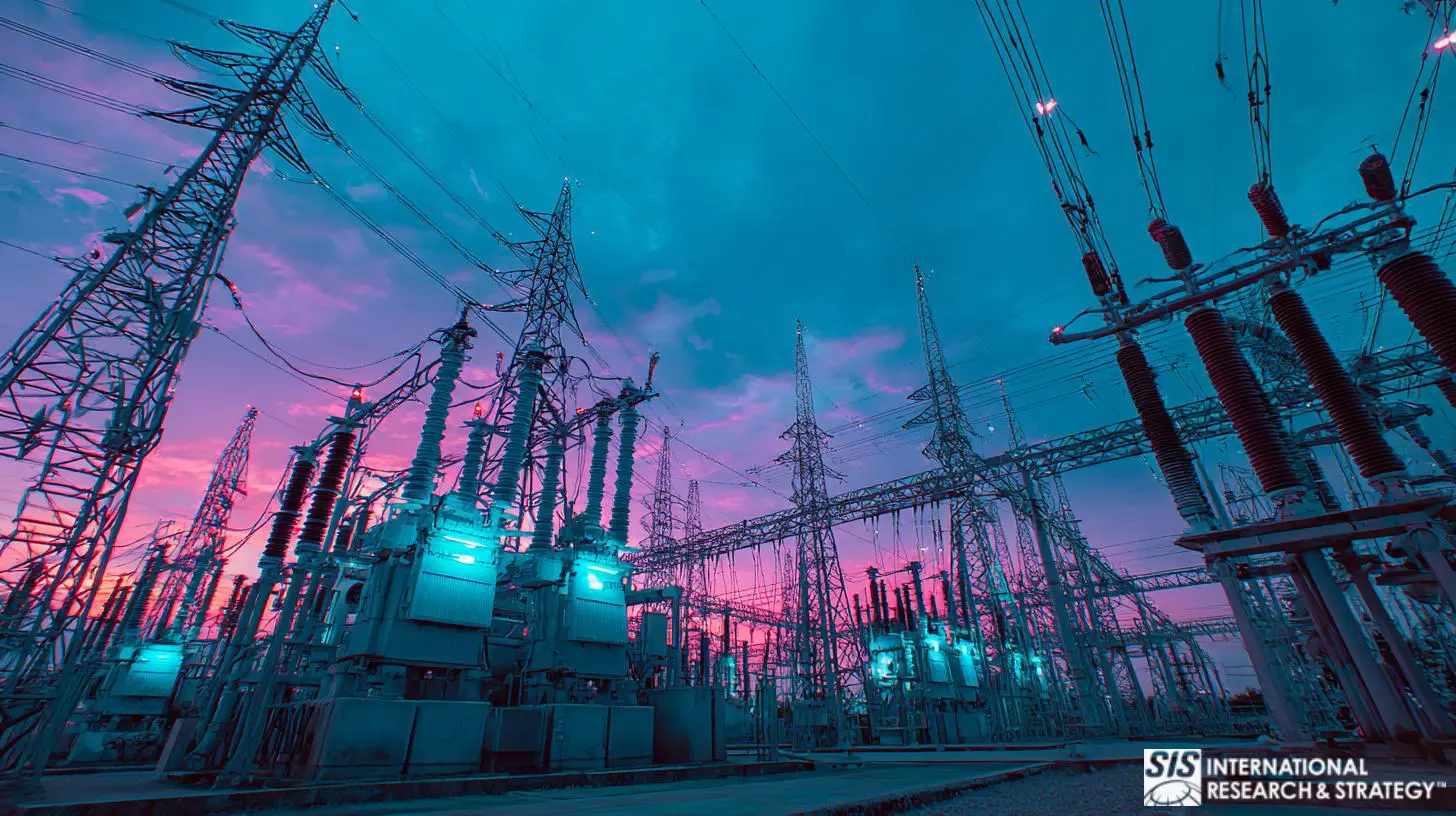
The firms treating energy market research as a continuous capability, not a project, are pulling ahead in three measurable ways. They commit capital faster because their boards see fewer surprises. They negotiate better PPAs because they understand counterparty alternatives. They acquire technology positions earlier because their pipeline of developer intelligence is deeper.
The architecture is straightforward. Pair quantitative load and price modeling with disciplined qualitative work: focus groups with industrial energy managers, ethnographic observation of plant operations, expert interviews across the value chain, and competitive intelligence updated quarterly. Energy market research delivered this way becomes infrastructure, not deliverable.
The transition is creating decades of capital deployment. Operators who build the intelligence function now will set the terms others accept.
Acerca de SIS Internacional
SIS Internacional ofrece investigación cuantitativa, cualitativa y estratégica. Proporcionamos datos, herramientas, estrategias, informes y conocimientos para la toma de decisiones. También realizamos entrevistas, encuestas, grupos focales y otros métodos y enfoques de investigación de mercado. Póngase en contacto con nosotros para su próximo proyecto de Investigación de Mercado.

 ES
ES  EN
EN  AR
AR  ZH
ZH  ZH_HK
ZH_HK  NL
NL  FR
FR  DE
DE  IT
IT  JA
JA  KO
KO  PL
PL  PT
PT