
食品包裝市場研究
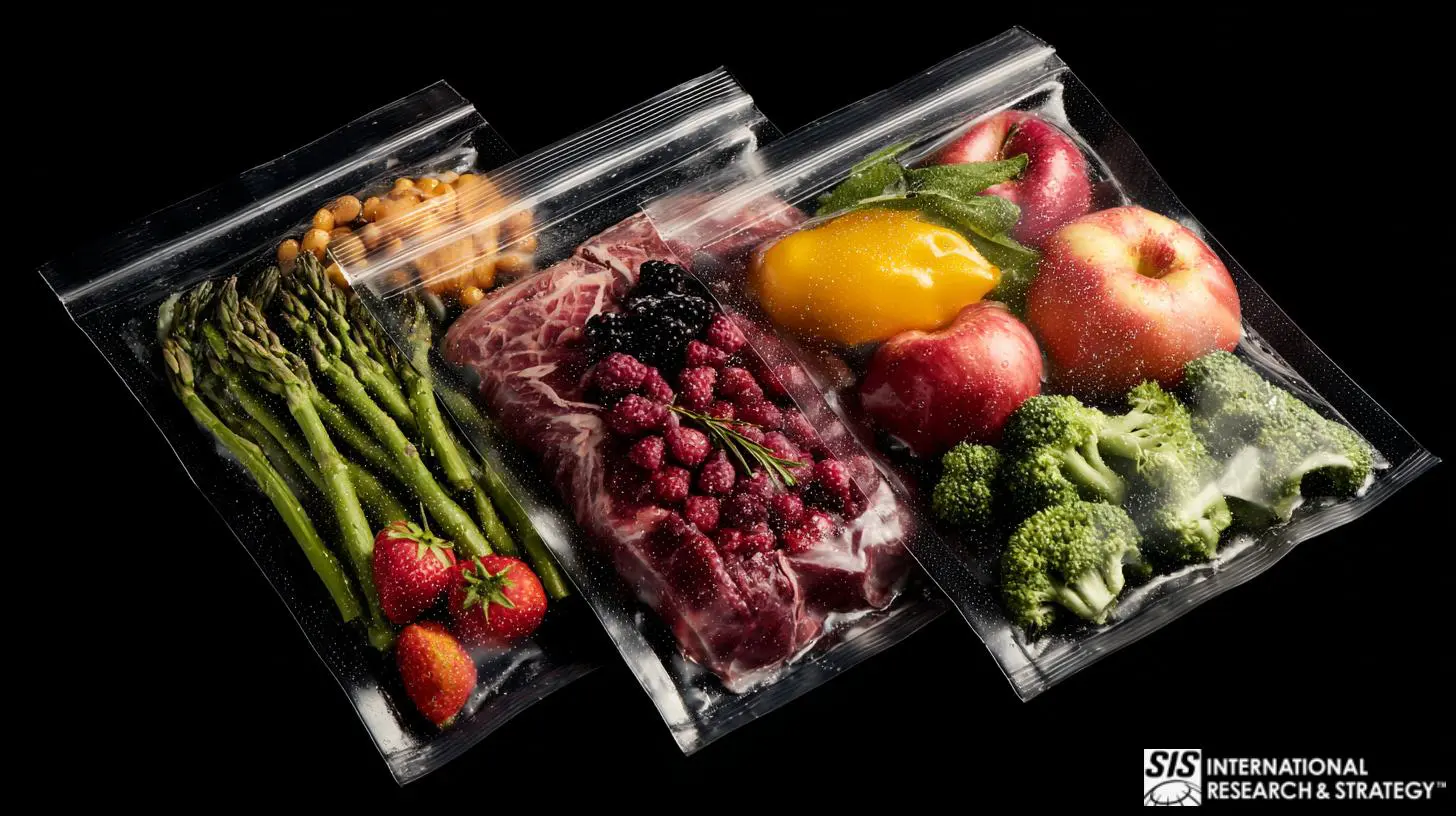
食品包裝的前景不再只是遏制和保存;而是關乎安全。它關乎創新、永續性以及給消費者留下持久的印象。這就是為什麼食品包裝市場研究對於那些希望在這個競爭激烈的舞台上蓬勃發展並透過為市場增加真正價值的傑出創新來保持領先地位的企業至關重要。
時間able of Contents
Most packaging material decisions are made on incomplete intelligence.
The standard narrative treats food packaging market research as a sizing exercise. Estimate the addressable market for flexible pouches or rigid containers, layer in a sustainability trend line, and present a growth story. This approach misses the actual problem. Material selection in food packaging is not a market sizing question. It is a decision-chain question. And the chain is broken in places most research never examines.
The gap sits between three groups that rarely speak the same language: paperboard substrate suppliers, converters who fabricate the package, and brand-side packaging engineers who specify materials. Each group optimizes against different constraints. Suppliers sell on substrate performance. Converters sell on run efficiency and minimum order economics. Brand engineers select against a brief that procurement, marketing, and regulatory affairs wrote separately. No single party holds the full picture. That gap is where value leaks.
The Converter Bottleneck Nobody Maps
Converters occupy an unusual position. They sit between substrate manufacturers and CPG brands, controlling which materials reach brand-side engineers as viable options. A converter’s preference for a particular substrate often has nothing to do with consumer preference or shelf-life packaging performance testing. It has to do with press compatibility, changeover time, and waste rates on their specific equipment.
This pattern is most pronounced among mid-tier converters operating older flexographic press lines. Tier-one converters with newer CI (central impression) flexo or gravure equipment can accommodate a wider range of substrate gauges and surface treatments. But mid-tier converters, which represent the bulk of regional converting capacity in North America and Europe, face real constraints. A substrate that requires tension adjustments outside their web-handling range or adhesive reformulation for their lamination stations simply never enters the conversation with the brand. The material is screened out on operational grounds before performance data reaches anyone with authority to evaluate it.
This means a substrate supplier can have a superior material, validated through accelerated shelf-life testing (ASLT) and clean label consumer perception studies, and still lose. SIS’s in-depth interviews with packaging decision-makers and engineers at FMCG firms across the converter-distributor pipeline confirmed this pattern: procurement decisions at large CPG companies were structurally separated from the technical evaluation that happened at converter level. Small firms showed more integration. Large firms fragmented the decision across four or five functions, none of which spoke to the converter’s equipment constraints.
食物 packaging market research that stops at the brand level misses this entirely. The real competitive analysis begins at the converter’s pressroom floor.
Sustainability Claims Are Outrunning Substrate Science
Every major CPG company now publishes packaging sustainability targets. Nestlé pledges recyclable or reusable packaging. Unilever targets virgin plastic reduction. PepsiCo commits to recycled content percentages. These commitments create demand signals that substrate suppliers and converters scramble to meet. But the scramble produces a specific failure mode: concept-product fit testing is skipped.
A plant-based protein brand launches in a PLA (polylactic acid) compostable film. PLA meets the sustainability brief and prints well. It fails the moisture barrier requirement within eight weeks, well inside the target shelf life, because PLA’s moisture vapor transmission rate is an order of magnitude higher than conventional BOPET or BOPP films. PBAT-blend films offer marginally better flexibility but share the barrier weakness. The brand pulls the SKU. This is not hypothetical. It is a recurring pattern in the plant-based protein segment, where packaging concept-product fit testing rarely accounts for the higher water activity of pea and soy protein matrices compared to conventional products.
Sustainable packaging market intelligence that focuses on consumer willingness-to-pay for eco-friendly formats misses the constraint that matters. Consumer perception research on sustainable food packaging formats is necessary but insufficient. Hedonic scaling methodology applied to the unboxing experience means nothing if the package cannot maintain sensory quality through the distribution cycle. Penalty analysis on a central location test (CLT) will expose that consumers detect off-notes in products stored in barrier-compromised sustainable films. Descriptive analysis panels calibrated on barrier-related defects like oxidized, stale, or cardboard-tainted notes detect these failures at concentrations well below what untrained consumer panels perceive. Yet few brands run either the CLT or the descriptive panel before committing to the format.
The real intelligence question is not “do consumers want sustainable packaging.” They do. The question is which substrate chemistries deliver both the barrier performance and the end-of-life profile that brand commitments require. That is a packaging material competitive analysis problem, not a consumer sentiment problem.
The Decision Architecture Gap Between Small and Large Firms
One of the least understood dynamics in food packaging is how firm size changes the decision architecture for material selection. In smaller FMCG companies, the founder or a single VP often controls packaging decisions end to end. They visit the converter, handle the substrate samples, run informal shelf-life checks, and sign the purchase order. The feedback loop is tight.
Large firms operate differently. Marketing writes a brief focused on shelf presence and brand guidelines. R&D specifies barrier and machinability requirements. Procurement negotiates on unit cost and minimum volumes. Regulatory affairs reviews migration limits and food-contact compliance. Sustainability teams audit recyclability claims. No single function owns the trade-off between these competing constraints. The packaging engineer, nominally the integrator, lacks authority over procurement’s cost targets or marketing’s format preferences.
SIS’s structured B2B expert interviews with packaging engineers and procurement leads at major FMCG food brands identified this fragmentation as the primary reason new substrates take years to reach market. A superior paperboard substrate could outperform on every technical dimension. But if marketing had already committed to a flexible pouch format in a product launch brief, the substrate never reached evaluation. The decision was foreclosed before the material could compete.
Food packaging market research that treats “the brand” as a single decision-maker produces misleading competitive maps. The decision is plural. Mapping it requires interviewing five or six roles within the same organization, then triangulating where authority actually sits on specific trade-offs.
Regulatory Fragmentation Creates Real Competitive Moats
The food packaging regulatory environment is not converging. It is diverging. The EU’s Packaging and Packaging Waste Regulation (PPWR) pushes recycled content mandates and reuse targets. France enforces AGEC law provisions that ban specific single-use plastic formats. California’s SB 54 creates a producer responsibility framework with distinct material definitions. Each jurisdiction defines “recyclable” differently. Each sets different migration limits for food-contact materials under frameworks like the EU’s Regulation 10/2011 on plastic food contact materials or the FDA’s Food Contact Notification program.
For a multinational CPG company, this fragmentation means the same product sold in Hamburg, Lyon, and Los Angeles may require three different packaging formats. The cost is not just in materials. It is in qualification testing, line changeovers, and SKU proliferation across distribution networks.
SIS’s market entry assessments for packaging manufacturers expanding into Scandinavian markets revealed that regulatory variation across even closely related Nordic economies created non-obvious barriers. What appeared to be a single regional market was in practice four distinct compliance environments, each with different buyer expectations around extended producer responsibility fees and deposit-return scheme compatibility.
Competitive intelligence in food packaging therefore requires regulatory mapping at the jurisdiction level, not the region level. A substrate that is commercially viable in Germany may be economically unworkable in France after AGEC compliance costs. This is the kind of granularity that standard market reports never reach.
關鍵人物
食品包裝產業是一個充滿活力和競爭的行業,其特點是有幾個推動創新和引領趨勢的關鍵參與者。了解這些主要參與者對於想要有效駕馭這一領域的企業至關重要。
- 利樂: 利樂是食品加工和包裝解決方案的全球巨頭,以其創新和環保的包裝產品而聞名。該公司提供一系列旨在保持食品安全、品質和新鮮度的包裝材料和設備。
- 阿姆科: Amcor 專門為食品、飲料、製藥、醫療器材、家居、個人護理和其他產品開發和生產高品質軟包裝、硬質容器、特殊紙箱、封蓋和服務。他們對永續發展和創新的承諾使他們成為包裝行業的領導者。
- 密封空氣: Sealed Air 以其 Bubble Wrap 品牌而聞名,提供確保食品安全、延長保質期並減少浪費的包裝解決方案。該公司專注於創造可持續、高效和保護性的包裝解決方案。
- 貝瑞全球: Berry Global 提供各種包裝解決方案,包括用於食品和飲料行業的容器、瓶子、罐子和軟包裝選項。他們的產品旨在永續發展,增強產品保護並延長保質期。
機會

探索食品包裝市場研究領域為致力於在這個充滿活力的領域進行創新和脫穎而出的企業揭示了大量的機會。隨著消費者偏好的變化和環境因素變得越來越重要,利用目標市場研究的見解的公司可以獲得顯著的競爭優勢。
- 擴大市場範圍: Understanding regional and global market dynamics through comprehensive research allows businesses to identify new expansion opportunities. Insights into local consumer behavior, preferences, and regulatory landscapes can inform strategies for entering new markets or expanding existing ones. Tailoring packaging solutions to fit local tastes and requirements can significantly enhance market penetration and success.
- Enhancing Brand Differentiation: Food packaging market research enables businesses to identify unique packaging innovations that can set their products apart. This could involve novel materials, smart packaging technologies that enhance product freshness or convenience, or designs that improve user experience. Such differentiation can be a powerful tool in attracting and retaining customers.
- 優化成本和效率: 除了面向消費者的好處之外,食品包裝市場研究還提供了優化營運成本和效率的機會。對新材料或生產流程的深入了解可以節省成本、提高包裝耐用性並減少浪費。此外,了解包裝材料的供應鏈動態可以幫助企業做出明智的決策,進而提高營運效率和永續性。
挑戰
Navigating the complexities of the food packaging market research presents a unique set of challenges for businesses seeking to innovate and excel in this competitive arena. These challenges can significantly impact the effectiveness of research efforts and the implementation of insights.
- 平衡消費者需求與永續發展目標: 消費者越來越需要既方便又永續的包裝解決方案,而實現這種平衡可能具有挑戰性。例如,一次性塑膠提供了便利,但對環境有害。
- 理解與預測消費者行為: 消費者的偏好和行為可能會高度波動,受到趨勢、社會運動甚至流行病等全球事件的影響。進行準確預測這些變化並符合消費者期望的市場研究具有挑戰性。
- 管理成本和資源分配: Effective 食品包裝市場研究 requires significant investment in terms of both time and resources. For many businesses, especially small and medium-sized enterprises, allocating the necessary resources for comprehensive research can be challenging.
- 適應全球供應鏈的複雜性: The global nature of supply chains in the food packaging industry adds another layer of complexity to 市場研究. Fluctuations in the availability of raw materials, changes in trade policies, and logistical challenges can all impact packaging solutions.
What Determines Whether Packaging Intelligence Gets Used
The packaging VP who commissions research wants one thing answered: which material, in which format, clears every internal gate and reaches the shelf within the launch window. That question cannot be answered with consumer data alone, supplier data alone, or regulatory data alone. It requires all three, mapped against the specific decision architecture of that company.
SIS runs 15 to 20 structured expert interviews with senior packaging engineers, procurement directors, and converter technical leads, triangulated against secondary regulatory analysis and competitive mapping. The output is not a market report. It is a decision map that shows where a material will pass and where it will stall, before the client commits capital.
我們在紐約的工廠位置
11 E 22nd Street, Floor 2, 紐約, NY 10010 電話:+1(212) 505-6805
關於 SIS 國際
SIS國際 提供定量、定性和策略研究。我們為決策提供數據、工具、策略、報告和見解。我們也進行訪談、調查、焦點小組和其他市場研究方法和途徑。 聯絡我們 為您的下一個市場研究項目。

 ZH_HK
ZH_HK  EN
EN  AR
AR  ZH
ZH  NL
NL  FR
FR  DE
DE  IT
IT  JA
JA  KO
KO  PL
PL  PT
PT  ES
ES